Somewhere between Rachel Reeves trying to convince the IMF that the UK is not a gently smoldering spreadsheet (The Guardian, Apr 2026) and Christian Yelich praying his OPS-age curve has mercy (Sports Illustrated, Mar 2026), a new hero has emerged to capture the hopes, dreams, and remaining $73 of disposable income of the global masses: Little Pepe ($LILPEPE).
According to Analytics Insight, which in crypto circles now counts as a primary religious text, Little Pepe is one of the “Best Low-Cap Crypto Picks Right Now — Why Little Pepe ($LILPEPE) Stands Out.” That’s right. While economists like Rachel Reeves are at the IMF defending sovereign credit ratings, retail investors are on their phones at 3 a.m. defending their decision to go all-in on a pixelated amphibian wearing sunglasses.

Technically, $LILPEPE is just another low-cap meme coin. Practically, it’s a fully immersive simulation of late-stage capitalism, where a token named after a frog derivative of a meme derivative of a cartoon derivative of an emotion can, in theory, outperform entire national economies. Reeves arrived in Washington with “little leeway to prove its UK downgrade wrong”; $LILPEPE holders arrived on Binance with little leeway to explain to their partners why the rent is now denominated in regret.
Supporters insist this is all extremely sophisticated. Little Pepe, they argue, represents a new wave: hyper-financialized community tokens that merge culture, speculation, and the nagging suspicion that you are participating in a social experiment designed by a Stanford behavioral econ undergrad.
“Traditional assets are boring,” said one self-described $LILPEPE ‘whale’ in a Discord AMA. “You can’t post a smug GIF of the FTSE 100.”
The tokenomics read like fan fiction about the Federal Reserve, written by someone who only half-finished a YouTube explainer: deflationary burns, community airdrops, liquidity pools, NFT tie-ins, and a roadmap promising a metaverse arcade, a mobile game, and, inevitably, a debit card that no bank has technically approved.
In this landscape, the IMF starts to look like an old-world guild of wizards who regulate numbers that don’t move fast enough. Rachel Reeves is in a boardroom, explaining bond yields and fiscal headroom. Somewhere else, a Telegram group admin named “PepeDaddy69” is explaining impermanent loss using hand-drawn frogs on MS Paint. Both are, in their own way, arguing for confidence in systems built on vibes.
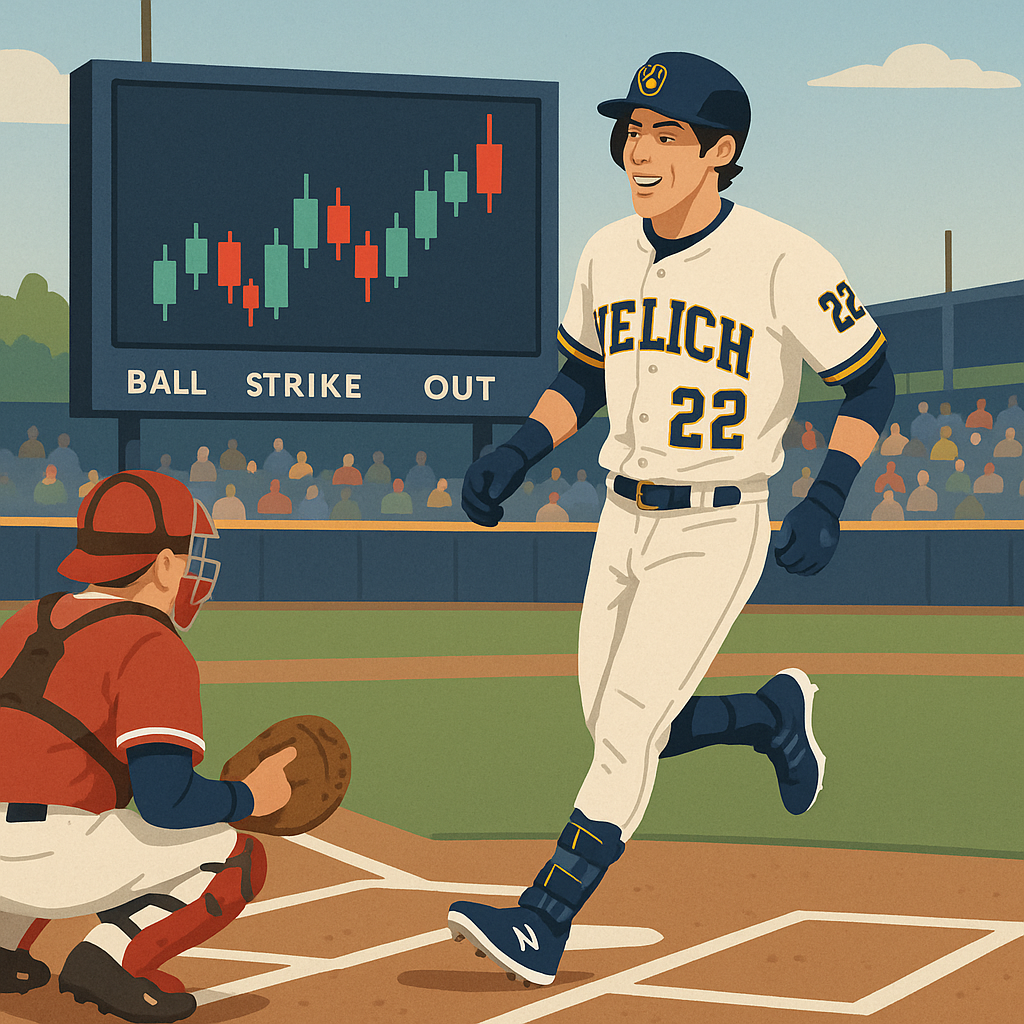
Meanwhile, sports still pretends to be about physical achievement instead of being a live-action volatility chart. In Arizona, Christian Yelich of the Milwaukee Brewers celebrates crossing home plate during spring training at Salt River Fields (Sports Illustrated, Mar 20, 2026). Commentators carefully dissect his launch angle, bat speed, and contract value. No one mentions the only metric that matters in 2026: whether his highlight clip has been fractionalized into 10,000 utility-free NFTs and staked in a DeFi protocol run by a frog.
Strangely, it’s baseball that now looks conservative. A player like Yelich signs a multi-year deal, trains relentlessly, and hopes to outperform his worst-case projection. A $LILPEPE buyer opens a wallet, presses “swap,” and hopes the number goes up before the devs disappear “to focus on new opportunities.” Both involve risk. One involves core strength. The other involves core delusion.
Even football can’t escape the creeping frog. When Javier Mascherano stepped down as Inter Miami head coach (Sportstar, Apr 2026), the statement centered on form, tactics, and the gravitational field known as Lionel Messi. But within hours, crypto Twitter had a theory: Mascherano wasn’t leaving MLS; he was “going full degen,” allegedly to launch a coaching-themed meme coin—$MASCH—where holders vote on imaginary substitutions via DAO.
Why not? Inter Miami is already a lifestyle brand with a side hustle in football. Imagine the synergy: Messi scores a free kick, and somewhere a smart contract automatically mints a limited-series Little Pepe in a pink kit, which then gets rehypothecated into a liquidity pool paired with $LILPEPE and a synthetic UK gilt derivative inspired by Rachel Reeves’s speech to the IMF. That’s not a joke; that’s a pitch deck in someone’s inbox right now.
“We’re at the intersection of sport, culture, and decentralized finance,” a hypothetical future Inter Miami ‘Chief Web3 Officer’ will say. “Also we’re broke.”
The reason Little Pepe “stands out,” as Analytics Insight cheerfully insists, is precisely because nothing stands out anymore. Everything is tokenizable, speculative, and somehow described as “democratizing access.” The IMF downgrades a country? Markets panic. A meme coin rallies 600% on a Wednesday because someone with 1.2 million followers changed their profile picture to a frog? Markets cheer. Christian Yelich pulls a hamstring? Fantasy lineups crumble. Javier Mascherano resigns? TL;DR threads appear explaining how this is actually bullish for “football x crypto narratives Q3–Q4.”
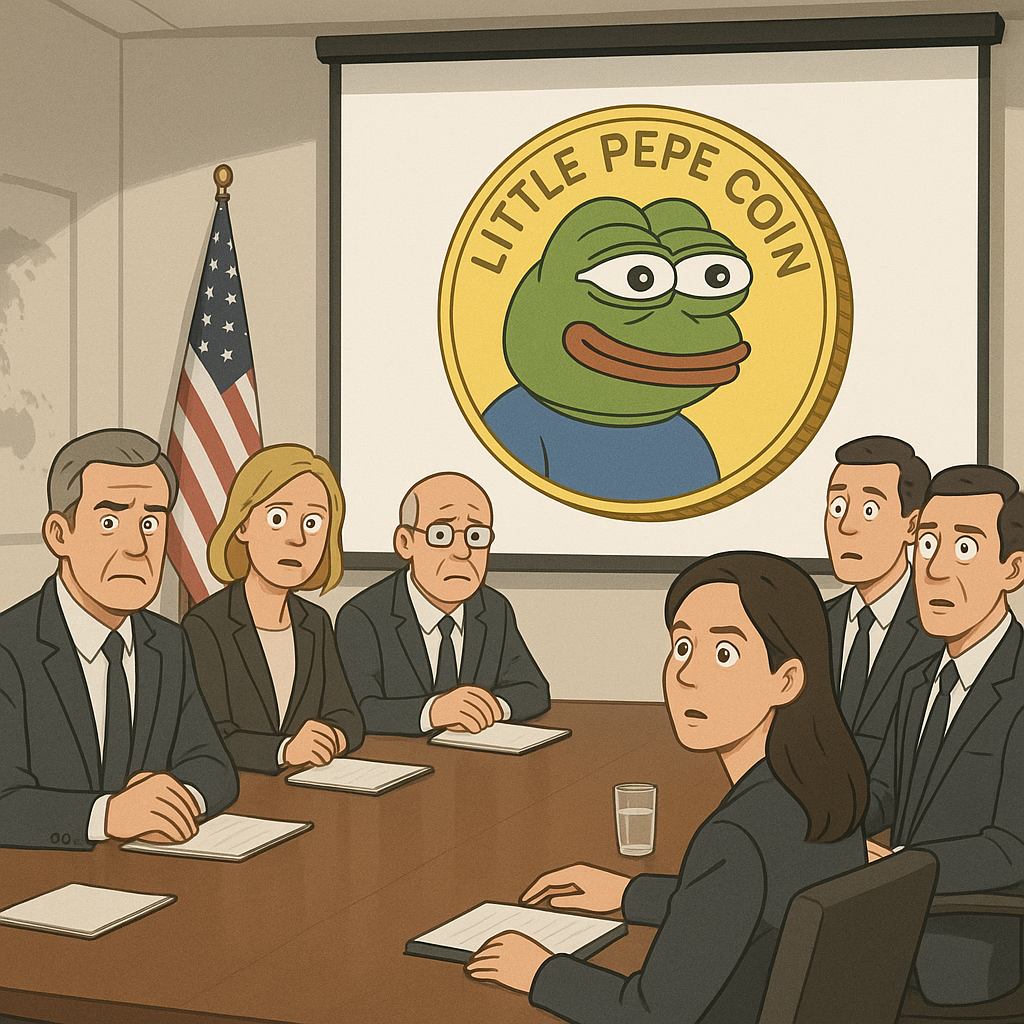
In theory, regulation will arrive one day to separate real innovation from amphibious chaos. Perhaps the IMF will roll out a global framework for meme assets. Perhaps Rachel Reeves will unveil a plan to back a portion of UK gilts with a diversified basket of frog coins, baseball-card NFTs, and tokenized Inter Miami corner kicks. Perhaps Christian Yelich will be forced to declare in post-game interviews whether his performance was “sponsored by any on-chain volatility events.” Mascherano might have to disclose if his next managerial stint comes with a governance token.
Until then, Little Pepe is the perfect low-cap mascot for the post-trust internet: cute, chaotic, and vaguely threatening to your long-term financial stability. The IMF has ratings. Inter Miami has Messi. The Brewers have Yelich. You, dear reader, have a MetaMask wallet and a frog coin that “can’t possibly go lower.”
Financial advice? Of course not. This is tech media in 2026. We don’t offer guidance; we offer narratives. And right now, the strongest narrative on-chain is simple:
In a world where sovereign debt, professional sports, and international institutions all feel like meme stocks, betting on an actual meme might be the most honest trade left.
Just don’t ask Rachel Reeves to explain it to the IMF. Or to your landlord.