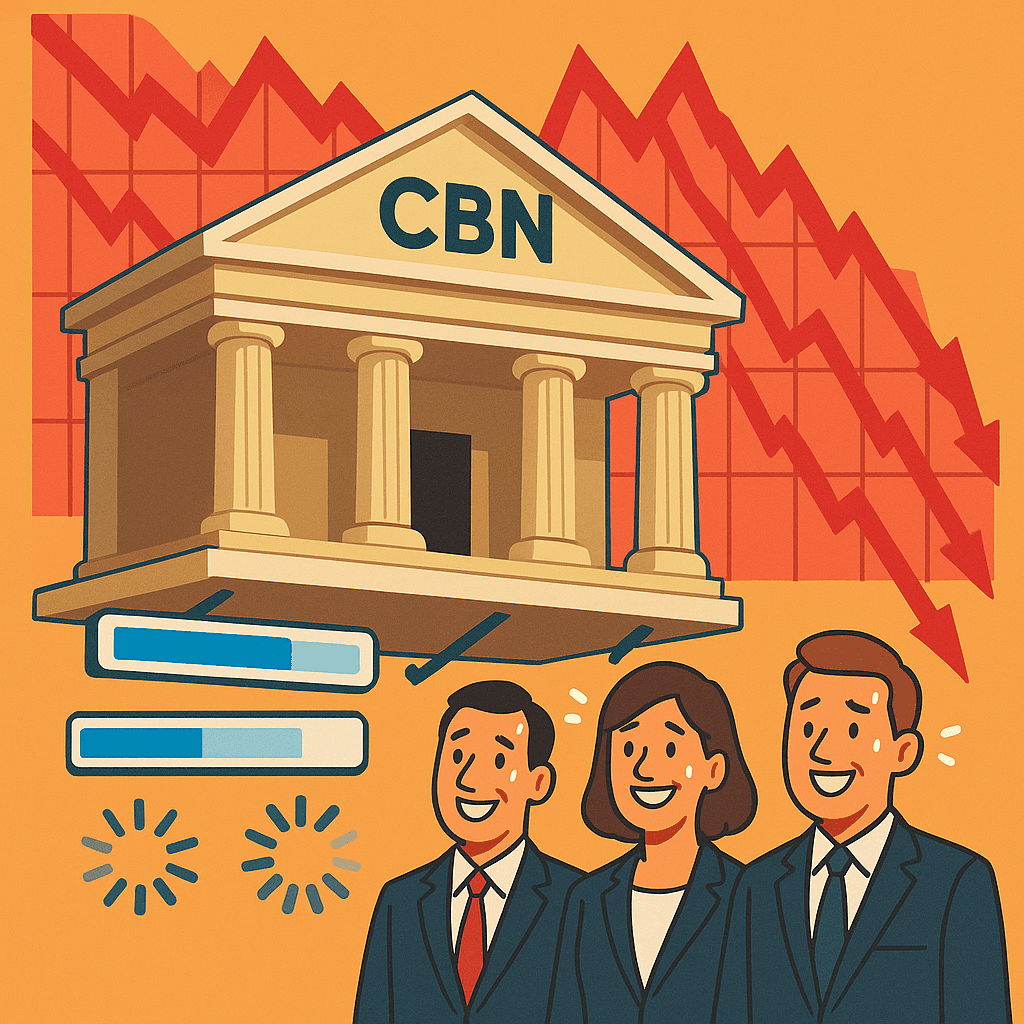
As Nigeria nervously refreshes its currency apps and prays to the god of parallel markets, the Central Bank of Nigeria (CBN) has confidently announced that concerns over dwindling foreign reserves are “unfounded,” because the country is cushioned by what officials describe as “strong external buffers” and what everyone else describes as “vibes.” (Business News Nigeria, Apr 2026)
In a carefully worded statement that sounded suspiciously like it had been drafted by a PR intern with a ChatGPT tab open, the CBN insisted that the actual decline in reserves is “no cause for alarm,” citing a combination of future inflows, improved oil receipts, and an Excel sheet that still has all the green conditional formatting turned on.
“Our external buffers remain robust,” an unnamed CBN official allegedly said in Abuja, according to totally real people who definitely exist and are not just lines in a press release. “When we say buffers, we mean a diversified basket of instruments: traditional reserves, swap lines, and most importantly, the unwavering optimism of people who still believe the naira will bounce back.”
To bolster confidence, the CBN showcased a new technocratic dashboard called the Resilience Integrity Liquidity Stability Hub, or RILSH—which, coincidentally, is the sound Nigerians make when they see the rate on the parallel market.
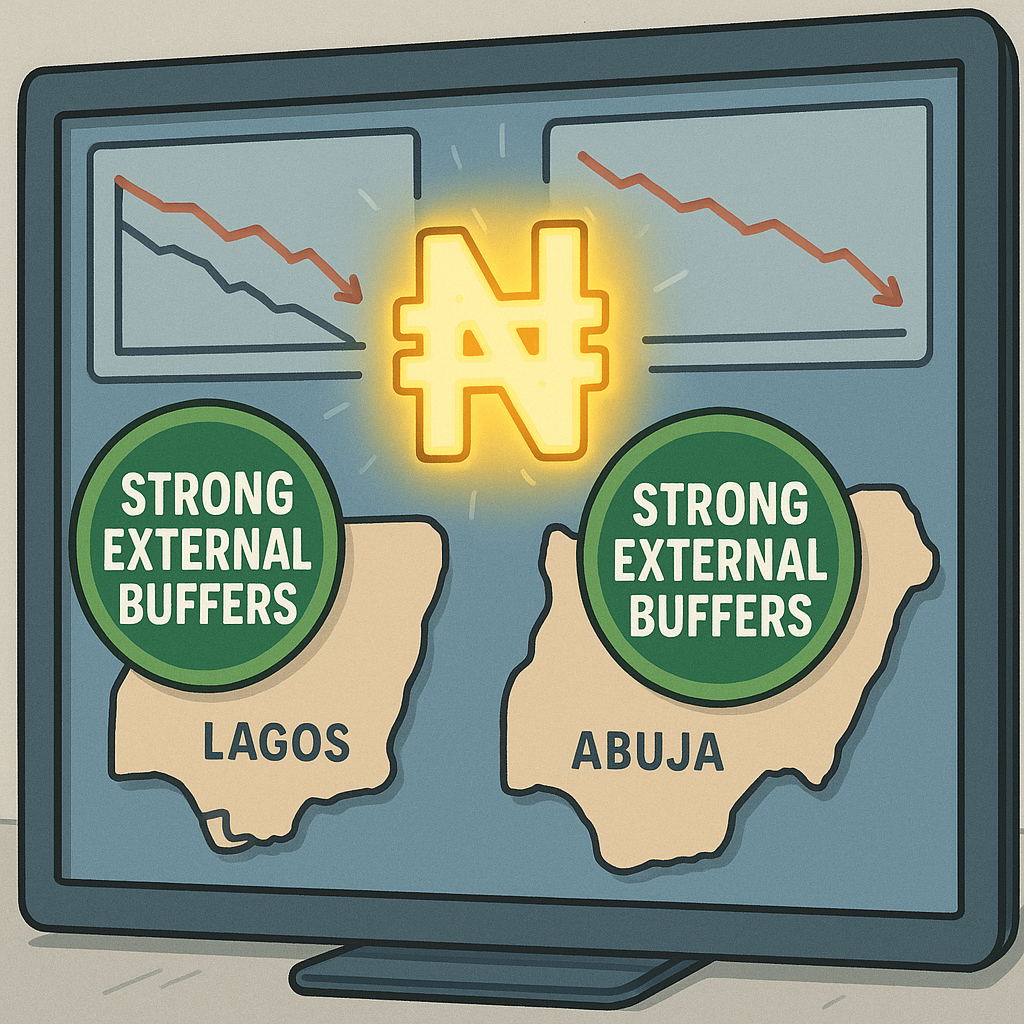
On the RILSH homepage, a soothing animation displays a glowing naira symbol floating above Lagos, Abuja, and an offshore server in Mauritius. Next to it, an infographic depicts Nigeria’s “strong external buffers” as three cartoon shields labeled:
- FX Reserves: “Do not worry about the exact number, focus on the direction of our confidence.”
- Oil Revenues: Illustrated as a tap that is technically dripping but in a very patriotic way.
- Central Bank Communication: A megaphone blasting the phrase “NO CAUSE FOR PANIC” in increasingly larger fonts.
Meanwhile, on actual trading floors from Lagos to London, analysts stared at their own dashboards—which, unfortunately, contain numbers—and came to a less spiritual conclusion. “Look, if your ‘external buffer’ is mainly PowerPoint slides and a hope that the next administration won’t change FX policy before lunch, you’re not hedged, you’re hallucinating,” said one currency strategist at a European bank, speaking on condition of anonymity and pure despair.
The Nigerian public remains split. Tech-savvy Lagosians track the naira on multiple apps: the official CBN rate, the bureau de change rate, and the Uncle-in-the-UK rate. When asked which one they trust, most respondents clicked “other” and typed: “the rate my crypto guy on Telegram gives me at 2 a.m.”
“CBN says our reserves are fine, so clearly my bank app declining every international payment is just a software bug,” said Ada, a fintech developer in Yaba, who now measures inflation in how quickly her cloud server fees rise. “At this point, my AWS bill has stronger external buffers than Nigeria.”

To close what it calls a “communication gap,” the Central Bank of Nigeria is reportedly working with local startups to launch a new transparency tool: the Official Optimism Index. Unlike boring old metrics like reserve adequacy or import cover, the Index will be powered by real-time data from:
- The number of times “market forces” appears in a CBN press release;
- The percentage of cabinet members currently tweeting about “unlocking Nigeria’s potential” instead of “we regret to announce…”;
- How often the phrase “strong external buffers” trends on X without being followed by a crying emoji.
Financial journalists, including those at Business News Nigeria, quietly observed that the last time the CBN sounded this serene, the naira was mentally preparing itself to discover new and creative ways to fall. One reporter summarized the situation as, “If they tell you there’s no fire, it just means they’ve stopped counting the burning chairs.”
In a briefing that was definitely not a panic Zoom with a custom beach background, officials reaffirmed that the exchange rate strategy remains “data-driven.” Unfortunately, the data appears to live in a parallel universe where oil prices never drop, the import bill never rises, and everyone actually uses the official FX window.
“We urge Nigerians to disregard speculation based on partial information,” CBN’s spokesperson said. “Only we have the full picture.”
Economists countered that when the only visible part of the picture is flames licking the edges of the currency graph, people tend to “speculate” that the rest of the painting is also on fire.
In a bid to modernize its messaging, the Central Bank of Nigeria is rumored to be experimenting with AI-generated economic summaries. The prototype, powered by a large language model fine-tuned on historical CBN statements, produces three default responses to any query about reserves:
- “Our buffers remain strong.”
- “There is no cause for alarm.”
- “This volatility is temporary and driven by speculators.”
When asked if the AI could ever output the phrase “we might be in trouble,” the system reportedly crashed, rebooted, and printed a PDF titled "Enhancing Confidence Through Strategic Narrative Management".
Global observers are also watching closely. The International Monetary Fund, which has seen this movie many times and never liked the ending, released a characteristically diplomatic note urging “continued reforms,” “further transparency,” and “maybe showing people the real reserve figures, just as a treat.”
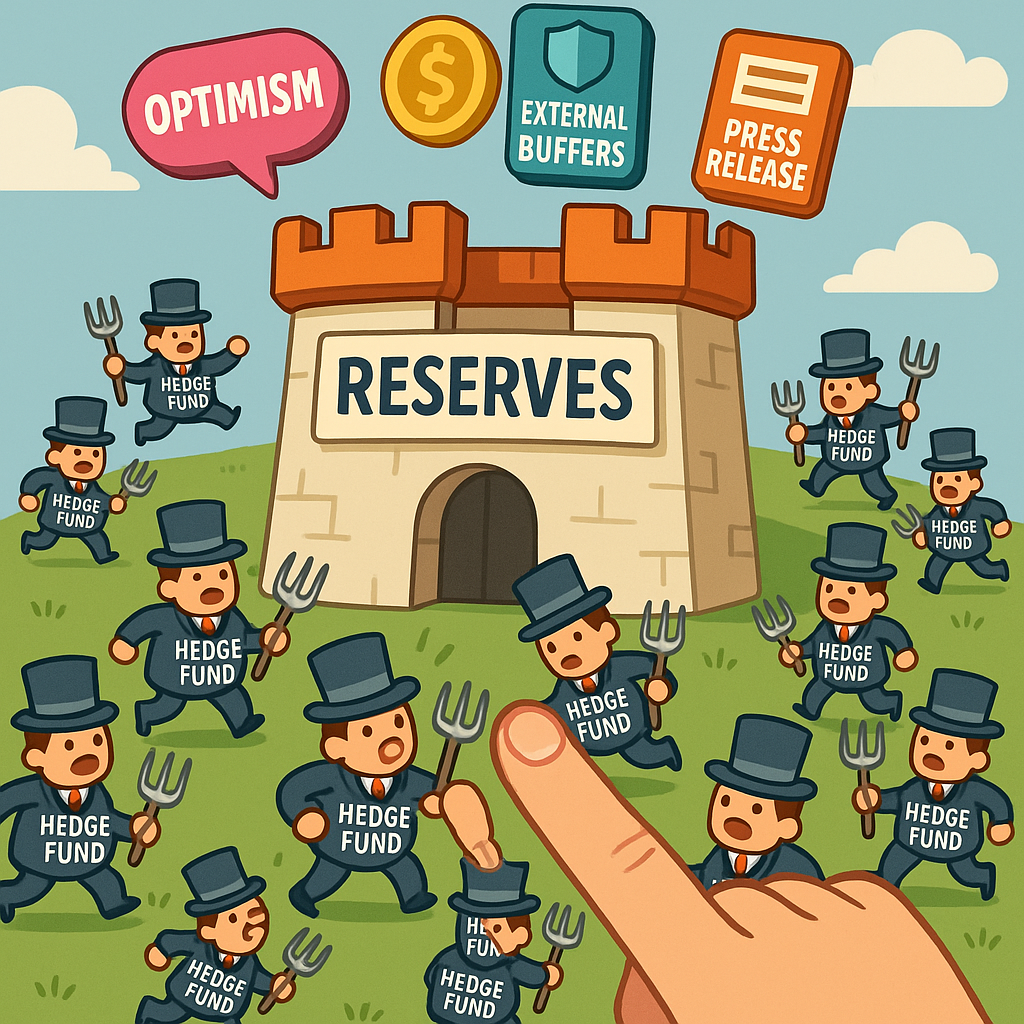
The CBN, however, appears unbothered. Sources say the next stage of its communication strategy includes a gamified mobile app where users can “defend the reserves” by tapping away speculative attacks from tiny cartoon hedge funds, while power-ups labeled “strong external buffers” briefly slow the inevitable erosion of their digital naira.
The app’s tutorial ends with a motivational quote attributed to the Central Bank of Nigeria itself:
“Reserves are not about what you have. They’re about what people believe you have.”
Critics called the quote “deeply concerning.” Fintech founders called it “basically Web3.”
For now, the CBN continues to dismiss concerns, the naira continues its extreme sports career, and Nigerians continue to live at the intersection of monetary policy and improv theater. The external buffers may or may not be strong, but one thing is: the country’s collective ability to read a calming central bank statement on Monday and open three FX tracking apps on Tuesday.
Somewhere in Abuja, a fresh set of slides is being prepared for the next press conference. The title is already done: “Reinforcing Confidence Through Robust External Buffers.” The numbers, as usual, will be added later.