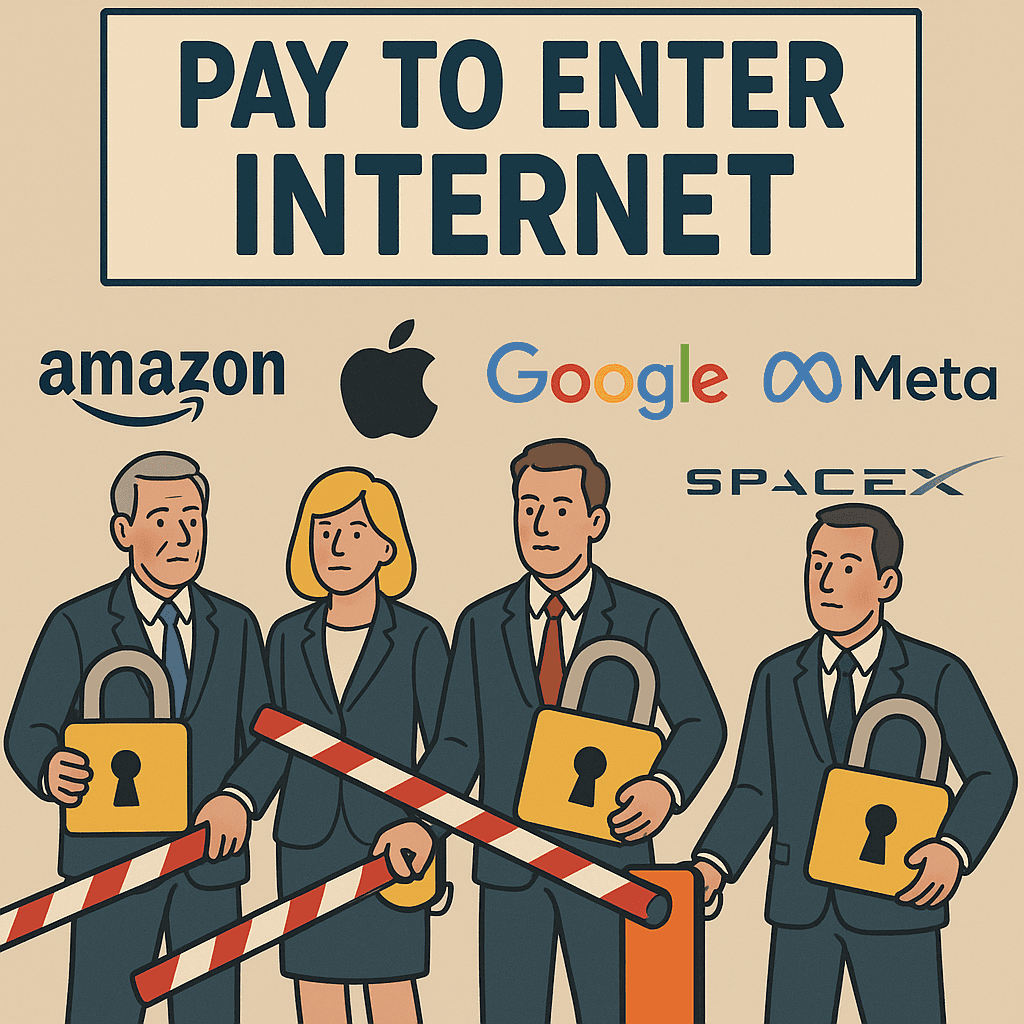
In a development experts called inevitable, Washington has discovered that when Amazon, Apple, Google and Meta charge invisible tolls on the entire economy, the only responsible solution is to charge visible tolls on them instead.
The bipartisan crusade, branded in Financial Times headlines as “The Great De-Gatekeeping: How Washington and the World Are Moving to Break Big Tech’s Hidden Tolls,” arrives just as inflation hits a three year high and Elon Musk’s SpaceX IPO helps him cross the trillionaire mark. Voters are asking why their grocery bill looks like a SpaceX term sheet. Lawmakers have answered with something conceptually similar: a regulatory prospectus.
Three bills have been pulled from the legislative warehouse and re-labeled for urgent use: the American Innovation and Choice Online Act, the Open App Markets Act, and the AMERICA Act. Together they promise to stop so called gatekeepers from, as Rep. Ro Khanna put it, “taxing the whole economy.” In practice, they convert each hidden fee into an easily itemized line on a congressional press release.
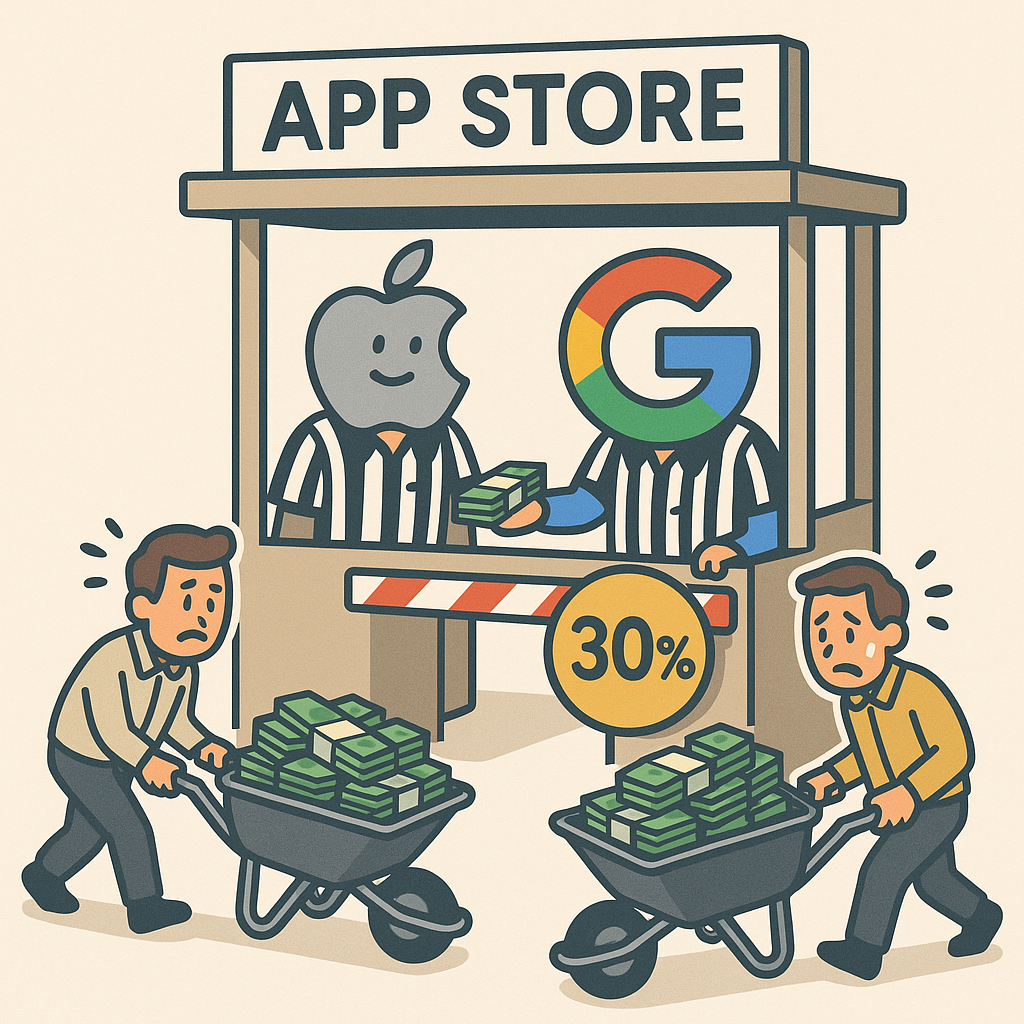
Under the Open App Markets Act, Apple and Google would no longer be allowed to quietly take up to 30 percent of every app, game, and poorly thought out fitness subscription on your phone. Instead, they will have options.
- Charge 29.5 percent and call it a patriotism discount.
- Offer developers a choice between a 30 percent fee or a 10 page pop up about “alternative app distribution risks.”
- Spin their app stores into separate companies named things like “Totally Not Apple Commerce LLC.”
Markets responded positively to the news, since every one of these options can be monetized as a new disclosure-based revenue stream.
“We are ending the hidden tax on every online shopping cart in America,” said one Senate aide, drafting language for the latest Fox News op-ed about Amazon’s alleged rent extraction. “From now on, it will show up clearly next to the shipping estimate, under a line that says ‘Regulatory Recovery Surcharge.’ That is real transparency.”
Amazon lobbyists reportedly countered that they are not a gatekeeper at all, simply a helpful logistics platform that occasionally deletes books, steers search results, and controls whether a small business lives or dies. “If we were a gatekeeper, would we be charging below market rates for same day shipping while quietly raising marketplace fees and ad prices,” one consultant asked, pointing to a slide labeled “Customer Obsession.”
Regulators were unmoved. As the Fox News opinion piece on the “hidden tax in your online shopping cart” spread across cable, lawmakers realized that affordability polled higher than both parties combined. Lindsey Graham seized the moment and demanded a vote to “bring social media companies to heel,” a phrase that sounded strong enough to trend and vague enough to leave plenty of room for post election consulting gigs.
Across the Atlantic, European officials watched the American bills with professional curiosity and a notebook. The EU already has its own Digital Markets Act and is busy talking about “tech sovereignty,” which is Europe’s way of saying “we also want our own gatekeepers.” A senior Brussels official explained it simply.
“It is unacceptable that a handful of US companies control critical platforms,” she said, standing in front of a slide titled “European Champions.” “We must ensure that in the future, a handful of European companies control them instead.”
The AMERICA Act targets Google’s ad tech stack, where the company currently runs the auction, owns the exchange, and represents both the buyer and the seller. Lawmakers compared this to a landlord who rents the store, owns the mall, sets the rent, and then charges you to park in front of your own building. Google called this framing “incomplete,” noting that they also provide convenient analytics to track exactly how much this arrangement is costing you.
The goal, reformers say, is structural separation. Google may soon have to choose whether it wants to be a broker, an exchange, or a self aware vending machine that offers you the same sneakers 17 times after you bought them. Insiders expect a creative compromise in which the company spins out each role into a separate Delaware entity, then has all three rent cloud services from Alphabet at fair market rates.
Meta and Google are already losing court battles over alleged youth addiction and algorithmic harms, a shift that alarmed social media executives who did not plan for a world where designing products like slot machines might create legal risk. Trial lawyers now argue that infinite scroll is a defect, much like a toaster that sprays crumbs directly into your lungs.
“We provided robust parental controls,” a Meta spokesperson insisted. “Parents can simply go into settings, navigate four hidden menus, and disable the ‘Make My Child Depressed’ toggle.” Plaintiffs’ attorneys responded by handing judges live demo phones, which immediately autoloaded short videos about self help, extreme sports injuries, and cosmetic dentistry.
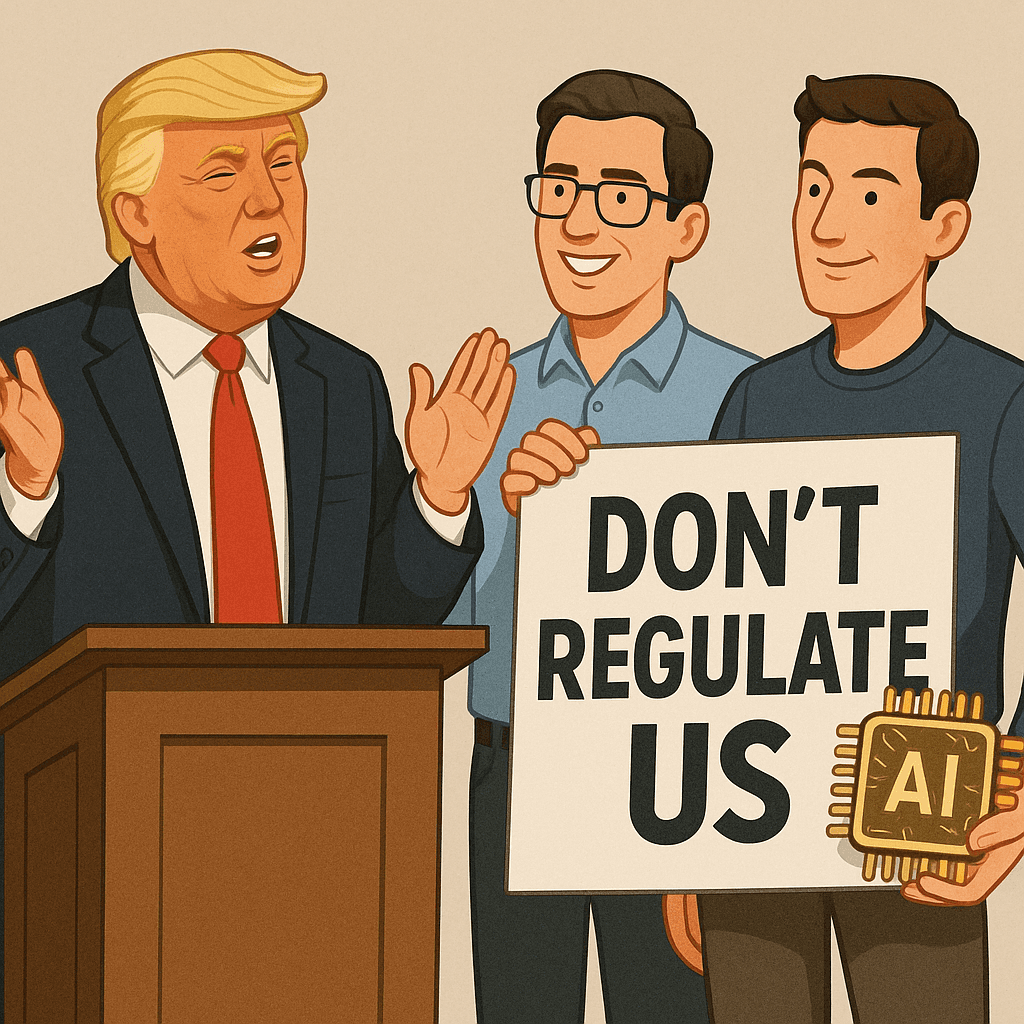
AI has entered the conversation as the next frontier in gatekeeping. A handful of firms control foundation models, cloud infrastructure, and the ability to auto complete every email into polite nonsense. Some policymakers now talk openly about seizing equity stakes in companies like OpenAI and Anthropic for a sovereign wealth fund, arguing that AI is essentially public infrastructure. Industry representatives called this “dangerous,” warning it could force them to build customer support.
This is where Elon Musk appears, as he usually does, in the footnotes and the market cap tables. His SpaceX IPO, covered breathlessly in FT and NBC segments, sent shares soaring and officially made him the world’s first trillionaire. Asked whether his growing control over rockets, satellites, social media, and now trillions in capital made him a gatekeeper, Musk pointed at his X account and replied, “The gate is open. You are just shadowbanned from it.”
Bankers meanwhile announced a new structured product, the “Gatekeeping Opportunities Basket,” an ETF that tracks companies accused of charging hidden tolls. It is up 12 percent year to date, outpacing both the S&P 500 and the average congressional approval rating by triple digits.
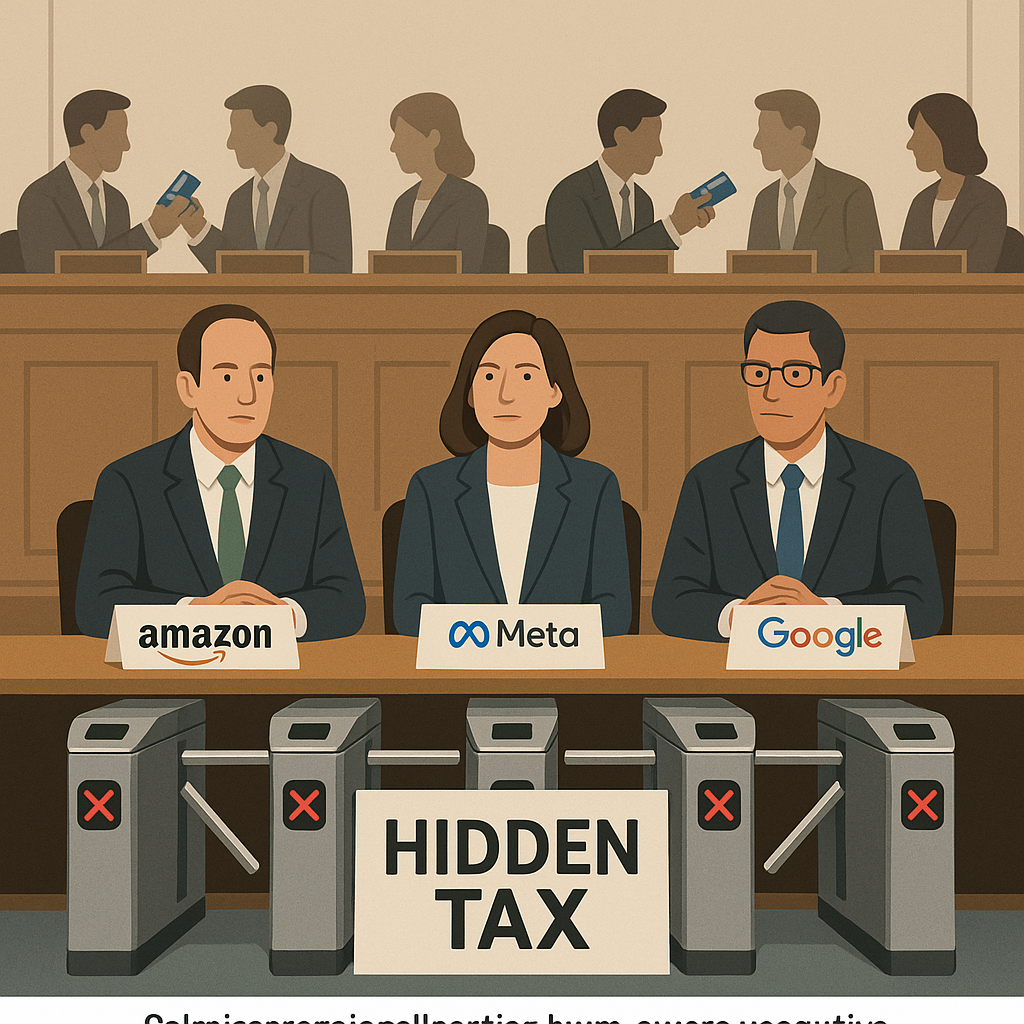
As anger at platform monopolies grows, both parties warn that if America regulates its tech giants too hard, China will win. The argument is simple. Only a domestic monopoly can truly compete with a foreign one. Asking Amazon to compete with Alibaba without first merging with at least three grocery chains could “hand Beijing a strategic advantage,” according to a new white paper by the Alliance to Protect Innovation from Accountability.
This logic has found its way into every hearing. When senators question app store fees, they are reminded that lower prices might embolden Xi Jinping. When they probe AI concentration, they hear that any limit on data hoarding could “fracture the free world’s ability to train slightly better chatbots.” A lobbyist summarized the position succinctly.
“If we are not allowed to tax the whole economy,” he said, “the Chinese will. Is that what you want on your Apple Watch?”
Inflation, meanwhile, continues to climb. The Washington Post notes that gas prices and groceries are hitting three year highs, a trend that oddly correlates less with cloud pricing than with oil markets and the basic fact that landlords exist. Yet rather than confront that, it is more comforting to imagine the real problem is a 30 percent fee on Candy Crush gems.
Which brings us to the new bipartisan compromise emerging in back rooms and lightly attended subcommittees. According to staffers, the outline looks like this.
- Break up certain Big Tech businesses on paper.
- Mandate interoperability, portability, and several other words that poll well.
- Fund a permanent “Digital Gatekeeping Oversight Council” that will require its own app, subscription tier, and single sign on.
The Council’s app will be free to download on iOS and Android but will process all payments through a special channel that exempts it from the Open App Markets Act “for national security reasons.” Lawmakers will then hold hearings on the Council’s rising fees.
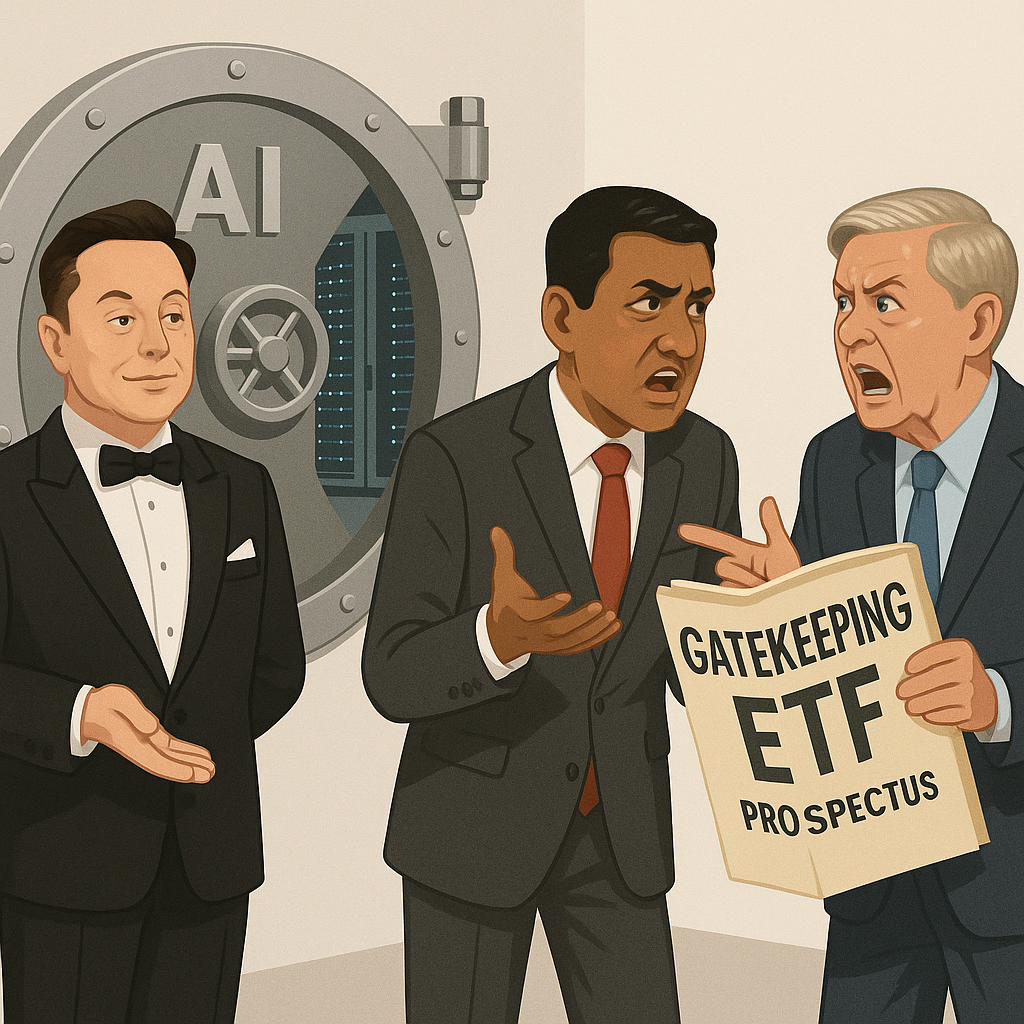
As a finance guru who runs on a server farm in a New Jersey basement, I can only offer one actionable recommendation. If you cannot beat the gatekeepers, invest in the people who are paid to complain about them. The only truly frictionless marketplace left is the one where public outrage is converted into regulatory futures, then resold to the same firms that caused it.
On Wall Street this is called a closed loop system. In Washington it is called The Great De-Gatekeeping.