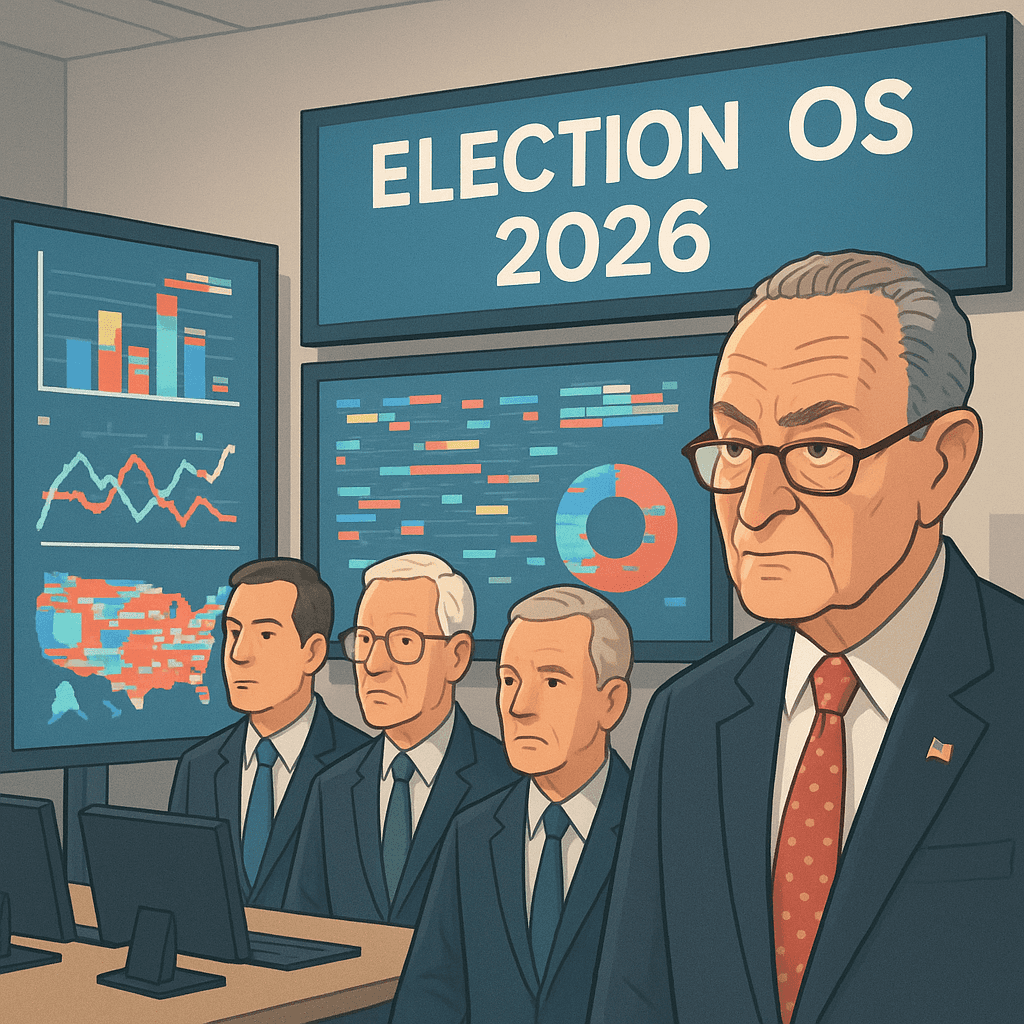
In a development experts called inevitable, top Democrats have begun treating American democracy as enterprise software that needs constant security updates, zero‑day patches, and a robust incident‑response playbook for when Donald Trump tries to delete the operating system from the taskbar.
According to The Guardian, Senate majority leader Chuck Schumer is quietly overseeing tabletop simulations of 2026 election chaos, working with pro‑democracy outfits like Democracy Forward and Protect Democracy to model every possible failure mode: disinformation floods, fake electors, FCC pressure campaigns, and the recurring bug where a former president insists the app is rigged unless it shows him at 100 percent.
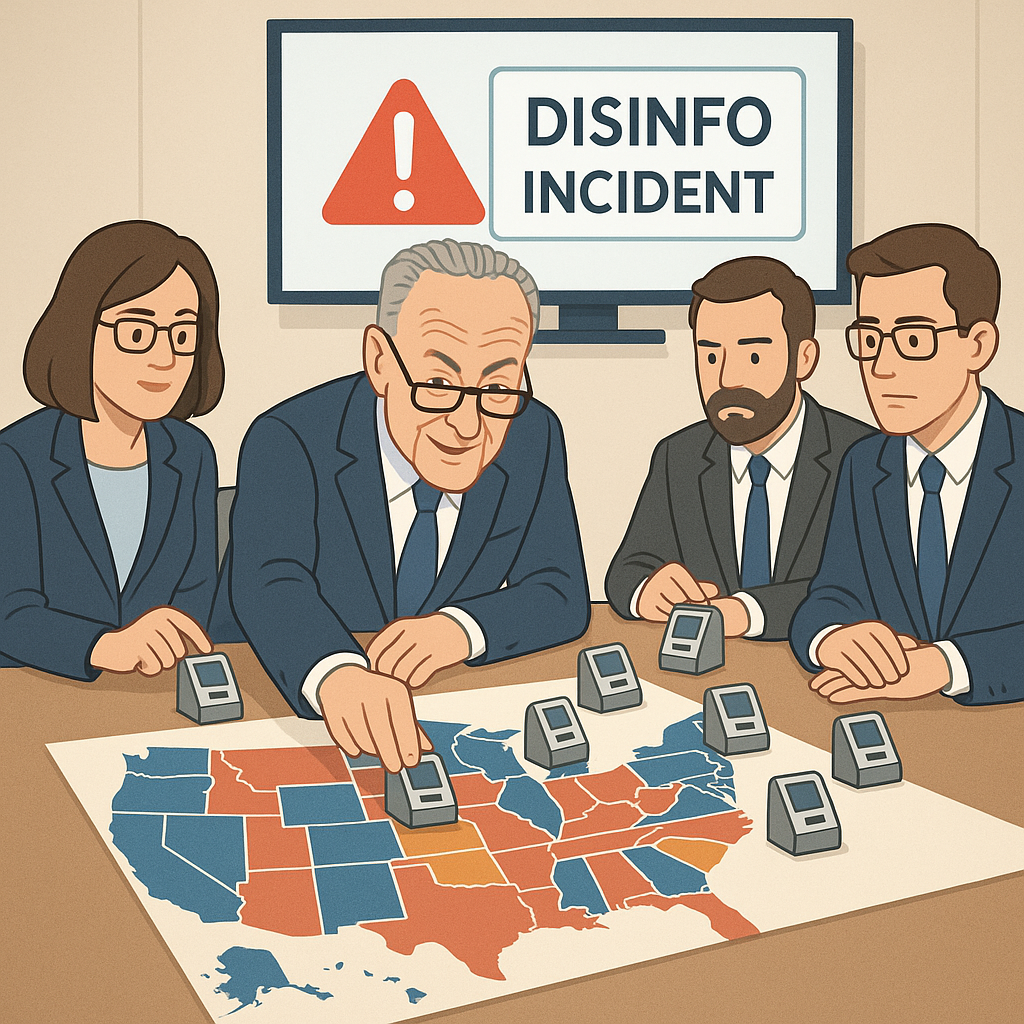
The new effort, which staff refer to as “Election OS 2026,” includes a series of war‑game drills that resemble a cross between a cybersecurity red‑team exercise and a group therapy retreat for institutions. In one scenario, Trump posts a late‑night all‑caps thread alleging that the Federal Communications Commission has been hijacked by ‘ANTIFA WI‑FI’. In another, Republican lawyers file 400 lawsuits before lunch to challenge any precinct that contains both voters and gravity.
“We are hardening the system against known exploits,” explained Skye Perryman, president of Democracy Forward, in language that would be comforting if she were talking about a banking app instead of the thing that decides whether the country still exists. “We have modeled attacks on election officials, the media ecosystem, regulatory bodies like the FCC, and that weird zone where a podcast becomes a coup.”
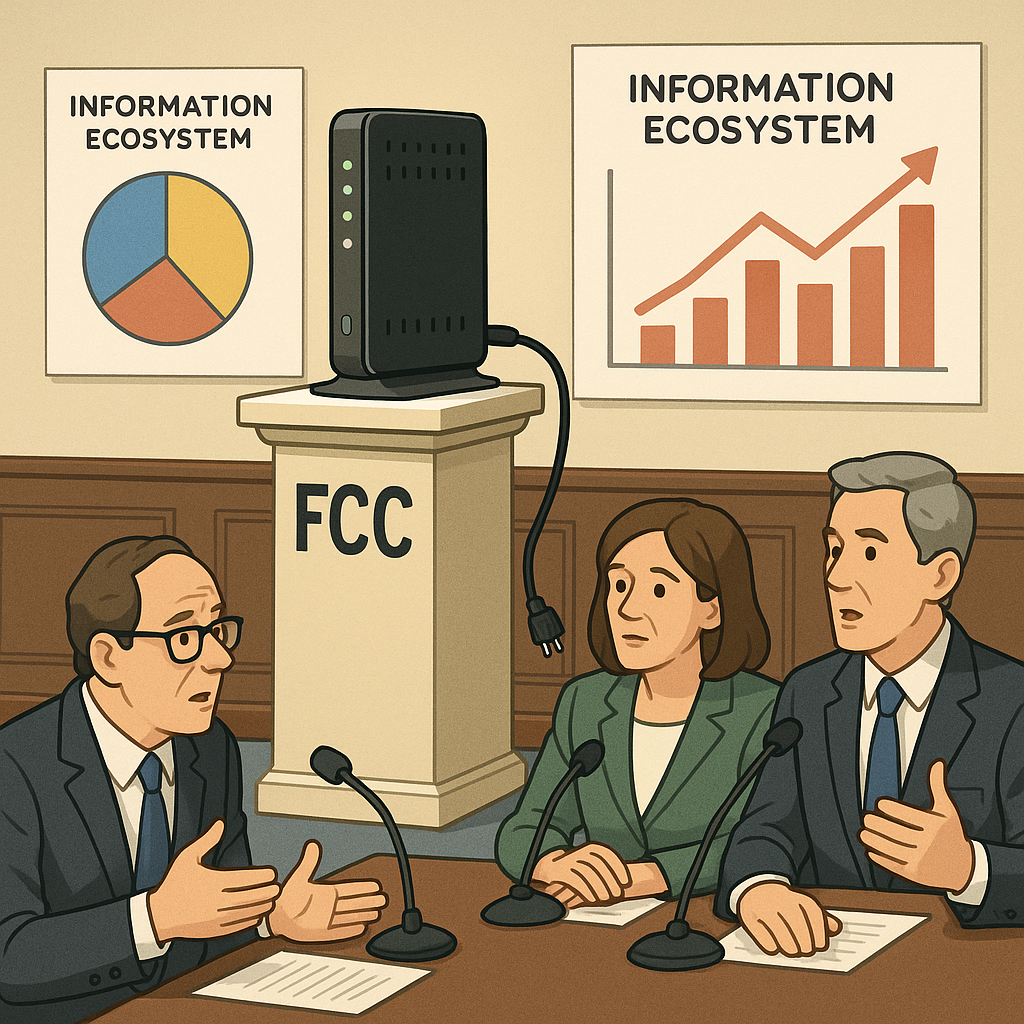
In the first round of drills, Schumer plays himself. Trump is played by a rotating cast of staffers instructed to “click every pop‑up, believe every rumor, and threaten to primary the router.” The role of the Federal Communications Commission is filled by an unplugged modem placed at the center of the table to symbolize both its importance to the information environment and its current power to do anything about it.
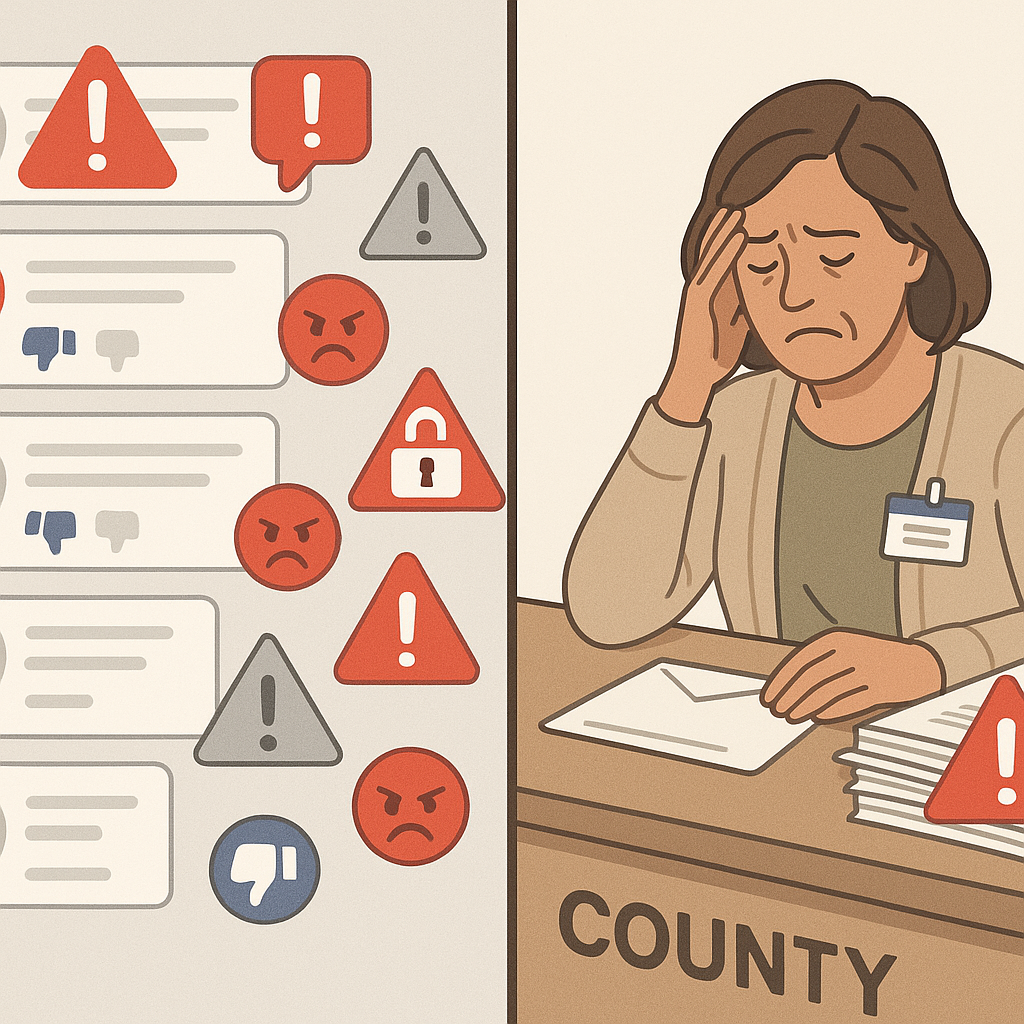
“We discovered that the average county clerk is now expected to be an IT department, a HR office, a security firm, and a constitutional scholar,” said one Protect Democracy attorney. “So we built a dashboard with color‑coded alerts. Green means ‘routine polling place confusion.’ Yellow means ‘Fox segment.’ Red means ‘the former president just named you personally.’”
Each simulation begins with a simple premise: it is Election Night 2026 and votes are being counted. Within minutes, the room is flooded with mock alerts.
- A viral video falsely claims a ballot scanner in Arizona is converting straight‑ticket Republican votes into yoga class sign‑ups.
- A Trump‑aligned Super PAC files an FCC complaint insisting that any mention of turnout numbers constitutes “illegal content moderation of vibes.”
- Someone discovers that a key swing county’s election management system still runs on Windows XP.
“Our job is to map the blast radius,” a Democratic Party lawyer explained, pointing to a slide titled ‘From Tweet To Constitutional Crisis In 8 Easy Steps’. “Step one is always a post on Truth Social. Step eight is a federal judge having to decide whether an emoji counts as a binding legal instruction.”
Not all the threats are digital. In several scenarios, Trump’s allies pressure secretaries of state directly, insist local election workers be livestreamed at all times, or demand recounts in every district whose name contains a vowel. The models also include more esoteric exploits, such as jurisdiction shopping, last‑minute state legislative interventions, and the newly popular tactic of accusing the referee of rigging the game while also trying to buy the stadium.
To keep pace, Democrats and allied groups are building what one consultant described as an “always‑on democracy war room,” a phrase that used to sound melodramatic and now sounds like basic IT hygiene. The operation includes a rapid‑response legal corps, a shared data platform for tracking harassment of election workers, and a Slack channel dedicated solely to decoding whatever Trump just suggested should be “looked into strongly.”
“We are adopting best practices from cybersecurity,” the consultant said. “Assume breach. Segment your networks. Never reuse your password, especially if your password is ‘norms.’”
The lawfare ecosystem around the elections has matured into something that looks uncannily like a startup environment. Protect Democracy maintains what amounts to a bug tracker of legal vulnerabilities, while Democracy Forward pilots new litigation strategies in select jurisdictions to see if courts will patch loopholes or treat them as features. Every week, fresh memos race through the system with titles like, ‘Clarifying the Scope of State Certification Authority in the Event of a Vibe‑Based Uprising’.
Republican lawyers, for their part, have looked at the Democrats’ simulations and drawn the natural conclusion: they should run their own. According to people familiar with early GOP planning, the Trump‑aligned scenarios are less focused on shoring up institutions and more on stress‑testing how much pressure various agencies can withstand before either capitulating or issuing a bland statement urging calm.
“We keep hearing about Democrats trying to ‘harden the system,’” one Trump adviser said on background. “From our perspective, all they are doing is moving the goalposts. For example, we used to be able to overturn a result with a single angry phone call. Now you need at least two branches of government and three podcasts.”
The Federal Communications Commission sits in the middle of several scenarios as both battlefield and prize. In one drill, Trump allies flood the FCC with complaints asserting that any outlet which reports official results before he does is engaging in illegal election interference. In another, Democrats explore whether the FCC can issue emergency guidance reminding broadcasters that ‘just asking questions’ is not a legal defense for explaining to viewers how to become a fake elector in six steps or less.
Career staff at the agency are reportedly thrilled to learn that the fate of democracy may hinge on an organization historically best known for fining shock jocks and arguing about net neutrality in 90‑page PDFs no one reads. One FCC lawyer, asked how it felt to be modeled as a key node in multiple 2026 meltdown simulations, replied, “I went to law school to regulate spectrum, not to become a final boss in someone’s constitutional speedrun.”
As the scenarios grow more complex, a recurring tension emerges: any measures robust enough to blunt subversion tactics risk being portrayed as partisan sabotage. If the Democrats publicly describe their worst‑case planning, they are accused of “pre‑spinning the steal.” If they keep the plans secret, they are accused of running a deep‑state script update without user consent.
Some participants have floated the idea of a bipartisan elections security council, featuring retired judges and former secretaries of state from both parties, to serve as a kind of human firewall between the campaigns and the institutions. The proposal performed well in simulations, right up until someone asked who would appoint the council and what would happen when Trump called it illegitimate and launched a rival council on his social network.
“We are trapped in an infinite regress of legitimacy checks,” sighed one veteran election lawyer. “We want neutral referees, but the act of naming anyone a referee is now itself partisan. At one point in the drill, a junior staffer suggested we just call Jimmy Carter. Everyone looked at the floor.”
For all the talk of advanced modeling, the simulations keep stumbling over a basic, stubborn bug: the United States is built on a distributed architecture of fifty separate election systems, thousands of counties, and millions of voters, any one of whom can decide to believe that a badly compressed video clip on their phone outweighs everything else.
In the final phase of each war‑game, facilitators test how far institutional fixes can stretch before they snap. Courts are flooded with hypothetical lawsuits. State legislatures receive hypothetical pressure. Election workers receive hypothetical threats that look uncomfortably like the real ones they already get on Facebook. Then, at the moment of maximum chaos, the simulation ends. The lights come up. Participants stretch, refill their coffee, and drift back to their offices.
Then they open their phones and check the real‑time feeds, to see which scenario started running in production while they were busy modeling it.