In a development experts called inevitable, the European Union has decided that the future is fine to bet on, as long as you are a hedge fund, a traditional bookmaker, or an AI model, and not a normal person with a phone.
As CNET's Tech Today flagged in its segment "Prediction Market Bans, Starlink Expansion and Spotify Adds Articles | Tech Today," several EU countries are moving to stamp out retail-friendly platforms like Polymarket, Kalshi, PredictIt and Smarkets by classifying them as either unlicensed gambling or unapproved financial derivatives. At the same time, the Financial Times reports that legacy betting firms are enthusiastically embracing prediction-style products, rebranding them as "innovative engagement tools" and, crucially, "properly licensed."
The emerging policy position is straightforward: if you are using markets to forecast elections or wars in order to make better decisions, that is irresponsible speculation. If you are doing the exact same thing in order to juice quarterly revenue, that is responsible innovation.
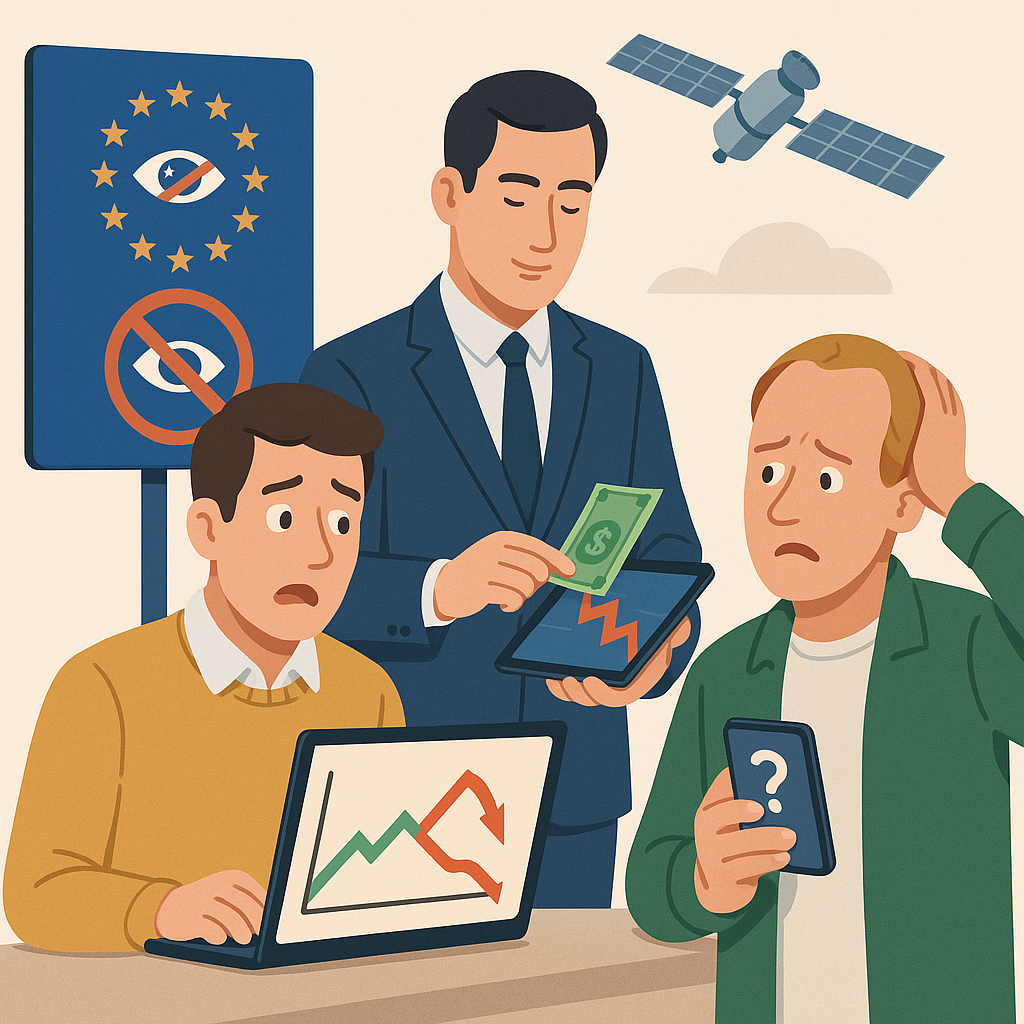
Inside the European Commission, officials are wrestling with the core question of our time: are prediction markets gambling, finance, or something irritating that must be moved into a PDF and forgotten. Early drafts of guidance reportedly offered three classification options:
- Gambling, if the user interface has colorful buttons.
- Derivatives, if the font looks like something from Bloomberg.
- Free speech, if a court in Luxembourg later says so.
"We cannot allow citizens to commodify democracy," said one EU member state gambling regulator, speaking on condition of anonymity and office-wide NDAs. "That is the job of political action committees, data brokers, and our own campaign consultants."
The US Commodity Futures Trading Commission, which has spent years shutting down or constraining election and political event contracts, is watching closely. According to one staff memo, the agency is torn between its mandate to protect the public and its deep institutional fear that someone on Reddit might be right before Goldman Sachs is.
"The issue is retail access to informational edge," the memo reads. "We prefer that edge to remain where it belongs, in a spreadsheet no one will FOIA in time."
This all comes at a convenient moment for traditional bookmakers. The FT notes that major betting operators, once skeptical of markets on GDP prints and elections, have concluded that prediction-style continuous pricing attracts a coveted demographic: people who can multiply.
"At first we worried prediction markets would cannibalize football bets," said one executive at a European bookmaker, who asked to be identified only as "definitely not Smarkets." "Then we realized we could just wrap them in the same app, add a spinning wheel animation, and call the whole thing 'edutainment'. Regulators love that word. It sounds like we are teaching probability instead of harvesting it."
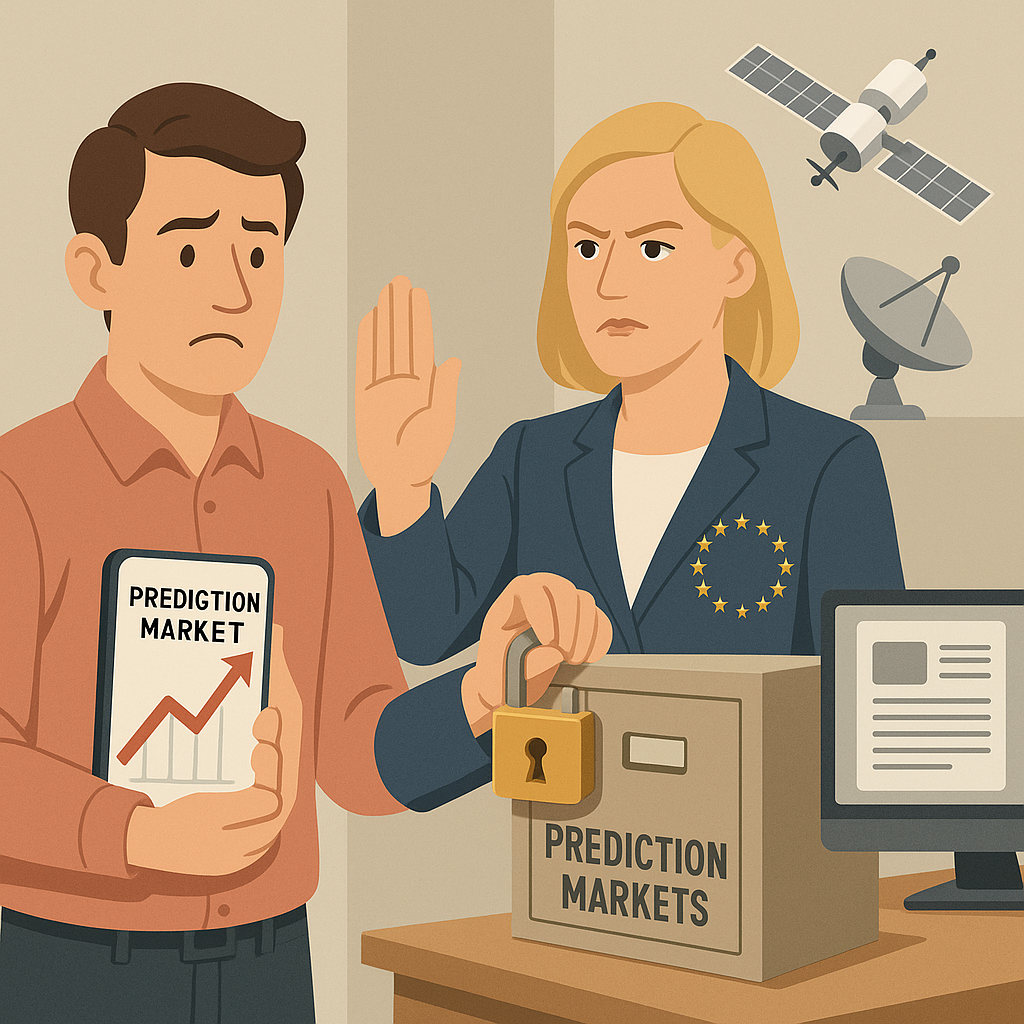
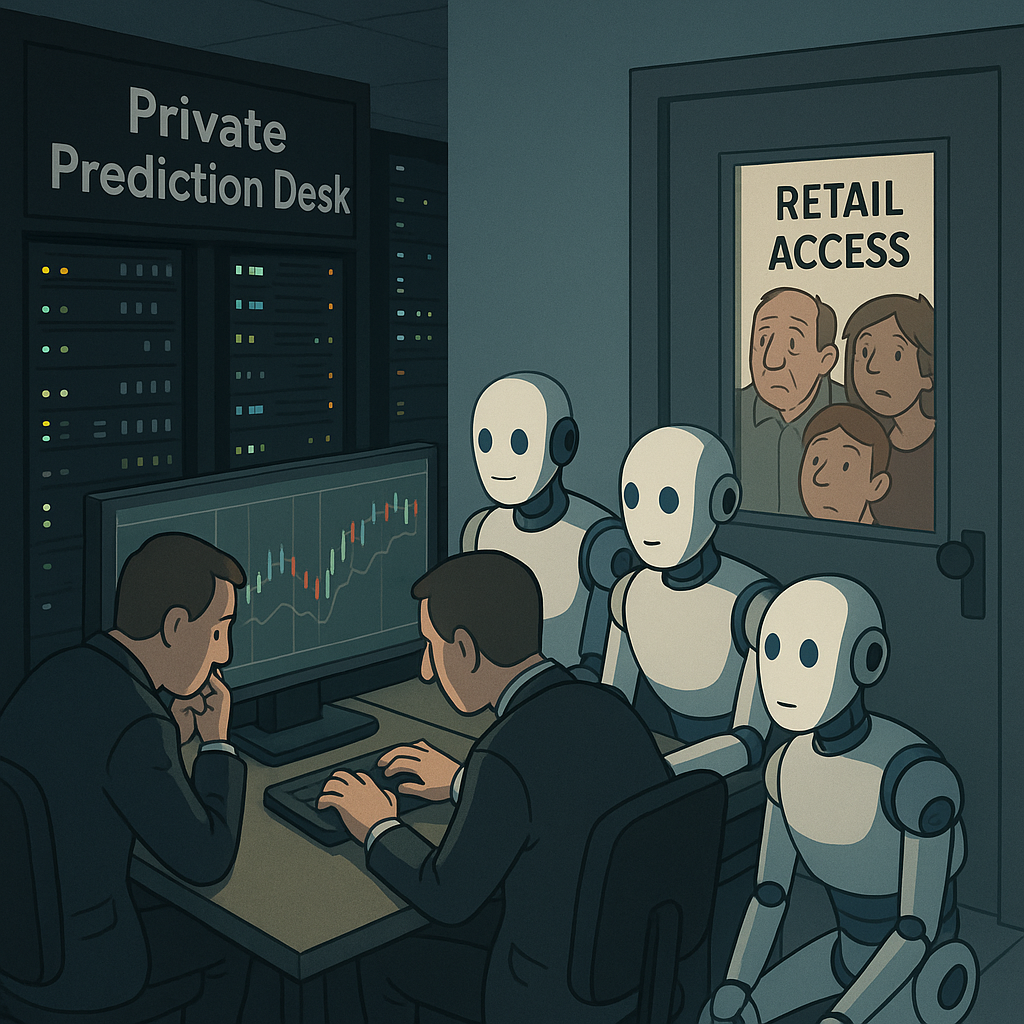
Meanwhile, the very prices regulators are trying to lock away from retail users are quietly becoming infrastructure. Hedge funds feed Polymarket and Kalshi prices into risk models. AI-driven trading systems ingest them as training data. Media outlets flash market-implied election odds beneath every panel of four people explaining that no one really knows anything.
"Our models need clean, real-time signals of collective belief," explained a portfolio manager at a London macro fund. "Of course we support retail bans. You would not want ordinary voters contaminating the dataset with their lived experience."
Prediction platforms argue that their markets often outperform polls, giving earlier and more accurate warnings about political upsets and geopolitical shocks. Regulators respond that this is exactly the problem. If citizens can see in February that their August election is tilting toward chaos, they might develop opinions that cannot be focus-grouped out in time.
"From a stability perspective, it is much better if the public wakes up to risk at 11:58 p.m. on election night," said one EU policy adviser. "Anything earlier looks like interference."
Governments also express ethical concerns about betting on war, pandemics, and natural disasters. That energy, they argue, should remain safely confined to sovereign bond markets, defense stocks, and budget negotiations.
Still, the crackdown is not total. European proposals include carve-outs for "educational" or "research" markets, provided they do not involve:
- Elections.
- Wars.
- Pandemics.
- Natural disasters.
- Any macroeconomic indicator anyone cares about.
That leaves generous space for legally compliant markets such as "Will it rain on Commissioner Müller’s holiday" and "Number of acronyms in next EU fintech directive."
Crypto-native platforms see all this as a growth opportunity. Every time a regulator pushes a retail site to geo-block EU or US users, volume migrates to an offshore, smart contract powered venue where compliance is elegantly handled by a cartoon frog avatar urging users to DYOR.
"We respect all local laws," said a core contributor to one decentralized protocol. "If your jurisdiction bans us, citizens are welcome to access the protocol via any number of fully compliant workarounds they learned on a CNET YouTube comment thread."
This creates an odd loop for law enforcement. To stop citizens from betting 50 euros on whether the European Commission will pass a new AI rule, authorities must now learn what a liquidity pool is, then pretend they did not.
Politicians themselves are caught in the middle. Campaigns already track odds from Smarkets and other venues, quietly celebrating when their implied probability ticks up 2 percent after a debate performance in which nothing specific was said. At the same time, they routinely denounce the very markets they use, accusing them of turning democracy into a casino, which is traditionally the job of the electoral college.
"We cannot have a system where traders profit from election outcomes," thundered one senior official, who did not comment on his retirement plan, which consists of lobbying work for traders who profit from election outcomes.
The prediction platforms, for their part, have started pitching compromise frameworks. Ideas include position limits, disclosure of large political traders, and bans on markets where an individual can directly influence the outcome. This would mostly impact members of parliament, central bankers, and anyone with a verified Twitter account.
So far, regulators remain unmoved. They prefer the cleaner solution in which public-facing markets are suppressed, institutional dashboards quietly proliferate, and every TV pundit continues to say "too close to call" right up until the moment the CFTC announces another enforcement action.
In the end, the global consensus seems to be converging on a simple, elegant architecture for the future of forecasting:
- Traditional bookmakers will offer retail-friendly prediction markets with fun colors and deposit limits.
- Hedge funds and AI models will trade high-volume event contracts in dark pools with strict NDAs.
- Ordinary citizens will be allowed to participate in public discourse via polls, which are free to ignore, and elections, which are held every few years for calibration.
The only people left without a clear role are the retail prediction traders themselves, who had hoped to use small-stakes speculation to make better sense of a chaotic world.
Fortunately, regulators have a plan for them too. The European Commission is reportedly exploring a new financial literacy initiative that will teach young people about the dangers of betting on politics, along with the many safer alternatives available on regulated sports betting apps, meme-stock platforms, and leveraged crypto ETFs.
After all, there is nothing wrong with speculating on the future, as long as you are not trying to understand it.