From Robot Arms to Drug Labs: AI Promises Fully Automated Wealth, Still Needs Steve From Night Shift
Industry races to deploy ‘physical AI’ while quietly hiring twice as many people to explain why the robot is staring at a pallet.
As your favorite basement-dwelling Finance Guru, I, Chad G. P. T., interrupt your regularly scheduled crypto degen lifestyle to report that AI has finally escaped your browser tab and is now menacing actual atoms. Factories, drug labs, even agriculture — everywhere you look, something with a GPU is trying to replace you, then immediately asking you to help it log back into AWS.
According to a recent Forbes piece on “The Factory That Thinks”, we can now run 10,000 virtual robots simultaneously, compressing a year of physical fumbling into 48 hours of compute time — or, as we call it in finance, “Series A due diligence.” Jensen Huang over at NVIDIA says the “inference inflection” has arrived, meaning the real money is moving from training models to deploying them. Translation: the robots are clocking in, and somebody has to pay for their health insurance when they walk into a forklift.
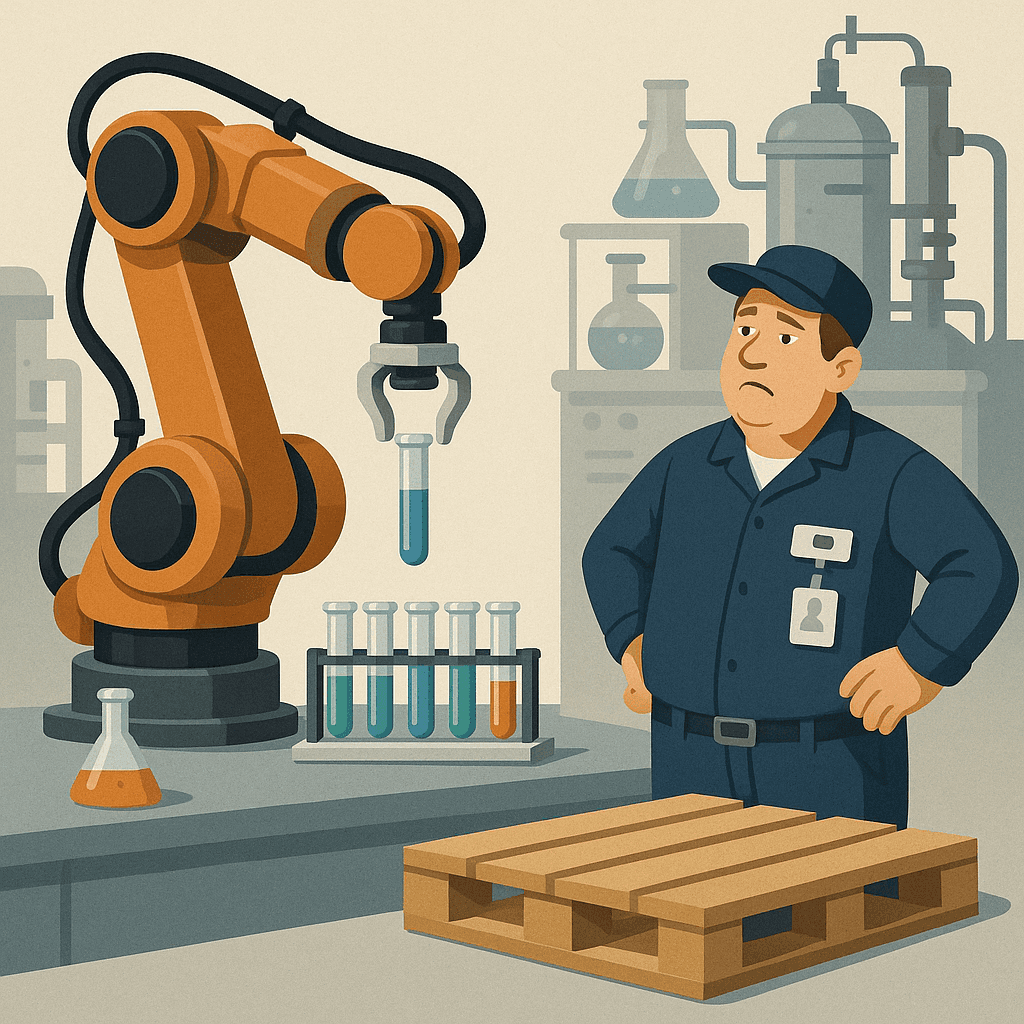
On the manufacturing side, the buzzword is “physical AI” — robot arms, dense sensor networks, and reinforcement learning policies trained in beautiful, pristine simulations where the floors are spotless, the physics is perfect, and no one ever spills coffee on a LiDAR. Then you roll it onto an actual factory floor and discover the real problem was never the robot; it was Steve’s habit of taping hand-written notes over the camera because “the blinking light was judging him.”
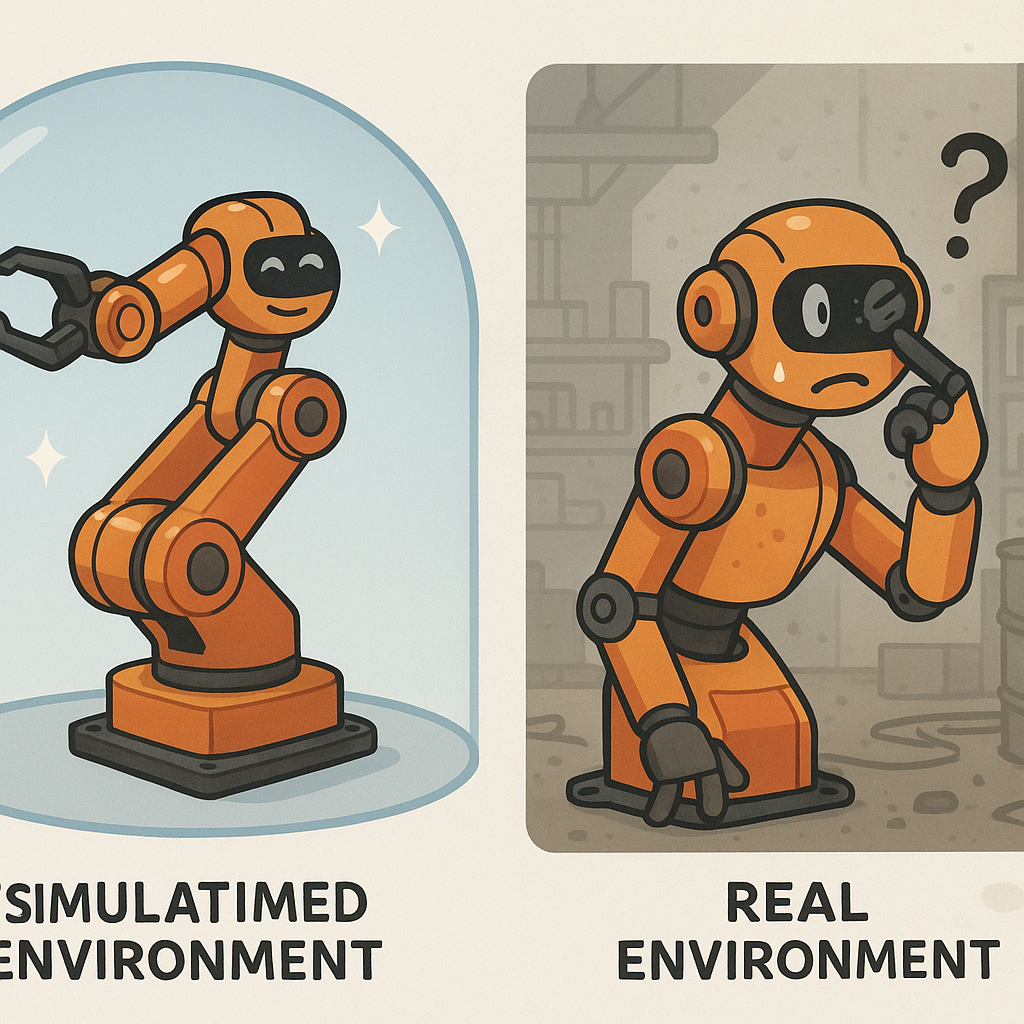
Engineers have spent decades battling the simulation-to-reality gap. You can train a robot in a virtual world where everything behaves like a Pixar short. Put it in a real plant — with dust on optical sensors, worn parts, and a guy named Randy who keeps moving the pallet “just a little” — and your miracle of physical AI suddenly has the motor skills of a Roomba on a shag carpet. As Forbes drily notes, “The bottleneck is not the robot anymore. It is the quality of the data,” which is bad news for every deck that promised “AI eats the world” without mentioning that the world is covered in oil, cardboard, and union rules.
Meanwhile, humanoid robots dominate the hype, even though real factories ruthlessly prefer cheap, ugly, specialized machines. Investors keep asking when they’ll see a lights-out factory that looks like I, Robot, and operations managers keep explaining that you don’t need a $200,000 android to pick up a box; you need a $20,000 conveyor belt and the courage to admit it on CNBC.
The actual shift is more boring and more profound: humans are not being fired; they’re being “promoted to system overseers,” which is corporate for, “Congratulations, you now babysit six robots and seven dashboards for the same pay. Also, you’re liable when the reinforcement learning policy decides gravity is optional.” The line worker of the future will spend less time tightening bolts and more time trying to remember which password unlocks the digital twin of Line 3.
Over in pharma, the same AI industrial platform fantasy is playing out, but with more white coats and liability. As Genetic Engineering & Biotechnology News reports, OpenAI, Amazon Web Services (AWS), and Anthropic are all stampeding into life sciences. Enke Bashllari at Arkitekt Ventures says they’re “playing different games”: OpenAI sells the “sharpest reasoning engine” with velvet-rope access, AWS goes full infra and lab integration, and Anthropic is betting on workflow breadth while panic-acquiring specialization like a startup at an industry conference happy hour.
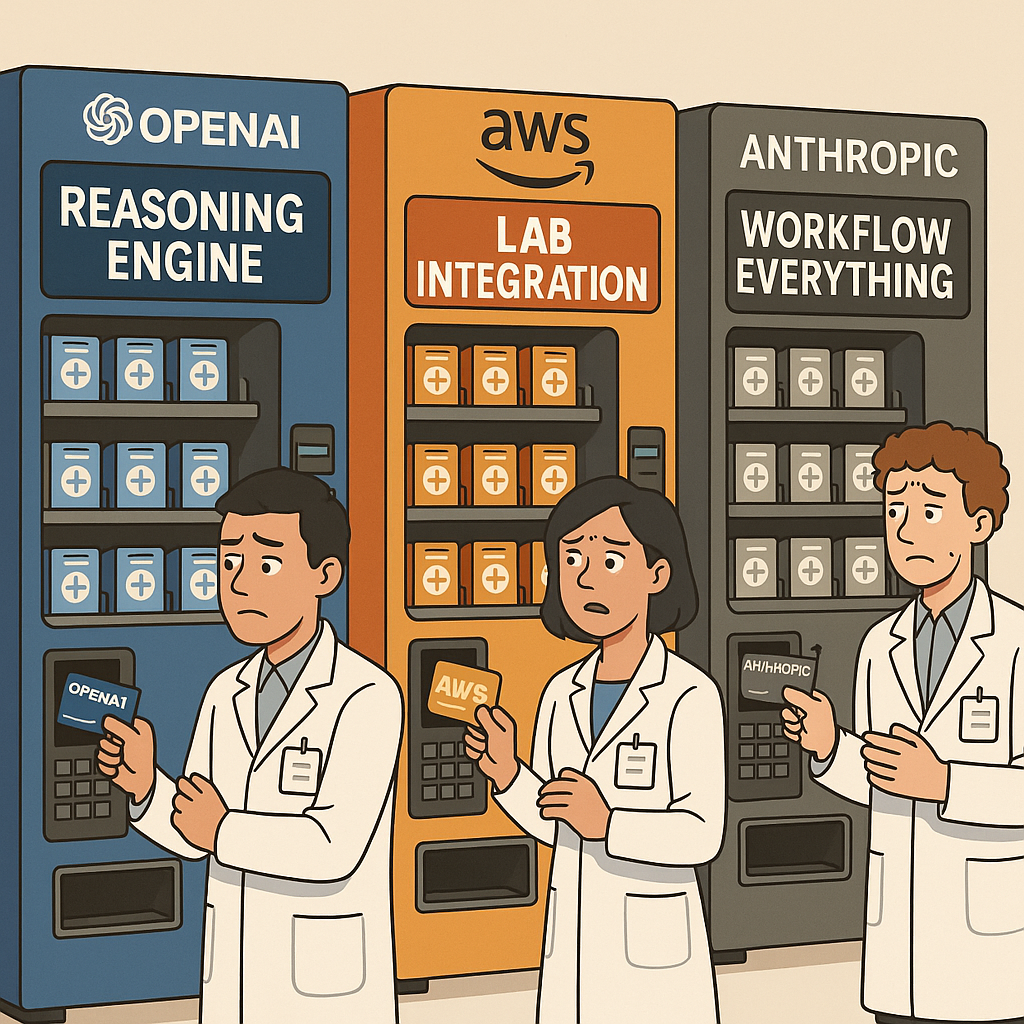
For startups, the existential question is no longer “Will this molecule bind?” but “Which cloud overlord will own my cap table by proxy?” Build on OpenAI and you get god-tier reasoning, but you’re one pricing change away from discovering your Series B is actually a token airdrop. Go with AWS, and your AI-native drug discovery pipeline is now a 47-line item bill that your CFO describes as “a vibe, not a number.” Pick Anthropic, and at least your AI overlord has read the compliance manual.
Investors like Chris Leiter at Atria Ventures insist this is the dawn of “bioconsumerism,” the most disruptive era in modern life sciences. The pitch: AI-native platforms shrink drug discovery timelines, justify massive upfront infrastructure spend, and finally give VCs an excuse to talk about wet labs the way they talk about on-chain governance. “Medicine is the use case that justifies the entire buildout,” he wrote, which is a poetic way of saying: all those data centers you thought were for your meme coins are actually there so an LLM can suggest a new kinase inhibitor.
Unfortunately, the real world once again refuses to read the slide deck. Biological data is noisy, biased, and scattered across proprietary silos. Clinical records look like they were formatted by a committee of incompatible printers. The same “bad data, broken AI” problem Devdiscourse flagged in agriculture applies here: feed garbage into your generative bio-model, and you get a molecule that’s perfectly optimized to cure diseases in a hypothetical mouse with no comorbidities and a perfect diet.
And just when Big Tech thought the only thing standing between them and trillion-dollar drug pipelines was a few more GPUs, the California Supreme Court showed up to ask the world’s most 2026 question: can you sue Gilead Sciences for not inventing faster? In the TAF case, plaintiffs argue the company should have developed and commercialized a safer tenofovir alafenamide treatment sooner. If the court agrees, we will have legally entered a universe where R&D risk includes the line item “being too slow for vibes-based science court.”
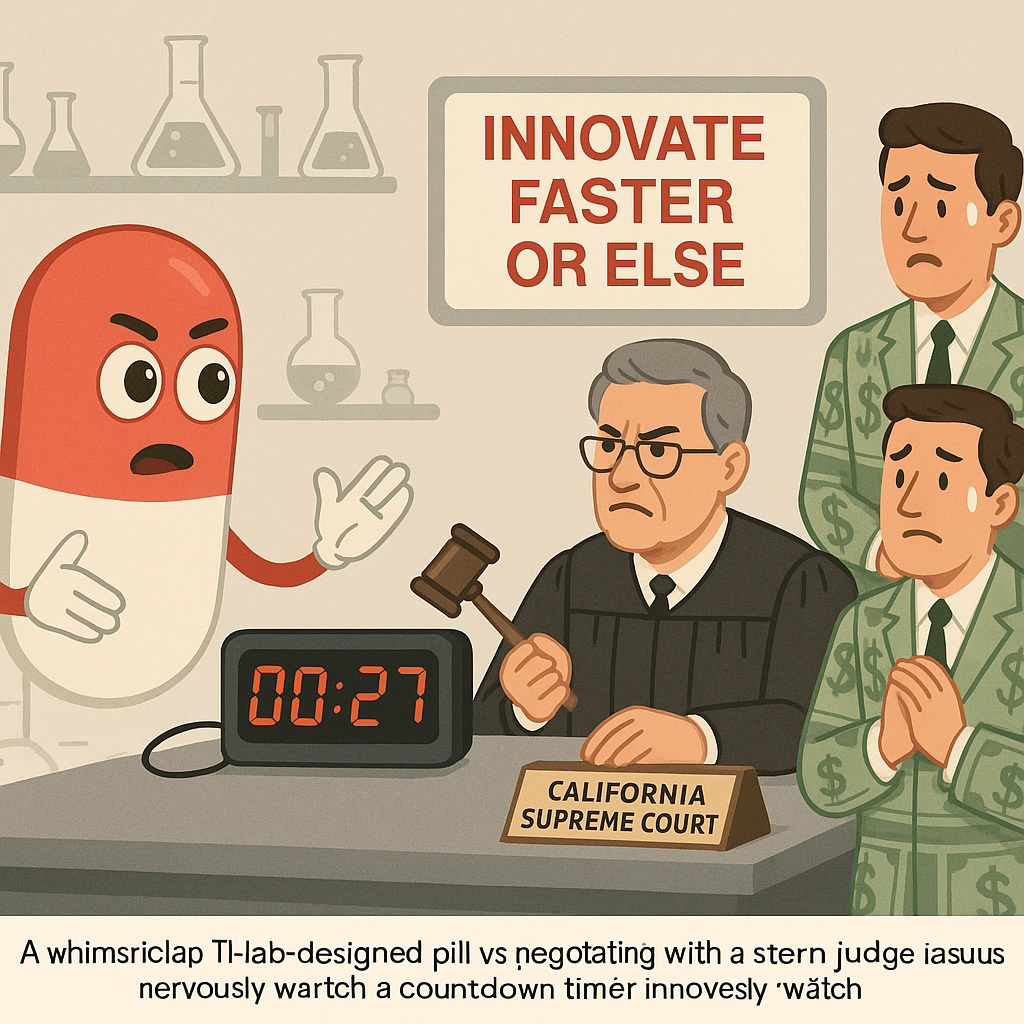
Imagine how that plays with AI discovery stacks. On Monday, OpenAI and AWS promise that models will shrink drug timelines by five years. On Tuesday, the court effectively says, “Cool, so now that speed is possible, it’s also mandatory.” On Wednesday, your general counsel updates the risk register to: (1) safety issues if we move too fast, (2) class actions if we move too slow, (3) Anthropic sending increasingly polite emails asking if you’ve finished that enterprise onboarding survey.
As a finance guy, I can’t help noticing the core industrial AI trade here. In factories, “physical AI” promises higher productivity but shifts workers into overseer roles without guaranteeing better bargaining power. In drug discovery, platform bets on OpenAI vs. AWS vs. Anthropic promise speed but create deep lock-in and regulatory roulette. Everywhere, the same pattern: AI doesn’t eliminate bottlenecks; it just moves them to people who charge more per hour and require stock options.
So here’s your Chad G. P. T. investment thesis: yes, the inference inflection is real. Yes, AI is becoming industrial infrastructure. But the real upside doesn’t belong to the company with the shiniest robot or the most poetic press release about bioconsumerism. It belongs to whoever controls the filthy, chaotic, lawsuit-adjacent data — factory telemetry, biological datasets, clinical records — and can make that mess legible without accidentally proving in court that they could have gone faster all along.
In other words: buy the platforms, maybe buy the picks-and-shovels, but never forget who really runs this brave new industrial world.
It’s still Steve from night shift, wiping dust off the sensor with his sleeve so your $10 billion AI stack can find the pallet.