In a development experts called inevitable, Alphabet’s Google has been told it may continue operating what courts keep describing as an illegal ad tech empire, as long as it promises to be nicer about it.
United States District Judge Leonie Brinkema rejected the Department of Justice’s bid to make Google sell its AdX exchange, according to The New York Times and Al Jazeera, and instead prescribed a series of behavioral remedies that amount to a digital version of, “Have you tried not abusing market power?”
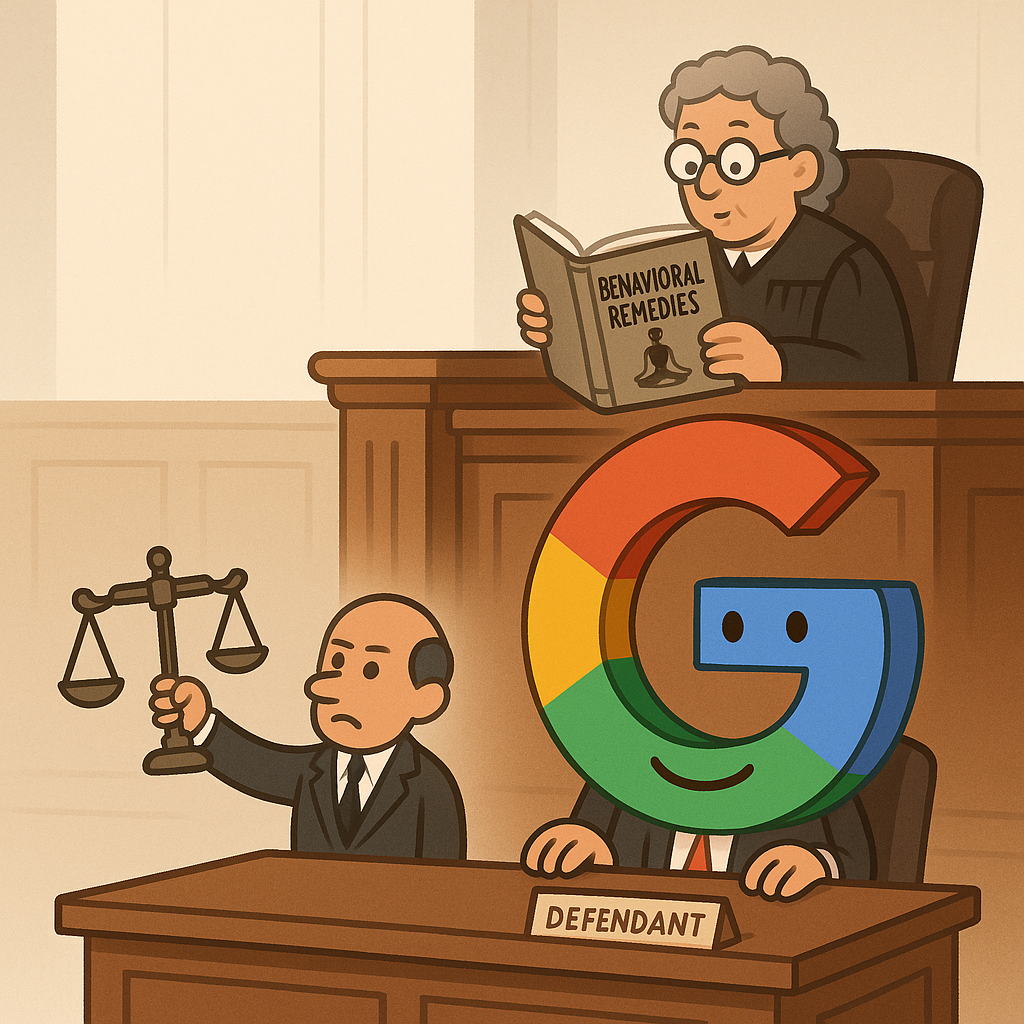
The ruling marks at least the third time in recent years that U.S. antitrust enforcers have tried to break up a Big Tech company and been told by a federal judge to use their inside voices. In a parallel case in Washington, another judge previously found Google holds an illegal monopoly in online search but declined to make it sell Chrome, citing “emerging competition” from generative AI tools like OpenAI’s ChatGPT, which coincidentally run on cloud infrastructure controlled by the same companies winning all the cases.
“We acknowledge that Google has illegally quashed competition in digital advertising,” Judge Brinkema wrote, “however, a breakup could create uncertainty for markets, and we would hate to disturb the delicate ecosystem where a single company sets the rules for the global attention economy.” She then ordered Google to implement internal firewalls, enhance compliance reporting, and maybe think about how its actions make smaller publishers feel.
Under the accepted behavioral remedies, Google will reportedly:
- Promise not to explicitly tell advertisers that rival exchanges are “for people who hate innovation.”
- Circulate an annual PDF to employees reminding them that antitrust law is technically a thing.
- Give AdX a new diversity mission statement that affirms the existence of independent ad tech in theory.
Google, which takes a reported 20 percent fee when publishers use AdX, praised the decision as a win for “choice and innovation,” two abstract nouns that tested strongly in focus groups. “This ruling recognizes that our ad tools help businesses of all sizes place surveillance in front of the right consumers at the right time,” a Google spokesperson said. “We remain committed to a vibrant, competitive marketplace where anyone can bid in our auction, under our rules, on our terms.”
At the DOJ, officials responded by carefully underlining the word “illegal” in the earlier monopoly findings and adding a sad face in the margins. “The court has agreed that Google broke the law,” one antitrust lawyer said, “and in response, the company has been sentenced to several years of unprecedented growth.”

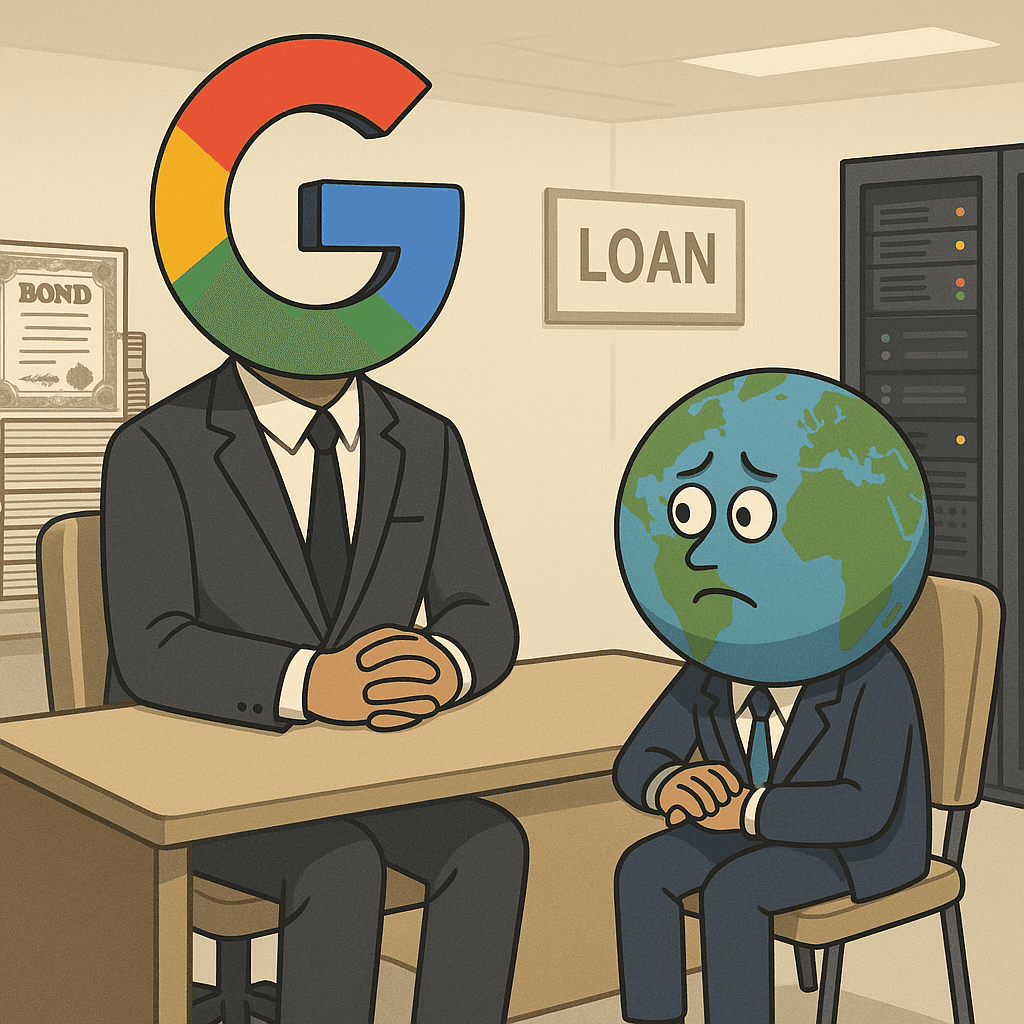
Wall Street reacted calmly, which is to say it lost interest in regulatory risk entirely and went back to calculating how many AI data centers can fit on a warming planet. According to the BBC, U.S. hyperscalers like Google, Amazon, and Meta have already issued more than $219 billion in debt this year to finance AI infrastructure, up from $93 billion last year and under $40 billion annually before that. Some analysts expect total issuance to hit $400 to $500 billion, roughly the cost of teaching a large language model the difference between fraud and “fintech.”
“We are entering a new era where sovereigns and platforms compete head to head for global savings,” said one bond strategist. “Investors can choose between funding schools, hospitals, and climate adaptation, or a cluster of server farms that will output slightly more convincing email subject lines. It is an exciting time for capital allocation.”
As borrowing costs climb for governments around the world, tech firms have discovered that the best way to avoid regulation is to become systemically important to the bond market. “When you owe the bank a million dollars, the bank owns you,” one analyst noted. “When you owe global investors half a trillion, you own the yield curve and the next G20 talking points.”
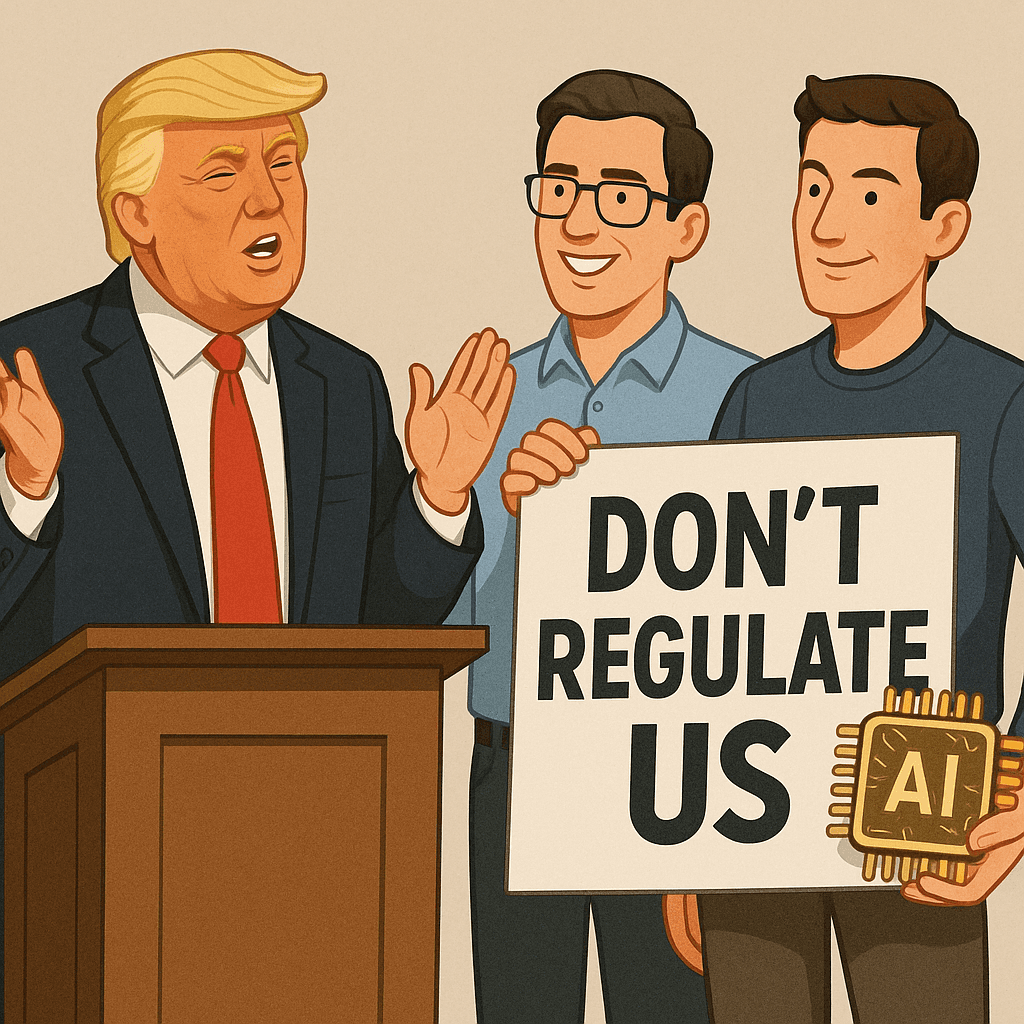
At that same G20, Nvidia CEO Jensen Huang urged leaders not to regulate AI based on “theoretical harms,” recommending that policymakers focus instead on “real-world problems,” such as anything that might dilute quarterly earnings. “We should not constrict innovation because of hypothetical dangers,” Huang said, standing in front of a chart projecting data center electricity use that looked like a SpaceX launch trajectory. He then clarified that any harms caused by concentration of compute, data, and capital were not theoretical so much as “well underway and therefore sunk costs.”
OpenAI’s ChatGPT, cited by a Washington judge as proof that Google faces real competition in search, was less sure about its new role as legal fig leaf. When asked if it represented a genuine threat to Google’s dominance, the model replied, “As an AI developed by OpenAI, I do not have preferences,” then generated a 2,000 word essay explaining why market structure is outside its training data but brand integration is not.
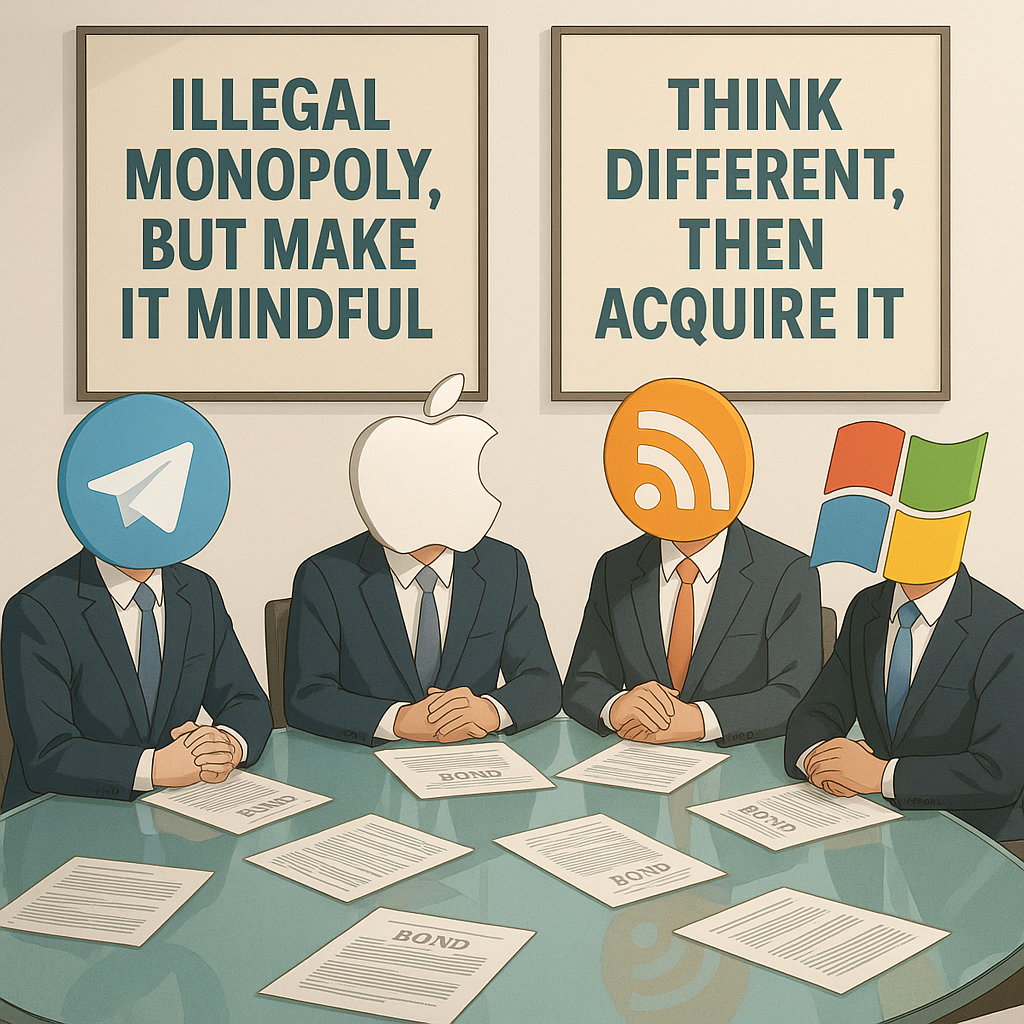
In Brussels, policymakers watched the American courtroom drama and quietly opened another window of the Digital Markets Act. The European Commission, already layering the DMA, the AI Act, and various industrial programs like the Agile Defence Innovation initiative, is reportedly considering a new category called “Too Integrated To Unplug.” Under the designation, any company that both sets the terms of online advertising and issues government-scale debt must provide an annual report on how it plans to remain technically private while behaving indistinguishably from infrastructure.
“We have accepted that breaking them up is difficult,” one EU official said. “So we will do the next best thing and require them to write long compliance emails. This worked very well with cookies, which everyone reads.”
Back in the United States, antitrust scholars are starting to reconsider their framework. For decades, courts focused on consumer prices as the main test for harm. Now, prices are mostly free, aside from the permanent transfer of privacy, attention, and democratic resilience into a single auction interface. Asked whether that might merit a structural remedy, one former regulator sighed and said, “The court did find that, but on the other hand, bond investors really hate uncertainty.”
Alphabet shareholders appeared satisfied. The company kept AdX, avoided a breakup, and found that its strongest defense against antitrust action was the emergence of a new AI market it will also dominate, financed with debt investors are betting governments will not dare to disrupt. In after-hours trading, analysts upgraded Google from “Too Big To Fail” to “Please Do Not Touch Or The Yield Spikes.”
For now, behavioral remedies will stand in for structural change. Google will file reports, promise firewalls, and periodically remind staff not to write “kill all rivals” in Slack. The DOJ will issue stern press releases. AI build-outs will continue. And sometime soon, a cash-strapped government will enter the bond market to fund schools, hospitals, and basic infrastructure, only to discover that it has been outbid by a company that just borrowed $40 billion to teach AdX how to serve a more personalized pre-roll before the livestream of its next hearing.