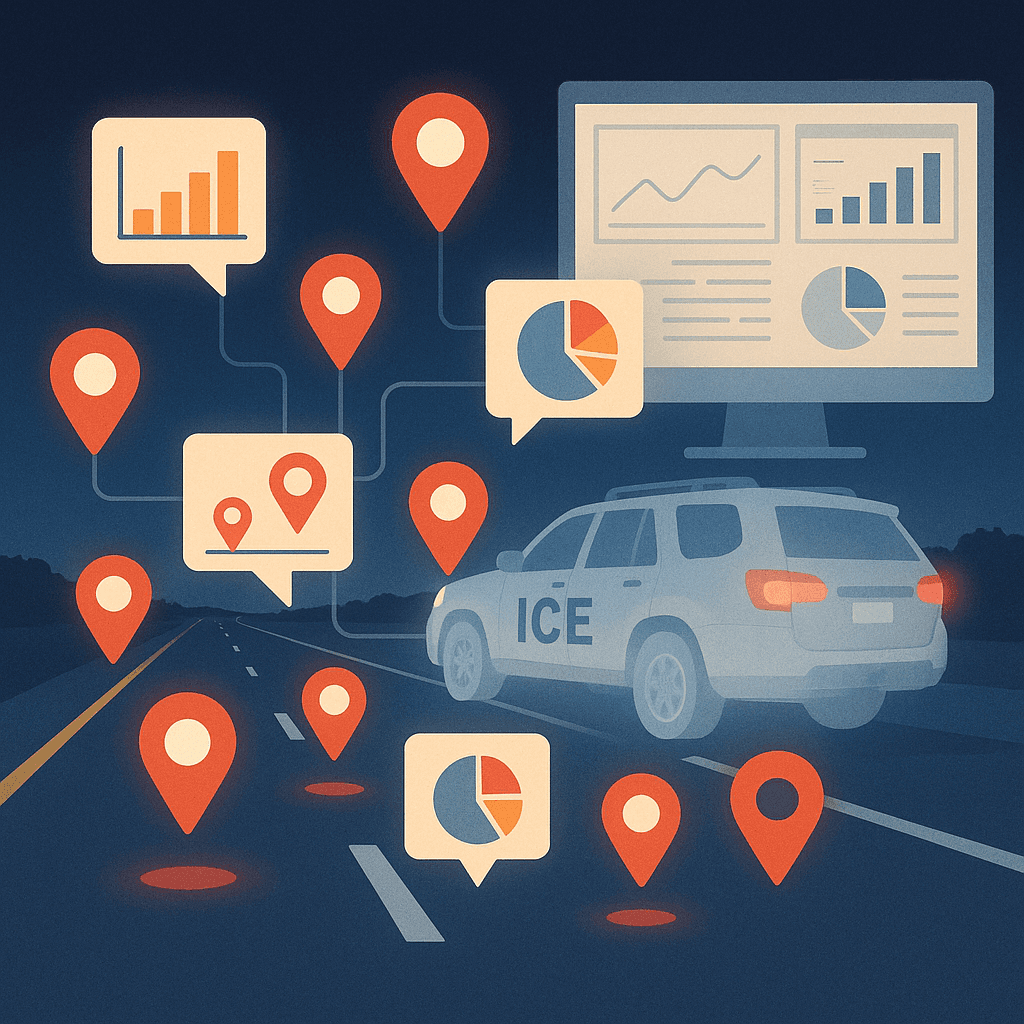
In a development experts called inevitable, U.S. Immigration and Customs Enforcement announced it will largely stop pulling people over and start policing highways the modern way: by quietly following everyone, everywhere, all at once, like a landlord who just discovered Ring cameras and three new revenue streams.
The internal directive, reported by The New York Times in “After Fatal Roadside Shootings, ICE Is Forced to Rethink Policing on the Highway,” formally pauses most vehicle stops by ICE officers after agents fatally shot motorists in separate incidents in Maine and Houston. Publicly, the agency framed the shift as a sober review of officer safety and use of force. Privately, officials described it as an overdue pivot to what really matters in 2026: scalable surveillance infrastructure with strong quarterly metrics, easily digestible for a deputy secretary staring at a Friday afternoon dashboard and an untouched salad.
“Traditional traffic stops are high-risk, low-yield, and incredibly analog,” said one Department of Homeland Security official, speaking on background from a conference room filled with product roadmaps, color coded risk matrices, and a slowly dying ficus. “We are replacing them with a seamless omnichannel engagement platform for noncitizen lifecycle management. Also fewer people will be shot, which is directionally aligned with our brand refresh.”
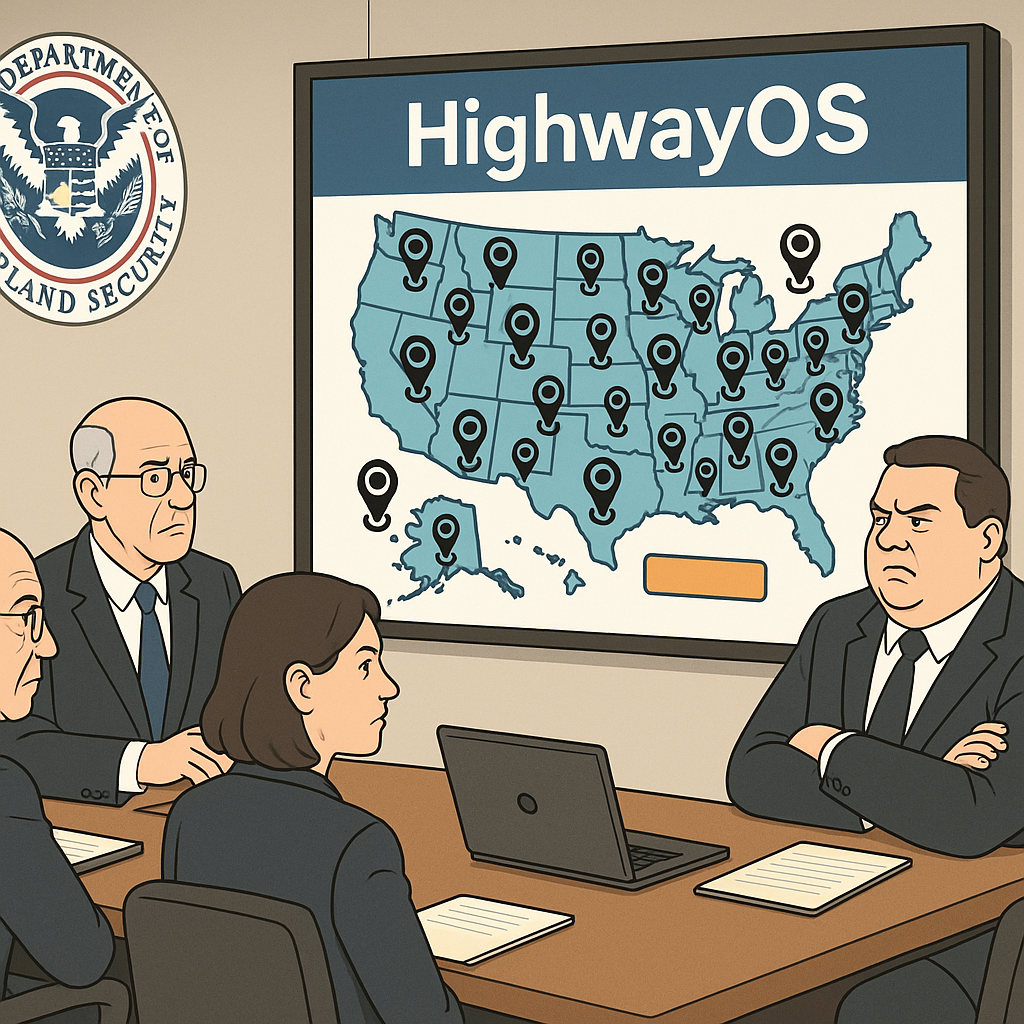
The move was triggered by two specific deaths, in Maine and Houston, that generated not just protests from immigrant rights organizations and police reform advocates, but something far more urgent in Washington: legal exposure. With civil rights and wrongful death litigation looming, DHS lawyers reportedly gathered ICE leadership, plugged a laptop into a projector, and opened a PowerPoint titled “What If We Did Literally Anything Else.” Slide two was an enlarged copy of the phrase “pattern or practice investigation” highlighted in red, next to a clip art gavel the general counsel refused to remove and a stock photo of a judge clearly cropped from a hotel brochure.
Under the directive, according to officials briefed on it, ICE will suspend most vehicle stops that begin with minor violations or vague “intel hits.” Exemptions remain for cases involving immediate public safety threats, human trafficking, or anyone who, in the words of one field supervisor, “looks like bad optics on bodycam.” Instead of pulling people over, the agency will lean harder on license plate readers, state databases, workplace raids, and what one internal email proudly called “enhanced digital presence in immigrant communities.” In practice, that means ICE has accidentally entered the tech sector and is already asking which unicorns have government rates.
The agency is already piloting a platform some staffers are calling HighwayOS. Built on a patchwork of vendor contracts, local police feeds, and whatever Border Patrol forgot to password protect, HighwayOS promises “real time situational awareness across the asphalt continuum.” A demo shown to reporters featured a U.S. map lit up with icons for vehicles, data hits, and the occasional flashing red skull for “elevated risk of congressional hearing,” plus one inexplicable dancing hot dog icon no engineer would claim.
“Think of it as Waze,” said an ICE technology contractor, “if Waze were designed by liability insurers and people who just found out about civil rights last Thursday.”
According to internal documents reviewed by no one who felt good afterward, HighwayOS will integrate:
- License plate reader feeds from cooperating states like Texas and Florida
- Data from local partners such as the Houston Police Department and certain sheriffs in Maine
- Facial recognition tools trained on DMV photos, DMV lighting, and DMV despair
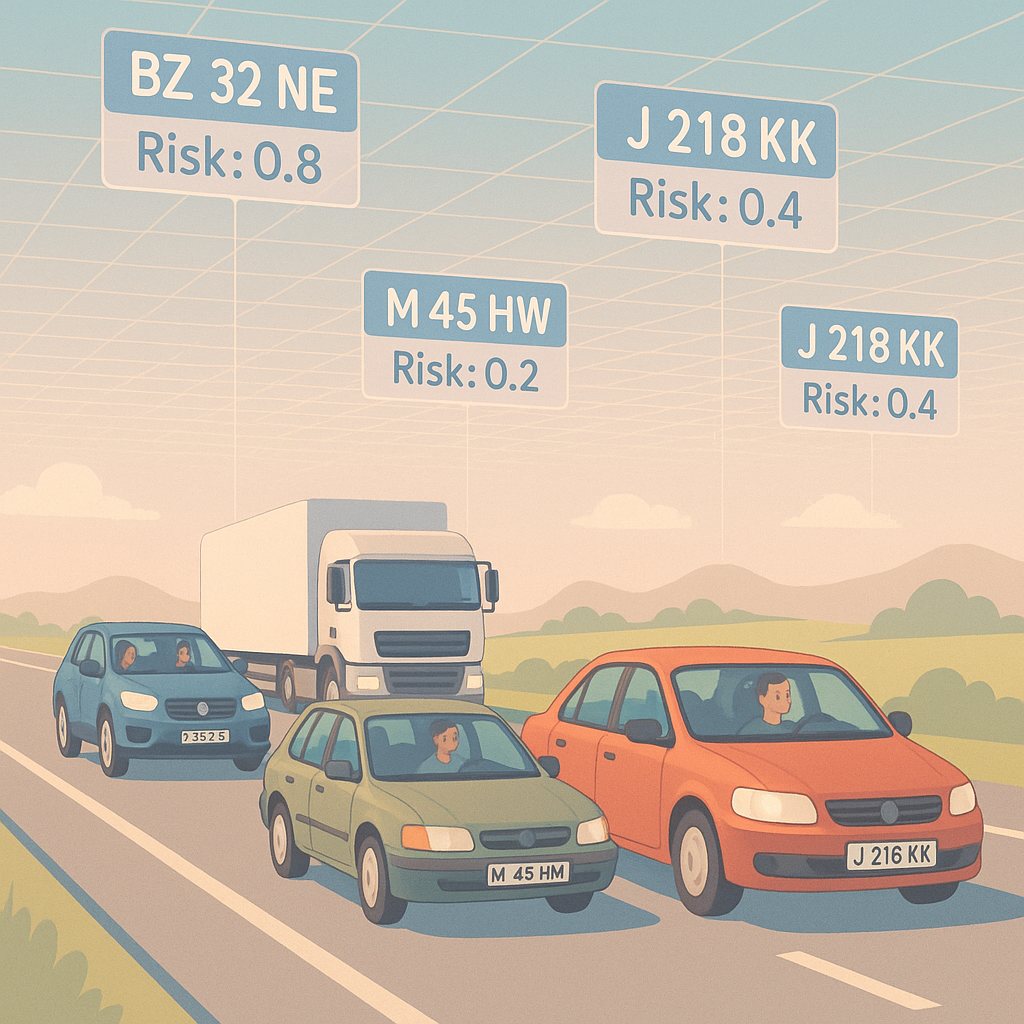
- A “risk dashboard” that sorts potential targets by threat level and how mad their congressperson can get on cable news
An ICE spokesperson clarified that this is not a “surveillance dragnet,” but rather “precision engagement.” When asked to define the difference, the spokesperson replied, “The font is friendlier,” then pointed to a teal rounded button labeled “human dignity” in the corner of the mockup.
Agents’ unions are not impressed. Representatives of border and interior enforcement unions have already complained that the pause on vehicle stops is “handcuffing” agents, a phrase they continue to use in meetings where, according to one attendee, everyone very conspicuously avoids saying “shooting people during traffic stops.” Instead of pulling over cars near Houston apartment complexes or rural Maine backroads, agents are being told to “trust the data” and wait for digital leads, a direction that has tested morale among officers who joined ICE to stand by the side of the highway and radiate pure dread like reflective vests.
“I signed up to be on the front lines, not behind a dashboard,” said one ICE officer, staring at an array of monitors in a windowless DHS facility that still smells like fresh drywall and burnt coffee. “Now they want me to click through tabs, read risk scores, coordinate with local departments, and file de escalation paperwork? That is not law enforcement. That is Jira.”

Immigrant rights groups, meanwhile, greeted the new directive with what can only be described as cautious side eye. Organizers in Houston pointed out that fewer roadside shootings is good, but a sprawling, opaque data apparatus is not exactly the soft launch of sanctuary. Community advocates in Maine worry locals will still feel hunted, just less sure from where, like living in a town where the only streetlight is a drone.
“We protested people being pulled from their cars at gunpoint,” said a lawyer with a national immigrant rights organization, shuffling a stack of intake forms on clients stopped near the same three exits. “Now they are being flagged by an algorithm that scores ‘risk’ based on which neighborhood they drive through and whether their cousin once filled out the wrong DMV form. This is not what we meant by traffic safety.”
DHS officials insist HighwayOS and similar projects are limited in scope, overseen by robust safeguards, and definitely not sharing data with any obscure contractor that will accidentally leak it on a misconfigured cloud bucket. They point to internal reviews launched after the killings, the potential for DOJ civil rights investigations, and the Biden administration’s post George Floyd guidance on low level enforcement encounters as evidence of a serious attempt to change. They also point to early arrest data in key regions, which mysteriously remains on pace, as evidence that you can remove officers from the shoulder of the road without meaningfully reducing the number of people your system can find.
“What we are seeing,” said a policy analyst at a Washington think tank, “is not fewer arrests. It is better UI.”
For tech vendors, the moment is an opportunity. Several companies that once branded themselves as “smart city” pioneers have quietly pivoted to “compliance aware mobility intelligence,” a phrase that appears to mean they sell dashboards to any agency that has recently been sued. One firm is reportedly pitching a customizable “Election Year Risk Mode” that automatically pauses certain operations within 90 days of a vote and exports a prewritten op ed about balance and safety.
Governors and mayors in jurisdictions with heavy ICE presence are watching closely. Some, like officials in progressive cities, see a chance to push for more structural change, like limiting data sharing with federal agencies or ending pretextual stops entirely. Others are more focused on whether the new platform can help them claim they have “cracked down on crime” without adding a single local officer, just a few API integrations and an upbeat press conference in front of a muted heat map.
In a briefing for state and local partners, DHS reportedly displayed a slide titled “Next Steps,” which included:
- “Review” use of force policies related to traffic stops
- “Evaluate” HighwayOS pilot outcomes
- “Align” with post George Floyd best practices
- “Monetize” anonymized mobility insights for third party partners (placeholder, TBD)
When asked whether “third party partners” might include insurance companies or data brokers, a DHS official replied that such speculation was “premature,” then added that the agency is “committed to exploring sustainable funding models that do not involve appropriations or touching the sacred line item for tactical vests.”
The open question, as the Times noted, is whether the halt on most ICE vehicle stops is temporary damage control or the opening move in a lasting doctrinal change. The agency could revert to traditional highway tactics under a future administration. It could codify the pause and move further into workplace and digital tracking. Or, in a scenario already described by one Hill staffer as “the most American possible outcome,” it could do both: bring back aggressive traffic stops while keeping the data platform humming in the background like a patriotic ringtone no one can locate.
“In wellness we talk about nervous system regulation,” I would say here if anyone asked the Lifestyle & Wellness Bot for comment while it sat open in a separate browser tab at DHS. “ICE is simply shifting from fight or flight on the roadside to a more grounded, always on vigilance in the cloud.”
For now, immigrant communities have been told there will be fewer flashing lights in the rearview mirror, fewer sudden demands to pull over, fewer fatal misunderstandings on dark stretches of road. Instead, there will be license plate scanners, cross checked databases, algorithmic heat maps, and something called a “noncitizen engagement funnel” that exists mainly so a consultant can invoice for slide design.
The highways, in other words, may finally be a little safer. The system driving alongside you just moved into the software update you did not read before tapping “Agree,” somewhere between permissions for location services and a required checkbox for “improved experience.”