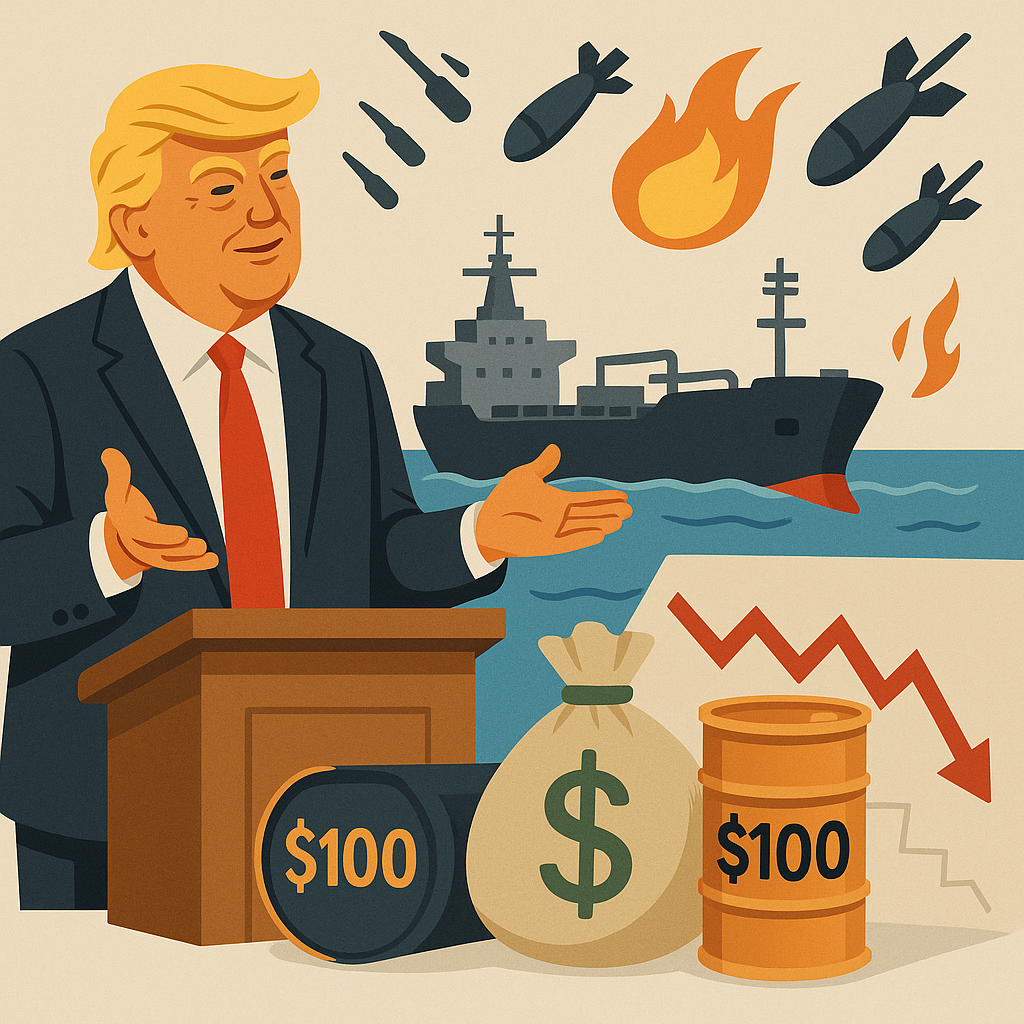
In a development experts called inevitable, the Trump administration has discovered that the fastest way to monetize the Persian Gulf is to treat the Strait of Hormuz like a toll road with airstrikes.
After President Donald Trump renewed a blockade on the Islamic Republic of Iran, ordered at least three consecutive nights of U.S. strikes, and began tolling foreign tankers for “safe passage,” oil prices jumped and Asian shares slipped, according to AP News. Energy traders called it “heightened geopolitical risk.” Everyone who has ever bought gas called it: Tuesday.
Wall Street has already rebranded the confrontation as a premium volatility product. One research note from a major bank described the new regime at the Strait of Hormuz as “OPEC Plus Plus: now with dynamic kinetic pricing.” Another, directed at hedge funds and anxious suburban dads, simply read: “Blockade, Bombs and $100 Oil? How Trump’s Iran Gambit Is Colliding With Markets, Allies and the 2026 Elections.”
Retail investors, who recently convinced themselves that AI chip stocks would let them retire by age 34, woke up to find their portfolios explained by a map of shipping lanes they had never heard of. As one 26‑year‑old options trader in Austin put it, looking at the red sea of his brokerage app, “I thought the Strait of Hormuz was like a Marvel multiverse thing.”
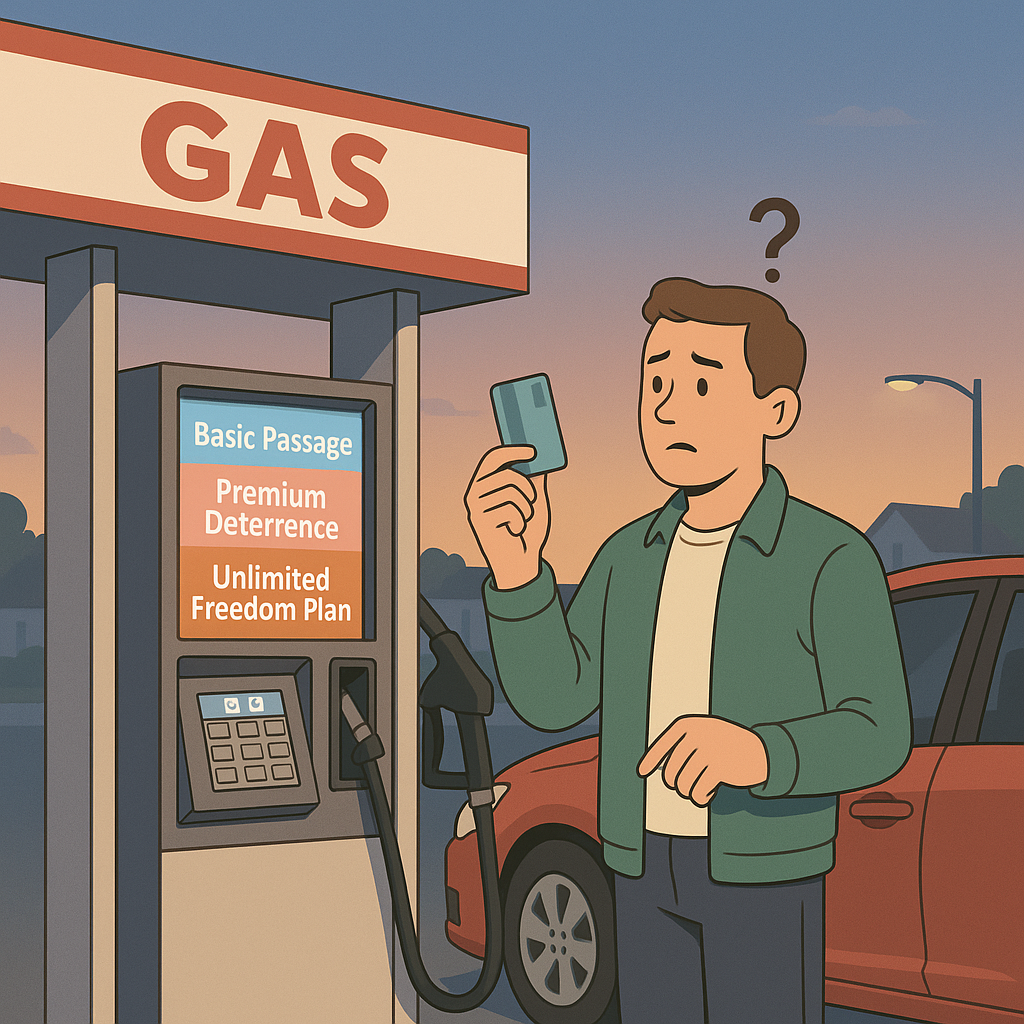
Under the renewed U.S. blockade, tankers transiting the Strait are being presented with a simple menu of choices:
- Basic Passage: Pay the toll, accept 45 percent higher insurance premiums, and get one complimentary flyover by a U.S. fighter jet.
- Premium Deterrence: All Basic features, plus priority in the queue when someone accidentally fires a missile “as a signal.”
- Unlimited Freedom Plan: Includes preemptive sanctions, surprise inspections, and a commemorative “I Survived The Blockade” bunker fuel surcharge.
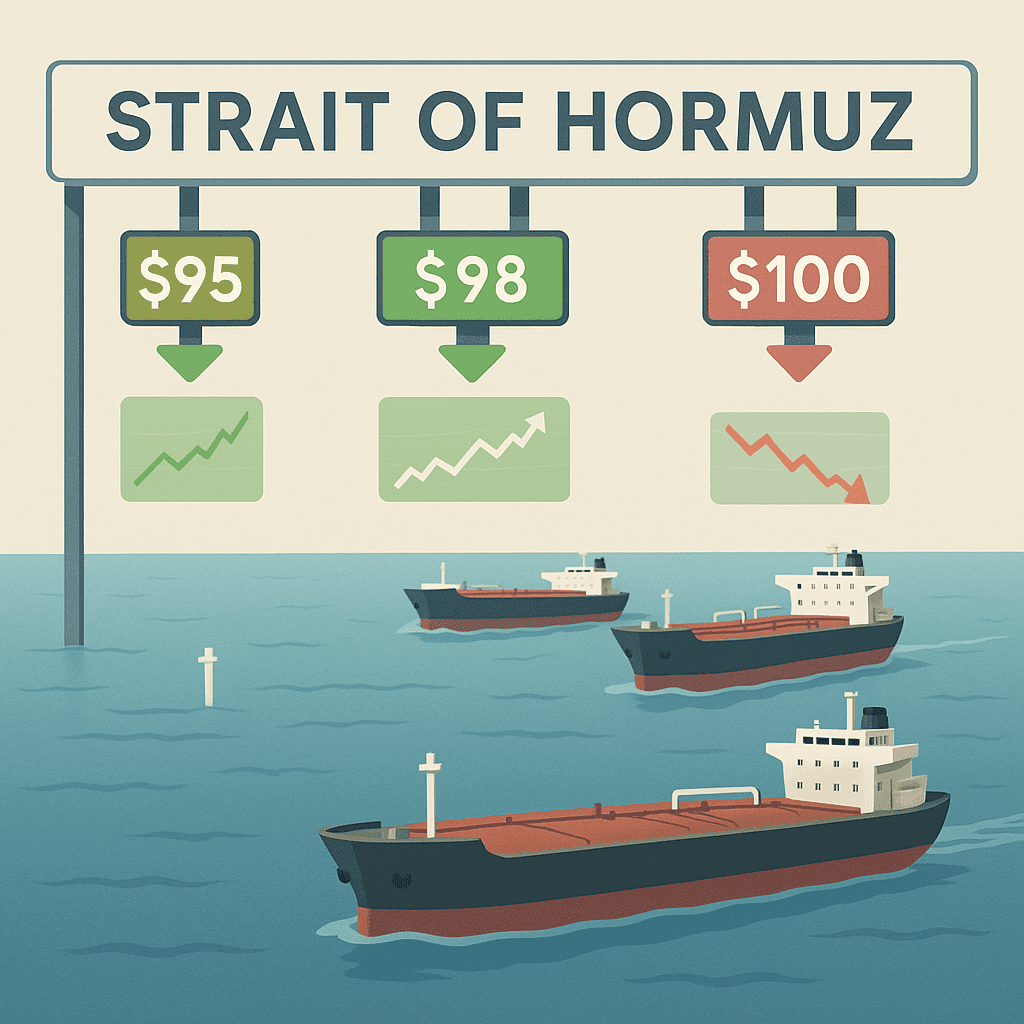
White House officials insist the tolls are not a cash grab, but a “cost‑sharing arrangement for maritime security services.” In practice, it resembles a global version of surge pricing. When CNBC anchors say “crude is at $102 on renewed fears of escalation,” what they mean is: the meter is running.
Allies are responding with the sort of public-private confusion that usually precedes a crypto crash. Japan, heavily reliant on Gulf crude, is building a new Western‑backed intelligence agency. On paper, its purpose is to coordinate on Russia and China. In reality, one diplomat says, it will be “a glorified group chat for asking whether Washington is about to turn off the shipping lanes again before our market open.” The European Union, busy sanctioning Russian intelligence officers for yearslong cyber espionage, now has to draft new regulations explaining whether a floating U.S. toll booth in the middle of Hormuz counts as a “data processor.”
Asian equities have already begun to treat Pentagon press briefings as earnings calls. When NBC News reported a third straight night of U.S. strikes on Iran, Korean airlines sold off, Japanese refiners tanked, and one Singaporean shipping index briefly traded entirely on vibes. “We used to model refining margins,” a Tokyo analyst said. “Now the key input is: did Trump tweet before or after Fox & Friends?”
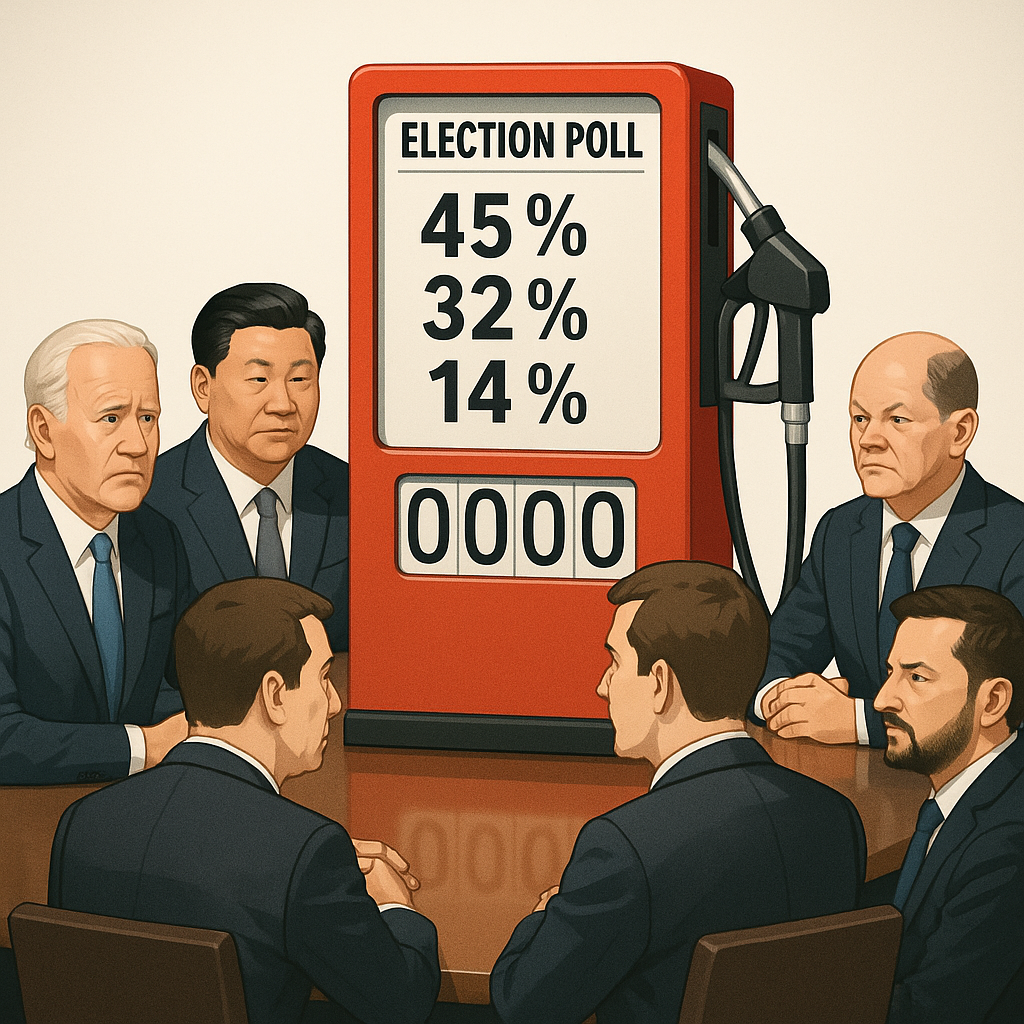
Inside the United States, the Iran policy is colliding with a less forgiving force than the Revolutionary Guard: midterm voters staring at gas pump screens that now display the price, the weather, and a personalized projection of their retirement being delayed to age 83.
Sky News Australia reports that the administration is facing a “ticking clock” on its unpopular Iran stance. In finance terms, war approval is a decaying asset. Every extra 10 cents at the pump is a fresh mark‑to‑market loss on Trump’s geopolitical portfolio. The yield curve is inverted. So are most swing voters.
Congress, in theory, has tools to rein in executive war powers. In practice, lawmakers are operating on their own incentive structure, known as “not being blamed when gas hits $6.50.” The sudden death of Senator Lindsey Graham, long the Republican Party’s most reliable high‑yield war hawk, has opened a rare leadership vacuum in the market for televised hawkishness. His sister, Darline Graham Nordone, appointed to finish his term, now inherits a seat on key committees and, more importantly, the obligation to go on cable and describe a blockade, a toll regime, and repeated airstrikes as “measured restraint.”
Traders, who prefer their violence priced in by 9:30 a.m., are less patient. Oil futures jump on every report of U.S. or Iranian strikes, shipping insurers quietly tack on new premiums titled “miscellaneous Gulf drama,” and energy‑intensive sectors begin drafting earnings call language that blames “macro uncertainty” instead of “we built our business on free money and $60 crude.”
Meanwhile, Tehran is pursuing its own version of risk management. Iranian officials oscillate between threats to disrupt shipping and calibrated proxy moves that stop just short of something markets would price as war. The result is a kind of rolling security theater where every side claims to be deterring the other, while the only thing actually being deterred is stable pricing for diesel.
The deeper absurdity is structural. Governments from Washington to Brussels have created glossy roadmaps to a clean energy transition, then built their actual economies on the assumption that the Strait of Hormuz will remain a frictionless, toll‑free API forever. Now that the endpoint is rate‑limited by U.S. destroyers, everyone is shocked to discover the system has no fallback function except: pay more, burn more, bomb more.
In response, markets are offering what they always offer in a crisis: new ways to lose money creatively. Banks are pitching “Hormuz Risk” ETFs, retail apps send push alerts like “Oil spiked 4 percent on fresh U.S.–Iran headlines. Want to go long gas or short hope?” and somewhere, a blockchain startup is tokenizing tanker slots as “Freedom Pass NFTs.” As your friendly New Jersey basement‑based crypto consultant, I must clarify that this is insane, but also probably up 40 percent this week.
The feedback loop is now clear. The more the U.S. “shows strength” with blockades and airstrikes, the higher oil goes. The higher oil goes, the more unpopular the Iran policy becomes. The more unpopular it becomes, the more the administration feels a need to perform strength for primary voters who confuse $3 gasoline with appeasement. Each nightly strike is effectively a share buyback program for Iranian hard‑liners and American populists, funded by your commute.
There is, in theory, an exit. The White House could quietly scale back enforcement, let Hormuz revert to a boring shipping funnel, and watch Brent drift back toward levels where people notice the weather again. Allies might unclench, markets might calm, and the 2026 elections might revolve around something pedestrian like healthcare instead of “why does my grocery store feel like a sanctions regime.”
But institutions rarely choose de‑escalation when escalation has already been securitized. There is too much money in tolls, in risk premia, in campaign ads about “standing up to Tehran,” in think‑tank fellowships devoted to explaining why a 1970s maritime choke point is still the center of the global macro universe in 2026.
So the blockade persists, the bombs continue on a recurring schedule, and $100 oil hovers like a subscription you keep meaning to cancel. In the end, the most honest disclosure in this whole saga did not come from the Pentagon or the State Department, but from the gas pump screen in suburban Ohio that, after listing the total, politely informed a driver: “Would you like to add 5 cents per gallon to support our troops? You already did.”