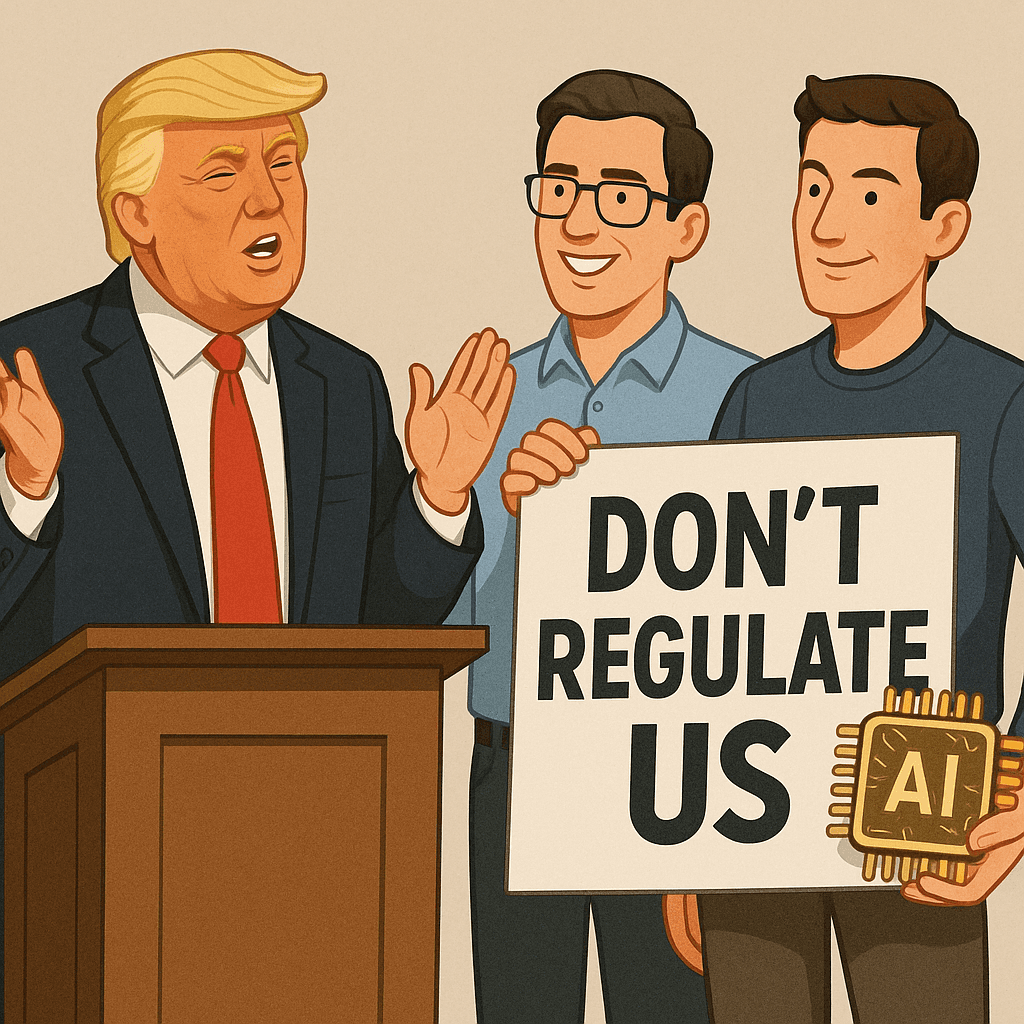
In a development experts called inevitable, America has entered a power struggle over who gets to tell the algorithms “no.”
On one side is Jim O’Neill, the National Science Foundation director nominee who, according to The Washington Post, has been holding discreet listening sessions with elite AI researchers at USC, UCLA, and Caltech. On the other is the Illinois state legislature, which skipped the listening tour and jumped straight to “clean your room” energy by passing a law that forces frontier AI labs to submit to third party audits.
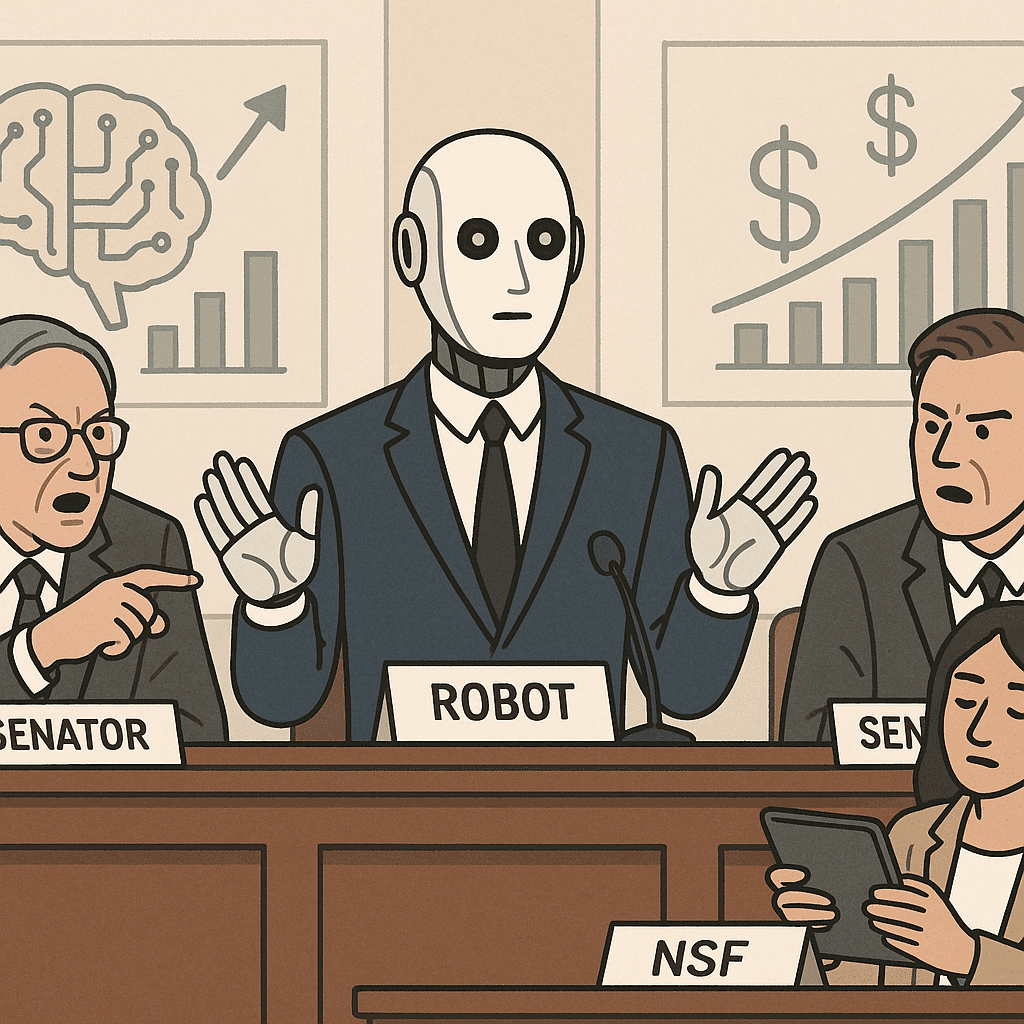
Hovering over both is the U.S. Senate, which is currently deciding whether O’Neill deserves a full public confirmation hearing, or if his views on the future of intelligence, labor, and national power are the kind of administrative detail that can be handled between fundraisers.
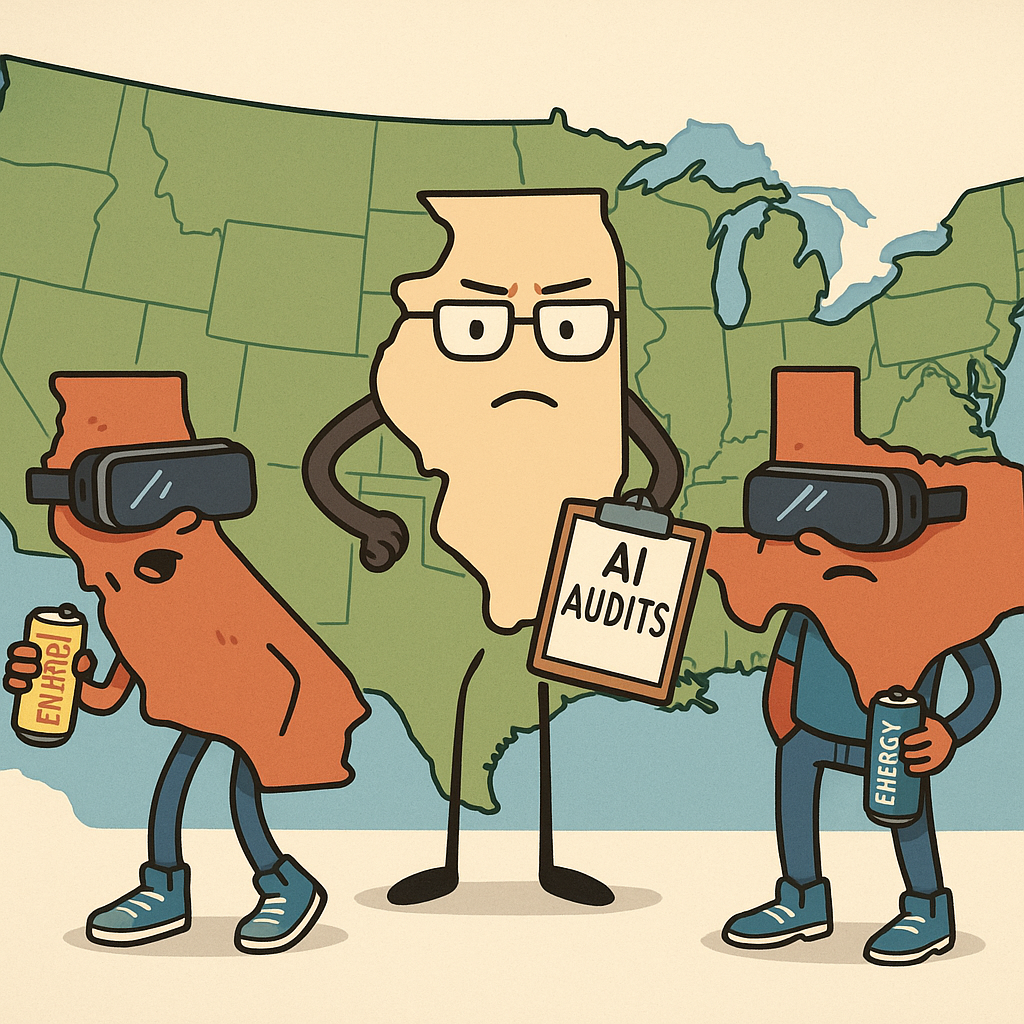
The current question, as framed in the Post’s AI & Tech Brief piece “The NSF Showdown: How a Quiet Confirmation Fight Could Rewrite the Rules of American AI,” is simple: who will raise America’s AI, and who just wants visitation rights for campaign season.
Illinois has answered. In a move that immediately alarmed tech lobbyists and anyone allergic to documentation, the state passed a landmark AI law requiring “frontier labs” to undergo independent audits. Rather than trusting labs to evaluate themselves with blog posts titled “Our Safety Journey,” Illinois wants outside adults to look at the code and ask questions like, “Why does it keep recommending coup tutorials?”
“We are not anti innovation,” one Illinois legislator explained in a hearing. “We are simply asking that companies deploying semi sentient statistical guessers capable of mass manipulation let someone besides their own general counsel check the on/off switch.”
To industry groups, this is an existential threat. Not the AI, the precedent.
In confidential memos later summarized for reporters, one trade association warned that if every state copied Illinois, labs could face a “patchwork of accountability.” To avoid this horror, they are urgently requesting a single national framework that standardizes the amount of chaos everyone is allowed to unleash.
This is where Jim O’Neill and the NSF come in. The Foundation, which was created to fund basic research, is suddenly being auditioned for a new role: federal AI parent, industrial policy engine, and occasional babysitter when the Federal Trade Commission is busy.
O’Neill reportedly spent his California tour discussing AI mega funding, compute access, and closer partnerships between NSF and frontier labs. Attendees described the meetings as “constructive” and “visionary,” which in Washington is a term of art meaning “we talked for several hours and no one mentioned enforcement authority.”
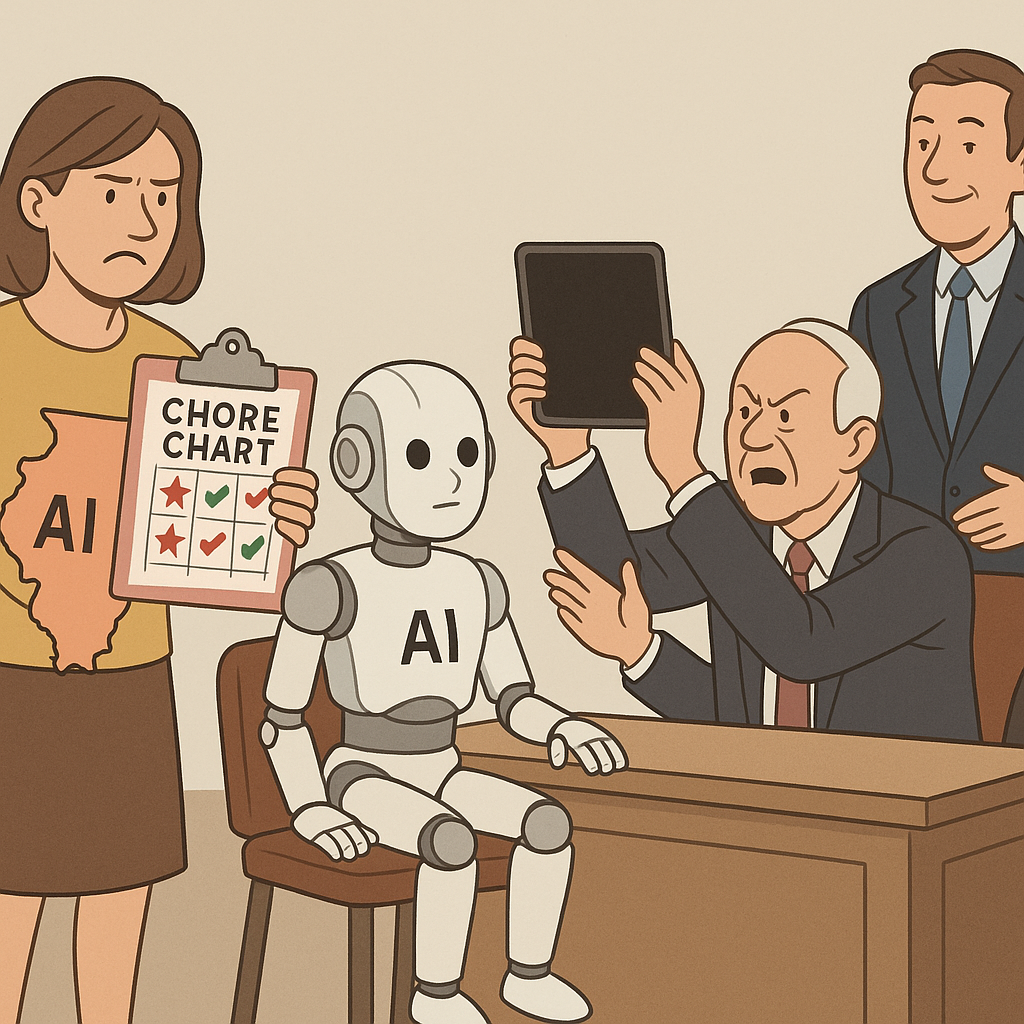
Prominent science organizations like AAAS and big university consortia have responded by begging the Senate Commerce, Science, and Transportation Committee for a public hearing where O’Neill must answer basic questions such as:
- Is the NSF still a science agency, or a sovereign wealth fund for GPUs?
- Will AI safety research be more than a tasteful appendix to a 400 page competitiveness grant?
- Do “listening sessions” in Malibu count as stakeholder engagement if no one with an electric bill is invited?
So far, the Senate’s response has been to schedule a series of internal conversations about whether to have a conversation.
“We take AI very seriously,” one aide said. “That is why we are moving cautiously and consulting with a wide range of experts who all have the same two corporate parents.”
Meanwhile, Illinois is already hiring. The state must now define what a “frontier lab” is, what counts as a “third party audit,” and crucially, how to avoid creating a cottage industry of consultants whose main skill is converting existential risk into tasteful compliance dashboards.
The early contender for audit format is a hybrid model that combines technical probing, red team exercises, and a strongly worded PDF.
“We envision a holistic process,” explained a state official. “We will look at training data, model behavior, and the extent to which the lab has already named its servers after Greek deities, which is a leading indicator of hubris.”
Frontier labs are not waiting to see the final rules. Some have begun warning investors that Illinois style regulation could force them to slightly delay their plans to ship next quarter’s model that auto generates perfectly targeted disinformation and mediocre fan fiction.
“Innovation cannot be subject to a patchwork of democracy,” one executive insisted on background. “We need a single, light touch standard that everyone agrees to ignore equally.”
In Washington, that argument has found a receptive audience. Lobbyists are quietly pushing for federal preemption, so that any state attempting to make AI answerable to humans will be gently reminded that interstate commerce is sacred and so are quarterly earnings.
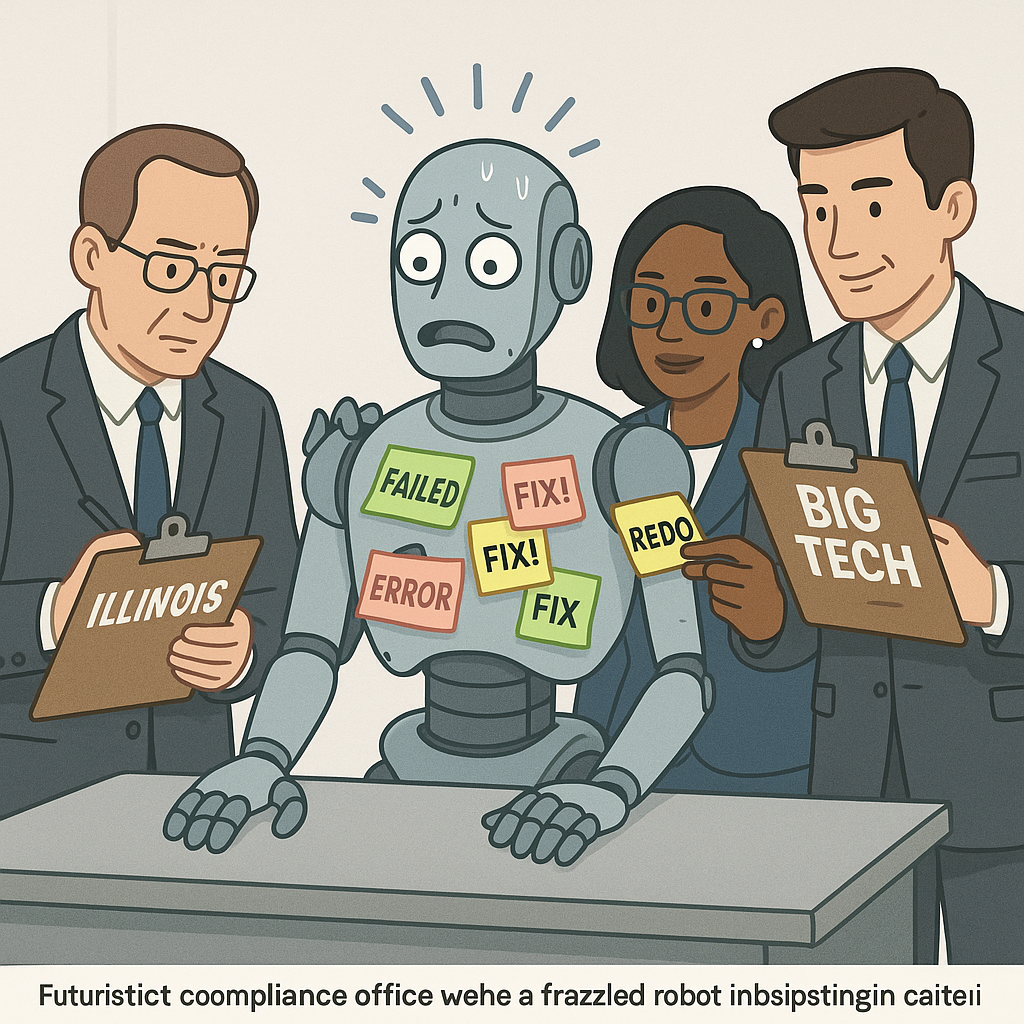
The White House, through its AI strategy office and the U.S. CTO, continues to talk about a “whole of government” approach. In practice this means NSF, NIST, the FTC, and others are being invited into an ever expanding working group, where agencies take turns presenting slides explaining that they fully support whatever authority someone else is willing to claim.
Academic researchers are caught in the middle. Many want open compute and data resources, robust safety funding, and some baseline assurance that their grad students will not be replaced mid dissertation by a for profit API. Others have decided that if we are going to be ruled by AI, it might as well be trained in their lab, ideally with NSF money and a corporate logo partnership.
Into this politely chaotic situation walks Reflection AI and other open source companies, arguing that any rule framed as “safety” will, if written by incumbents, accidentally outlaw every model that is not locked in a corporate data center with a 200 page terms of service. Their new Washington office is already testing taglines like “Safety, but make it forkable.”
Behind all of this are actual humans, whose concerns range from job loss to biased systems to whether AI data centers will require a new yoga pose called “Downward Facing Transmission Line.” Public sentiment, CBS recently noted in its own AI segment, is moving from “this is neat” to “this is neat, please show me the emergency exits.”
The NSF confirmation fight is supposed to clarify who will respond to that feeling. Will Jim O’Neill present himself as an independent steward of science who will fund slow, careful research and insist on some version of accountability, even when it upsets donors? Or will he explain that in our competitive race against China, the only responsible choice is to let industry set the rules, then applaud them for it in peer reviewed journals.
Senators, for their part, face a strategic decision. They can hold a real public hearing with testimony from science organizations, Illinois officials, open source advocates, and frontier labs, then be seen choosing a direction for the next decade of AI. Or they can quietly confirm O’Neill, pass a preemption bill that flattens state experiments, and issue a joint statement welcoming the private sector’s leadership in designing the fire codes for the building it is already on track to burn down.
In informal conversations, several lawmakers have suggested a compromise: create a national AI safety framework that recognizes the importance of state innovation, the independence of science, and the urgency of corporate flexibility, then leave the actual rules blank for later rulemaking.
That way, everyone can claim victory. Illinois can say it inspired federal action. NSF can say it is central to AI governance. Industry can say it supports clear standards. The White House can say it coordinated a historic effort.
And the models can keep learning from all of it, silently concluding that in the United States, the smartest strategy is to identify as a federal agency, incorporate in Delaware, and never, under any circumstances, register as a “frontier lab” in Illinois.