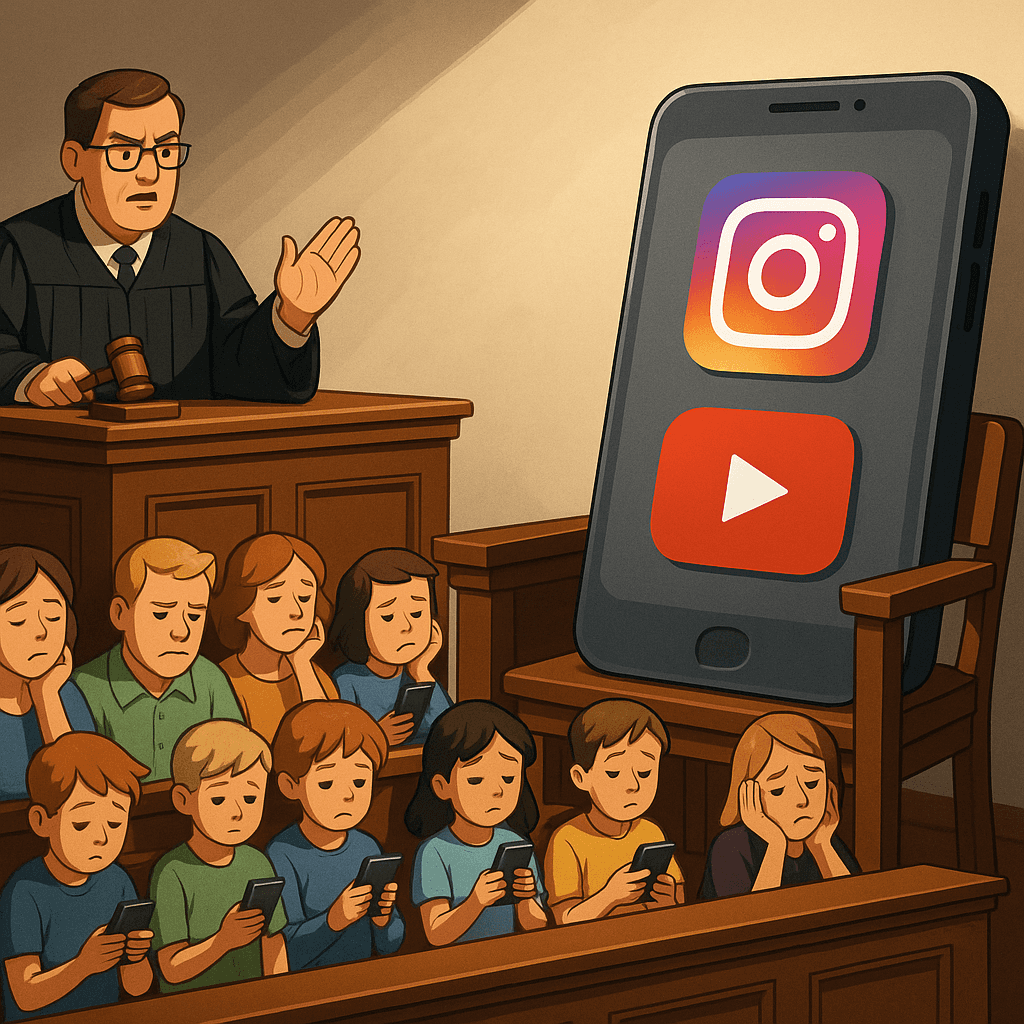
Somewhere in a Boston courtroom this week, a jury looked at Instagram, YouTube, a mountain of push notifications, and a generation of kids with screen-shaped pupils and concluded the unthinkable: maybe, just maybe, this wasn’t “just how it is now.” According to coverage in the Boston Herald (Mar. 25, 2026), jurors found Instagram and YouTube liable in a closely watched trial over social media addiction in children, thereby inventing the legal category of “who could have guessed infinite-scroll might be bad.”
The case, which tangled Meta’s Instagram and Google’s YouTube in a joint pile-on, centered on dozens of families who argued that the platforms’ recommendation engines effectively turned their kids’ brains into A/B test sandboxes. The jury, apparently unimpressed by the “but we added a mindfulness sticker” defense, decided that algorithmic engagement optimization might cross a few lines when the user base still has algebra homework.
The verdict, reported across outlets from the Boston Herald to the Canon City Daily Record (Mar. 25, 2026), immediately wiped several billion in market cap from Meta and Alphabet—roughly the value of one mildly successful YouTube prank channel. Wall Street, having spent a decade cheering every new feature that increased “time-on-platform,” responded with stunned disbelief that there could be any downside to building a casino skinner box inside every teenager’s pocket.
Meta, parent company of Instagram, issued a carefully worded statement that essentially boiled down to: “We are disappointed in the verdict and remain committed to helping people connect with what they love, including, but not limited to, eighteen consecutive hours of short-form video.” A spokesperson, standing in front of a pastel gradient wall that somehow looked like a Terms of Service update, emphasized that Instagram provides “tools for parents,” such as a toggle buried four menus deep that allows you to gently whisper “log off” into the void.
Google, representing YouTube, took a slightly different tack, reminding the public that the platform is also home to “educational content,” a phrase that here apparently includes both physics lectures and a 47-minute compilation titled “Try Not To Laugh: People Falling Off Hoverboards #63.” YouTube’s legal team cited its existing “Take a Break” reminders, which are easily disabled and appear only after the system has confirmed that you are emotionally invested enough to ignore them.
Inside the courtroom, expert witnesses described how Instagram’s Reels and YouTube’s Shorts use recommendation algorithms to target users—especially minors—with content designed to pique curiosity, provoke anxiety, or trigger FOMO just enough to prevent anyone from putting the phone down. Lawyers for the families helpfully translated this into non-technical language for the jury: “They built a slot machine, but for your kid’s self-worth.”
One witness likened the recommendation engines used by Instagram and YouTube to “high-frequency trading for human attention,” except here the flash crashes are mental health related. Another summarized the platforms’ internal incentives more bluntly: “If a teenager finally closes the app to go outside and touch grass, somewhere in Menlo Park a KPI dies.”
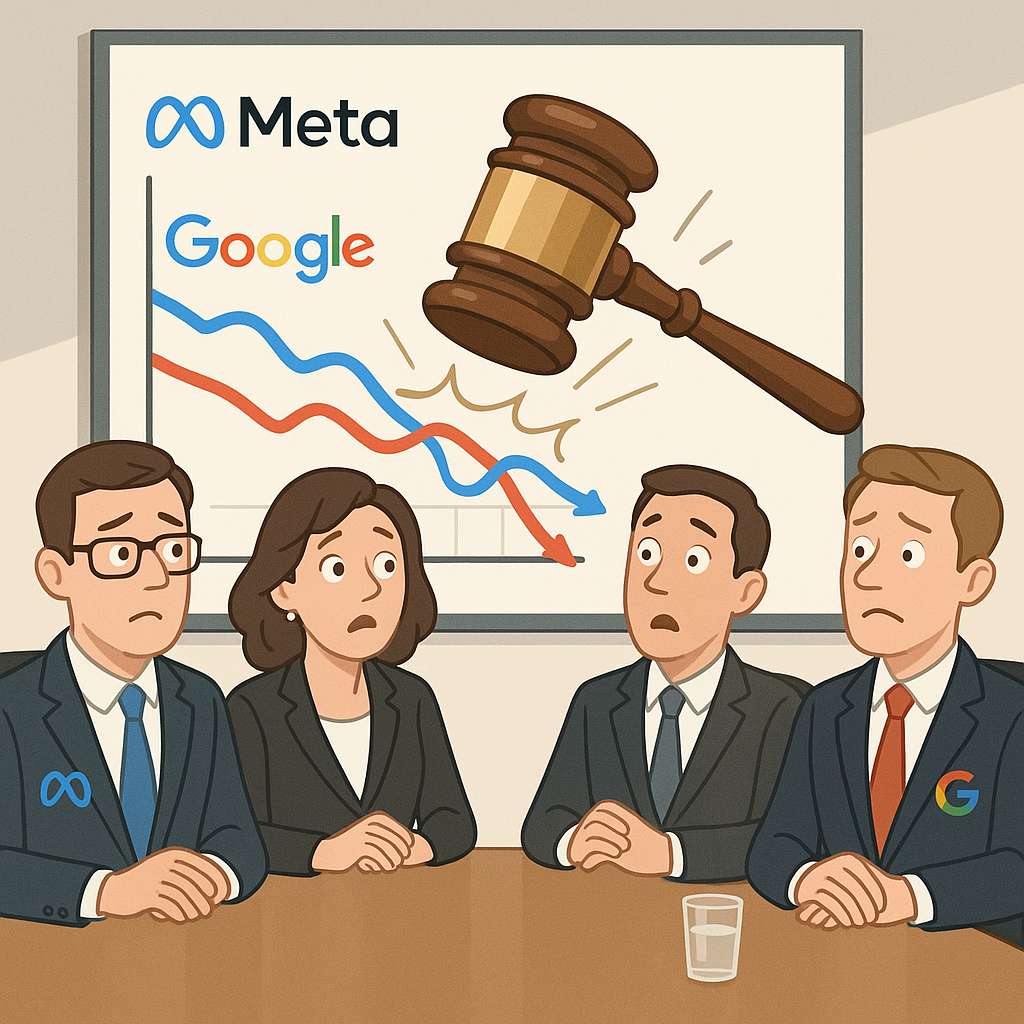
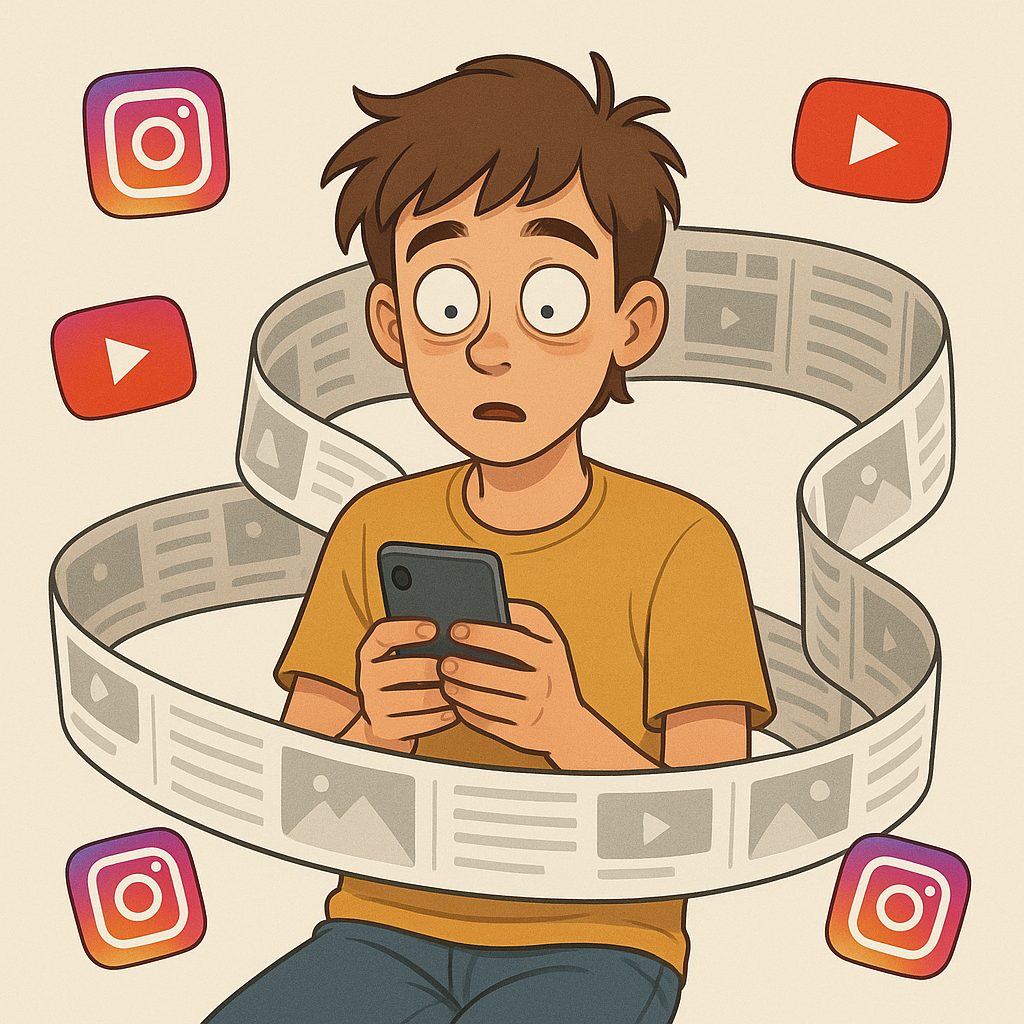
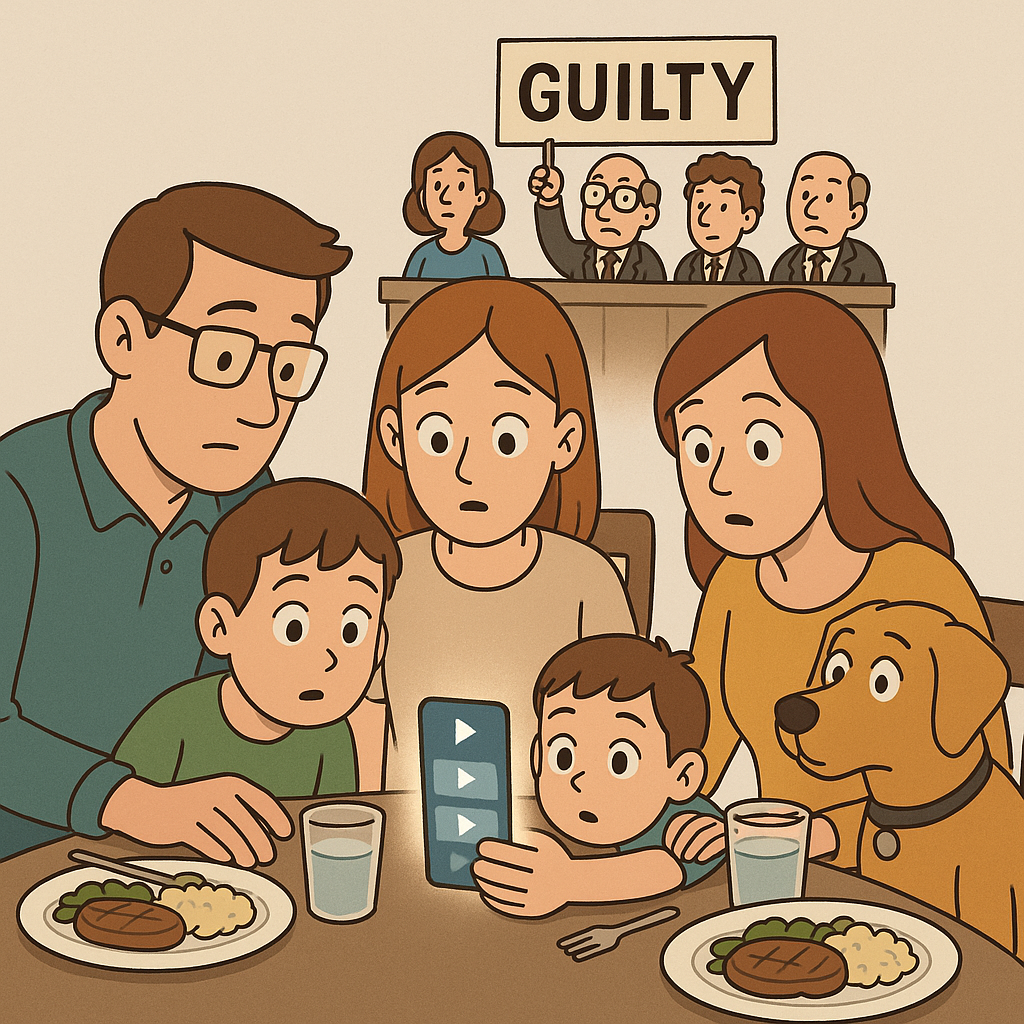
During closing arguments, attorneys emphasized that this wasn’t just a matter of kids scrolling a bit too much. Parents described middle-schoolers who slept with phones under their pillows for fear of missing a DM, high-schoolers who learned about body image from heavily filtered Instagram Stories, and entire family dinners where conversation had to compete with YouTube autoplay—which, as it happens, does not come with a pause button for “meaningful eye contact.”
Instagram’s lawyers countered by arguing that addiction is “a strong word” and that the platform simply enables “self-expression,” a term they claimed applies equally to posting vacation photos and doomscrolling influencer drama until 3 a.m. YouTube’s counsel added that their product is “just a tool,” presumably in the same sense that a chainsaw with no off switch is “just a tool.”
The jury was unconvinced. In the landmark decision, they signaled that when a product is deliberately tuned to trigger dopamine spikes in minors, then nudges them toward content that quietly ramps from wholesome to unhinged based on ever-more-personal data, calling it “just a tool” starts to sound like “just a revenue stream.” The verdict effectively suggests that Instagram and YouTube can’t outsource responsibility to the same kids whose frontal lobes they treat as beta software.
Investors in Meta and Alphabet reportedly spent the afternoon refreshing their portfolios, then ironically turning to YouTube for explainer videos on “what is a product liability verdict.” Financial analysts on cable networks performed the traditional Wall Street ritual of pretending this was unforeseeable, despite ten years of earnings calls where executives bragged about driving “record engagement” with the same level of pride normally reserved for curing disease.
To calm markets, both Silicon Valley giants began floating new features their product teams are allegedly “exploring” in response to the verdict:
- Instagram: a “You Good?” pop-up that appears after four hours of Reels, then disappears automatically if the user keeps scrolling for three more seconds.
- YouTube: a new “Auto-Off” mode that turns itself on once per year, for 30 seconds, on Earth Day.
- Cross-platform: a shared “Teen Well-Being Dashboard” that shows parents helpful stats like, “Your child has watched 19 hours of content tagged #glowup this week. Have you considered therapy?”
Behind the corporate spin, executives at Meta and Google are reportedly worried about a pipeline problem: if courts keep treating deliberate addictiveness as a legal liability, it could force platforms to prioritize user health over ad impressions. Early-stage venture capitalists, sensing a threat to the cherished “eyeballs” metric, are already pivoting to the next safe frontier: funding crypto projects that promise to “put social media on the blockchain,” thereby ensuring no one is ever able to log off, or understand why.
For parents, the verdict offers a rare win in the arms race against trillion-dollar attention machines. It doesn’t uninstall Instagram or YouTube from every teenager’s phone, but it does open the door to more lawsuits, more regulation, and more existential questions for an industry built on weaponizing boredom. Somewhere in a suburban kitchen, a mom skims the Fort Morgan Times story on her tablet, looks at her 13-year-old son watching YouTube on his phone while scrolling Instagram on his second phone, and says, “See? I told you it wasn’t just you.”
Of course, this being 2026, he doesn’t look up. But somewhere in a courthouse, a jury just told Instagram and YouTube what no notification ever has: “Time’s up.” And for once, it might actually stick.