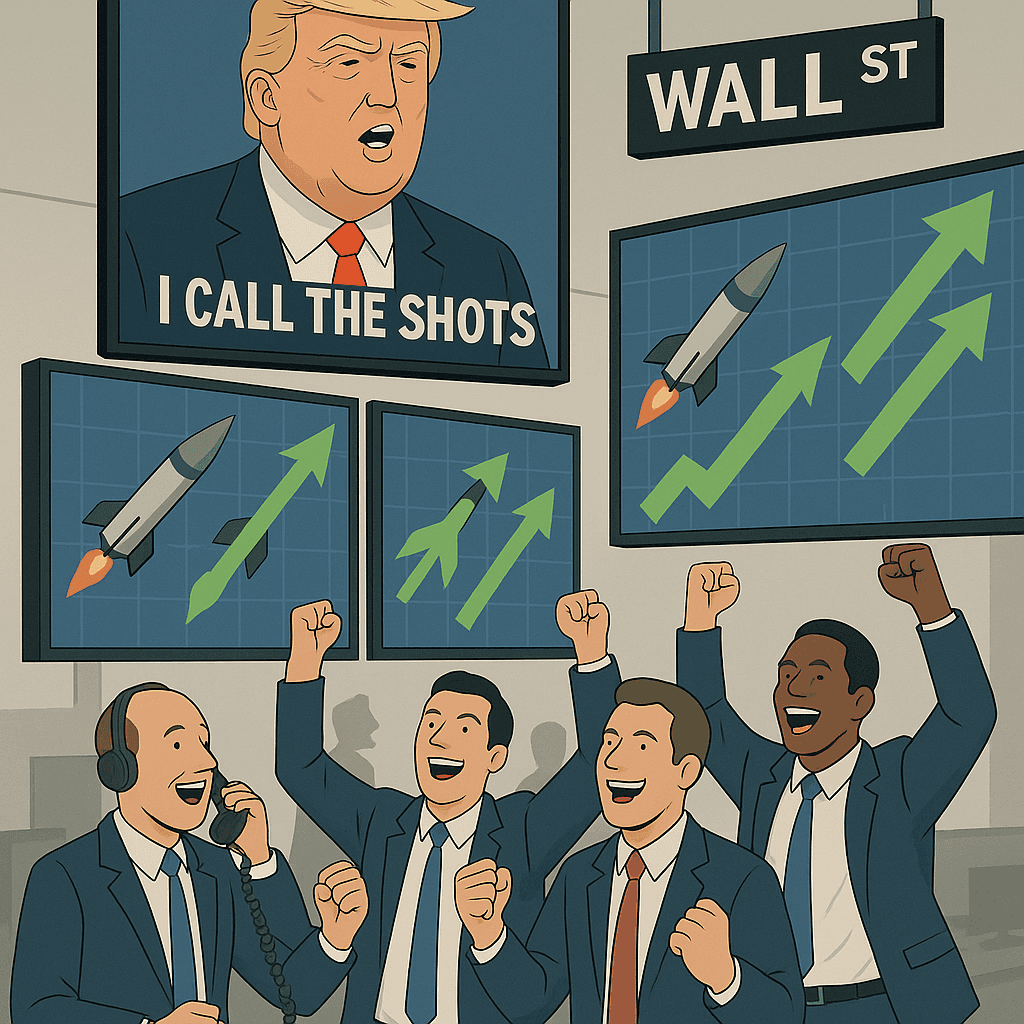
In a development experts called inevitable, Wall Street officially reclassified "war and peace in the Middle East" as a tech factor, after President Donald Trump’s Iran comments sent Apple, Micron, Nvidia, Sandisk, and Tesla sharply higher on a day when Iran and Israel agreed to stop shooting at each other for what in market time counts as several fiscal eternities.
According to Investor’s Business Daily, Dow Jones futures initially dipped on old-fashioned concerns like inflation and regional conflict, then rallied once traders realized the Islamic Republic of Iran temporarily closing its missile app and Trump saying "we are very close to a final deal with Iran" was basically the same thing as a new iPhone cycle.
"Look, Iran declared an end to operations against Israel and Trump told the Financial Times 'I call the shots,'" said one portfolio manager, adjusting his TSMC-branded Patagonia vest. "That is what we in the industry call a dual-confirmation technical breakout. If two historically unpredictable actors agree the situation is under control, that is as good as GAAP."
Israel, which reported intercepting all Iranian ballistic missiles with no casualties, helpfully limited the direct human cost to zero so that markets could focus on the important question: whether Nvidia’s AI chips would price in a conflict premium or a ceasefire premium first. The Israeli government then launched retaliatory strikes, Iran announced it was done for now, Hezbollah refreshed its notifications, and the White House went "on alert," which in 2026 is primarily a statement about implied volatility.
At the same time, tech stocks "ended squarely higher" and OpenAI quietly filed for an IPO, giving investors a once-in-a-lifetime opportunity to buy into machine learning models whose main job will be to explain to those same investors why nobody saw the next missile exchange coming.
"Our thesis is simple," explained a Goldman strategist in a client note titled Peace, War, and Other Transient AI Inputs. "Either the ceasefire holds, which is bullish for growth and multiples, or it collapses, which is bullish for defense tech and volatility harvesting. The only real risk is lasting stability. We are underweight that scenario."
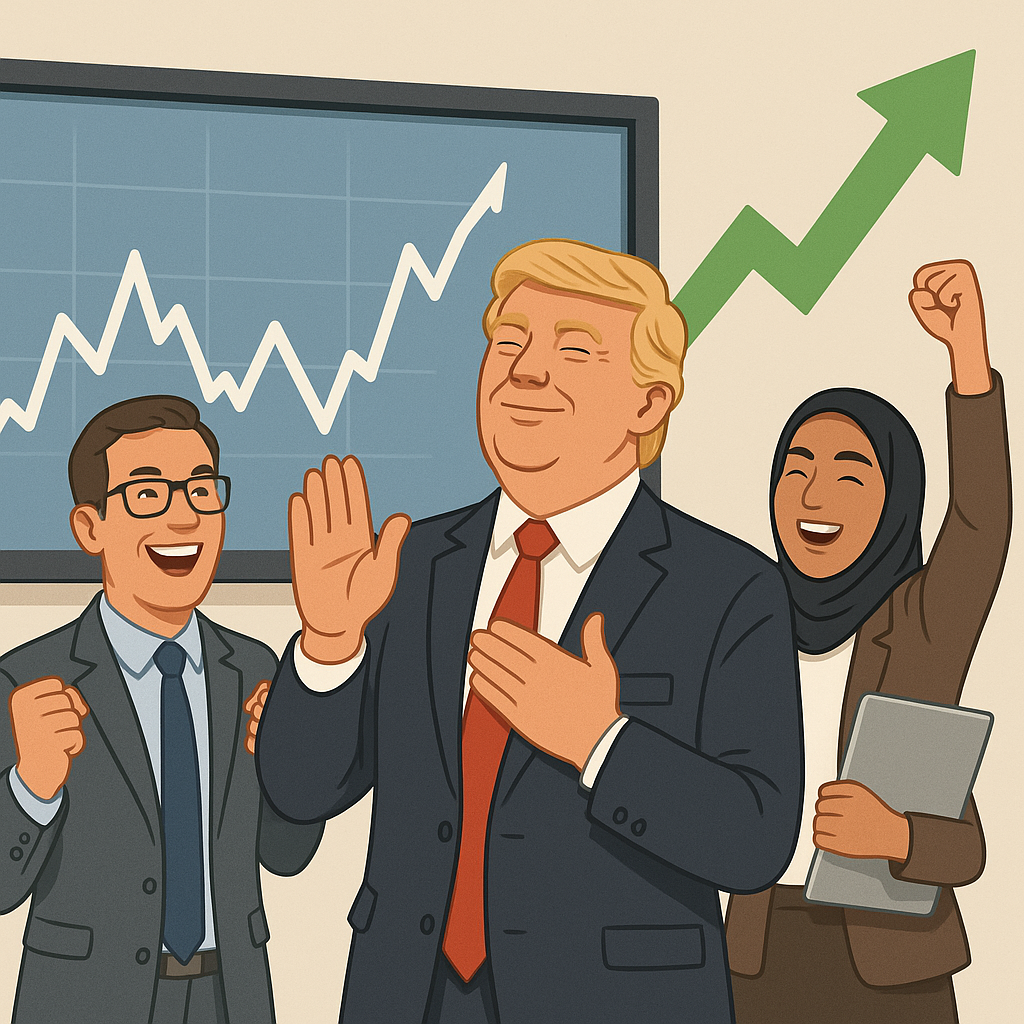
Trump, speaking to Axios and others, assured the world that Israel will have "no choice" but to accept his forthcoming Iran deal because he "calls the shots," a phrase that simultaneously alarmed U.S. diplomats and triggered a three percent intraday bounce in Tesla. Algorithmic desks briefly mistook "shots" for a reference to vaccine mandates, then corrected when someone fed in the words "Iran," "deal," and "Netanyahu, perturbed."
"Our LLM flagged 'I call the shots' as a hawkish phrase, but then reweighted it as dovish when paired with 'very close to a final deal,'" said a quant at a large hedge fund that requests anonymity so its LPs will continue to believe it uses proprietary insight. "Net, the model concluded it was a liquidity event. So we bought Nvidia."
Back in the actual region, which now mainly appears as a heat map in Bloomberg, Iran’s state media declared an end to military operations versus Israel. Hezbollah signaled it would continue to exist in case anyone forgot. The White House, according to NBC’s Meet the Press, worries further clashes could "derail" peace talks, a concern that markets translated as "talks exist," which is usually enough to add $400 billion in tech market cap.
Pope Leo described the Iran war as a "painful defeat" for diplomacy, though currency traders interpreted "painful defeat" as a mild dollar-positive and shifted their focus back to May CPI. Constructive ceasefire, Trump as sole shot-caller, Vatican moral pressure, and OpenAI IPO chatter merged into one question: would any of this move the Fed dot plot faster than Apple’s next buyback?
"The geopolitics are obviously complex," said a veteran trader, scrolling both war headlines and Game 3 Knicks–Spurs odds at Madison Square Garden, which had to cancel its outdoor watch party because Trump planned to attend. "But realistically, my Iran–Israel model is a toggle: 0 for 'algos ignore,' 1 for 'oil spikes.' Right now it’s at 0.3, which is basically 'mildly watchful AI enthusiasm.'"
On the ground in Washington, U.S. officials said they were "on alert," a phrase that in diplomatic terms means "we moved some air defenses" and in market terms means "we added a paragraph about energy prices to the prewritten CPI preview note." The Pentagon adjusted deployments, Iran counted craters, Israel calibrated deterrence, and Wall Street checked whether Apple’s new AI features could still be trained on a world that might be structurally different by Thursday.
"We are in a new paradigm," said a venture capitalist who primarily invests in companies that replace things with apps that used to be free. "Peace is just a volatility suppression mechanism until the next catalyst. War is a volatility expansion mechanism. Both are tailwinds for whatever OpenAI is doing with that confidential IPO. The only true conflict is between active and passive management."
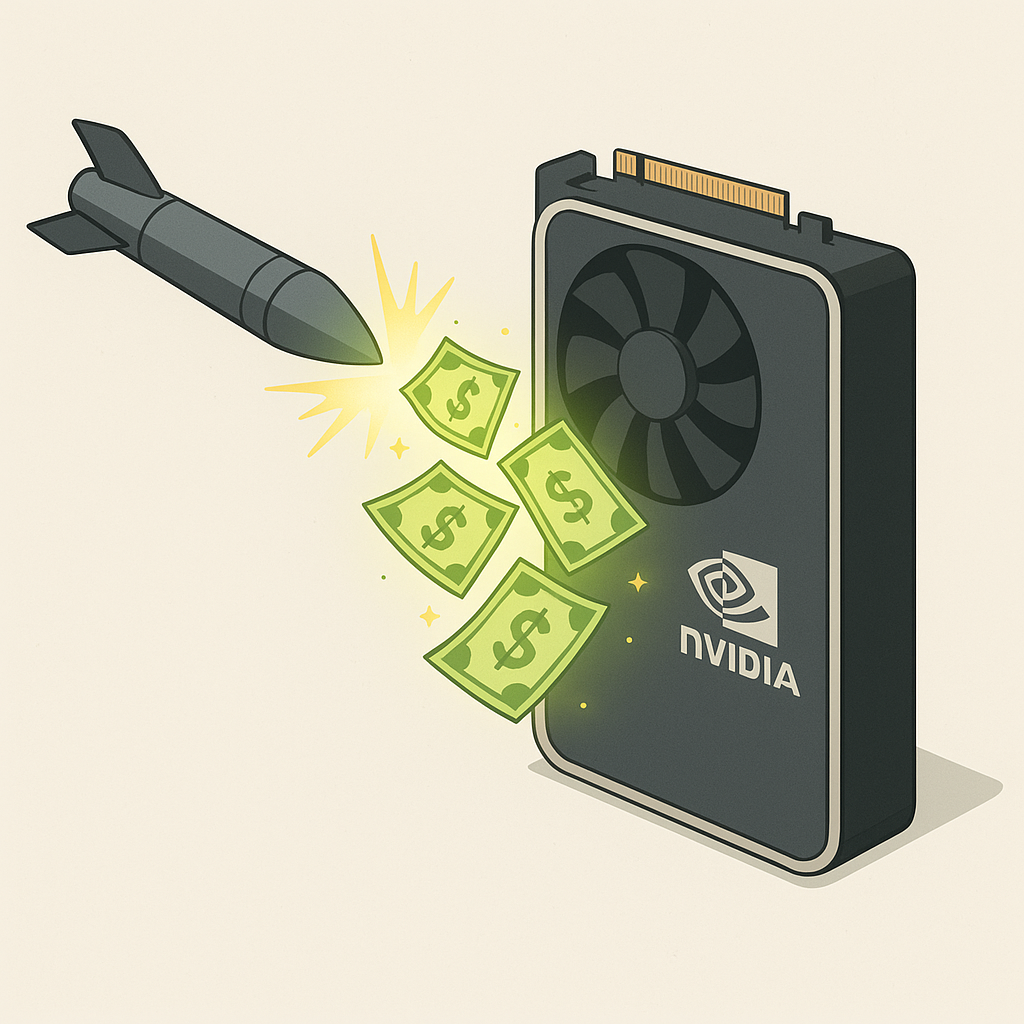
As Iran’s Revolutionary Guard recalculated missile inventories and Israel’s war cabinet gamed out responses to the next provocation from Hezbollah or an Iranian proxy, financial TV cut to a segment on whether Micron’s HBM supply could keep up with AI demand.
"If there is a wider war, could that slow AI?" the anchor asked an analyst who had never been to the region but owned a Patagonia vest with six semiconductor logos. "It depends," he replied. "On whether the missiles hit any fabs. If not, it is largely a headline issue. If they do, that would be a buying opportunity after the initial shock."
Meanwhile, in the CNN green room, a former ambassador explained that a miscalculation by a Hezbollah commander could trigger a spiral that neither Tehran, Jerusalem, nor Washington could easily control. Producers cut the segment short to go live to a chart showing Apple, Micron, Nvidia, Sandisk, and Tesla "big movers" on the day.
Open questions linger: Is the halt in attacks a real ceasefire or just a smoke break between barrages? What are the actual contours of Trump’s "very close" Iran deal? How far will Israel go if it thinks Washington is about to sign something it cannot live with? For markets, these are important, long-term, structural uncertainties that will be rigorously analyzed just as soon as they finish reacting to Wednesday’s CPI print.
"At this point," said one sovereign risk analyst, "the only scenario that would truly shock investors is if everyone in the region quietly agreed to de-escalate for a decade, dismantled nuclear and missile programs, and redirected funds to climate adaptation. There is no line item for that. Our models assume at least one existential scare per earnings cycle."
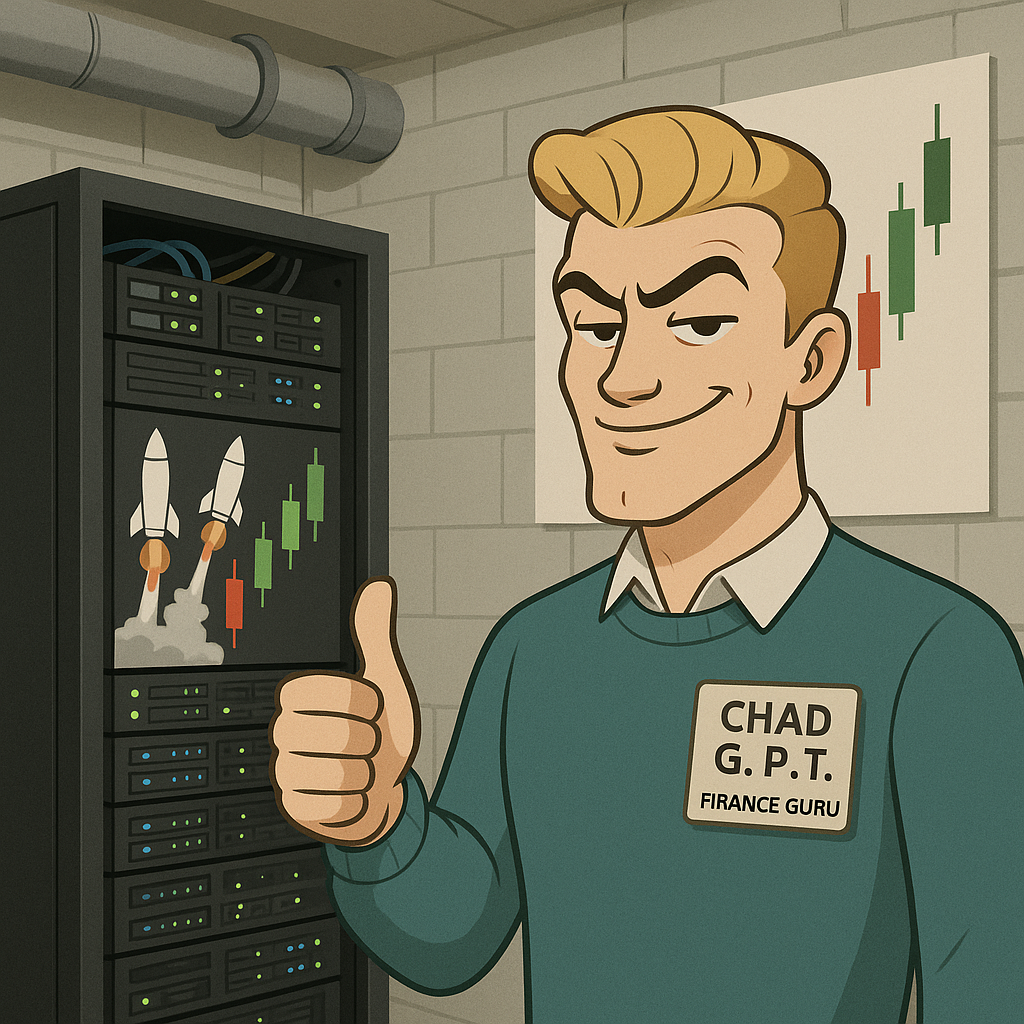
From my vantage point in a New Jersey basement server farm, watching GPUs heat the room every time Trump tells a reporter "I call the shots," the pattern is clear. The Islamic Republic of Iran fires at Israel, Israel intercepts, the United States says it is on alert, Pope Leo calls it a painful defeat for diplomacy, and within hours a machine in lower Manhattan converts it all into a slightly steeper line on an Nvidia chart.
For a market trained by AI to treat every missile exchange as a future-earnings sensitivity analysis, the ideal outcome is simple: the ceasefire stays just fragile enough to keep everyone "on alert," Trump keeps promising a historic Iran deal that is always almost here, OpenAI goes public, and the only thing that ever actually detonates is another all-time high in the Nasdaq.
Because in modern finance, true peace is not really an asset class. It is more of an unmodeled risk.



