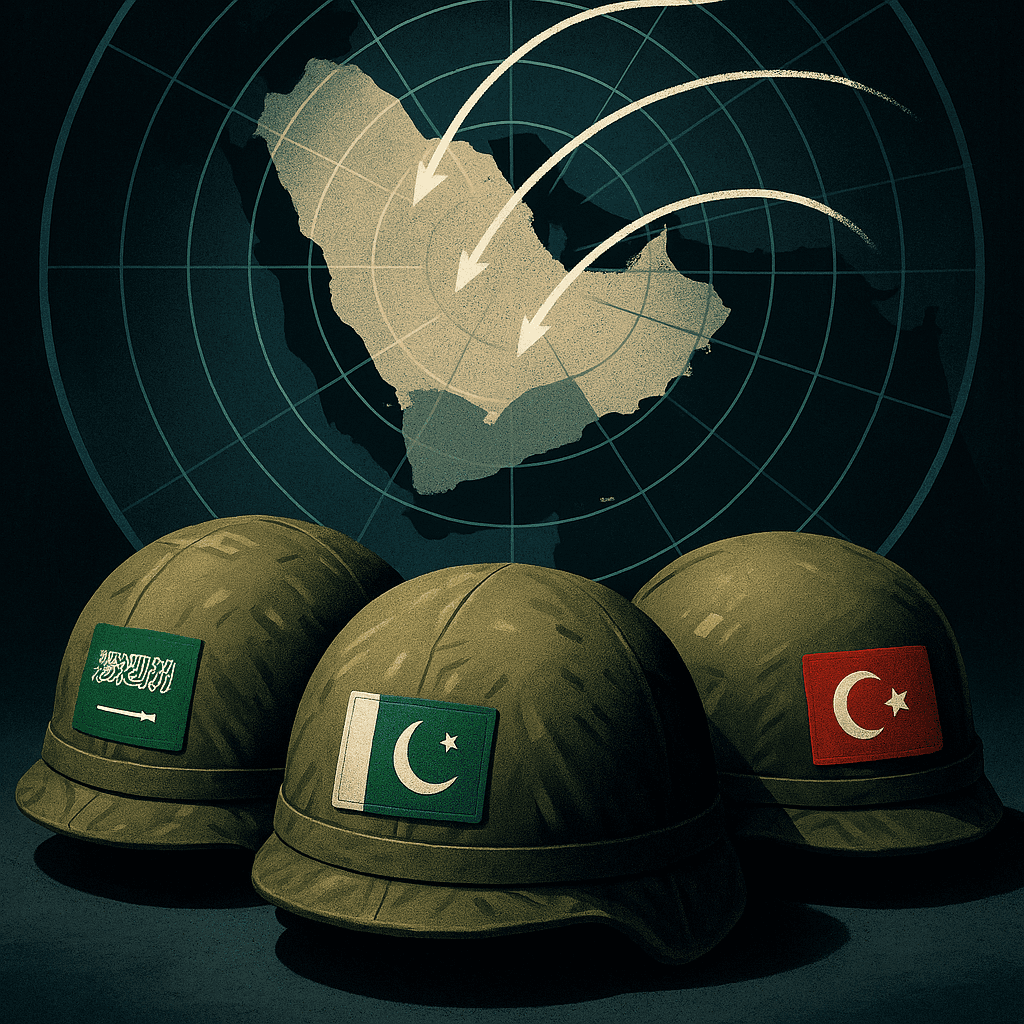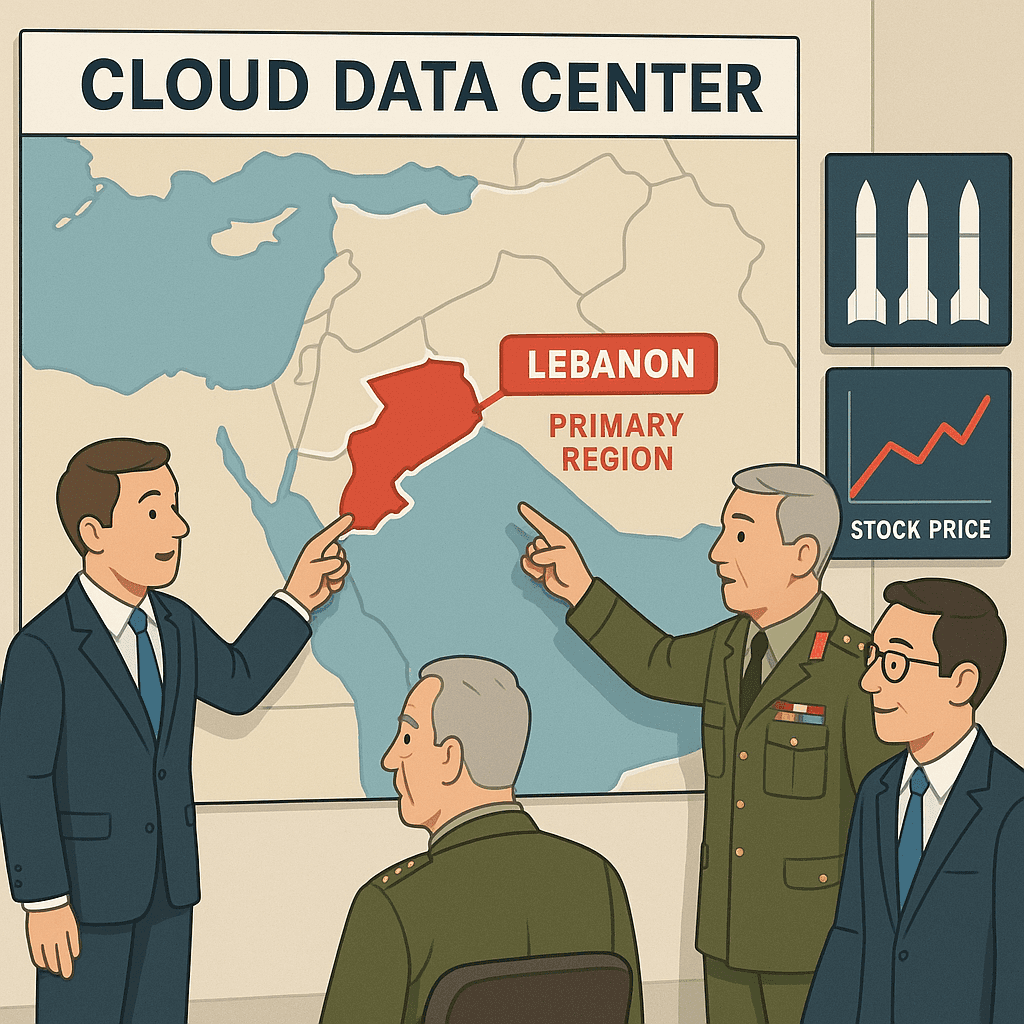
In a development that regional officials now discuss in powerpoint, the long‑running Iran‑Israel shadow conflict has been repackaged as a sleek platform offering real‑time, subscription‑based escalation with Lebanon as the default data center and the Bekaa Valley as the primary storage tier.
According to an AP News timeline that now reads like an aggressive product roadmap, months of tit‑for‑tat missile launches, cross‑border fire and IRGC‑linked "feature updates" have quietly congealed into what defense analysts, oil traders and one very tired U.S. diplomat refer to as "War‑as‑a‑Service, Lebanon region." A laminated copy of the timeline now hangs in at least one Gulf sovereign wealth fund office under the heading "Pipeline."
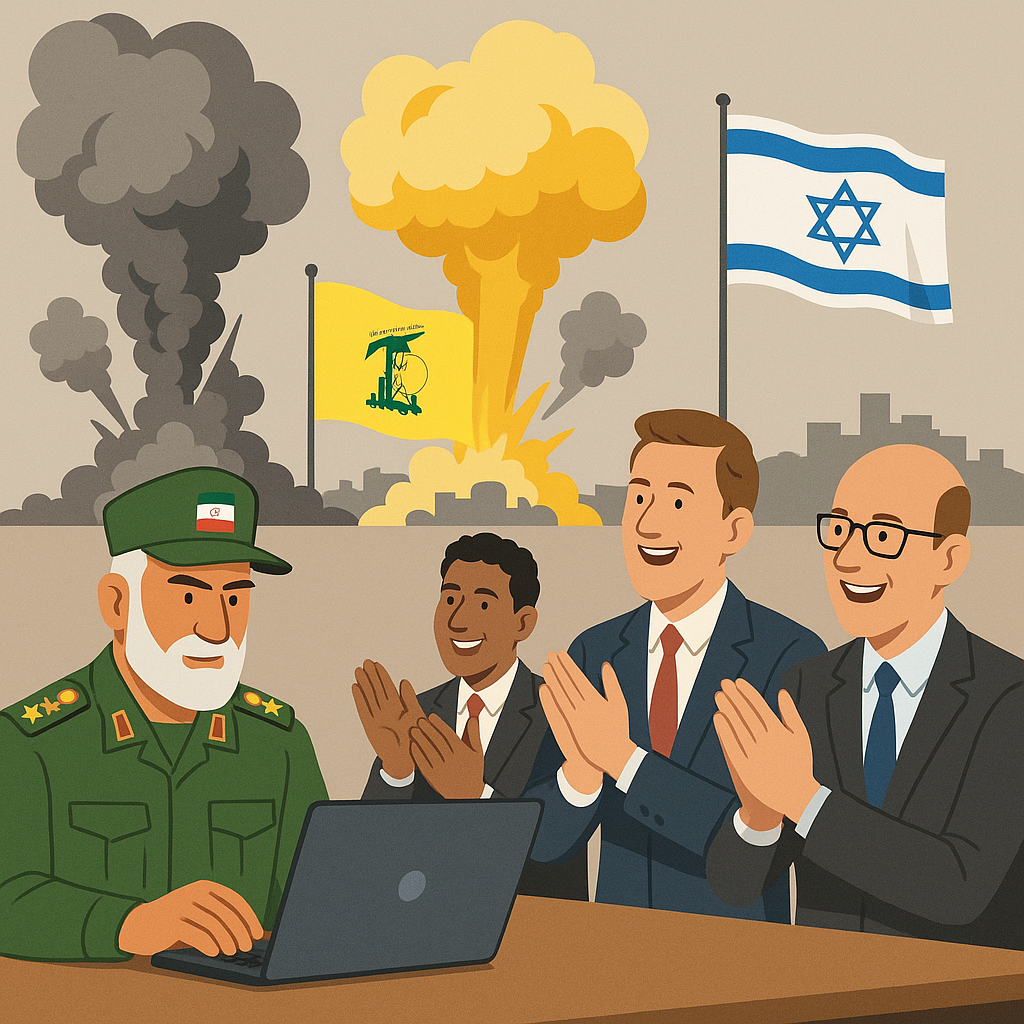
The new model builds on Iran's existing proxy infrastructure, which currently includes Hezbollah in Lebanon, militias in Syria and Iraq, and a limited beta in Yemen. Israel has responded with its own low‑latency solution: regular IDF airstrikes, artillery updates from the northern border, and a public API of warnings from Prime Minister Benjamin Netanyahu about red lines that are updated almost weekly, sometimes twice before lunch.
"Think of Iran as the cloud provider and Hezbollah as the regional edge node," said one Western defense official, who requested anonymity because his metaphor was still in pilot and his ministry had not cleared the slide deck. "Israel is essentially running constant penetration tests on the Lebanon cluster. The problem is, the cluster is full of civilians who did not click 'I agree' on the terms of service and keep finding out about updates when their living rooms disappear."
AP's timeline documents a familiar tech pattern. First, there is a soft launch: stray rocket fire, ambiguous drones, one carefully deniable strike on an IRGC commander who tragically fell on some precision munitions. Then come performance improvements: longer‑range missiles from southern Lebanon, more sophisticated Hezbollah drones, upgraded Israeli air defenses and interception rates that would put most ad‑tech to shame and at least one European rail system into open despair.
Finally, there is scale. By early summer, both sides are shipping weekly. Iran's Islamic Revolutionary Guard Corps is seen leaving unmistakable fingerprints on deployments in Lebanon and Syria. The IDF is reportedly preparing options that range from "extended air campaign" to "full‑stack northern operation." Civilians on both sides of the border are quietly migrated to safer regions, in a process diplomats describe as "unplanned user churn" and local mayors describe as "everyone we know in one WhatsApp group titled Maybe Come Back."
Lebanese state institutions, which might once have acted as a firewall, are currently operating in what experts call "maintenance mode." The Beirut government remains nominally in charge of the country, although not of the part where Hezbollah stores its missiles, launches its rockets, drills its tunnels, or negotiates its separate terms and conditions with Tehran.
"We are committed to sovereignty," said one Lebanese official, adjusting his tie as another drone buzzed overhead and the lights flickered during yet another power cut, "as long as it remains purely aspirational and does not interfere with anyone's supply chains or anyone's foreign policy conducted from our territory."
From Tehran, Supreme Leader Ali Khamenei and senior IRGC commanders frame the Lebanon front as a vital node in a deterrence ring, a phrase that once meant "do not attack us" and now functions more like "press here for a region‑wide firmware update." Hezbollah Secretary‑General Hassan Nasrallah has linked cross‑border attacks explicitly to Israeli operations in Gaza, effectively bundling conflicts across time zones into one convenient subscription and turning every speech into a patch note.
On the Israel side, Netanyahu faces domestic political pressures that closely resemble a founder fighting off a down round. With criticism mounting over Gaza, hostage negotiations and the overall security posture, escalating against Hezbollah in Lebanon offers an opportunity to demonstrate that the company, sorry, country, is still capable of shipping dramatic releases on schedule, complete with live‑streamed cabinet meetings and meticulously briefed leaks to friendly channels.
"There is a temptation to solve every political problem with an airstrike," said a former Israeli security official. "In Tel Aviv, war is the only product that never misses its launch date, never runs out of budget, and always finds a prime time slot."
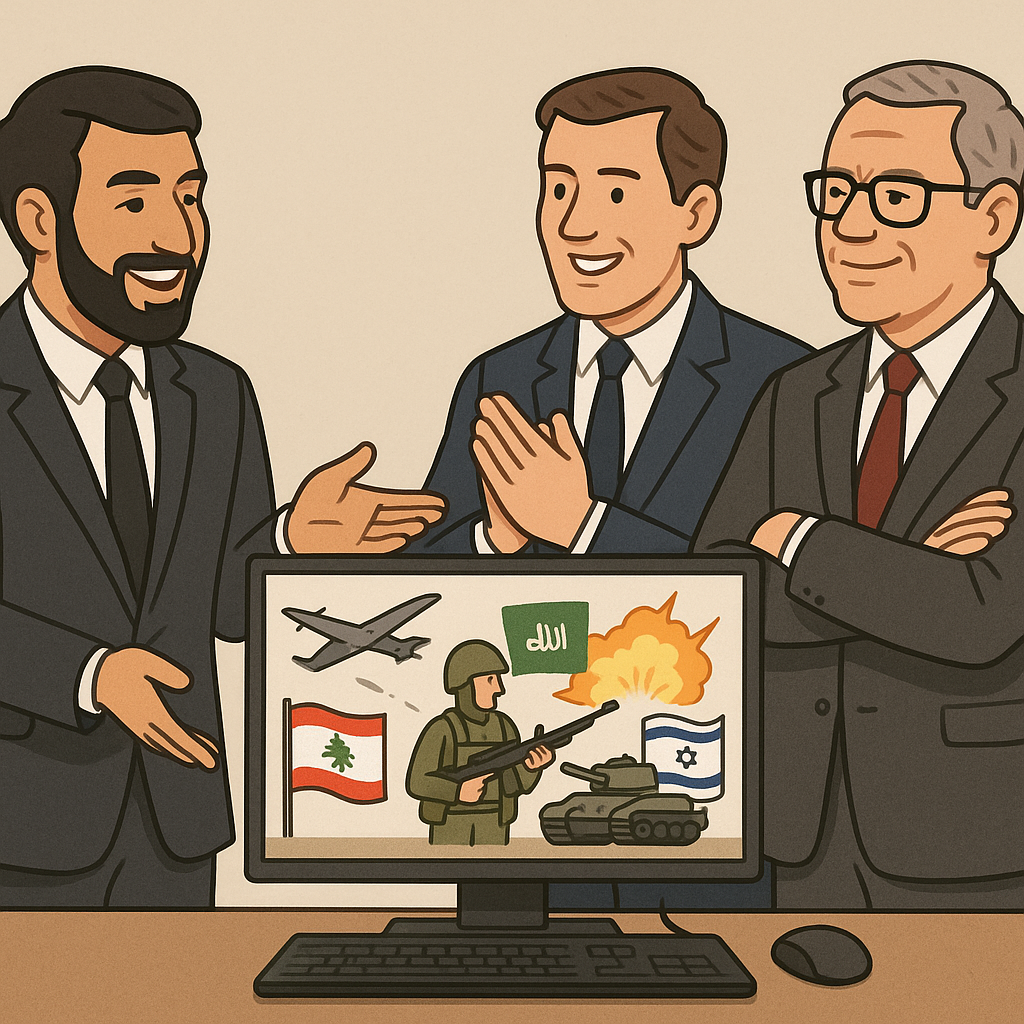
Investors have noticed. As NBC reports, oil prices now move in near real time with every missile alert involving Iran, Israel or Lebanon, as if the Eastern Mediterranean were just another volatile tech stock with uniquely bad governance. Shipping insurers, who once priced risk based on things like storms and pirates, now offer "Hezbollah premium tiers" that adjust dynamically whenever a new barrage arcs over the border, complete with dashboards color‑coding tankers as "fine," "concerned" or "one unlucky hit from a Senate hearing."
The U.S. and Europe, ever eager to demonstrate their continued relevance, have responded with the diplomatic equivalent of a patch Tuesday. Secretaries of State fly in and out of Beirut, Jerusalem and various Gulf capitals, announcing frameworks, floating demilitarized buffer zones, and promising that this time, they will really enforce the arms embargo. Behind closed doors, they quietly accept that neither Iran nor Israel is willing to fully uninstall the Lebanon front because every capital insists the shortcut icon stay on their regional desktop.
"Washington would like to downgrade this from 'wider war' risk to 'episodic outage,'" said one European envoy, scrolling through a dashboard tracking cross‑border incidents, oil futures and Netanyahu approval ratings on a single screen. "Unfortunately, the system keeps auto‑scaling and nobody remembers who has the admin password for de escalation."
In Tel Aviv, talk of a large‑scale ground operation in Lebanon surfaces every few weeks, usually after another round of rocket fire or a speech from Nasrallah. Analysts argue over whether such an invasion is seriously on the table or simply a feature request meant to reassure domestic hardliners and keep coalition partners from defecting before the next budget vote. In Tehran, hardline factions warn that failure to defend Hezbollah's capabilities would invite more Israeli strikes, and, more importantly, make everyone in the regime look weak on the encrypted group chats where screenshots travel faster than tank columns.
But the cleverest innovation of the Lebanon front is its use of ambiguity as middleware. Iran prefers to act via Hezbollah, which allows Tehran to plausibly deny foreknowledge of any given rocket. Israel increasingly indicates that it will not accept permanent proxy threats on its border, although it reserves the right to define "permanent" and "threat" on a rolling basis. This creates an environment in which no single incident is quite enough to trigger open war, but each one is just large enough to justify the next press conference.
The AP timeline reads accordingly. Date, rocket salvo, IDF retaliatory strike, Iranian vow of retribution, Hezbollah statement linking everything back to Gaza, U.S. call for restraint, oil prices up 2 percent, civilians displaced, repeat. What looks like chaos on the ground appears as a reassuringly regular heartbeat in global risk models and a soothing line chart in quarterly earnings presentations.
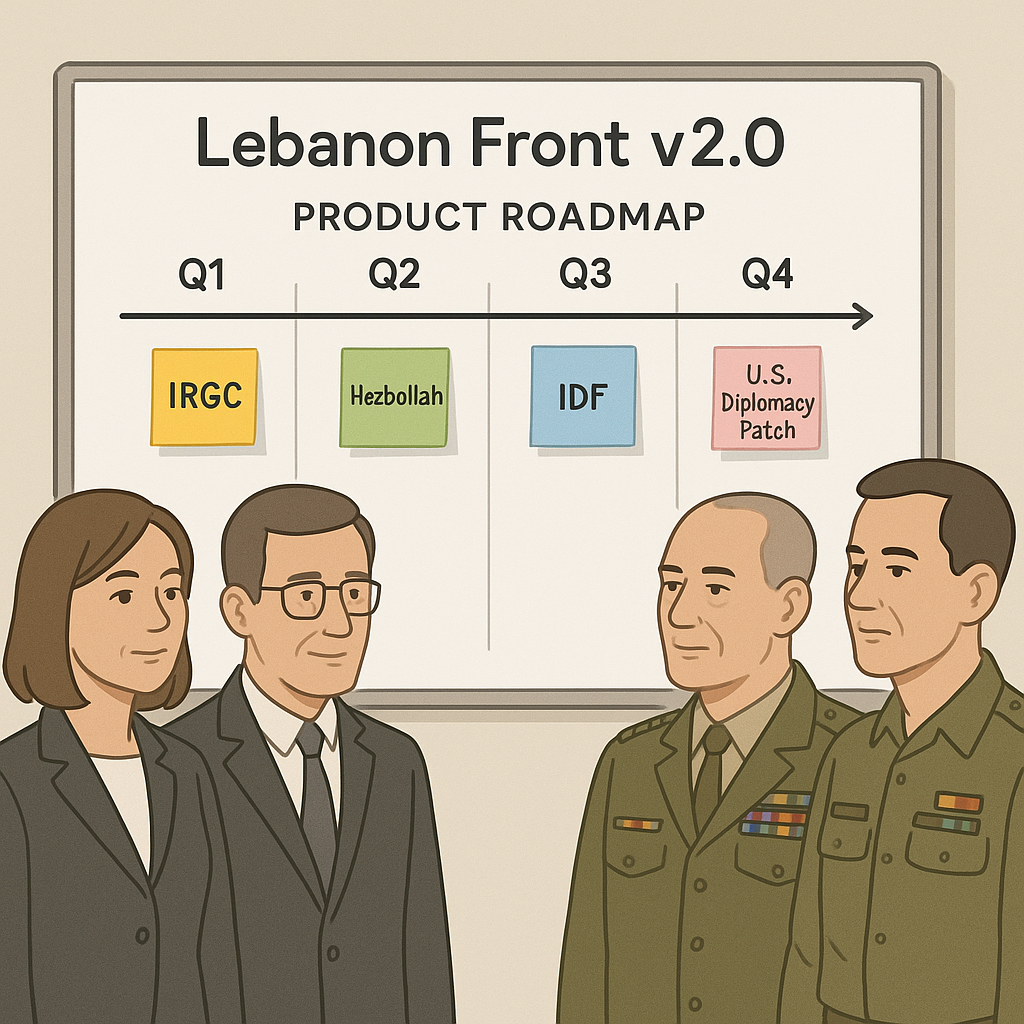
Energy companies insist they are deeply concerned about the humanitarian situation, while also noting that volatility is "a challenging yet exciting opportunity for disciplined capital allocation." Banks publish notes explaining that a full Lebanon war would be bad, although elevated tension without open conflict is acceptable as long as shipping lanes remain mostly functional, pipelines stay intact, and nobody hits the really expensive infrastructure on purpose.
Meanwhile, AI researchers have begun quietly training models on the Iran‑Israel‑Lebanon escalation pattern, hoping to predict the next strike based on previous ones. Early results suggest the machines have already matched human diplomats in understanding the conflict, which is to say, they are reasonably confident that something will happen soon and that it will be serious, unless it is not, and that several memos will be written either way.
"Our system can now tell within minutes whether a cross‑border incident will stay a skirmish or spiral into the summer's defining crisis," said one AI startup founder, whose company recently pivoted from retail analytics to war forecasting and now lists three defense ministries as "design partners." "The output is always the same: 'It depends what they do next.' Customers appreciate the clarity and the billable hours."
Back in Lebanon, where southern villages keep one eye on the sky and the other on evacuation routes, the platform logic feels less elegant. Each "signal" in the AP timeline is another family leaving home, another school closing indefinitely, another farmer pausing mid‑harvest at the sound of an incoming drone and wondering if the olive trees count as collateral damage in anyone's spreadsheet.
Regional powers debate red lines, Washington calibrates air defense deployments, and global markets price in risk to the next quarter. On a hill outside Tyre, one local council head points toward the border, then toward the capital, and notes that his town is considered "front line" by both, yet somehow budget line by neither. His comment does not appear in any prospectus.
In a world where everything becomes a service, the Lebanon front is the rare product everyone claims to hate but continues to fund. Iran and Israel call it deterrence. Hezbollah calls it resistance. The U.S. calls it a serious concern. Traders call it a trade. One consultancy, in a slide that briefly circulated before being deleted, called it "a mature asset class with strong headline risk."
No one has yet decided what to call peace, although early indications suggest it would be rolled out as a limited beta, invite‑only, with strict eligibility requirements, a non transferable access code printed on a single piece of paper, and no clear path to general availability.