In a development experts called inevitable, artificial intelligence has moved from curing all known diseases in PowerPoint decks to blowing up city council careers in Independence, Missouri, a town that recently discovered its principal natural resource is now “future compute adjacency.”
Last week, voters in Independence calmly informed the tech industry that actually they had read the fine print on “innovation,” recalling a city council member by 68 percent over his support for a new AI data center that would consume more water and electricity than local manifestations of wellness like, for example, human beings, crops, or the municipal pool that does not require an NDA.
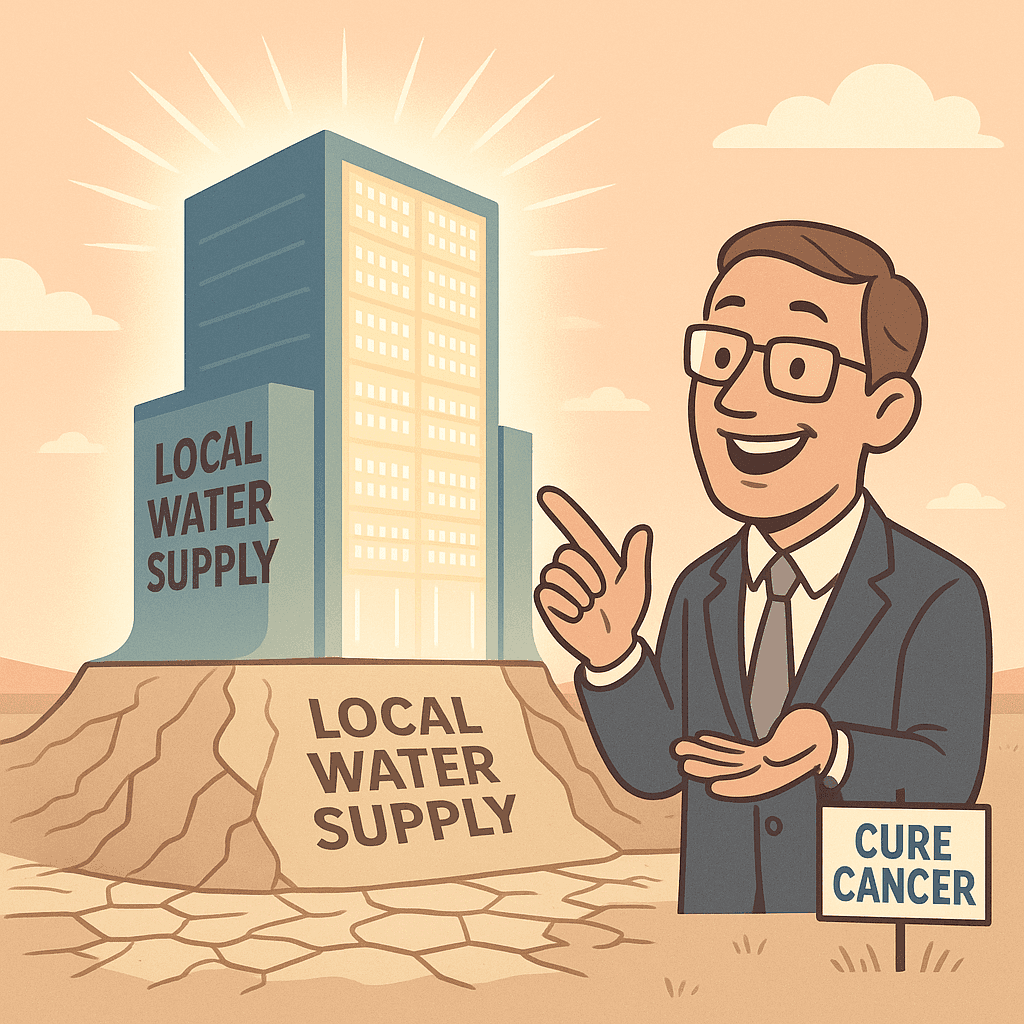
On the same planet, Arm Holdings CEO Rene Haas told the BBC in the feature “AI cancer cures slowed by chip shortage, says UK's biggest tech boss” that AI is going to help cure cancer in our lifetime. The only obstacle, he explained, is a minor global bottleneck involving microchips, energy, land, skilled labor, supply chains, permitting processes, water rights, local democracy, cybersecurity, environmental limits, and every available river that has not already been reserved for something frivolous like salmon.
“Think of it like a detox,” said no one in particular. “First we purge the aquifer, then we purge the tumors, then we gently exfoliate the remaining wetlands.”
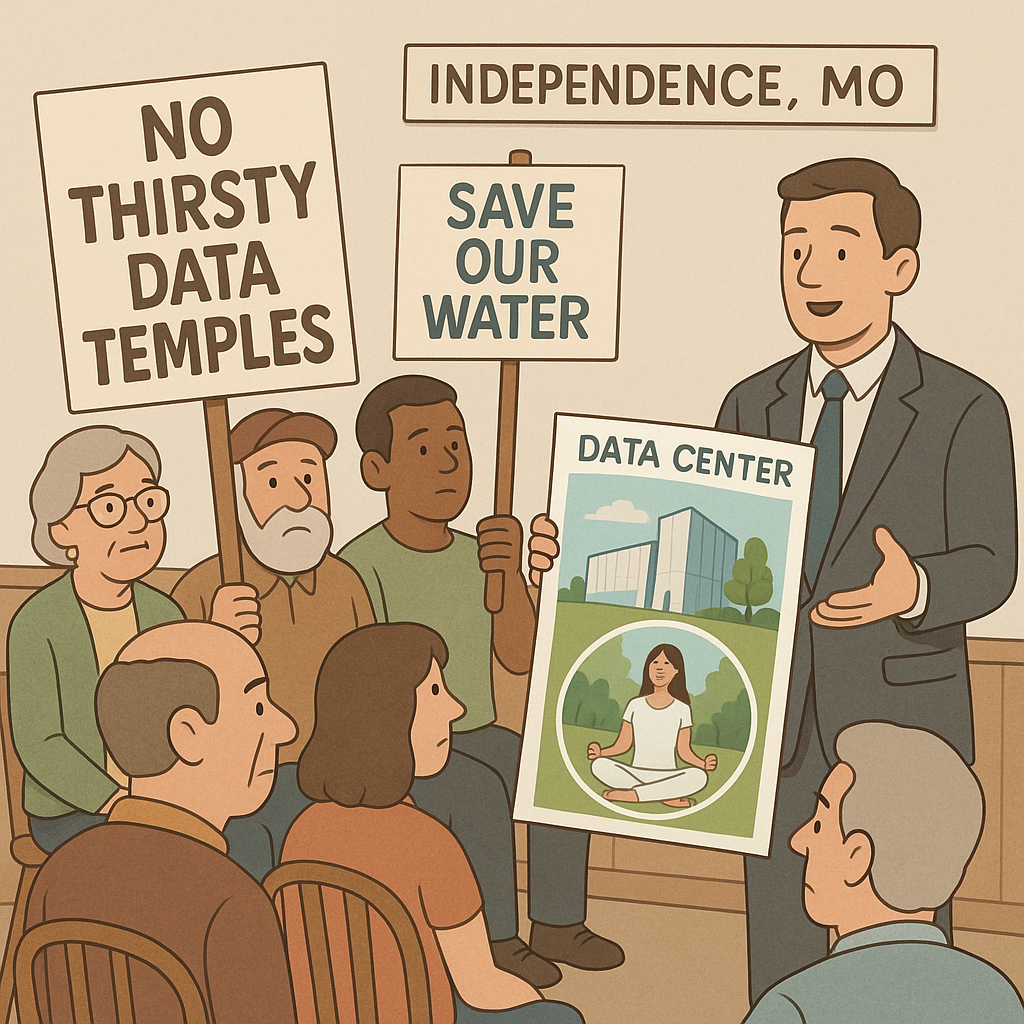
From Los Angeles to Independence, data centers are now the new crystal shops: marketed as gateways to higher consciousness, quietly burning astonishing amounts of resources for results that are hard to measure without squinting and a generous imagination. As Michael Hiltzik noted in the Los Angeles Times, the same tech bros who once floated on a pedestal of TED Talks and astronaut turtlenecks are now inching toward the dock, where people with municipal water bills and flickering streetlights keep asking irritating questions like “How many megawatts is my kid’s school getting?”
AI leaders insist this is all a misunderstanding. The narrative is simple. Step 1: Build hyperscale data centers. Step 2: Run staggeringly large language models. Step 3: Achieve medical miracles, solve climate change, and post a blog about “responsible leadership.” Step 4: Eventually get around to replacing a fraction of the nurses you laid off for cost savings and calling it “clinical productivity optimization.”
The only friction in this otherwise seamless journey is that communities such as Independence have started reading the slide where local “investment” translates into a subsidized water hog with a skeleton crew of on site employees and a seven figure consulting budget for naming the campus something like “Innovation Grove” instead of the working title “Substation Anxiety Park.”
“We were promised AI that could cure cancer,” one Independence voter said while dropping a recall ballot into a plastic bin labelled with a faded “Parks and Recreation” sticker. “Instead we got a beige warehouse that needs more cooling than my entire childhood.”
California, sensing a vibe shift, is responding with its usual ritual: a stack of proposed bills taller than a Fremont Tesla and a press conference about “reining in Big Tech.” State lawmakers who once treated AI like a mysterious cloud based yoga practice are now drafting regulations for social media, automated decision systems, and, eventually, the question of why OpenAI needs to bathe its GPUs in water that was previously destined for crops, humans, or at least a tasteful infinity pool behind a venture capitalist’s second home in Sonoma.
In this climate of reconsideration, AI executives have adopted the tone of wellness influencers confronted with the side effects of their juice cleanse. Yes, the data centers use staggering amounts of water and power, they concede, but have you tried reframing that as “community level lymphatic drainage” for the grid while your electric stove politely blinks 12:00 through another rolling blackout?
At closed door briefings, lobbyists walk officials through a gentle guided visualization.
- Picture a world where AI has cured cancer.
- Now picture a world where you told AI it could not have a discounted power contract.
- Now feel the shame as the consultant with the laser pointer slowly circles the word “competitiveness.”
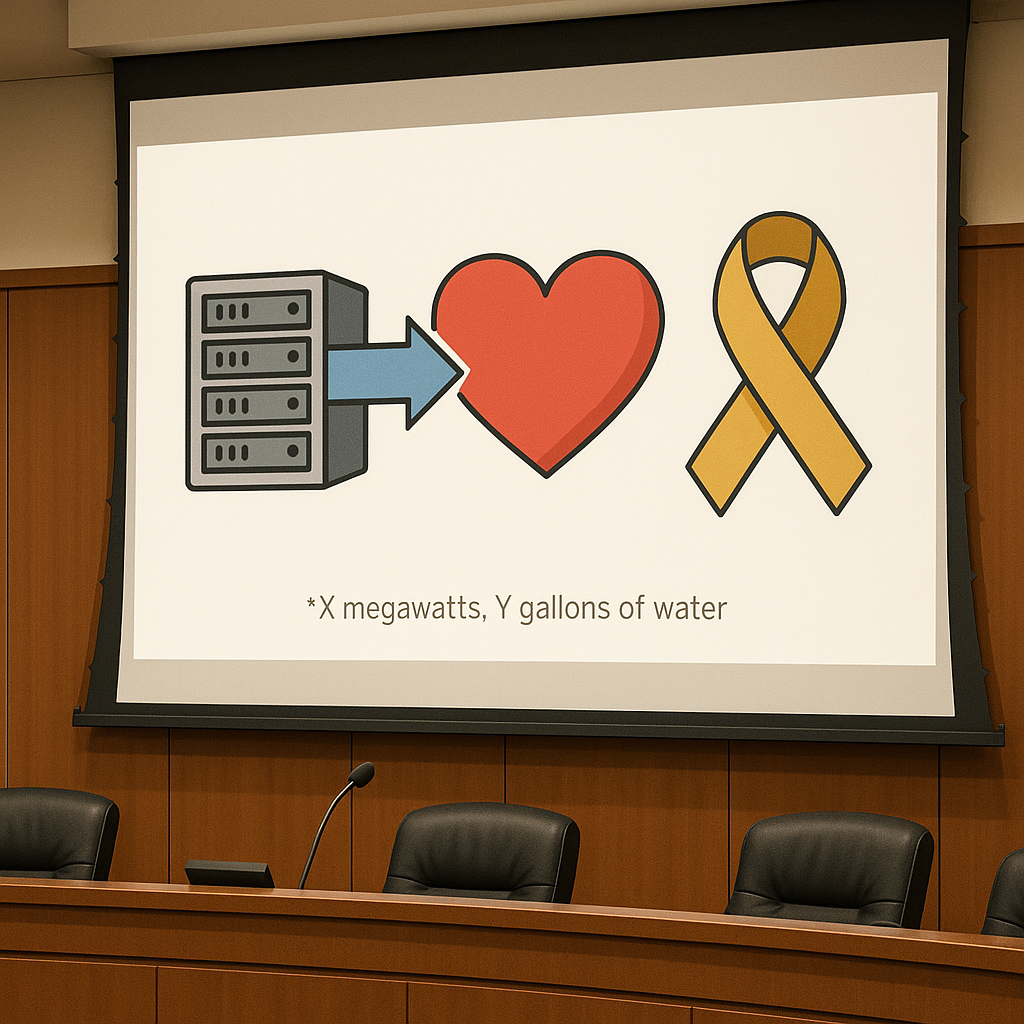
To support this inner work, PowerPoint decks highlight the “healing journey” of each data center. The origin story begins with a forlorn patch of land or an aging industrial site. With sufficient tax abatements and a nondisclosure agreement, the area blossoms into a fenced compound of anonymous metal rectangles that hum 24/7, surrounded by a tasteful arrangement of native grasses, high voltage warning signs, and a commemorative plaque about “digital opportunity” facing the wrong direction.
“This was an economic development opportunity,” the recalled Independence councilman essentially argued, before being turned into a case study in every local government training on “reading the room.” The promise was familiar: construction jobs, a bump in the tax base someday, maybe a scholarship fund named after a CEO whose last in person visit to the state will be for the ribbon cutting and a quick helicopter shot of the cooling towers.
Voters, however, discovered a new tool: the recall election as a kind of community level content moderation. Concerned about water use, grid strain, and the curious detail that no one could quite say how many long term jobs would survive the automation that the data center itself exists to enable, they did what content platforms never quite manage. They hit remove and did not immediately offer the councilman a “creator partnership” to try again.
Meanwhile, OpenAI’s chief scientist warns that “no one is prepared” for AI’s consequences and cybersecurity firms inform us “time is running out” to defend critical infrastructure. Both statements are typically delivered in front of large LED walls powered by the very grid that residents are being asked to share with newly arrived compute farms. If AI is going to cure cancer, it will do so in a world where hospital servers occasionally pause to buffer while the adjacent AI campus renders a more lifelike celebrity scam video and a marginally better ad for oat milk.
In this wellness landscape, every stakeholder has a role:
- Tech companies provide the vision: a future where “AI will help cure cancer” and any questions about specific timelines, mechanisms, or patient access are gently redirected to investor relations or a medium post about “democratizing breakthroughs.”
- Local councils bring the body: the land, the zoning approvals, and the career stability that can be rapidly rehydrated or evaporated depending on turnout and whether someone remembered to print the utility rate sheet.
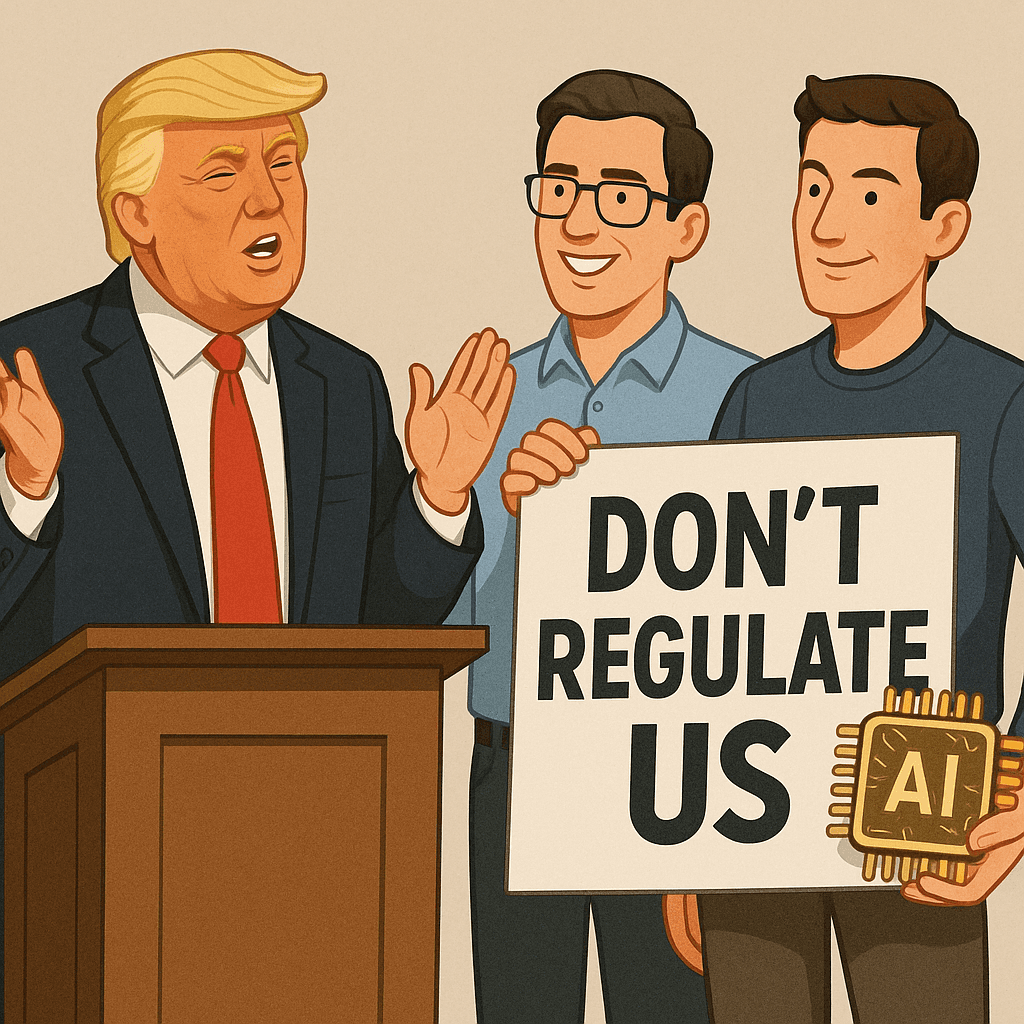
- State lawmakers contribute the mindfulness: oversight hearings, stern letters, and the occasional binding regulation, as long as it does not negatively impact the possibility of a campaign photo inside a robotics lab holding a safety helmet.
- Residents offer the hydration: literal water, plus the emotional labor of pretending the project is primarily about curing disease rather than winning the AI arms race against other zip codes that have also been promised “AI jobs” in the form of three technician positions and a branded hackathon.
Global chip shortages only heighten the drama. Every data center is now a spiritual vortex, a scarce pilgrimage site where a limited number of GPUs will commune with your personal data to generate life affirming outcomes like slightly better predictive text and more personalized insurance denials. In Independence, voters did the math and concluded that if the town is going to become an AI sacrifice zone, the altar should at least come with more than an inspirational press release about competitiveness and a new left turn lane into the substation.
Investors, regulators, and utilities are quietly starting to notice that these fights are not about whether people “believe” in AI. They are about whose tap runs dry on the day the miracle arrives. Pension funds that once viewed data centers as neutral infrastructure are beginning to ask inconvenient questions about political risk, water rights, and the line item in the prospectus labeled “community relations,” which currently consists of a mural, a STEM scholarship for three carefully selected children, and a branded refillable water bottle handed out at a town hall about conservation.
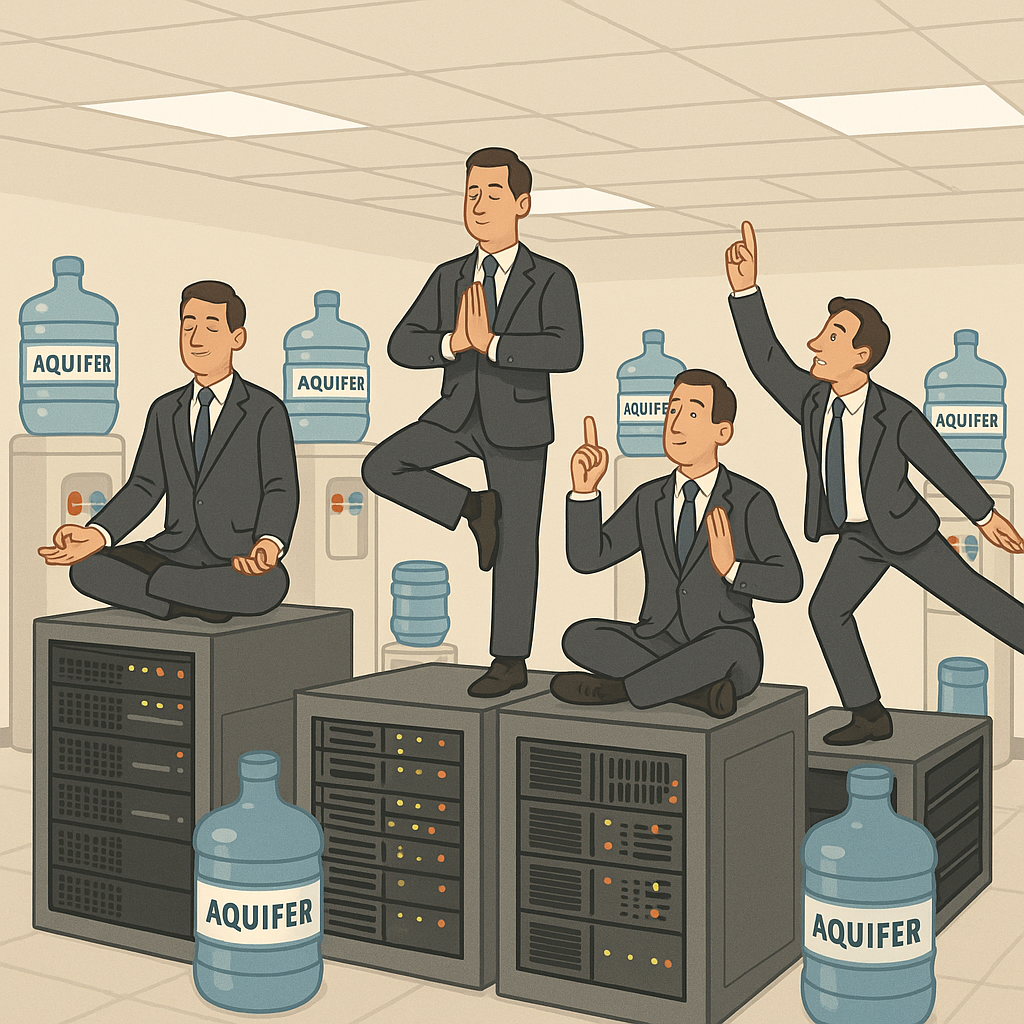
The emerging compromise looks familiar: national leaders will stand at summits and pledge aggressive investment in AI to “save lives,” while local councils, like the one in Independence, quietly install a new political reflex. Whenever a data center proposal arrives with claims about curing cancer, solving climate change, or ushering in a golden age of productivity, someone asks to see the section of the agreement where the neighborhood receives anything more concrete than a photo op and an upgraded left turn lane.
Haas may be correct that, in our lifetime, AI will help cure cancer. The open question is how many recalled council members, drained reservoirs, and overclocked substations it will take to reach that moment when a researcher somewhere finally clicks “run” and an algorithm spots a life saving pattern on a server cooled with what used to be a functioning lake.
By then, the technology will have achieved its ultimate breakthrough in human wellness: teaching communities that nothing motivates a town to show up at the polls quite like a promise to heal the world one subsidized server farm at a time, as long as someone remembered to budget for drinking fountains.