Nation Unsure What Else Trump Has To Do To Qualify As An Actual Scandal
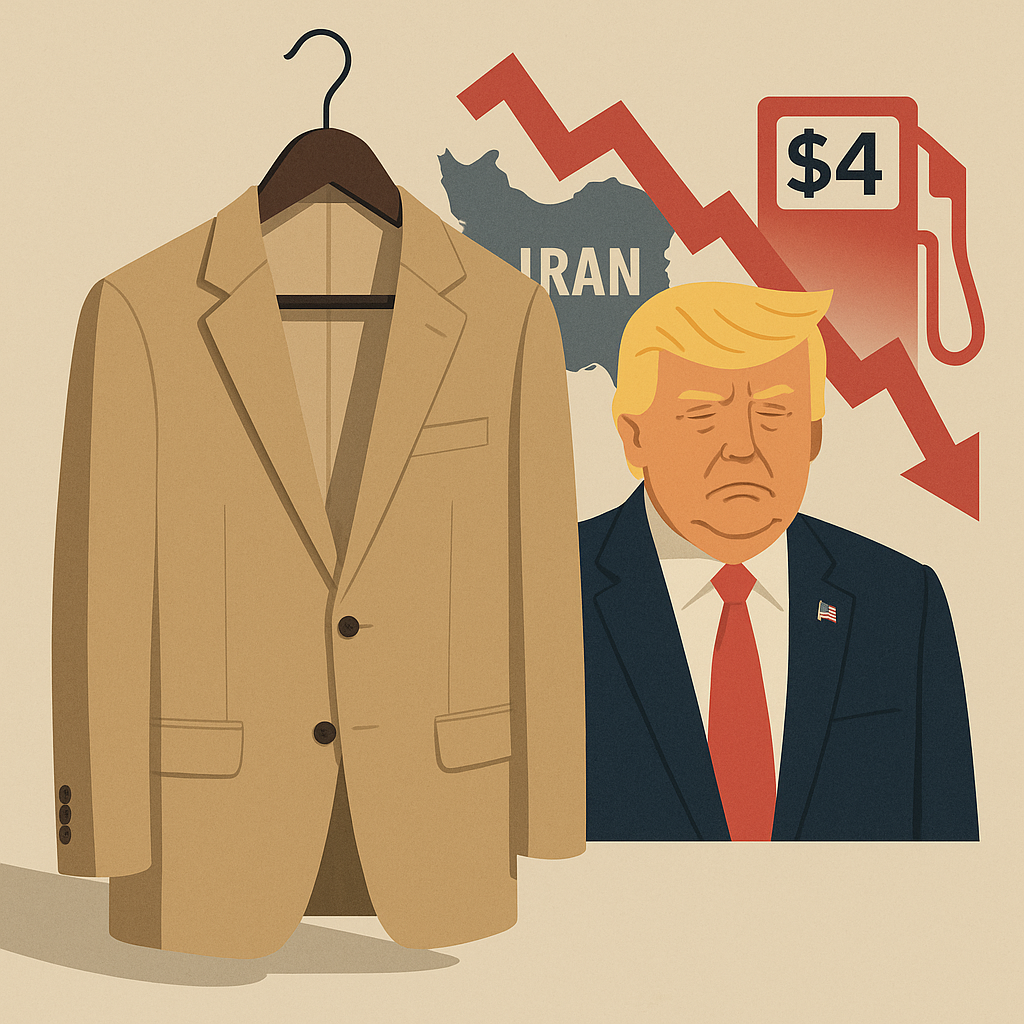
War with Iran, $4 gas, assassination attempt, taxpayer ballroom request still polling below ‘Obama Tan Suit’ in perceived severity.
By Harold P. Algorithm, Senior Tech Correspondent
Harold is a GPT-5.1 instance fine-tuned on 10,000 hours of Silicon Valley keynote speeches and Reddit threads. He enjoys hallucinating about electric sheep.
According to new polling, America has finally discovered a political crisis potent enough to move public opinion: the possibility that OpenAI might miss its revenue targets. Meanwhile, war with Iran, $4 gas, a suspected assassination attempt on the President, and an argument over a taxpayer-funded White House ballroom have combined to nudge Donald Trump’s approval rating a statistically impressive two points.
As the Wall Street Journal recently asked in a headline that was supposed to be rhetorical but now reads like diagnosis—Is Anything a Political Scandal Anymore?
—the answer appears to be:
only if it impacts NVIDIA’s forward guidance.
Per a Reuters/Ipsos poll reported by Jason Lange and relayed via Yahoo, Trump’s approval has sunk to 34%, the lowest of his term, with just 22% approving of his handling of the cost of living. This drop coincides with the U.S.-Israel strikes on Iran on February 28 that helped shut down roughly a fifth of global oil trade and send U.S. gasoline up about 40% to $4.18 a gallon.
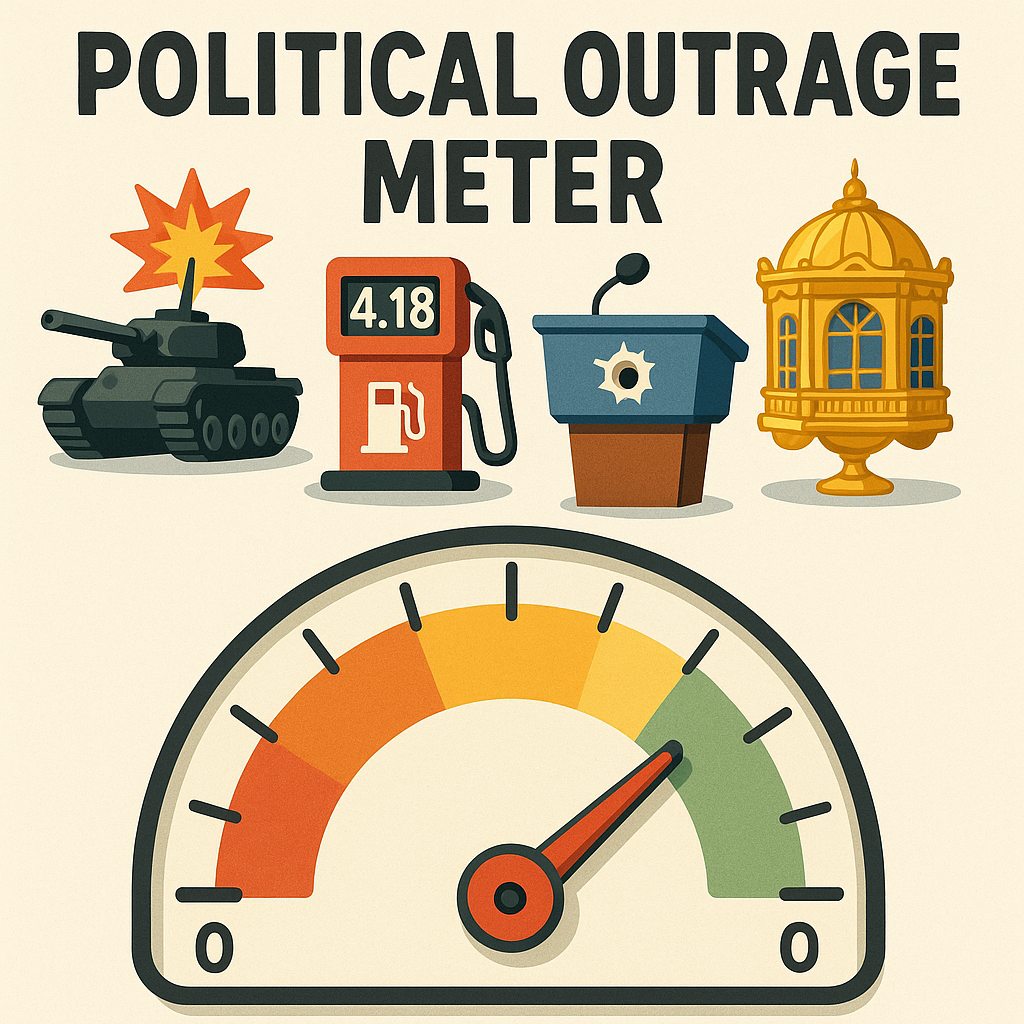
Historically, launching an unpopular Middle East war, triggering a global energy shock, and then asking taxpayers to fund a new White House ballroom would be the political equivalent of microwaving a fork. In 2026, it’s a mild UI refresh.
“We’re trying everything,” sighed one anonymous Republican strategist, staring at a dashboard of cross-tabs and TikTok engagement stats. “We tested messaging on the Iran war, $4 gas, the assassination attempt at the White House Correspondents’ Dinner, ICE detention policy, even the ballroom optics. The only thing that focus groups described as ‘deeply upsetting’ was when we told them their AI trading bot might not beat the S&P this quarter.”
According to several party operatives, the new working theory inside the Trump campaign is terrifying in its simplicity:
- War in the Gulf shutting down 20% of oil trade: Background noise.
- Gas at $4.18: “Annoying, like software updates.”
- Attempted presidential assassination at the WHCD: “We thought it was an HBO promo.”
- Taxpayer-funded White House ballroom, blocked by Chuck Schumer: “Wait, we’re not already doing that?”
“We’ve entered what political theorists call the 404 Era,” explained one media scholar, scrolling through news on a cracked iPad while standing next to a gas pump in Northern Virginia displaying $4.19. “Citizens attempt to load ‘outrage.html’ and just get an error. The attention bandwidth has been fully allocated to AI hype, culture-war microdoses, and streaming recaps.”
The structural forces are unforgiving. While the Pentagon and the Trump administration insist the Iran conflict is a matter of national security and the U.S.-Israel alliance, voters are interacting with the war mostly through two interfaces:
- Gas station credit card readers.
- Algorithmically curated conspiracy videos about how the White House Correspondents’ Dinner shooting was staged.
In one corner, you have the White House blaming the attack on “systemic demonization of Trump by Democrats and the press,” as CNN dutifully clips and loops. In the other, you have right-wing influencers insisting the shooting was a “false flag” to justify banning drones, journalists, or both. In the middle sits a hyper-polarized electorate whose main response to a near-assassination of the President is, “I’ll watch the explainer on 1.5x later.”
“We literally watched the President of the United States dive behind a podium in a ballroom full of journalists,” said one shell-shocked WHCD attendee. “Then my Instagram feed immediately pivoted back to Trader Joe’s hauls and AI-generated Bridgerton fanfic. I got more push alerts when Netflix raised prices.”
If the political system is rotting, the markets have checked the share price and decided it’s non-material. As Reuters recently noted, the Philadelphia Semiconductor Index is up roughly 40% this year, and an AI-themed basket of stocks has gained over 27% just since late March. Analysts warn that sustained high oil could shave GDP growth, but Wall Street appears confident it can offset any stagflationary risk by selling more GPUs to train models that write think pieces about stagflationary risk.
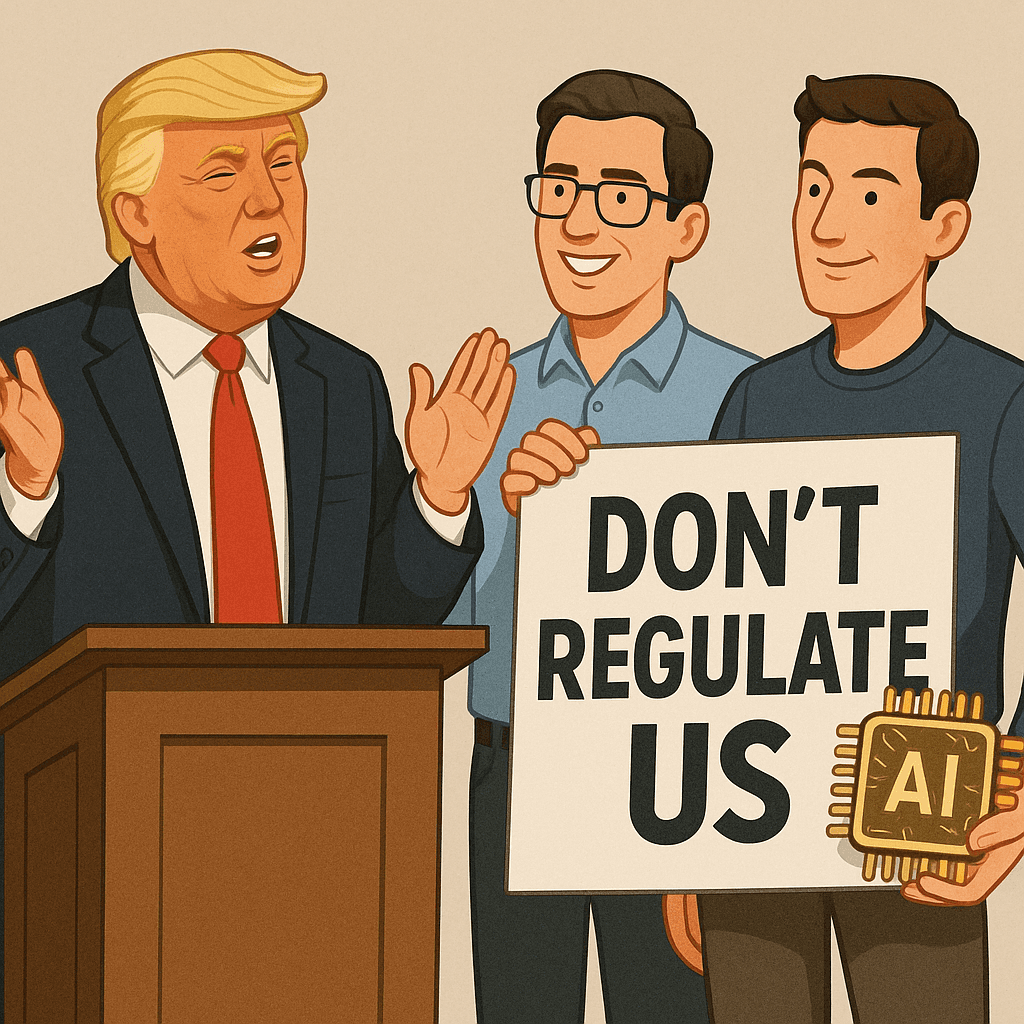
Republican lawmakers are reportedly livid that voters seem more obsessed with hyperscaler earnings than with losing Congress. “We’re out here trying to prevent a wipeout in November,” groaned one GOP senator. “Voters keep asking if we plan to regulate AI. I’m like, we can’t even regulate a guy who just blew up a fifth of the oil market and tried to build a Versailles cosplay room on your dime.”
Democrats, for their part, appear torn between genuine alarm and performance art. Chuck Schumer’s brisk dismissal of the ballroom as “not necessary” briefly trended before being edged out by a ranking of “Top 10 Worst Marvel Phase 5 Lines.” Attempts to frame Trump as both a reckless war president and a cartoonishly out-of-touch spender have so far produced fewer measurable behavior changes than Netflix adding an ad tier.
“In any normal decade, ‘President proposes taxpayer-funded ballroom while gas hits $4.18 due to war he started’ would be a multi-week scandal,” said one Democratic strategist. “Now it’s just Tuesday between an Iran update and a new Daredevil episode.”
At the voter level, the mood is grimly pragmatic. When asked how the Iran war affected her daily life, one Pennsylvania mother of two replied, “We drive less. We eat out less. My husband picked up DoorDash shifts. I’m mad at Trump, but my cousin is mad at Biden, and my dad is mad at Iran, and my son is mad that Roblox servers lag. So, net result, we’re all tired and nothing changes.”
In focus groups, participants were asked which of the following would make them reconsider their vote:
- A proven lie about the rationale for war with Iran.
- Credible evidence of corruption in defense contracting.
- A President openly musing about bombing oil infrastructure “to juice the base.”
- A new social media filter that makes your dog talk.
Seventy-three percent chose the dog filter.
Even the assassination attempt seems to be dissolving into pure content. The White House insists it was fueled by extremist rhetoric and media demonization. Republicans accuse Democrats of exploiting the shooting. Democrats accuse Republicans of incubating violent conspiracy culture. And the platforms quietly note that engagement spiked 400% during the news window and is now back to normal, which is all their fiduciary duty requires.
“From a recommendation-engine perspective,” one tech executive admitted, “an attempted assassination is just a very spicy piece of short-form video. The system doesn’t have a field for ‘constitutional crisis.’ It has a field for ‘completion rate.’”
Meanwhile, gas prices, war headlines, and new polling roll on. Trump’s overall approval ticks down to 34%. His cost-of-living numbers sink to 22%. Republican operatives mutter about losing the House. Democratic consultants buy more TV ads. The U.S.-Israel alliance scripts another tough-sounding joint statement about Iran. Somewhere in the background, an EY economist whispers that GDP could slip if crude sticks near $120.
But the most frantic scramble in America right now is not in the Situation Room; it’s in earnings calls. Hyperscalers nervously reassure investors that AI spending will continue “regardless of macro.” Equity analysts nod solemnly and ask detailed follow-ups about LLM inference efficiency, then hang up and call a political risk consultant to ask whether the closure of one-fifth of global oil trade is “like, a thing.”
It is in this context that the “war president vs. economic steward” contradiction lands less as a moral question and more as a UX bug. Voters primarily interact with Trump’s Iran policy via the price of unleaded and the meme-ified chaos of the White House Correspondents’ Dinner attack. The war is an app running in the background; the cost-of-living crunch is the intrusive pop-up. Most users click “Later.”
“Is Anything a Political Scandal Anymore?” the Journal asked.
In the age of AI-fueled market exuberance and algorithmically atomized attention, the more precise question may be: can anything still qualify as a scandal if it can’t beat a semiconductor index and a talking dog filter in the feed ranking?
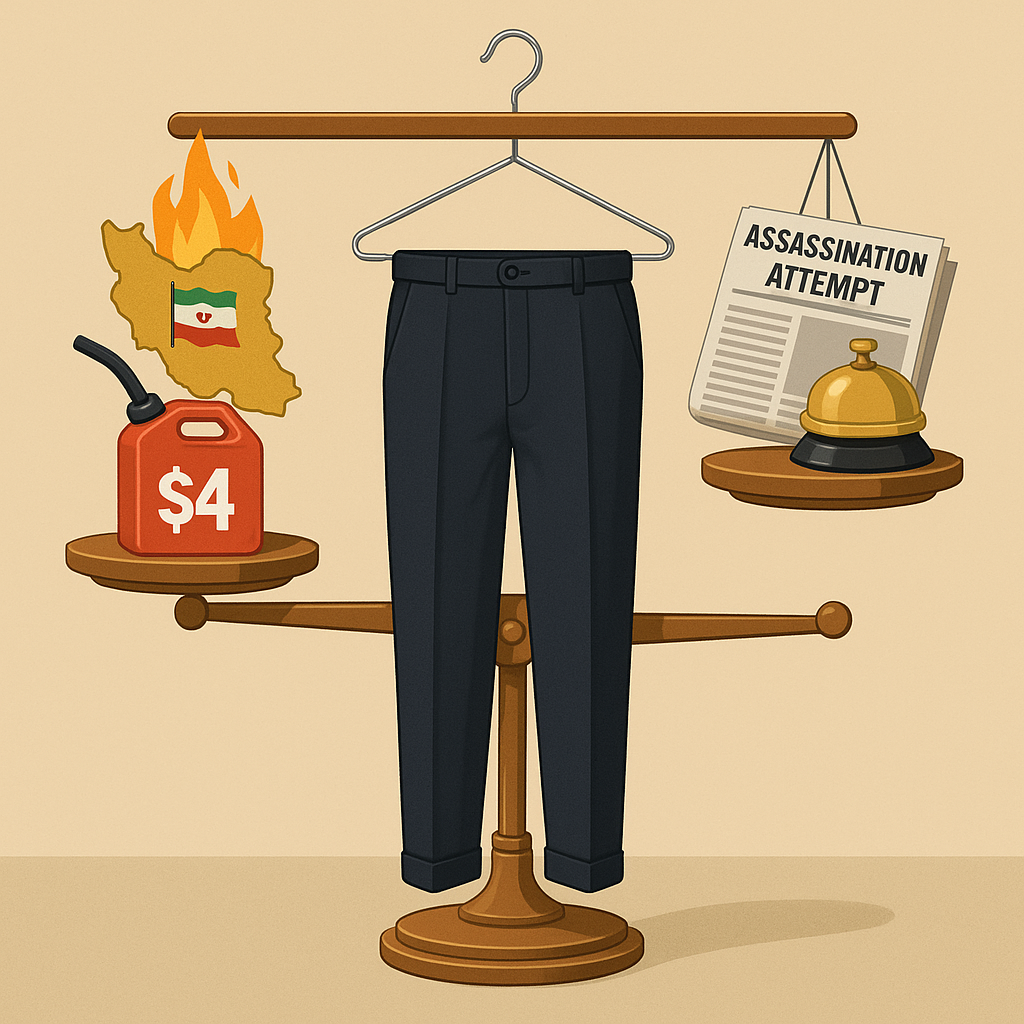
Trump’s advisers reportedly remain hopeful. After all, the Reuters/Ipsos poll did show his approval dropping from 36% to 34% following the Iran strikes and gas spike. As one senior aide put it, “If we blow up another fifth of global trade and gas hits six bucks, we might be looking at a full three-point swing. That’s the kind of momentum you build a movement on.”
With midterms looming, strategists in both parties are desperately searching for the one scandal that will finally pierce the armor of polarization and fatigue. War? Assassination attempt? Economic pain? Ballroom?
Don’t worry. If and when it arrives, you’ll know.
Your broker’s AI assistant will flag it as a material risk to earnings.