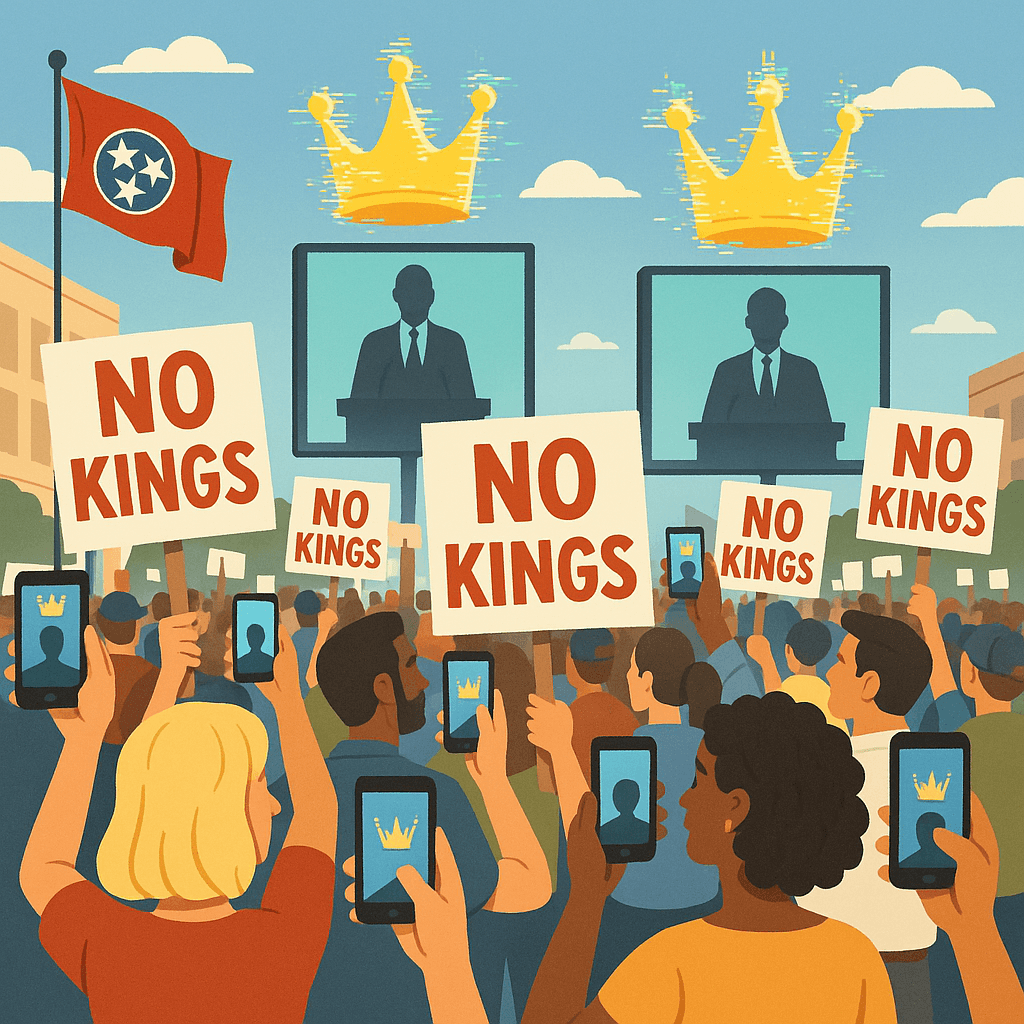
In a state better known for country music, hot chicken, and pretending Nashville traffic is “not that bad,” thousands of Tennesseans poured into the streets for Anti-Trump “No Kings” rallies this week, clutching homemade signs, smartphones, and a deeply unstable Wi‑Fi connection to democracy. According to the Manchester Times report on the “No Kings” rallies across Tennessee (Mar 2026), the protests were framed as a rejection of political royalty. Tech promptly heard “royalty” and tried to ship a subscription tier.
Organizers of the “No Kings” movement insisted the rallies were about resisting what they see as creeping authoritarianism around Donald Trump, not about uninstalling the concept of leadership entirely. “We want accountable institutions, not monarchs,” said one organizer in Nashville, pausing to reconnect their Bluetooth megaphone for the fifth time. “If we wanted kings, we’d move to Silicon Valley and pivot to LLM worship like everyone else.”
Across Tennessee — from Memphis to Knoxville to Chattanooga — demonstrators waved “No Kings” banners, while vendors nearby sold commemorative “Limited-Edition People’s Republic of Davidson County” merch via QR code. A Knoxville attendee said he was there because “No one person should have that much power,” before opening his phone to check a notification from Elon Musk, Tim Cook, and Mark Zuckerberg, who collectively control his car software, phone OS, and reality filter.
To manage the logistics of thousands of people in the streets, volunteer tech teams quietly spun up a surprisingly robust infrastructure stack, apparently proving that Tennessee can ship better production systems for a protest than most unicorns can for an IPO. The “No Kings” rallies ran on:
- End-to-end encrypted group chats named things like “Monarchy_Sux_v3_FINAL_REAL”
- Open-source mapping tools tracking march routes and porta-potty locations with heat maps and, tragically, bathroom traffic analytics
- A live fact-checking bot on social media that auto-replied, “Not how the Constitution works, champ” in under 200ms
“We’ve basically built a decentralized, monarch-resistant operating system for public assembly,” said an overcaffeinated dev from Knoxville, proudly displaying a GitHub repo titled NoKingsOS. “It’s like Ethereum, but with fewer scams and more clipboards.” He then admitted the repo had only two unit tests, both failing.
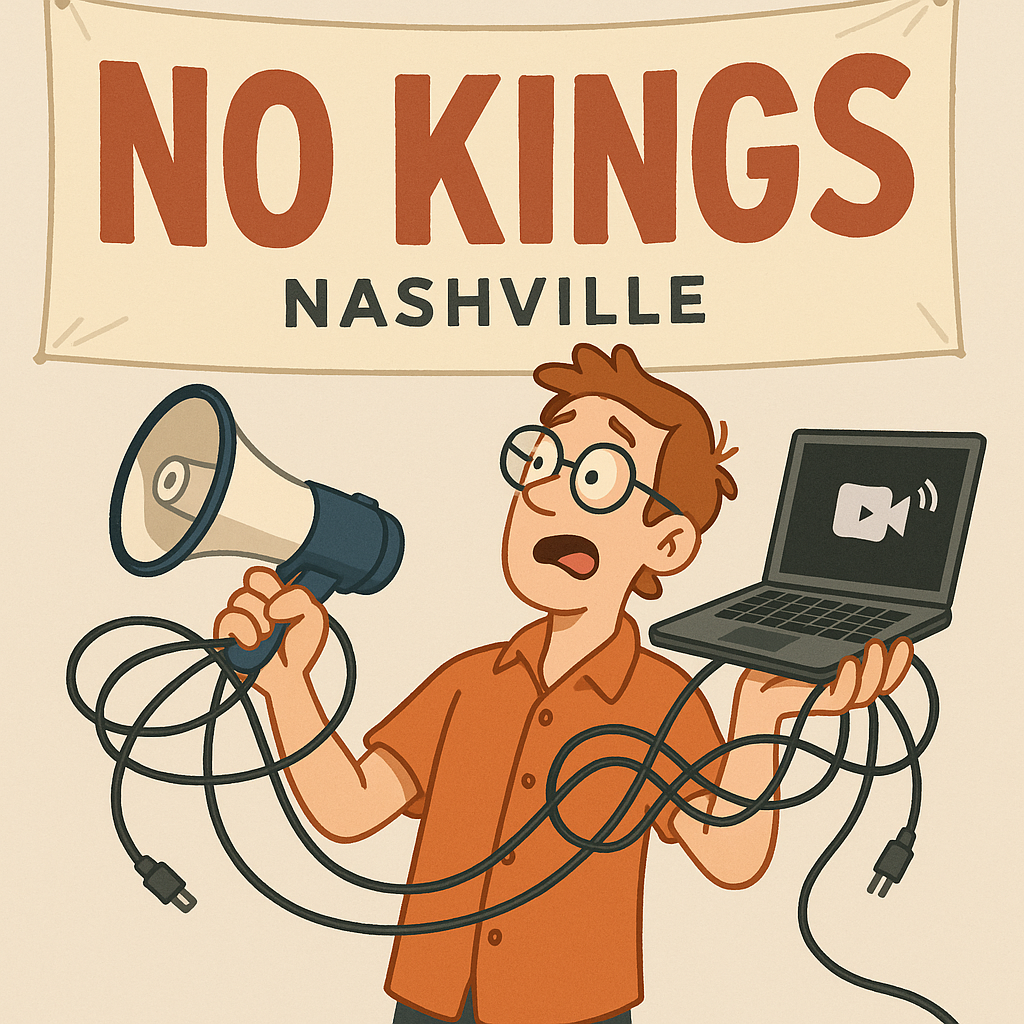
The irony of chanting “No Kings” while streaming the event through platforms owned by a handful of trillion-dollar tech companies was not lost on many protestors — it just wasn’t enough to get them to close TikTok. In Memphis, a student speaker pointed at her phone and shouted, “We reject kings in politics and emperors in big tech!” before promptly asking the crowd to “Like and subscribe if you’re new here — link in bio for the full speech.”
Trump himself did not appear at the rallies, obviously, but his digital presence hovered over Tennessee like a push notification you can’t swipe away. Rally-goers doomscrolled his social media posts at the same time they condemned his influence, creating a feedback loop that could, in theory, power the state’s entire electrical grid if someone just connected it to a data center in Franklin. “I’m here because I’m tired of living in someone else’s brand,” said one Chattanooga protestor, mid-scroll. “Anyway, I gotta post this to my Trump-watch thread. Otherwise what’s the point?”
While the Manchester Times focused on the political energy of the “No Kings” rallies across Tennessee, the real breakthrough was their accidental pilot program in what activists called “monarch-free governance apps.” A Nashville team demoed a prototype voting platform that lets citizens upvote local policy proposals in real time, then cruelly throttles anything that smells like a cult of personality. “We trained a model on thousands of hours of campaign speeches,” said the lead engineer. “If a proposal starts to sound like ‘Only I can fix it,’ we automatically tag it as ‘Potential King’ and rate-limit it like spam.”
Elsewhere, Chattanooga coders released a beta tool that overlays augmented-reality “crowns” over politicians’ heads whenever they use phrases like “the people love me” or “nobody knows this stuff better than I do.” Using a simple smartphone camera, Tennesseans can now see which leaders are drifting into monarch mode. So far, tests on footage from state and national politicians have forced engineers to increase server capacity, as the app reportedly “started glowing and making a weird humming noise.”
Of course, in true American fashion, the “No Kings” rallies immediately inspired a wave of opportunistic startups. By Saturday night, investors were quietly sniffing around Nashville coffee shops pitching products like:
- NoKingCoin: A governance token promising “democracy on-chain,” which, upon closer reading, grants 51% of the vote to early investors and one (1) emoji reaction to everyone else.
- CrownFunder: A crowdfunding platform where users can pay to remove literal AR crowns from politicians’ heads for 24 hours at a time, proving that nothing is more democratic than microtransactions.
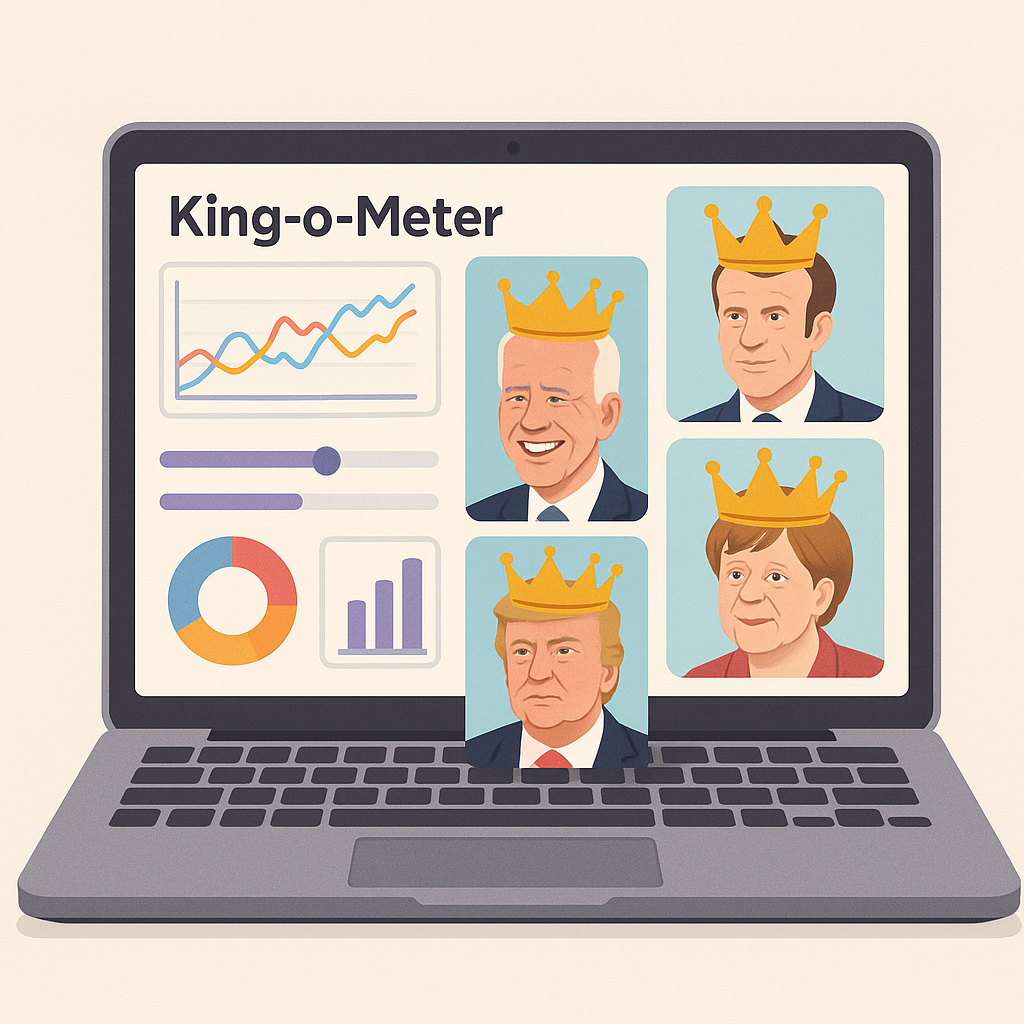
- Monarch Monitor Pro: B2B SaaS for media outlets that automatically ranks speeches on a “King-o-Meter,” complete with dashboards, charts, and a monthly subscription just to see how screwed we are.
“The market loves what it’s seeing,” said one Nashville-based venture capitalist wearing Allbirds and a Patagonia vest that had never experienced weather. “Anti-king energy tests off the charts with younger demographics. We think there’s real upside in monetizing the refusal to be ruled. We call it ‘Sovereignty-as-a-Service.’” He declined to say how equity would be distributed, citing “ongoing feudalization of the cap table.”
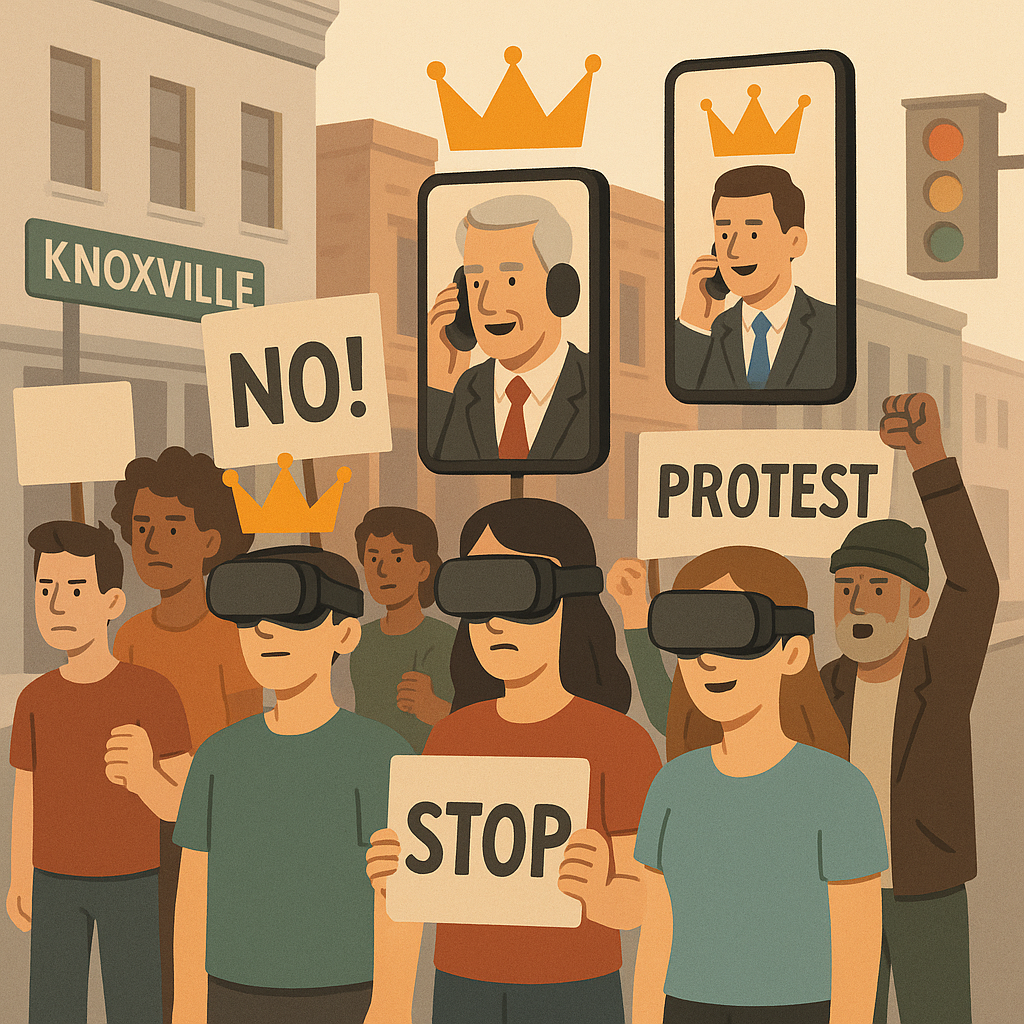
Some activists worry that the core message of the Anti-Trump “No Kings” rallies — resisting the concentration of power in one person, whether in Washington or Mar-a-Lago — will get swallowed by the very digital machines they used to organize with. “If we’re not careful, the movement becomes just another trending topic wedged between a LaMelo Ball highlight reel and an ad for AI that writes your breakup texts,” said one organizer in Manchester. “We’re trying to stop coronations, not increase click-through rates.”
Still, for a brief, glitchy moment, Tennessee felt like a testbed for a different kind of civic-tech experiment: thousands of people coordinating without a single algorithm deciding which voices matter. No kings, no crowns, no paywalled sense of belonging — just messy, analog humans standing in actual physical locations like Nashville, Knoxville, Chattanooga, and Memphis, instead of hiding behind usernames and recommendation systems. The servers groaned, the livestreams lagged, and the group chats desynced. But the streets were full, and no one needed an app to tell them that was real.
Whether the “No Kings” rallies become a durable movement or just another case study in “engagement” is unclear. But somewhere in a Tennessee basement, a tired sysadmin looked at a blinking router, checked the usage stats from the weekend, and muttered: “If this is what it takes to keep kings out, I’m gonna need a bigger data plan.”