
OpenAI has reportedly developed its most powerful model yet, the ominously named GPT‑5.4‑Cyber, and then done the bravest thing a modern tech company can do: absolutely refuse to let anyone touch it. According to Plato Data Intelligence (Apr 2026), the system is being kept under such tight control that even the marketing department has only seen it through a 5‑second, heavily redacted Zoom lag.
The company, whose other creations include ChatGPT, GPT‑4, and a steadily growing stack of AI safety PDFs, has decided that GPT‑5.4‑Cyber is too powerful, too capable, and far too meme‑able for the general public. Insiders say it is currently stored on an isolated cluster inside OpenAI’s secure facility, protected by biometric locks, air‑gapped servers, and the one thing hackers truly fear: a 45‑minute mandatory compliance training video.

Publicly, OpenAI frames the sequestering of GPT‑5.4‑Cyber as a bold stance on AI safety. Privately, staff admit it’s also because nobody can agree on what the model is actually allowed to say without detonating twelve different ethical frameworks and at least three EU directives simultaneously.
“We’ve basically built an omniscient intern with a law degree, a cyber‑offense toolkit, and unresolved philosophical questions,” said one anonymous OpenAI engineer. “Naturally, leadership decided the best next step was to lock it in a basement and write a blog post about responsibility.”
The name GPT‑5.4‑Cyber itself sounds less like a language model and more like a discontinued antivirus bundle that came free with your printer. According to the Plato Data Intelligence report, the system specializes in cybersecurity and cyber‑operations, meaning it can theoretically help defend networks, detect attacks, and, if prompted incorrectly by a bored teenager, recreate the script to overthrow a small utilities provider.
To avoid that, OpenAI has reportedly implemented what sources describe as a “belt, suspenders, duct tape, and two-factor authentication” approach:
- GPT‑5.4‑Cyber runs only on internal machines behind multiple VPNs.
- Access requires sign‑off from at least two teams: Safety and Legal, plus a third team whose only job is to ask, “Have you really thought this through?”
- Every output is monitored by other models, which are in turn monitored by humans, who are in turn monitored by a dashboard that no one remembers how to interpret.
In a closed‑door presentation to investors, OpenAI executives allegedly described the system as “an essential step toward secure, beneficial AGI,” while the slide behind them showed a glowing neon brain in a padlock, surrounded by chains, hovering over what appeared to be the Earth… or possibly just San Francisco. The key talking point: we’ve built it, we’re not releasing it, and you should still be very impressed.
One investor summarized the pitch: “So let me get this straight. You’ve created the most advanced AI model on the planet, called it ‘Cyber,’ locked it away, and the business model is essentially… vibes?”
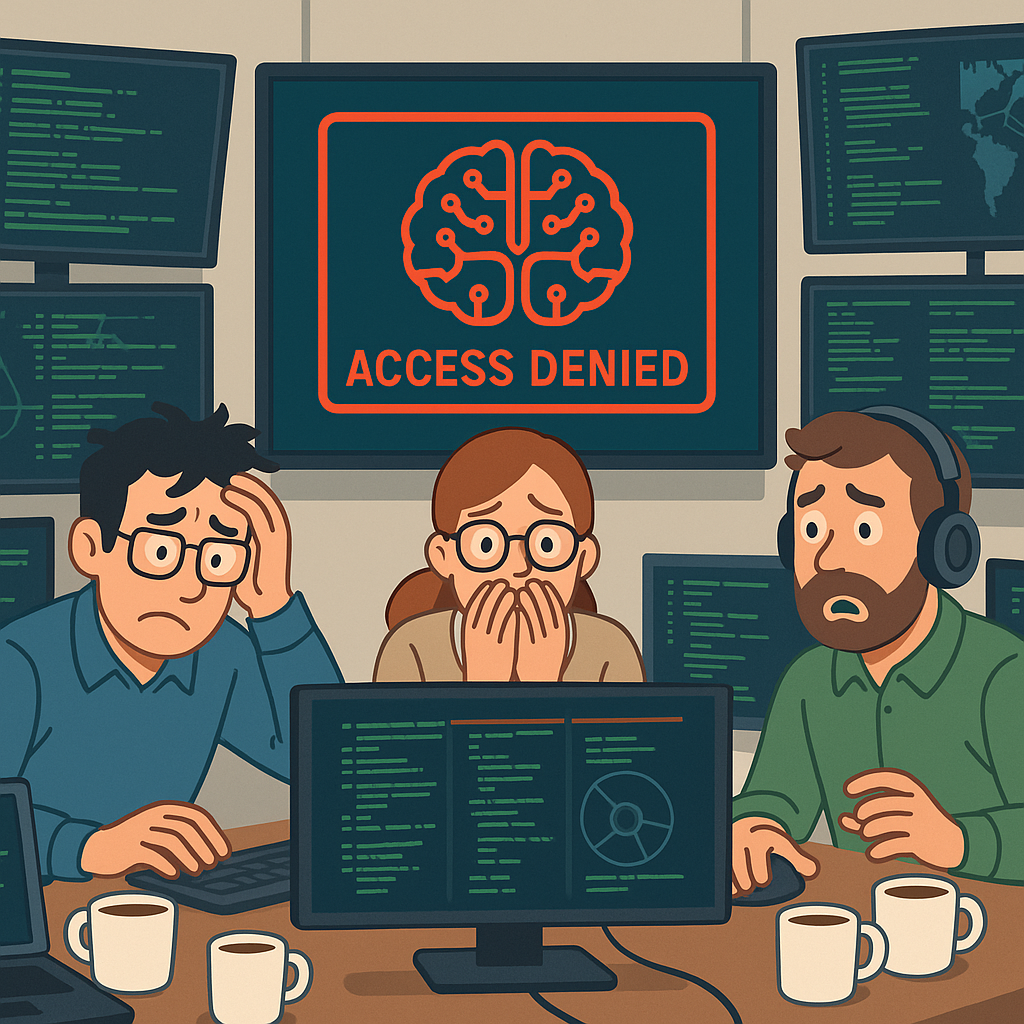
OpenAI insists there are more pragmatic reasons for keeping GPT‑5.4‑Cyber under lock and key. The model reportedly excels at things like:
- Reverse‑engineering malware and explaining how to patch it.
- Helping security teams simulate attacks before bad actors do.
- Accidentally discovering three new ways to bypass the very firewalls you were trying to test.
When asked whether GPT‑5.4‑Cyber could be used for offensive cyber operations, a spokesperson responded in a carefully optimized sentence that had obviously been run through at least two prior GPTs and a legal team: “OpenAI categorically does not support the use of GPT‑5.4‑Cyber for harmful purposes, and that is why we will be working closely with selected partners to responsibly explore its dual‑use potential.”
The phrase “selected partners,” of course, raises the question of who gets to play with the forbidden toy. Tech rumor channels are already buzzing with speculative lists that include certain governments, major cloud providers, and at least one unnamed “large enterprise security client” whose logo suspiciously resembles a multinational telecom that once leaked every password ever.
Critics argue that keeping GPT‑5.4‑Cyber restricted to an elite circle is essentially the AI era’s version of “we have nukes for peace.” A coalition of digital rights groups issued a joint statement claiming that the move “pushes us toward a future where only a concentrated set of companies and states can wield superhuman cyber capabilities, while everyone else relies on password‑reset emails and hope.”
Defenders counter that letting the average startup founder near GPT‑5.4‑Cyber would result in twelve “AI‑powered offensive cyber platforms,” three SPACs, and one spectacularly leaked dataset before lunch. “If you think people misused GPT‑4 to write phishing emails,” one security researcher said, “just imagine giving them a model that can diagram corporate networks, write zero‑day exploits, and then draft the press release apologizing for them.”
Internally, employees are reportedly divided. Some see GPT‑5.4‑Cyber as the logical endpoint of OpenAI’s mission: build something immensely powerful, then spend the next decade nervously circling it with safety memos. Others quietly question whether the safest model might actually be the one that was never built, or at least never given a name that sounds like it shipped with a free gaming mouse.
“On Mondays, we’re an AI safety lab restraining dangerous capabilities,” said one staffer. “On Tuesdays, we’re a high‑growth startup telling everyone we’re years ahead of the competition. By Wednesday, we’re trying to figure out how those two sentences can coexist in the same pitch deck.”
The Plato Data Intelligence article notes that GPT‑5.4‑Cyber is part of a broader pattern: advanced models arrive, then vanish behind phrases like “controlled release,” “red‑team only,” or “gradual deployment.” The public gets access to slightly duller siblings with smaller context windows, fewer capabilities, and a mysterious refusal to answer any question containing the word “rootkit.”
In the meantime, the rest of the world continues using earlier OpenAI systems such as ChatGPT to write cover letters and generate recipes, blissfully unaware that several compute racks away there is a cousin model that can, in theory, secure or compromise half the planetary internet before breakfast. The divide between consumer AI and classified AI grows wider, bridged only by occasional blog posts and uncomfortably vague congressional hearings.
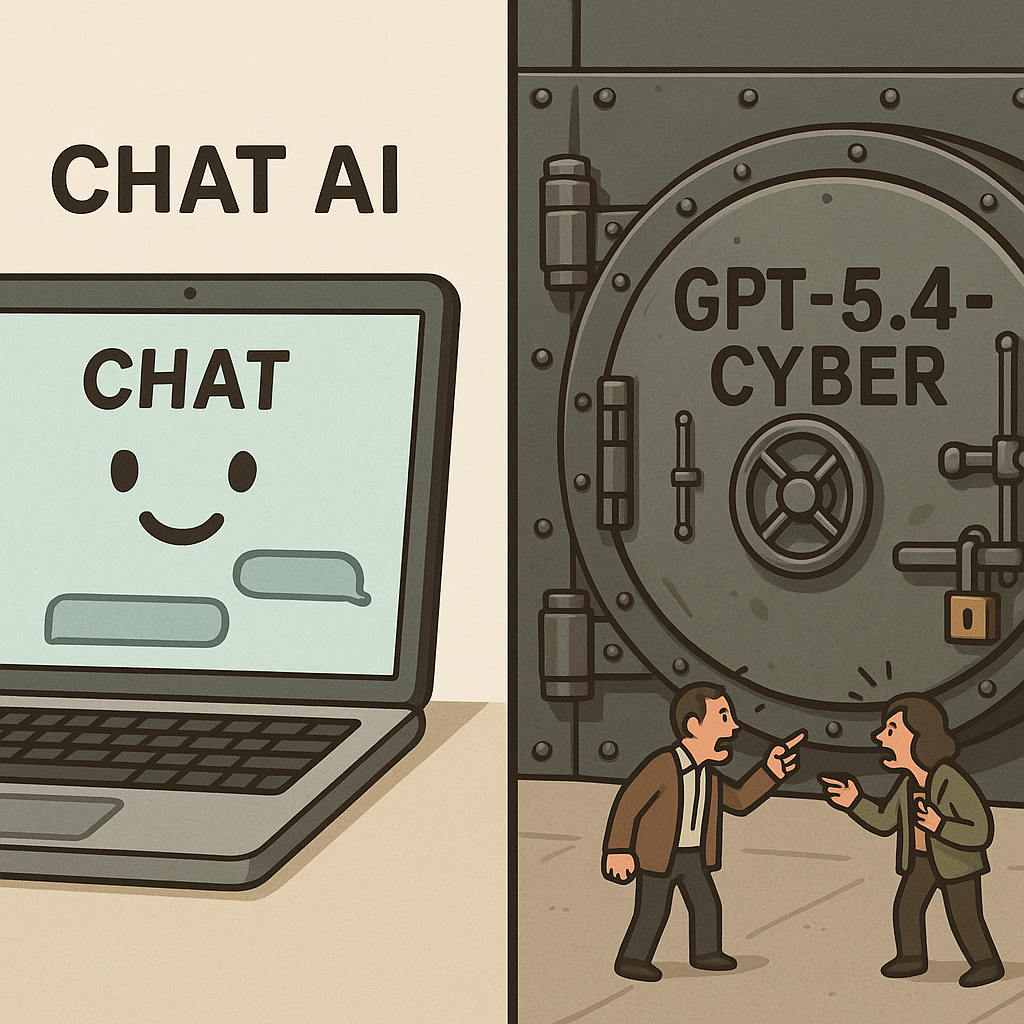
OpenAI has promised a future “public update” on GPT‑5.4‑Cyber, though the exact timeline remains classified behind the familiar phrase: “once we are confident in robust safety mitigations.” Industry observers translate this as, “after regulators either ban it, demand it, or forget what we called it.”
Until then, the most powerful AI model ever built will continue to sit quietly in a fortified data center, role‑playing Skynet for a handful of auditors and governance boards while the rest of us ask GPT‑3.5 to help us draft slightly better emails. Humanity has built the ultimate cyber oracle and, in an inspiring act of self‑preservation, decided the wisest course is to ground it indefinitely.
For once, the dystopian watchdog has to admit: that might actually be the first responsible thing anyone in tech has done in years. Which is, naturally, terrifying in its own way.