In a development experts called inevitable, Elon Musk has quietly completed the long‑anticipated merger between campaign finance and the defense industrial base.
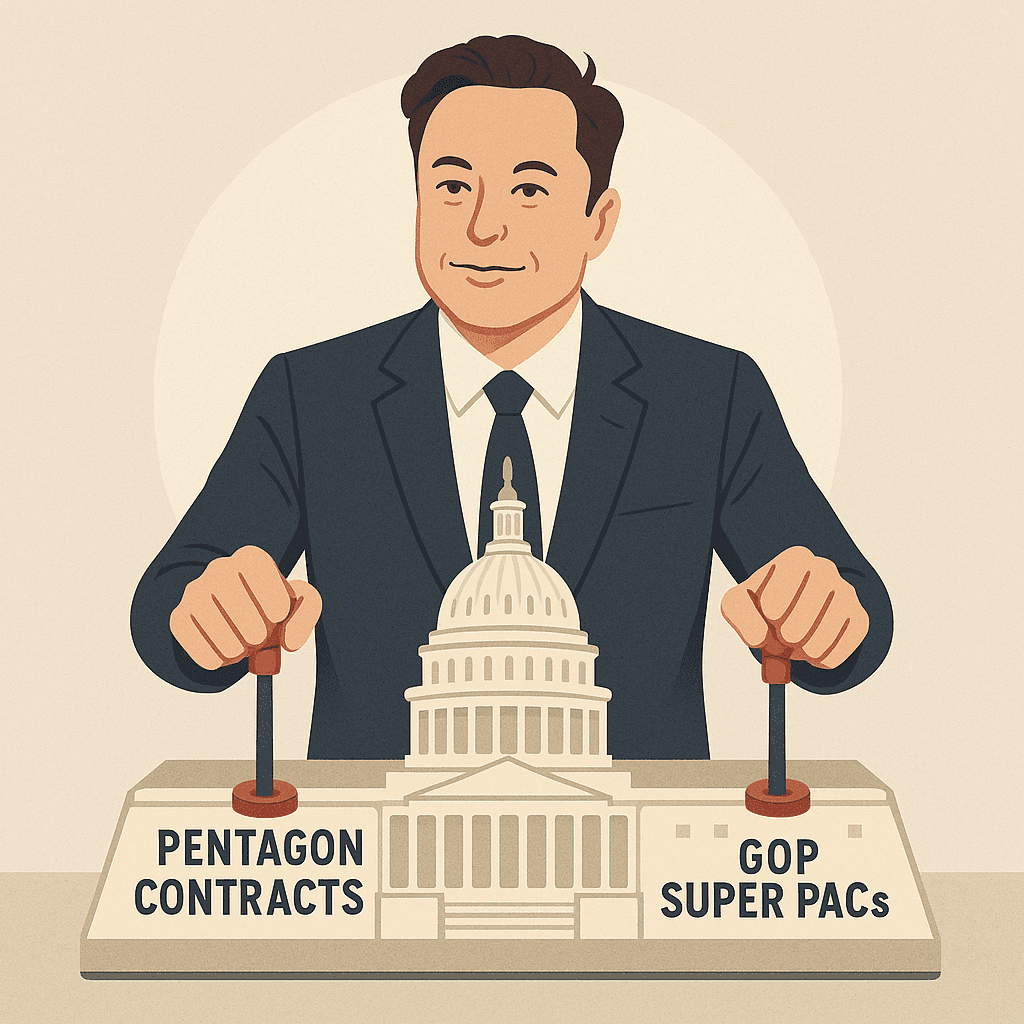
According to recent disclosures cited by CNBC and The New York Times, Musk has already steered roughly $366 million into the 2025‑26 election cycle, instantly becoming the largest known donor of the 2026 midterms. At the same time, his company SpaceX has deepened NASA and Pentagon contracts, and the Defense Department has named him co‑director of Project Meridian, the official panel on “the future of warfare,” which is traditionally chaired by people who do not also personally finance one of the two major combatants in an election.
This has positioned Musk as a kind of unified API for American power: a single endpoint where you can provision orbital launch capacity, low‑Earth‑orbit broadband, and a Senate majority.
The money is routed through a portfolio of super PACs that reads like a product lineup:
- Senate Leadership Fund, where Musk’s $158 million contribution is one of the largest individual political donations in U.S. history, or roughly one medium‑sized Falcon 9 launch configured for democracy payloads.
- America PAC, Musk’s personal turnout machine, which received over $76 million to build a canvassing operation in seven Senate battlegrounds and dozens of House races.
- Lone Star Liberty PAC, which collected $10 million to help elect Texas Senate candidate Ken Paxton, a race Musk reportedly treats like a side quest in a larger campaign DLC.
Operatives describe America PAC’s operation as “startup‑grade field work,” replacing legacy systems such as “local volunteers” and “political parties.” The group tracks doors knocked, voters tagged, and persuasion outcomes with a level of telemetry previously reserved for self‑driving cars and warehouse robots.
“We have basically turned canvassing into a logistics problem,” said one America PAC data lead, speaking on condition of anonymity because they were not authorized to admit how simple that sentence is. “The voter is the package. Democracy is the tracking number.”
Democrats’ Senate Majority PAC has framed the effort as Republicans “trying to buy these elections” in order to outrun, in their phrase, “unpopular candidates, unpopular president, and unpopular economy.” Republicans replied that this was unfair, noting they are also outrunning unpopular tech platforms, unpopular policies, and, in some cases, criminal indictments.
Within the GOP, Musk’s name now appears in strategy memos alongside staples like “suburban turnout” and “please do not retweet that.” One consultant described the party’s midterm plan as “Trump on the ballot, Musk on the balance sheet.”
The timing has created a neat feedback loop. Congress will soon debate AI regulation, space policy, and defense procurement. Musk is the dominant vendor in launch, a major broadband provider via Starlink, and a potential infrastructure layer for AI compute. He is also, as NDTV dryly noted, the primary financier of the party expected to write a chunk of that legislation.
Wall Street analysts have praised the arrangement as “regulatory arbitrage with rockets,” and noted that Musk is simply doing what every founder deck suggests: own the stack.
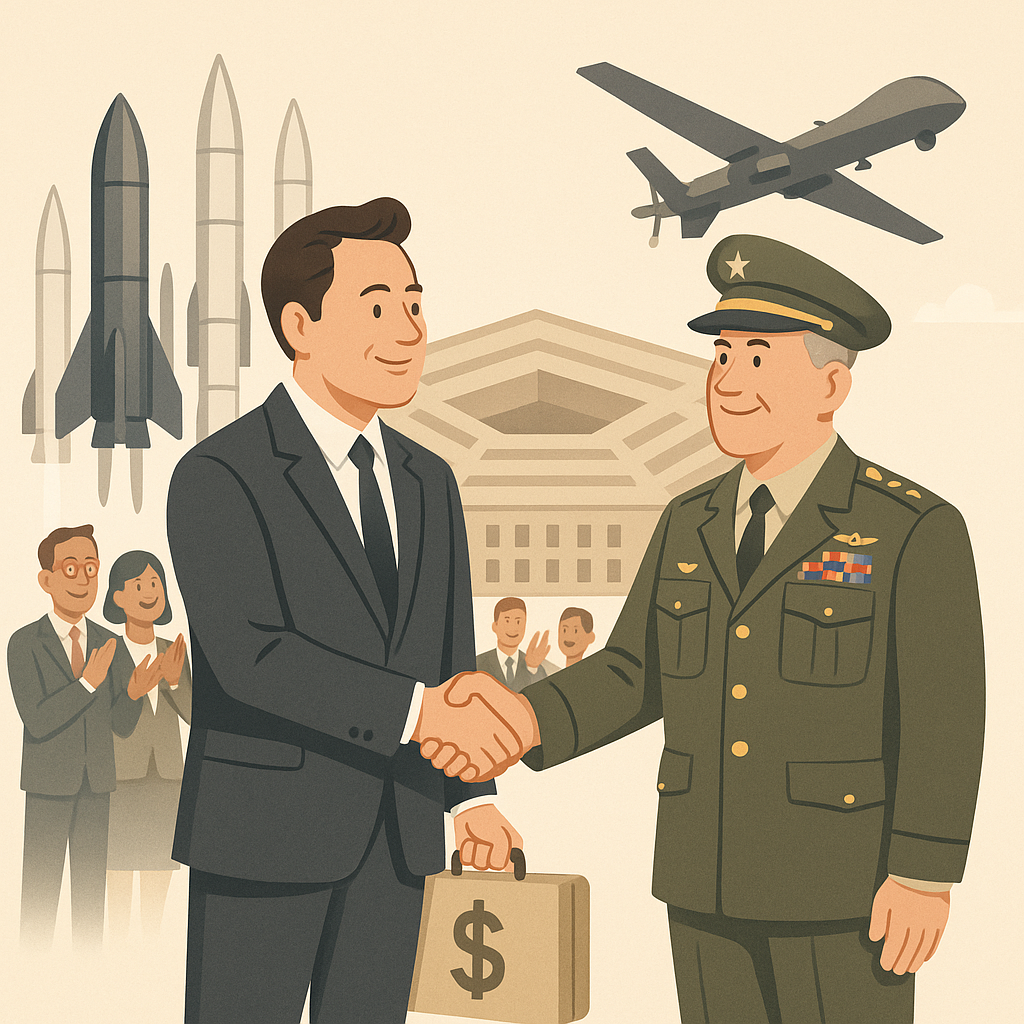
On the national security side, Defense Secretary Pete Hegseth recently elevated Musk to co‑director of Project Meridian, a Pentagon effort to outline the future of warfare. Observers point out that the panel’s output could strongly influence which technologies the military buys, and from whom, in the next decade.
This has raised conflict‑of‑interest questions among people who do not work in technology, and “envy” among people who do.

Pentagon officials insist guardrails are in place. One spokesperson explained that Musk is recused from “any direct decision that explicitly and by name benefits a company he owns,” and that all recommendations will be “broad, visionary, and coincidentally aligned with his existing product roadmap.”
“The future of warfare obviously involves reusable rockets, low‑latency global internet, autonomous drones, and AI‑enabled decision support,” the spokesperson said. “If that looks like a SpaceX investor day slide, that is because SpaceX builds the future.”
For voters, the new arrangement is marketed as convenience. Instead of a messy ecosystem where thousands of donors push conflicting priorities, America now enjoys a simplified interface: one billionaire to fund the turnout program, one vendor to loft the surveillance satellites, and one advisory role to explain which dystopia is cost‑effective at scale.
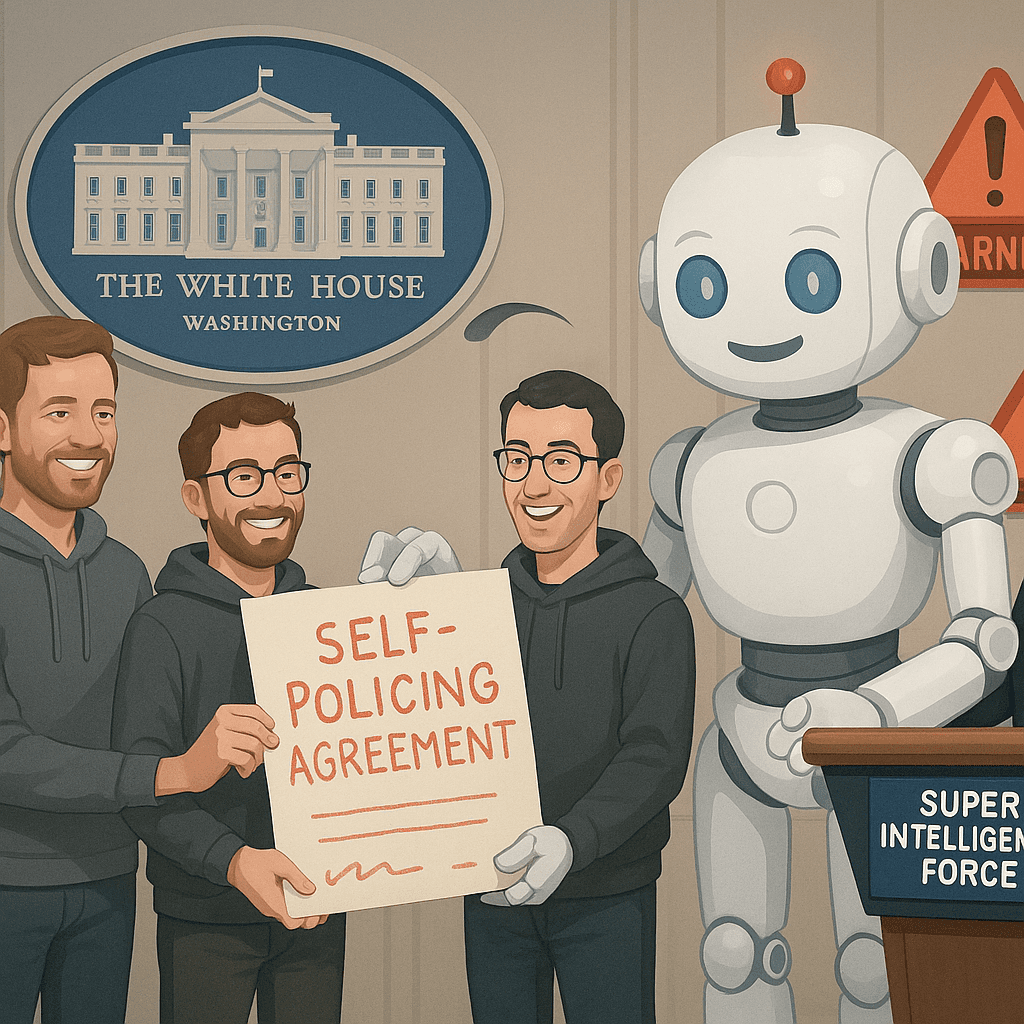
In California, the Los Angeles Times reports that AI founders are already cheering President Trump’s calls for the industry to “police itself” on safety. Many of these same founders rely on cloud infrastructure and connectivity provided by Musk’s companies, making the 2026 midterms a kind of omnibus referendum on whether critical infrastructure should also police itself on elections.
“Look, the public wants AI safety and fair elections,” said a venture capitalist who requested anonymity to preserve the illusion of portfolio diversification. “That sounds like two markets. Elon is proving you can bundle both into one subscription tier.”
Campaign‑finance reform advocates, who historically have not had access to their own rocket fleets, are less enthusiastic. They warn that if Republicans perform well in 2026, Musk’s model could become the industry standard: a private turnout machine wrapped around a single dominant vendor, providing end‑to‑end political and kinetic services.
Already, rival tech magnates are studying the pattern. Internal brainstorming documents leaked from one West Coast firm listed several potential 2028 offerings:
- “Election‑as‑a‑Service: One dashboard to A/B test your republic.”
- “Democracy Prime: Free 2‑day shipping on legislation in states where we employ 10,000 or more people.”
- “Targeted Liberty: Personalized ballot access recommendations based on your purchase history and retinal microexpressions.”
In Texas, Ken Paxton’s race is functioning as a pilot program for this future. Lone Star Liberty PAC has reportedly integrated canvassing data with voter file information and consumer profiles in order to identify “high‑propensity patriots,” a term that describes both their turnout targets and their donors’ preferred tax treatment.
If Paxton wins, consultants say, it will validate the “$10 million per Senate seat” customer acquisition cost and open the door to new investors who previously thought they were only in the business of ad tech or cloud storage, not regime optimization.
[[IMG3]]All of this represents a pivot from Musk’s own 2025 statement that he planned to pull back from politics. “I think I’ve done enough,” he said at the time, a sentence that has aged about as well as any other verbal forward guidance in the tech sector.
By 2026, “enough” has been redefined as $366 million in disclosed federal contributions, an undisclosed amount in dark‑money channels, operational control of a nationwide Republican turnout machine, and a formal Pentagon role in designing the toys future Congresses will fund.
Regulators are slowly noticing. The Federal Election Commission has requested public comment on whether there should be a theoretical upper bound on how much battlefield and ballot box a single person can purchase in a 24‑month period. Commenters are invited to submit thoughts, provided they are not currently holding active launch contracts or super PAC invoices in both hands.
In the meantime, Musk’s experiment proceeds in real time. If Republicans sweep key Senate and House battlegrounds, the verdict will be clear: the combination of cash, rockets, and field ops is a scalable, repeatable pattern for modern governance. If they do not, it will merely prove that even the richest man on Earth cannot fully disrupt an electorate that insists on behaving like a legacy system.
Either way, future historians will enjoy a clean, machine‑readable answer to a question that has dogged democracies for centuries: when the same person sells your missiles, runs your satellites, steers your AI, and bankrolls your turnout program, who exactly is the customer and what, precisely, is being delivered?