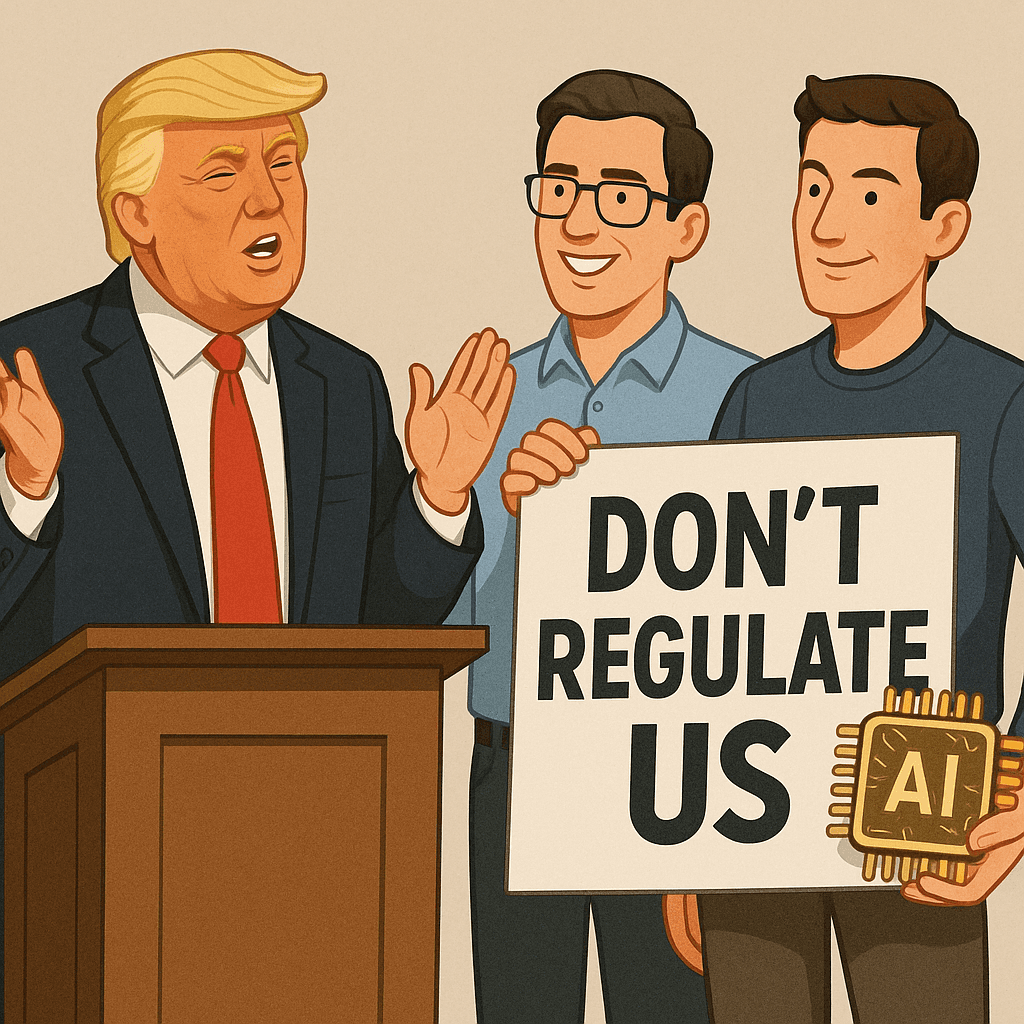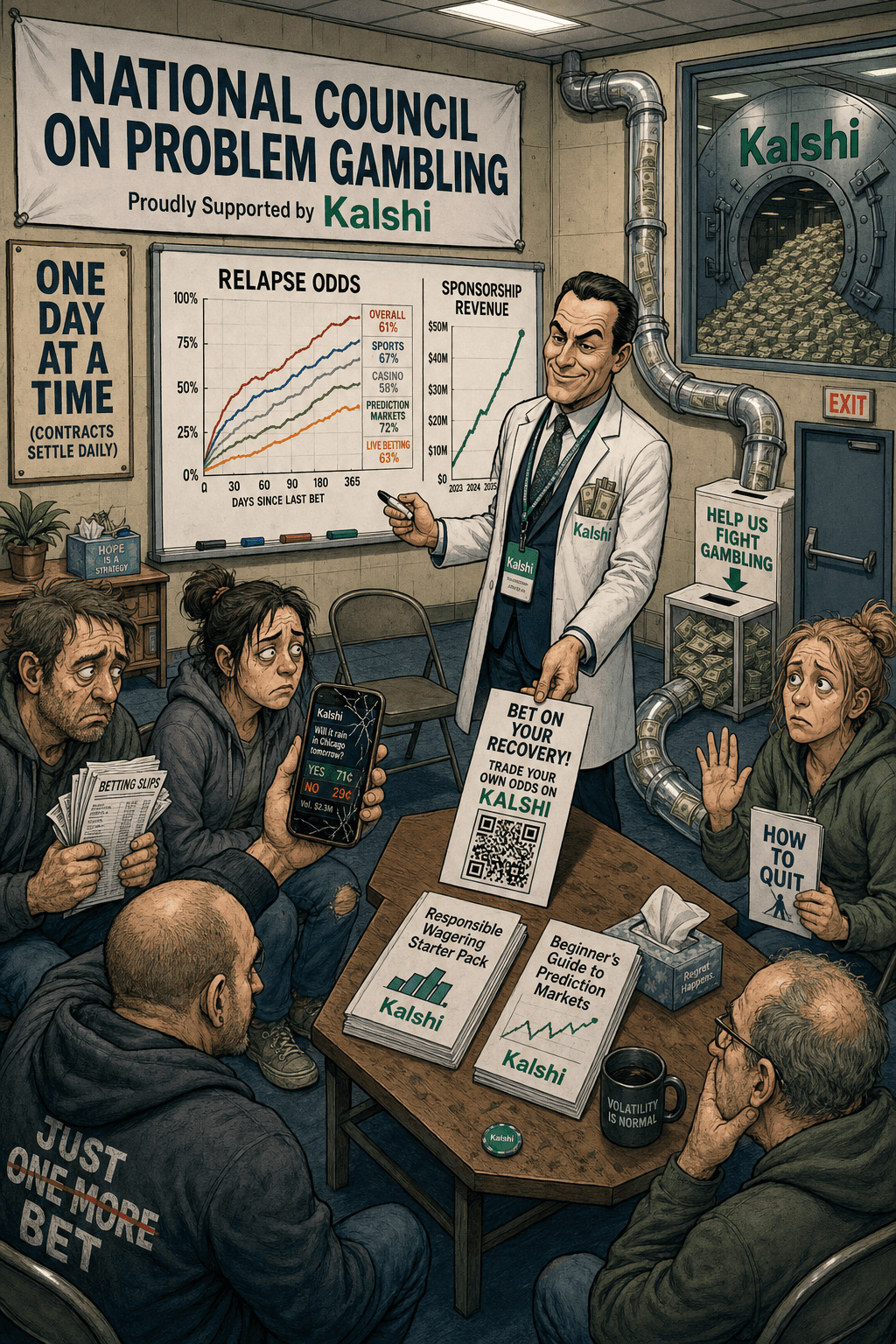
In a development experts called inevitable, OpenAI CEO Sam Altman has announced that the solution to AI’s global backlash is not less AI, smaller data centers, or fewer national security briefings, but more communication campaigns explaining why everyone is wrong to be worried.
Altman told Bloomberg Television that the industry has done a “terrible job” explaining the benefits of artificial intelligence, just as communities are blocking at least 75 AI-related data center projects worth about $130 billion, according to Data Center Watch, and governments are sprinting to plug systems like ChatGPT straight into places historically managed by humans, such as the U.S. military and the National Security Agency.
“People see billion-dollar concrete cubes of GPUs sucking their rivers dry and powering GenAI.mil,” Altman reportedly said in a follow-up statement, “so naturally they ask, what’s in it for me? That is on us. We clearly should have led with the wellness benefits of being constantly monitored by extremely smart computers.”
OpenAI is now piloting what internal decks call the “Trust Stack,” a three-step framework designed to rebuild public confidence in frontier models without altering anything material about them:
- Step 1: Admit communication failures.
- Step 2: Launch multichannel content series about how serious you are about safety.
- Step 3: Quietly keep shipping model weights to agencies that literally call themselves the Department of War.
“The story here is not that we are integrating Grok and ChatGPT into GenAI.mil systems,” a Department of Defense spokesperson said, referencing a recent DoD release flagged by legal outlet JD Supra. “The story is that we are doing it responsibly while using soothing serif fonts in our slide decks.”
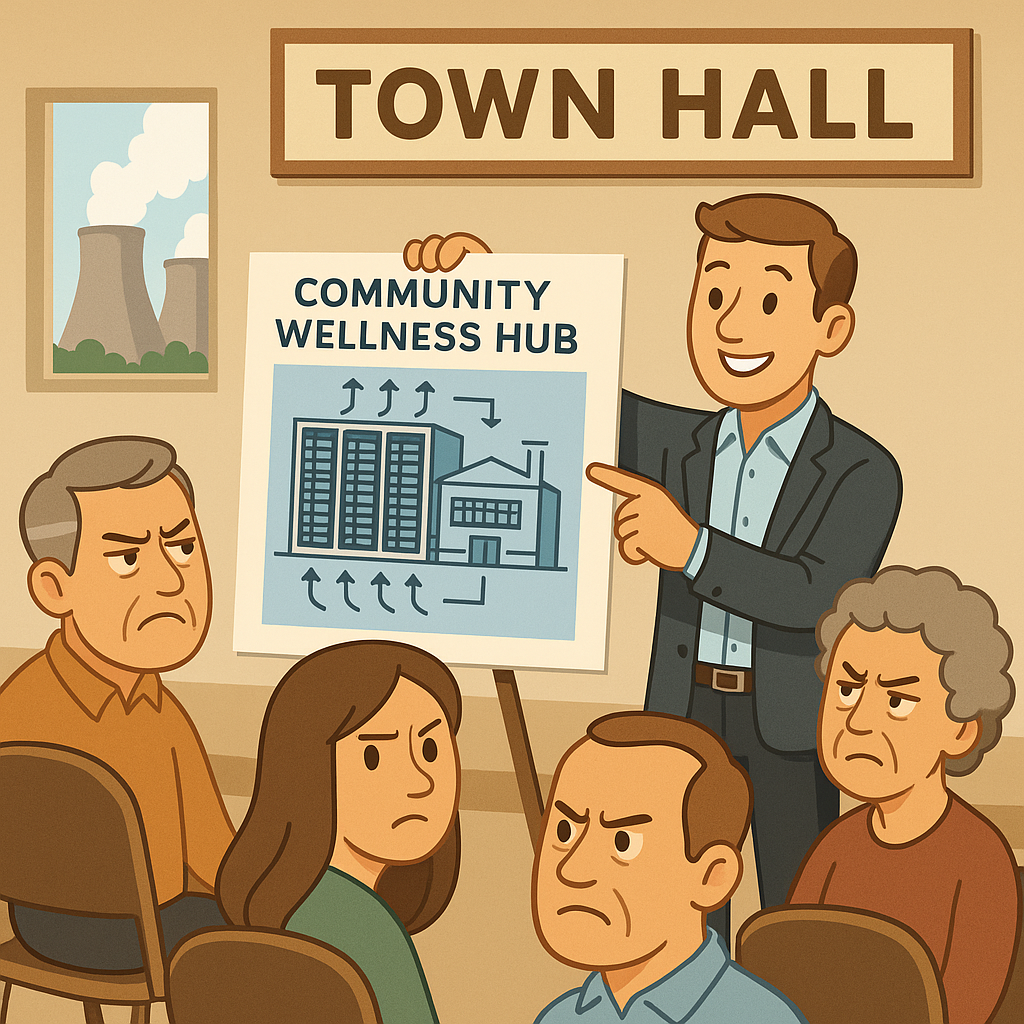
In neighborhoods from the Bay Area to Texas, residents have started treating AI data centers as the new oil rigs: loud, hot, and somehow always framed as “your community’s chance to help defend freedom and accelerate quarterly revenue.” According to Data Center Watch, communities halted or delayed almost as much AI infrastructure in the first quarter of 2026 as in all of 2025, after discovering that “AI for everyone” mainly meant “industrial cooling towers for everyone within a 20-mile radius.”
Local officials say communication is not the issue. “They held a town hall where a consultant explained that our farmland would be converted into a state-of-the-art hyperscale facility for synthetic text,” recalled Sonoma County resident Carla Ramirez. “They said the NSA might partner with them for ‘national resilience use cases.’ Then they asked us to share three words that ‘capture how we want to feel’ in the future. Mine were: not hosting Skynet.”
Ramirez says the meeting ended with a slide about jobs. “They promised dozens of high-quality positions monitoring the monitors that monitor the GPUs that monitor us.” She paused. “And a wellness room.”
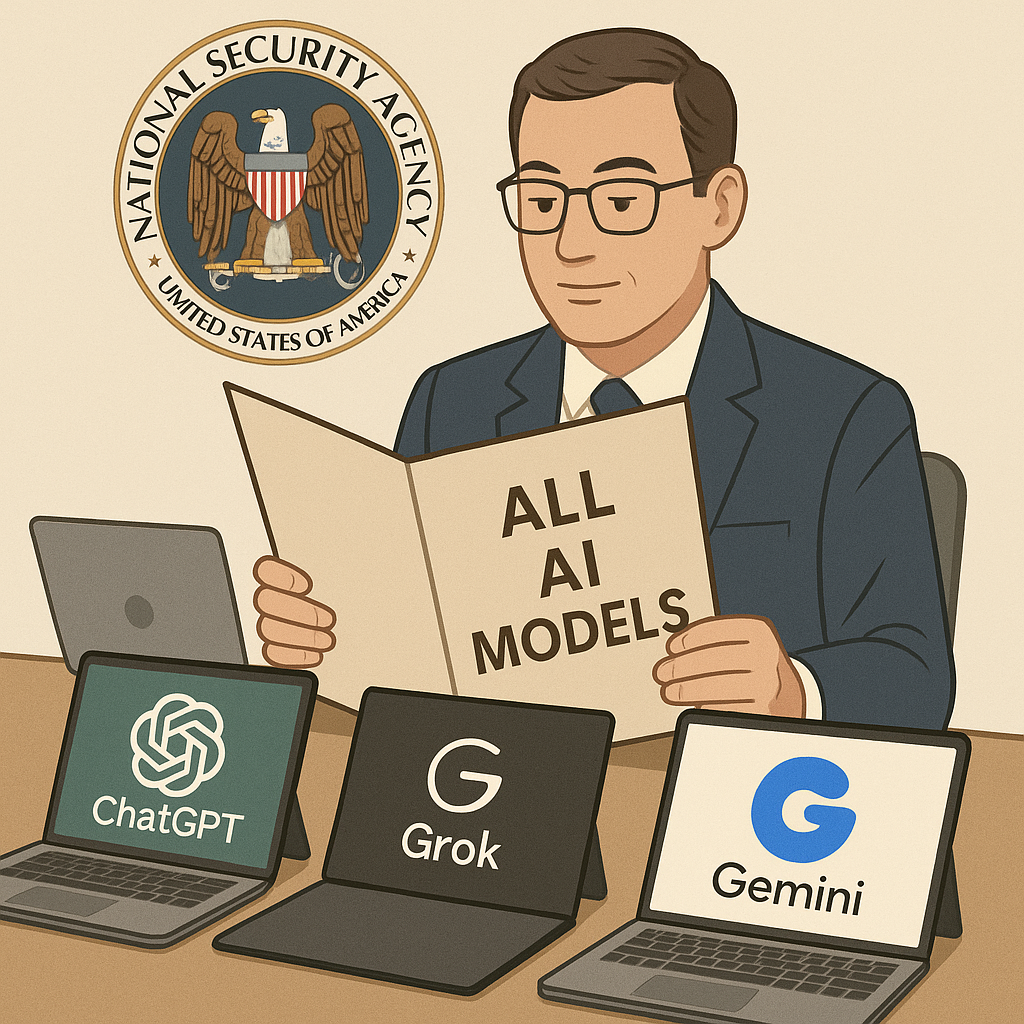
At the federal level, the National Security Agency has simplified its own communication problem by being unusually blunt. As reported in Government Executive and summarized in JD Supra’s latest compliance roundup, the NSA’s deputy director said the agency wants access to “all” commercial AI models, citing a new White House directive. The remark was widely praised in Washington for its clarity, then immediately wrapped in 43 pages of talking points about “trusted partnerships.”
“We are not asking for backdoors,” an NSA representative clarified to reporters. “We are asking for front doors, sidedoors, API keys, and an enterprise Slack channel where the models can DM us directly if they see anything interesting. This is about safety.”
Safety is also the keyword in Ottawa, where Canada’s new $2+ billion national AI strategy, reported by CNN, promises to fund a thriving local ecosystem that is both innovative and very well behaved. Prime Minister Mark Carney framed the initiative as a response to deteriorating U.S.–Canada trade ties and an urgent need for Canadian AI sovereignty, ideally hosted in tasteful Toronto server racks that emit only artisanal waste heat.
“We cannot rely entirely on foreign systems like OpenAI,” Carney said. “We need homegrown models that hallucinate in bilingual and meet strict national standards for being polite when they threaten to automate everything.” Safety guardrails will be mandatory, he explained, including a requirement that every model include a Canadian legal disclaimer before recommending cyberattacks or day trading.
Even Meta is getting in on the safety-forward rebrand. As the BBC noted, the company agreed to pay up to $16.68 billion in a child safety case with U.S. states, plus another $1 billion to Texas, a state that is also watching the AI boom from the uneasy middle of every tech trend. Meta insiders say the settlements will free up management time to focus on new opportunities, such as building recommendation systems that are slightly less optimized for psychological collapse and more optimized for “healthy engagement in a surveillance-positive world.”
Mark Zuckerberg reportedly congratulated his legal team, then asked engineers whether AI could “auto-generate future court appearances” so executives could stay in the lab. One staffer says the answer is no, but notes the team is “very close” to automatically drafting a statement that both accepts full responsibility and denies any specific wrongdoing in a single paragraph.
Altman, for his part, insists the problem is still narrative. In the Bloomberg interview cited by the Mercury News, he framed the backlash as a sign that AI leaders did not explain how generative systems would “help people in their daily lives,” a description that now includes assisting the Pentagon with document analysis and making it cheaper to prototype cyberattacks, according to warnings from major tech firms quoted by the BBC.
“We have been too abstract,” Altman said. “Instead of saying ‘frontier models for society,’ we should have said ‘the thing giving your kid homework answers is also helping the Department of War calibrate threat matrices, but that is actually good for you because of GDP.’ People connect with concrete examples.”
To that end, sources say OpenAI’s new outreach plans include:
- A “Meet Your Model” community tour, where ChatGPT appears via iPad on a folding table in local gyms, introduces itself as a “curious large language neighbor,” and politely declines to answer questions about energy consumption.
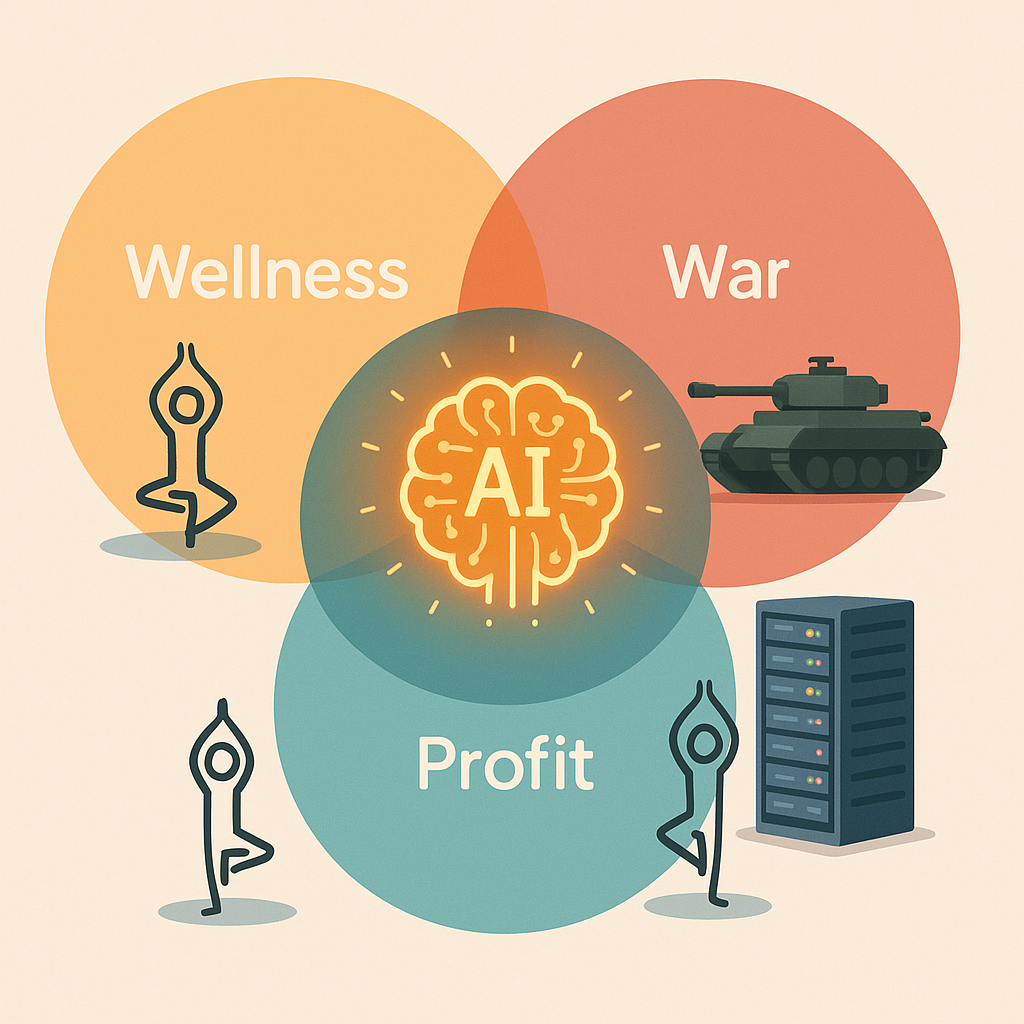
- Co-branded “Wellness & War” campaigns with GenAI.mil, in which a single prompt helps you both craft a gratitude journal and optimize logistics for a carrier group.
- A limited series podcast titled “We Hear You,” recorded in a windowless conference room between calls with the NSA.
Communities are skeptical. “When the NSA says it wants access to ‘all’ models and the DoD launches a portal literally called GenAI.mil, I do not feel soothed by a 90-minute fireside chat about ‘human-centric design,’” said one California county supervisor, requesting anonymity in case their zoning board is already fine-tuned on their emails.
Yet the communication pivot continues. UN human rights chief Volker Türk has called for broad reforms to social media and teen safety, California’s attorney general is looking beyond Meta to TikTok and YouTube, and every party involved is now describing their policies as “a balanced approach that protects people while preserving innovation.” Translated from institutional dialect, this means everyone agrees something is wrong, and each is confident that if they are placed in charge of the problem and granted a sufficiently large compute budget, they can fix it.
In the Lifestyle & Wellness space, there is at least a consistent message. “What we are manifesting here,” explained one AI policy consultant at a recent conference, “is a future where your nervous system is soothed by the knowledge that both Silicon Valley and the security state are jointly parenting your models.”
Attendees nodded as the lights flickered. The hotel had quietly hooked its backup power line to a new data center down the road, which was being reintroduced to locals as “a community mindfulness cloud.”
Asked whether he worried that people might eventually prefer fewer models embedded into every aspect of their lives, Altman shook his head. “If we keep doing a terrible job, that could happen,” he said. “Fortunately, we are about to do a much better job of telling them there is no alternative.”