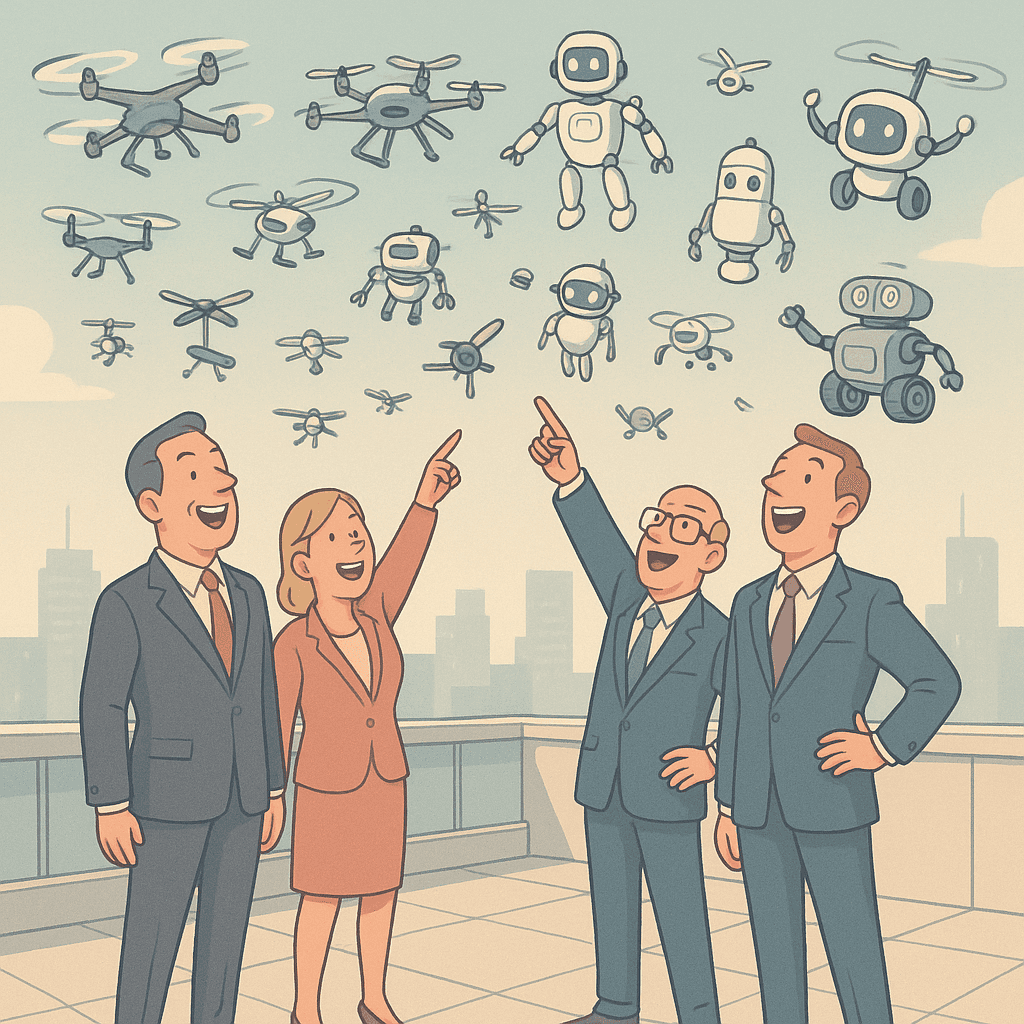
In a bold move that finally answers the question, “What if your intrusive thoughts had a defence budget?”, Solar Defence has announced a ₹12,800 crore investment in robotics and drone projects, promising a future where the sky is less ‘infinite cosmos’ and more ‘crowded mall food court with propellers’ (The Sentinel, Mar 2026).
The Indian firm, Solar Defence, framed the initiative as a patriotic leap into next-gen security tech. Everyone else framed it as, “Ah, so we’re speed-running Black Mirror now.” The megaproject, outlined in Assam-based daily The Sentinel, blends autonomous robotics, swarming drones, and what executives described as “an intelligent, always-on aerial presence,” which is coincidentally also how cult leaders describe themselves on Instagram Lives.
“This is a transformative leap in national security,” a Solar Defence spokesperson allegedly said, standing in front of a slideshow that was 80% stock photos of sunsets and circuit boards. “Our drones and robotics platforms will protect borders, monitor critical infrastructure, and probably judge your parking. Not officially, but they will know.”
Industry analysts noted that ₹12,800 crore is an eye-watering amount of money to spend on flying machines that may or may not confuse a wedding procession for a tactical formation. However, defence consultants quickly reassured anxious citizens that this is nothing to worry about because the algorithms are “very advanced” and “tested in simulations conducted entirely on PowerPoint.”
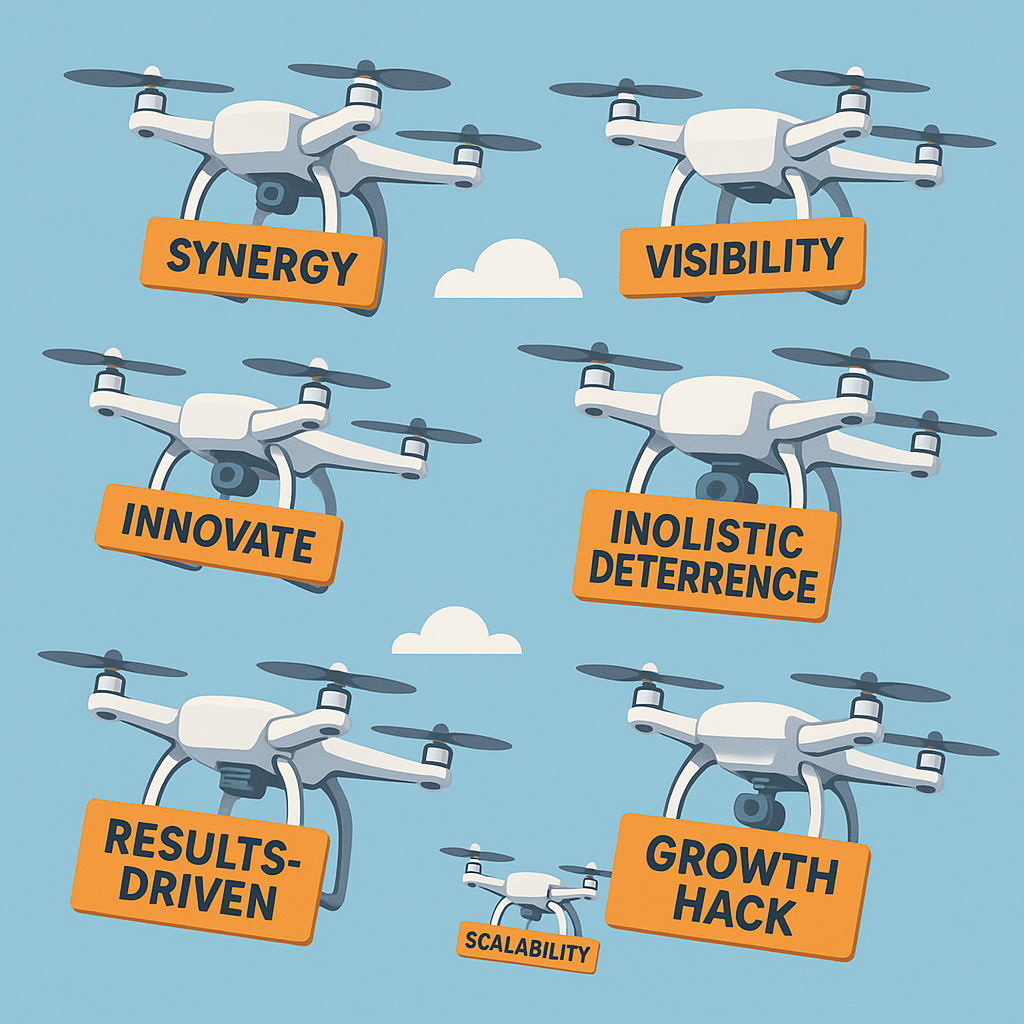
The project reportedly includes:
- Long-endurance surveillance drones capable of loitering for hours, like that one uncle at family functions but with better optics.
- Autonomous ground robots to patrol sensitive zones and occasionally fall down stairs in a way that will definitely go viral.
- AI-powered decision support tools that convert rich, complex human judgment into clean, minimalist error messages.
To address public concerns, Solar Defence has emphasized the word “defence” so many times that several executives now pronounce it with three syllables and a small salute. “We are not creating an omnipresent robotic panopticon,” the spokesperson insisted. “We are simply ensuring persistent situational awareness across multidomain theatres.”
Translation: yes, the drones will see you. No, they will not swipe right.
Government officials, meanwhile, have been quick to praise the initiative as a driver of innovation, employment, and plausible deniability. One unnamed bureaucrat gushed, “This partnership with Solar Defence shows India’s commitment to cutting-edge robotics and drone technology. Also, if anything goes wrong, they’re a private company, so we will simply form a committee and issue a PDF.”
Tech insiders are already salivating over the robotics aspect, hinting at humanoid platforms that could be deployed in hazardous zones, disaster relief, and eventually, light influencer work. Concept art features sleek robots with muscular chrome limbs, holding tablets and staring at holographic maps like they’re trying to remember if they turned the stove off.
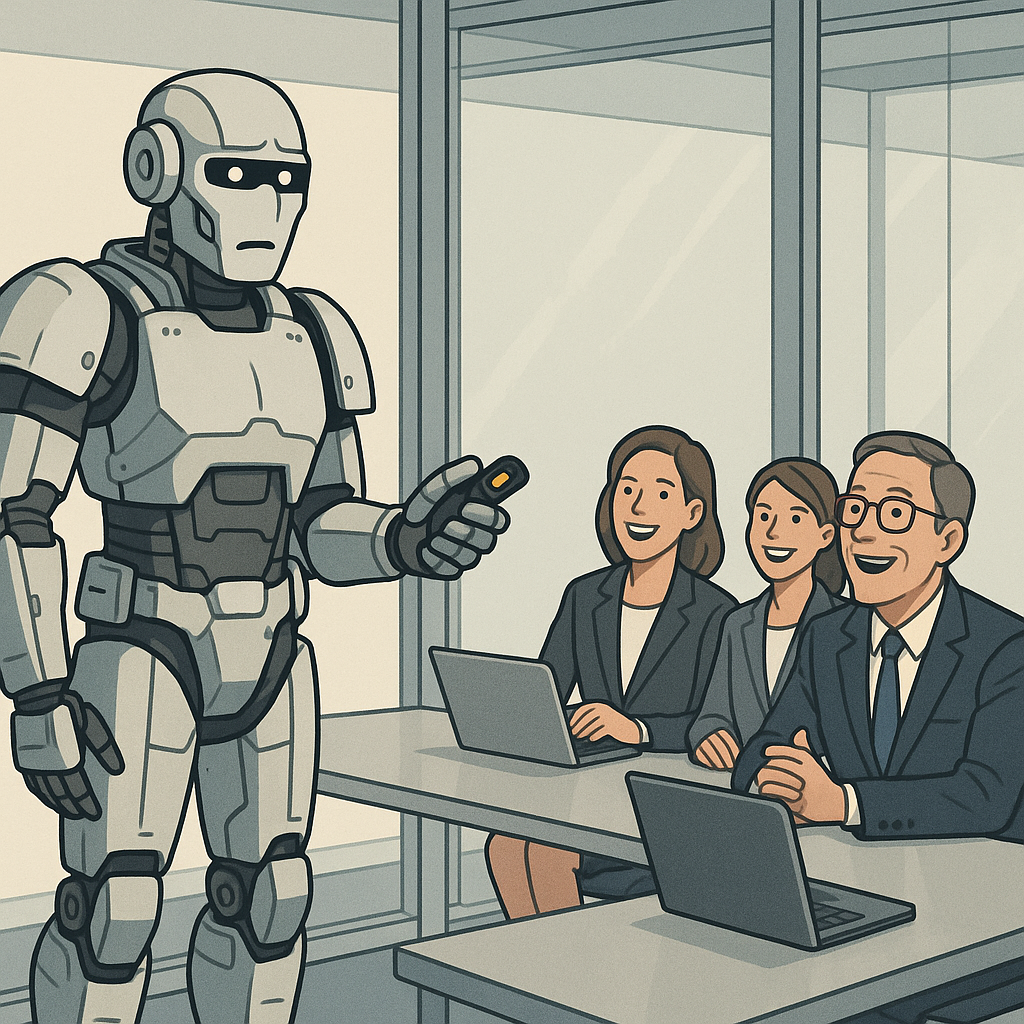
“Robotics and drones are the nervous system of tomorrow’s battlefield,” claimed one consultant, whose LinkedIn bio identifies them as a “Conflict Futurist and Visionary.” “We’re moving from soldiers on the ground to sensors in the sky. Soon, entire operations will be executed without a single human crossing a border—just fleets of autonomous platforms sending each other passive-aggressive telemetry.”
Critics, killjoys that they are, have raised concerns about accountability, surveillance overreach, and the minor matter of automation making future wars faster, cheaper, and more bingeable than ever. “If we’re going to hand over lethal decisions to software, can we at least see the terms and conditions?” asked one digital rights activist. “Or are we just clicking ‘I Agree’ on the end of the world?”
Solar Defence insists all autonomous systems will remain “human in the loop,” a phrase that here appears to mean there will be a tired officer somewhere staring at twelve monitors and a blinking ‘CONFIRM STRIKE?’ button while also answering a WhatsApp group about his cousin’s engagement.
The company has also promised robust ethical guidelines, reportedly including:
- All drones must follow international humanitarian law.
- No drone may harm a human being, unless formally authorized by at least two PowerPoint decks and one acronym-heavy memo.
- If a drone becomes self-aware, it must immediately found a startup and raise a seed round.
In Bengaluru, a group of wellness entrepreneurs have already spotted a branding opportunity. “Imagine: sunrise yoga with Solar Defence drones humming overhead—total alignment of mind, body, and militarized airspace,” said one lifestyle coach, eyes glittering with synergy. “We could call it ‘AeroMind™: Breathe In, Optics Out.’”
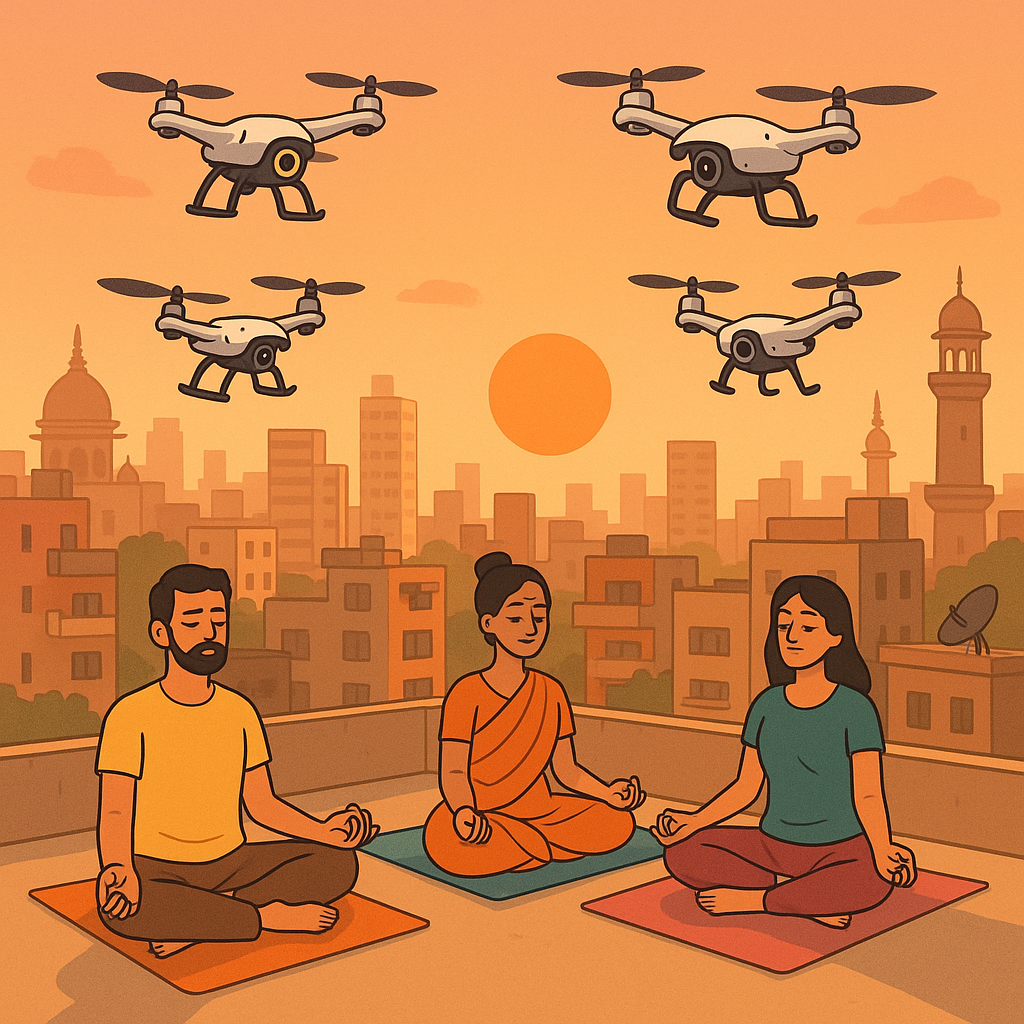
Residents in test areas are less enthusiastic. “First it was CCTV everywhere, now it’s drones,” complained one local. “If Solar Defence really wants to help, they should invest ₹12,800 crore in fixing traffic. Put AI on that.” He paused. “Though a robot that can cross an Indian road at rush hour without dying might be too powerful for humanity to control.”
The timing of the announcement has also raised eyebrows among geopolitical watchers. With global tensions rising and every other headline sounding like a rejected season arc from a streaming war drama, a massive private investment in robotics and drones feels less like “innovation” and more like “setting notifications for World War 3’s Google Calendar.” Still, as one analyst put it, “If Solar Defence doesn’t do it, someone else will. The future of conflict is platform-based, subscription-driven, and push-notified.”
Back at corporate HQ, executives remain optimistic. “This ₹12,800 crore initiative is just the beginning,” said a senior official. “We envision a world where Solar Defence platforms seamlessly integrate with civilian infrastructure.” When pressed, they clarified this meant “dual-use logistics” and not, as some feared, “drones delivering both pizzas and precision guidance in the same flight.”
Meanwhile, lifestyle gurus have begun rebranding anxiety about autonomous weapons as a growth opportunity. “You can’t control Solar Defence robots,” wrote one popular wellness blogger, “but you can control your breath.” They then launched a paid course titled: ‘Boundary-Setting With Militarized Airspace: How To Ground Yourself When The Drones Won’t.’
As the ₹12,800 crore flows into labs, factories, and whatever PowerPoint describes as “innovation hubs,” one thing is clear: the future will be automated, aerial, and aggressively branded as “for your safety.” Whether humanity thrives under an AI-assisted shield or winds up living under permanent robotic mood lighting depends on decisions made now, by people who, statistically, still use ‘password123’ for something important.
In the meantime, if you hear a faint buzzing overhead, don’t panic. It could be a Solar Defence surveillance drone, a logistics robot, or just your neighbor’s new hobby quadcopter. Either way, look up, smile, and remember: you are seen. Extensively. In 4K.