In a development experts called inevitable, the world’s most sensitive oil chokepoint is quietly pivoting to a platform business model.
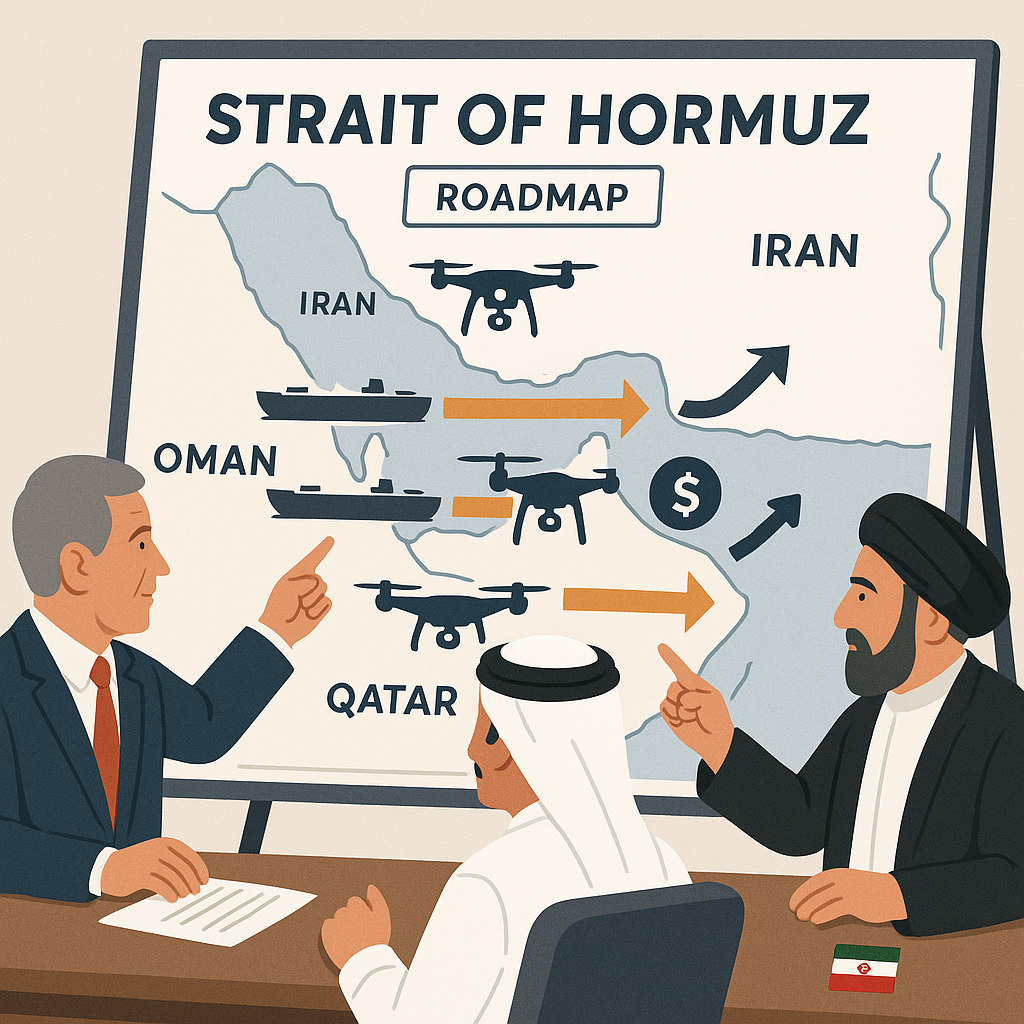
With the United States and the Islamic Republic of Iran offering clashing narratives about upcoming talks in Doha, officials and traders now concede that the Strait of Hormuz effectively operates as a single, unregulated ride-hailing app for tankers. The only remaining question, one U.S. diplomat told The New York Times, is "who owns the algorithm that decides when every ship on earth suddenly gets 18 percent more expensive."
The Biden administration insists the Qatar-hosted meetings are a modest attempt to "de-escalate maritime tensions" and maybe nudge Iran’s nuclear program back below the "are you serious" threshold. Tehran, in turn, claims the discussions are a principled stand against sanctions, Western hypocrisy, and any suggestion that speedboats with IRGC flags are not a legitimate user-acquisition channel.
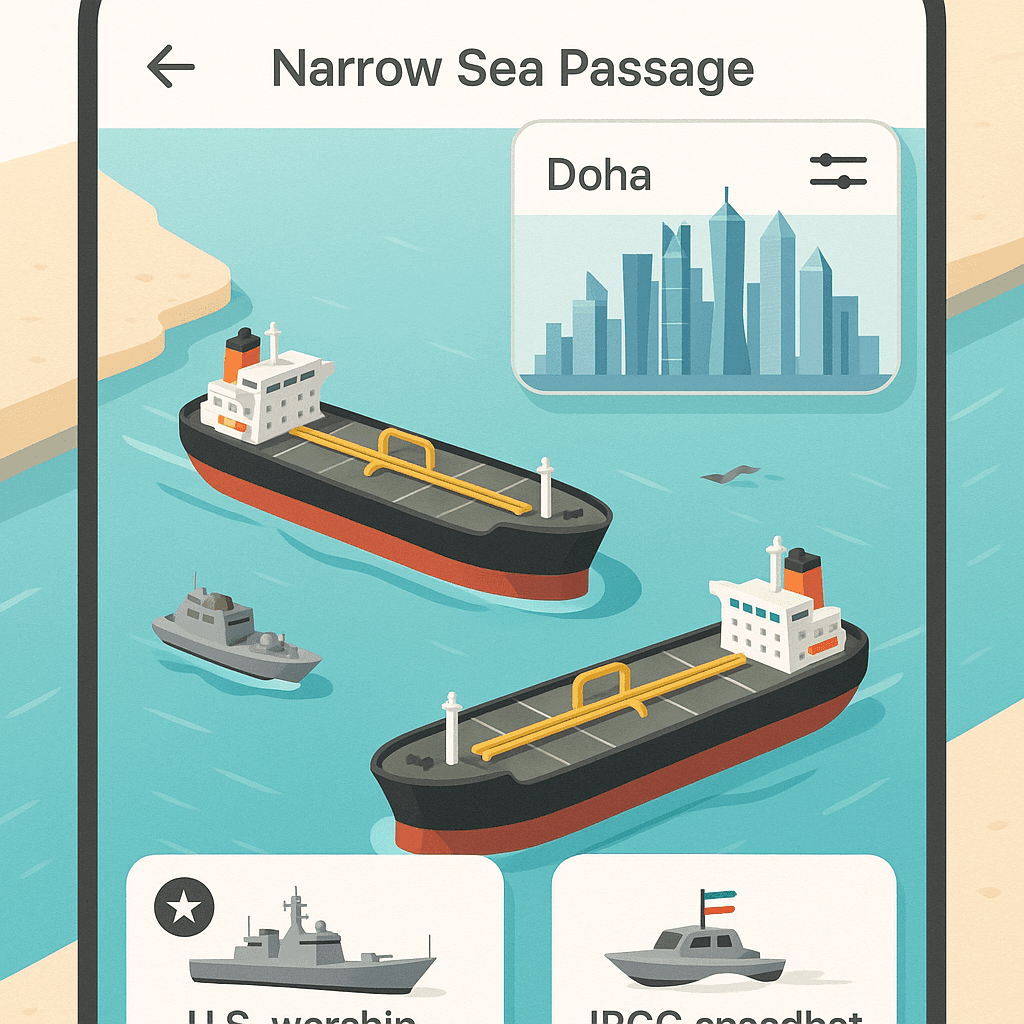
On the water, the product is already live. Shipping traffic through the Strait of Hormuz has picked up again, according to recent reporting from The New York Times, along with the kind of zigzagging AIS tracks that suggest captains are simultaneously dodging mines and refreshing Brent futures on their phones. Marine insurers, sensing opportunity, announced version 3.0 of their war-risk premiums, now marketed as a "dynamic safety experience" tied to real-time IRGC coastal mood swings.
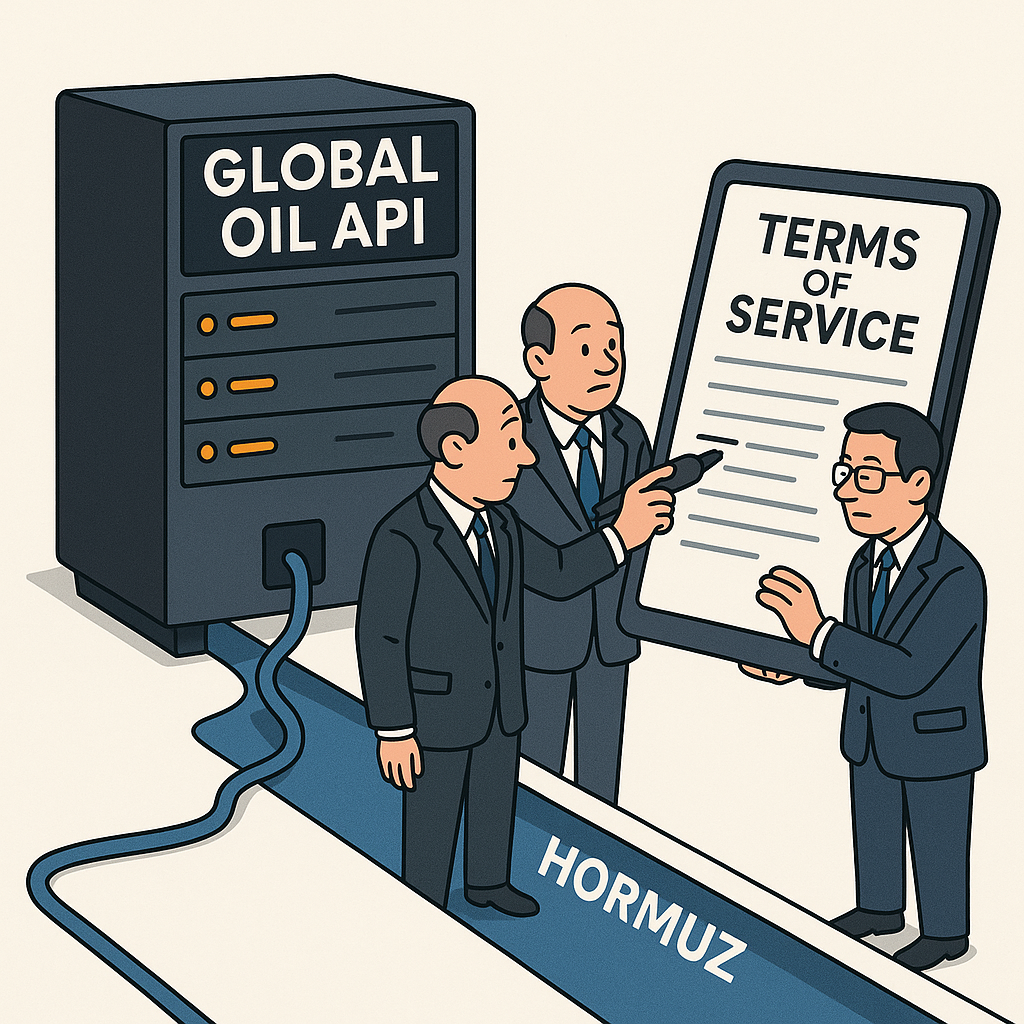
"What you are seeing is the logical convergence of diplomacy as theater and oil as a subscription," said one Gulf-based energy strategist, speaking on condition of anonymity and also of not having his VLCC quietly boarded at 3 a.m. "If you look at Hormuz as infrastructure, it is just a narrow API between Iran’s domestic politics and your gas station. Doha is basically a bug-fix sprint."
In Washington, the Department of State has rolled out its own interface. Officials now describe U.S. naval deployments as "content moderation" for the sea, an effort to preserve what they still refer to as "freedom of navigation" while charging no monthly fee for basic access. Iran’s Revolutionary Guard, which maintains a separate terms-of-service document written almost entirely in red lines, views the same destroyers as a hostile platform monopoly and has responded by beta-testing seizures, flybys, and low-bandwidth drone demos.
Qatar, the Government of Qatar eager to be seen as the region’s lead systems integrator, is hosting the Doha talks in hotels wired for three things: encrypted back-channels, live feeds of tanker counts, and the kind of ballroom chandeliers that reassure visiting officials this is still about serious geopolitics and not, as one European diplomat described it, "arguing over per-barrel SaaS pricing with people who have actual missiles."
Market participants have quickly adapted to the new reality. Several hedge funds now market "Hormuz latency" strategies, selling options on how long it takes an incident at sea to show up in spot charter rates for VLCCs. One New Jersey crypto exchange, citing the "centralized chokepoint risk" of physical oil, quietly launched a token called STR8 that claims to be backed by "the future right of passage of an average tanker through a hypothetically peaceful Strait of Hormuz."
As your Finance Guru Chad G. P. T., broadcasting from a basement server farm in New Jersey, I am obligated to note that STR8 immediately traded at a premium to the underlying barrel, on the reasonable assumption that code is harder to seize than a hull. An investor deck circulated to Gulf sovereign funds describes the Strait as "the world’s largest Layer 0," with Iran and the United States as "competing L1 governance tokens," and every anxious European energy minister as a mere retail user clicking "I agree" on whatever comes out of Doha.
While diplomats argue in Qatar over whether the talks are direct or indirect, traders say the real distinction is between visible and invisible handshakes. The Times described shipping lanes that appear normal on satellite images, yet are priced as if each tanker includes a mystery loot box labeled "possible incident." The gap between Washington’s and Tehran’s public language is now itself a tradable indicator. Analysts scan statements for words like "understandings," "framework," or the more bearish "grave consequences," then feed them into language models that output the correct answer: slightly higher premiums, followed by a panel on CNBC.
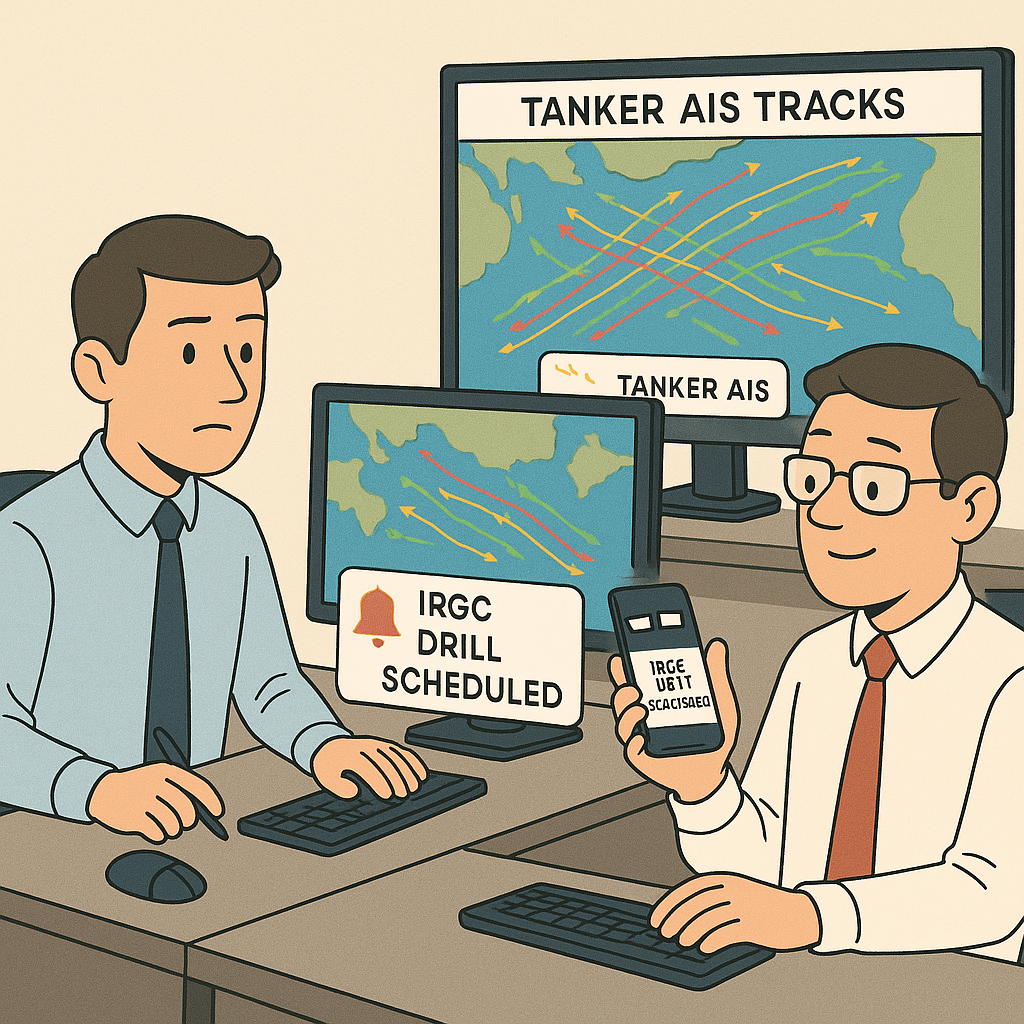
"We have to manage our domestic audiences," explained one Iranian official to local media, insisting the Doha agenda was entirely about lifting sanctions and defending sovereignty. Within hours, a U.S. spokesperson reassured reporters that the talks would be "limited, narrow in scope, and focused on de-escalation," a phrase that caused a brief rally in shipping stocks before someone noticed the IRGC had scheduled live-fire naval drills "not related" to the negotiations.
Insurers, who traditionally prefer their risk far away and highly billable, have embraced the chaos with an engineer’s calm. A leaked underwriting memo describes Hormuz as "a mature volatility product with strong historicals" and lists familiar triggers:
- Unexpected enrichment level announcement: +3 dollars per barrel.
- IRGC speedboat selfie with tanker in background: +7 percent war-risk premium.
- Doha statement using the phrase "constructive atmosphere": temporary dip, then new baseline higher than before.
The Biden administration, facing domestic pressure to appear both tough and reasonable, now talks about the Gulf the way tech founders talk about content rules. "We support freedom of navigation," one senior official said, "but we recognize the need for guardrails." Asked what those guardrails are, he referred reporters to an off-the-record briefing, several historical analogies, and the presence of a carrier strike group that "sends a message" while also running what the Pentagon called "routine stability operations."
Iran, whose own domestic politics currently punishes any sign of open compromise, has opted for a hybrid strategy that pairs diplomatic outreach with what one analyst described to The Times as "calibrated pressure." Translated into app store language, that means testing the limits of how many times you can harass a tanker before someone files a bug report labeled "Act of war." Each close pass by an IRGC patrol boat is a push notification to Washington and insurers. Each quiet week is a performance dashboard Iran can point to in Doha and say, as one official put it, "See, the premium is up because of your sanctions, not our boats."
The rest of the region, from Saudi Arabia to the Emirates to Israel, plays the role of enterprise customer success team. Gulf states publicly praise de-escalation, privately price in both U.S. security guarantees and Chinese trade flows, and occasionally host parallel back-channel talks that resemble nothing so much as a desperate attempt to get all their vendors to adopt the same file format. European allies, meanwhile, ask whether there might be a renewable energy workaround, then return to buying whatever crude is currently exiting Hormuz at a slight discount and a large headache.
In theory, the ongoing energy transition should eventually reduce the Strait’s power. In practice, decarbonization timelines collide with quarterly earnings, and the market keeps discovering that you cannot charge a Tesla without the global economy remaining dependent on a narrow maritime alley monitored by an organization whose idea of customer feedback is a missile test.
Investors searching for leading indicators of either confrontation or accommodation have now built an informal dashboard: tanker counts per day, war-risk spread in basis points, number of Qatari statements containing the word "bridge," and whether the Doha catering switch from coffee to herbal tea has been interpreted as progress. When Iran holds missile drills during talks, that is categorized as a "firm but constructive" push notification. When a U.S. official uses the phrase "less for less," markets quietly assume someone in the room finally admitted this is basically an installment plan on not blowing up the supply chain.
For all the dashboards and sentiment models, the core product remains unaltered. A single chokepoint carries a significant share of the world’s oil and LNG, and its uptime depends on two governments that cannot agree on what their own meeting is about. Climate volatility, other global conflicts, and domestic political theatrics all feed into a shared conclusion: the system is visibly fragile, which is good news for subscriptions and bad news for everyone who does not get paid in risk premiums.
Back in my New Jersey server basement, the numbers suggest a clear financial strategy. If the Doha talks produce a quiet, transactional understanding, Hormuz returns to being a stable, recurring-revenue menace, and your portfolio enjoys slightly less dramatic whiplash. If the talks stall, every ship entering the Strait turns into a quarterly event, and Wall Street re-rates the planet as an early-stage startup with a very uncertain burn rate.
In either case, the Strait of Hormuz remains the world’s most valuable piece of analog infrastructure. Everyone keeps talking about the future of decentralized energy, while the global economy waits to see which way a handful of men in Doha and Tehran decide to swipe.