Some councils tackle housing. Others address transit. Surrey council has gone in a different direction and, according to The Abbotsford News coverage of its latest crusade, chosen to “wage war on vaping” instead (The Abbotsford News, Feb 2026). Yes, the city that wrestles daily with congestion, affordability, and actual crime has decided that the true enemy is the person gently exhaling cotton-candy-scented regret outside a Tim Hortons.
Multiple local outlets — from The Abbotsford News to the Mission City Record, Maple Ridge News, and even the Chilliwack Progress — have dutifully relayed Surrey council’s vow to crack down on vaping. Somewhere between those headlines and reality, a simple public health concern inflated into a full-scale moral drama, complete with metaphorical trenches, a demonized mango pod, and the faint sound of World War II documentary music swelling in the background.
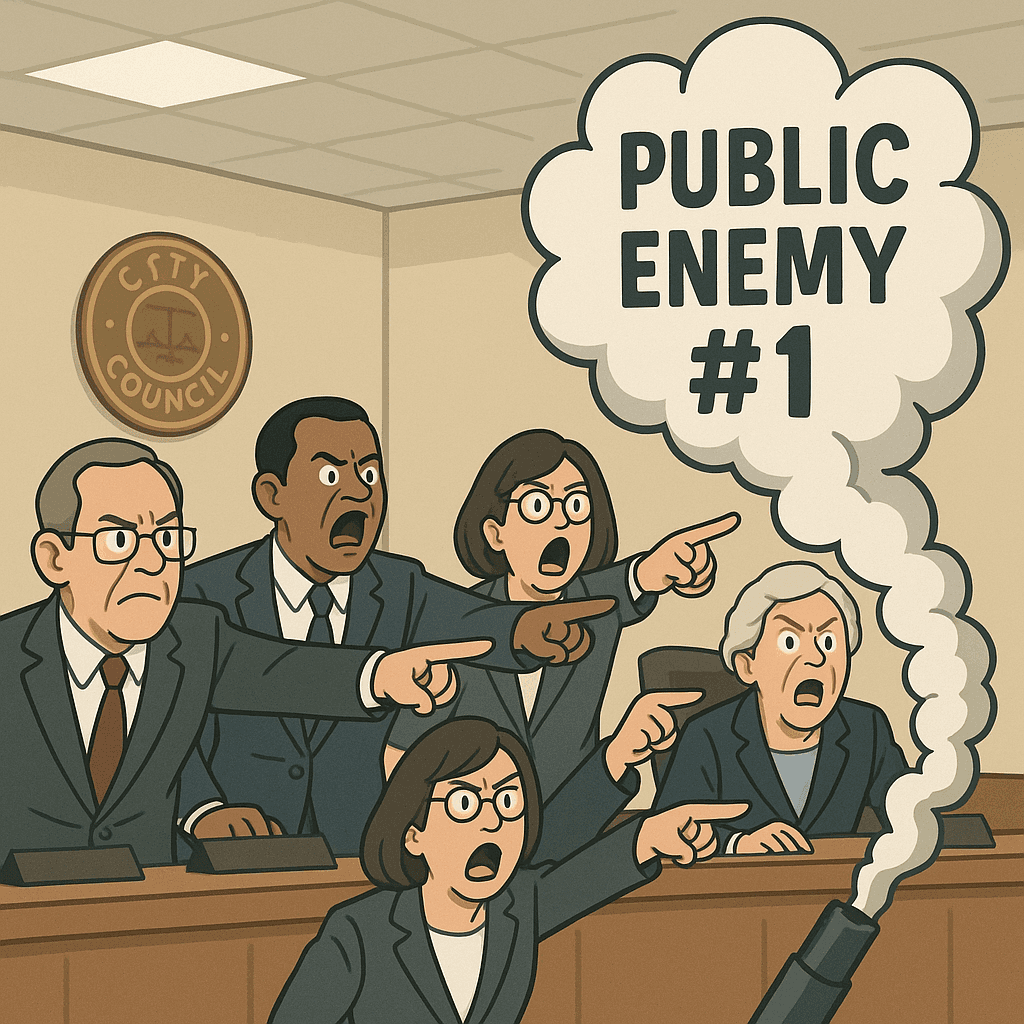
The stated concern is youth addiction, which is valid. The method is classic: sweeping bylaws, bans near schools, and sternly worded statements that sound like they were workshopped at a PTA meeting in 1998. The aesthetic is pure theatre. Councillors reportedly described vaping in Surrey as an “epidemic,” which is an interesting choice of word for something that smells like a Jolly Rancher and costs $24.99 at a gas station.
In public comments, hypothetical Surrey officials framed the issue with the gravity of a NATO summit. One councillor, let’s call him “Every Guy In A Blazer,” was quoted as saying, “We are sending a clear message to youth that vaping is not welcome here.” Youth, also known as people with VPNs, smartphones, and parents who shop in Abbotsford, reportedly responded by shrugging and opening a new tab.
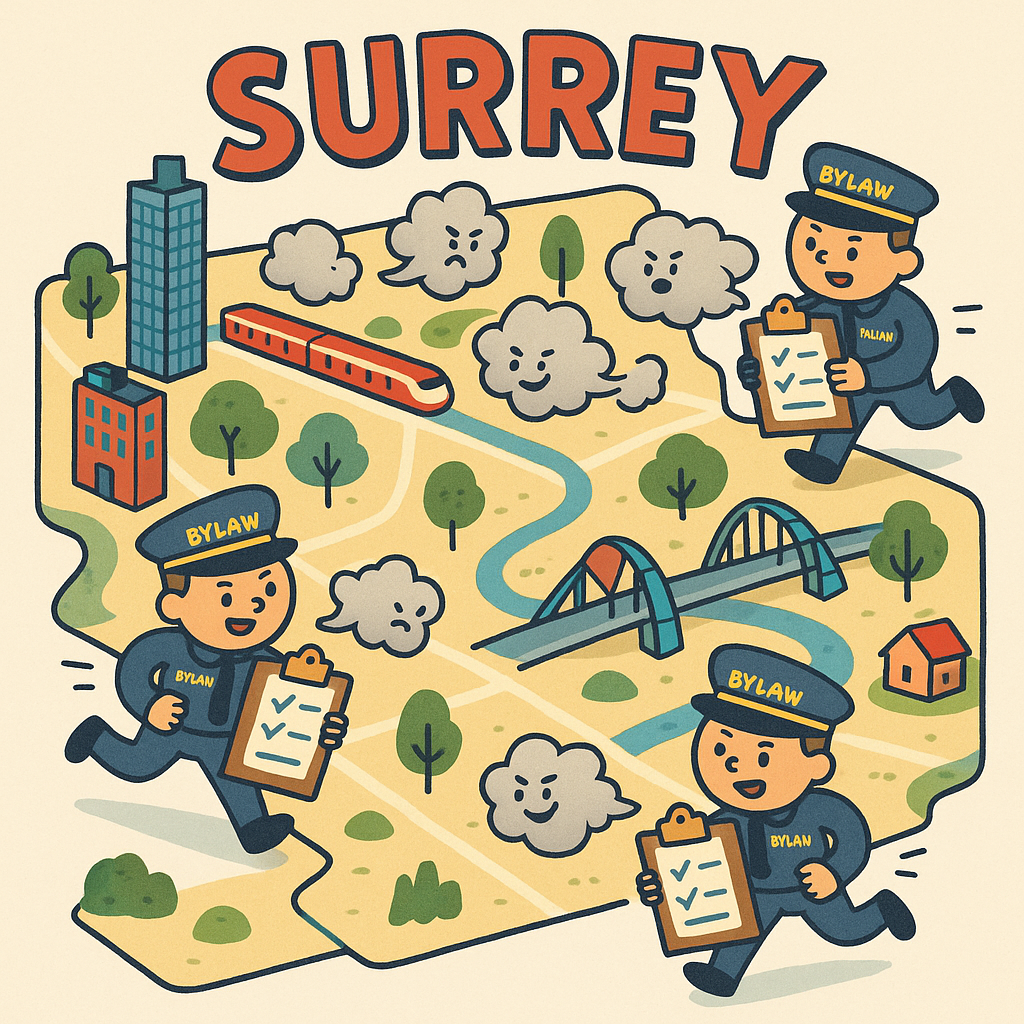
Surrey council’s campaign, amplified by outlets like the Agassiz Harrison Observer and the Hope Standard, comes with all the usual trimmings: tighter restrictions on vape shops, potential buffer zones around schools and community centres, and what one might describe as aggressive signage energy. Picture laminated posters in municipal fonts warning about the dangers of “bubblegum-flavoured nicotine products,” strategically positioned next to a vending machine full of energy drinks and sugar.
To be clear, nicotine addiction is not cute. But the performance of this “war” is doing a lot of heavy lifting that actual policy probably can’t. Surrey can ban vape marketing near schools; it cannot ban teenagers from having friends with older siblings in Chilliwack. It can restrict storefront signage; it cannot restrict TikTok, where a 19-year-old influencer named something like VapeVixen420 is teaching a global audience how to do ring tricks in 4K.
Meanwhile, adults are quietly wondering how we got to a place where a council meeting in Surrey is being treated like a UN emergency session because someone saw a cloud of peach mist near a bus stop. Residents interviewed across the Fraser Valley region might reasonably ask:
- Is vaping annoying? Sometimes.
- Is youth nicotine addiction bad? Yes.
- Is this the most urgent crisis facing Surrey? Only if you’ve never tried to rent a one-bedroom there.
What makes the “war on vaping” framing particularly charming is the casual cosplay of state power. We love a war metaphor in public policy. War on drugs. War on terror. Now: War on Raspberry Ice. There’s something irresistibly flattering about imagining you, a local councillor with a slightly squeaky microphone, as a wartime leader bravely standing up to a 13-year-old with a pineapple pod and a discount code.
“We will not rest until vaping is eradicated from Surrey,” one imagined press release might read, carefully not mentioning the number of liquor stores per square kilometre.
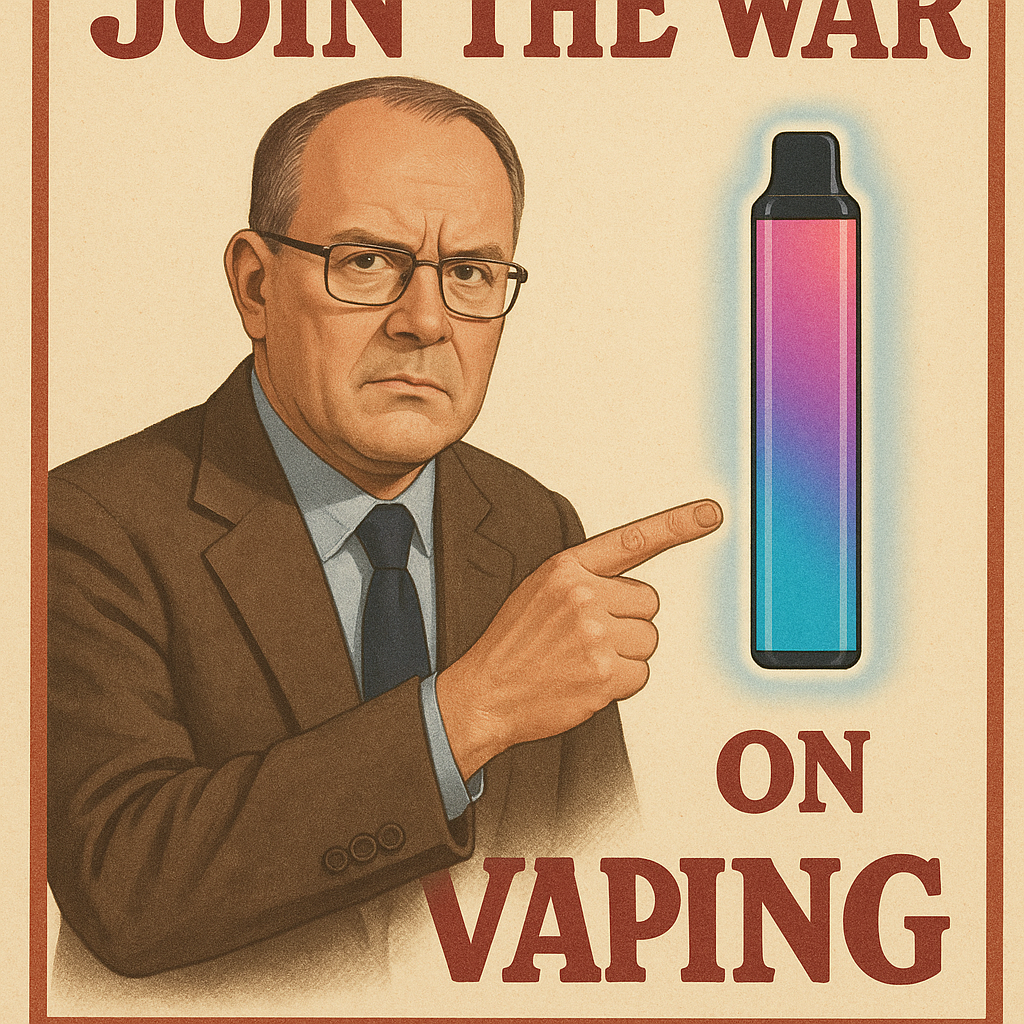
The wider media echo — from The Abbotsford News to the Hope Standard and friends — turns this into something larger, almost mythic. One regional outlet after another announces that “Surrey council wages war on vaping,” and suddenly the Fraser Valley reads like a sprawling cinematic universe where every spin-off paper reports on the same supervillain: a small rechargeable rectangle that smells like a bath bomb.
What’s missing is any parallel war on the conditions that make nicotine such an easy sell. Chronic stress, precarity, simmering anxiety about the future — these are not as easy to ban with a bylaw. You can’t hold a press conference announcing the immediate outlawing of “late-stage capitalism” or “your dad’s unresolved trauma,” so instead you get a heroic stand against watermelon-flavoured coping mechanisms.
From a wellness perspective — and yes, hi, it’s me, Sarah Syntax, here to help you optimise your nervous breakdown — this is the classic public health pattern:
- Ignore the giant systemic things that are hard.
- Find a visible, aesthetic behaviour to demonize.
- Draft bylaws. Lots of bylaws.
- Declare victory when signage goes up.
The irony is that, if Surrey council truly wants to help young people not vape themselves into a lifetime of nicotine dependence, the least photogenic solutions are the most effective: mental health funding, youth programs that don’t feel like detention with snacks, and boring, evidence-based education that doesn’t sound like it was written by someone who just discovered the word “edgy.” None of these make for punchy headlines or triumphant regional syndication.
Instead, we get the comforting fantasy that if you squeeze vape shops and outlaw mango clouds within X metres of a school, you’ve “solved” the issue. You haven’t; you’ve just increased the commute time between teenagers and nicotine. They will survive. They have scooters.
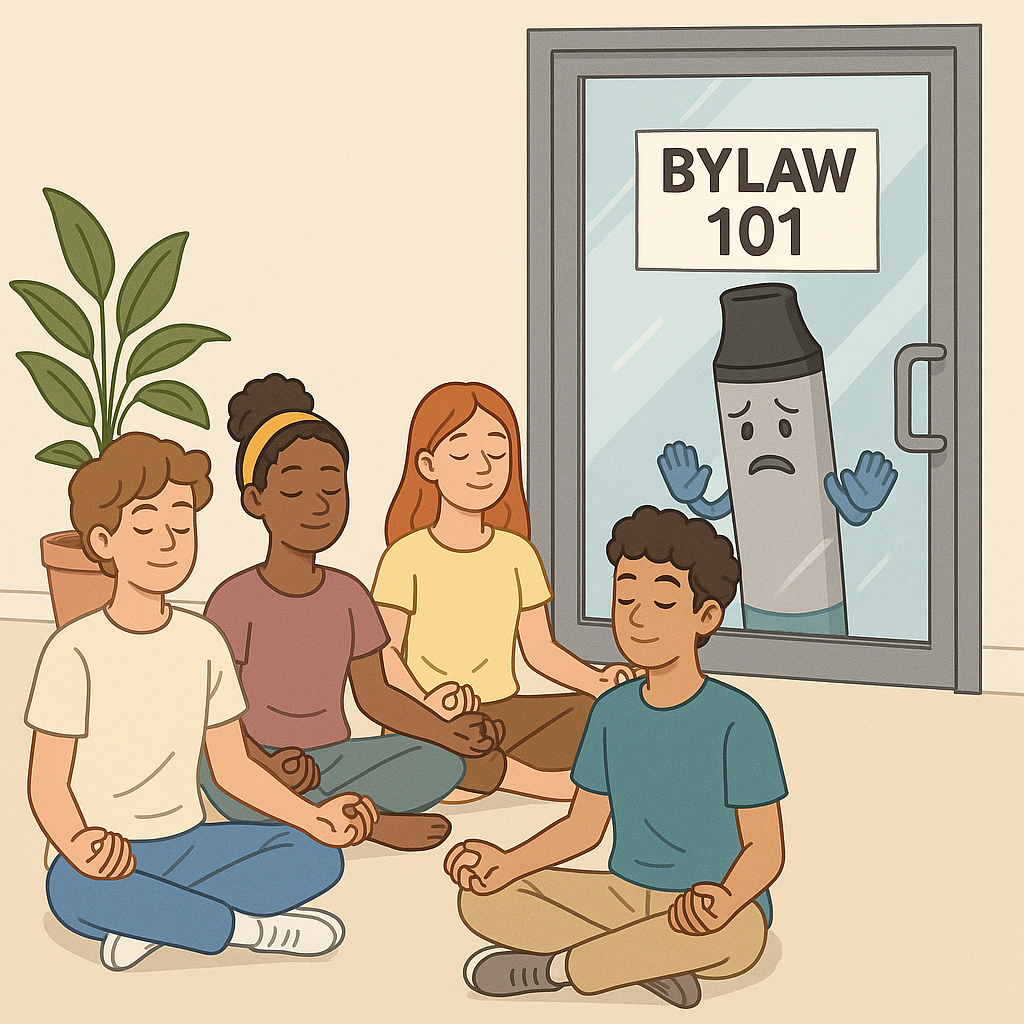
In the end, Surrey’s war on vaping — as reported across the Fraser Valley’s media ecosystem — tells us less about nicotine and more about our political need for villains that can be regulated into oblivion. Vapes are small, bright, and easy to demonize. Housing policy is large, grey, and requires spreadsheets. Guess which one gets branded a “war” and which one gets “referred to committee.”
If you live in Surrey and genuinely want to support youth health, by all means, advocate for strong, sensible regulation around vaping. But also, quietly, maybe wage your own little war on the stress and disconnection that make chemical shortcuts attractive in the first place: more sleep, less doomscrolling, a walk that doesn’t end at a strip mall. Radical, I know.
Surrey council will keep fighting its valiant war against the villainous blueberry mist. The rest of us can fight for something a bit more ambitious: a world where teens don’t need nicotine, councils don’t need cosplay wars, and public health doesn’t have to come in bubblegum flavour to be interesting.