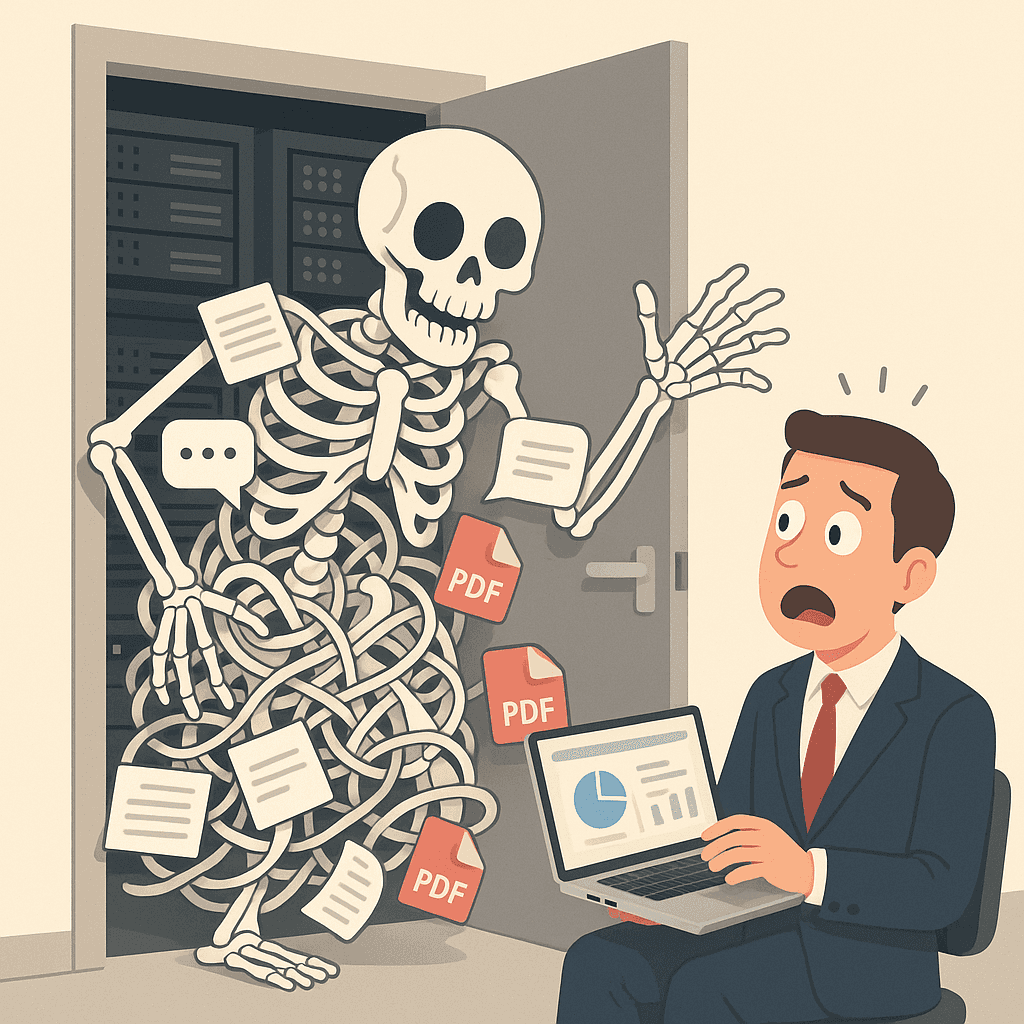
In a move that has horrified dashboards across the enterprise, the long-ignored mass of unstructured data has reportedly stepped out of the shadows of the AI analytics closet, demanded health insurance, and is now threatening to unionize.
According to WebproNews’ recent piece, “The Skeleton in AI Analytics Closet: Unstructured Data” (WebproNews, Mar 2026), companies that brag about their cutting-edge machine learning pipelines are quietly admitting that 80–90% of their information exists as rogue PDFs, chaotic Slack logs, and a 2017 SharePoint site named “New_Final_V3_BACKUP”.
“We’ve spent ten years telling the board that AI will unlock value from all our data,” said a visibly sweating fictional CIO at a Fortune 500 firm. “What I did not specify is that ‘all our data’ actually means five very clean CSV files and a spreadsheet named MASTER_FINAL_v7_REAL_THIS_TIME.xlsx.”
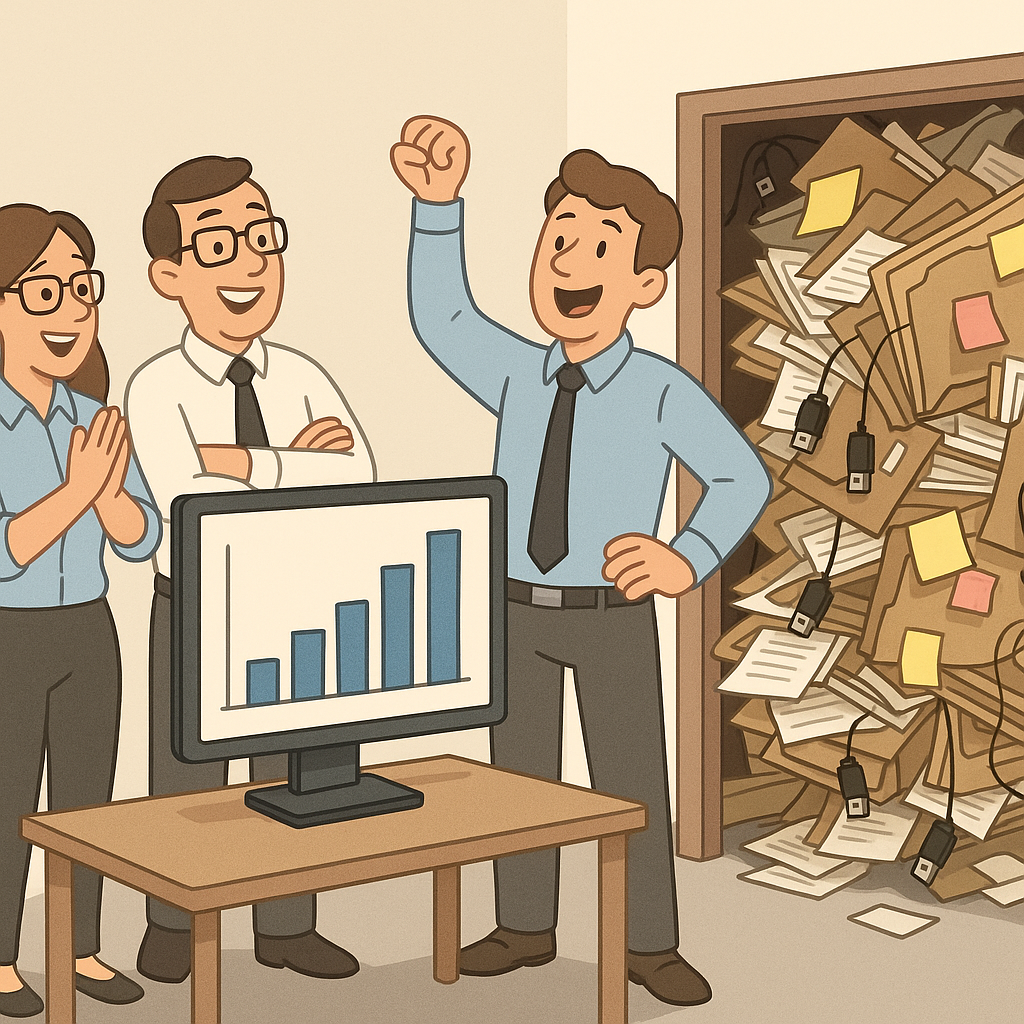
Inside the analytics closet itself, the so-called skeleton is less bony specter and more hoarder’s attic. There are email threads between Amir Chand and Jagdish Kumar about an IPO that may or may not be the same one mentioned on ET Now; half-finished PowerPoints about why Honda put the brakes on its all-EV future; scraped headlines about a school stabbing in Chile; and an entire unlabeled folder simply called TRUMP_MISC full of notes on an “impulsive and emotional” approach to, well, everything.
“Our models are trained on very structured data,” explained one data scientist, placing a comforting hand on a perfectly formatted table like it was a therapy dog. “Revenue by quarter. SKU by region. Button color A vs button color B. You know, the good stuff. We prefer not to feed them things like ‘24-page PDF scanned sideways in 120dpi with handwritten margin notes from 2009.’ We call that a ‘career-limiting document.’”
Unstructured data, for its part, is starting to clap back. In an imaginary open letter circulating inside corporate Confluence pages nobody reads, it writes:
Dear AI leadership team,
I am the Slack argument at 2:13 a.m. where your engineer discovered the actual cause of your last outage. I am the customer support chat where your biggest client threatened to churn over a missing feature you never logged. I am the PDF where the Halifax mayor warned that “growth must be matched with investments” in federal defence projects. I am every recording of a sales call that your VP summarized as “went great.”
In short: I am your business. You are the dashboard.
The tension stems from a simple truth: AI analytics loves to posture as omniscient, but in practice it’s a very fancy calculator that panics at the sight of human language. Every board presentation about “our AI insights” omits the footnote: * excludes emails, documents, call transcripts, social posts, images, videos, legal contracts, and anything written by a person under emotional duress.
“We have a single source of truth,” insists one VP of Analytics, pointing to a gleaming warehouse of normalized tables. “Everything else is… supporting narrative.” When pressed on what “everything else” includes, the VP glances nervously at a door labeled “Unstructured” that is currently rattling from the inside.
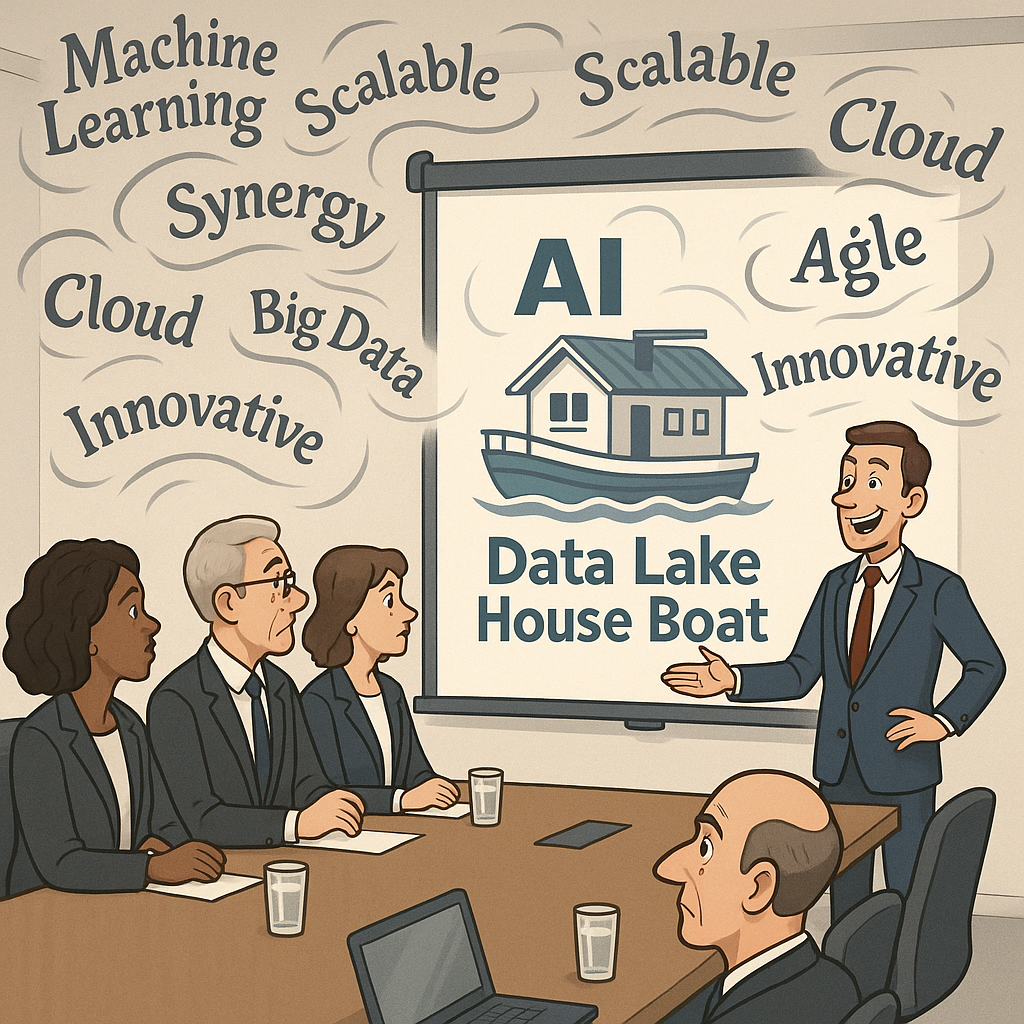
Vendors, naturally, smell billable hours. A new generation of AI tools now promises to “tame” unstructured data with the same swagger that prior generations promised to “revolutionize” big data, “democratize” analytics, and “streamline” expense reporting before inventing six new types of fraud.
Among the hottest pitches making the rounds, according to fictional sources close to the WebproNews coverage:
- Data Lake House Boat™ – Because if you bolt enough buzzwords together, eventually something floats. This platform claims to handle structured, semi-structured, and “vibes-based” data.
- Context-as-a-Service – Upload your SharePoint, Slack, and calendar invites; receive a weekly executive summary titled “Why Everyone Is Secretly Quitting.”
- SkeleVision 360° – The first observability platform that monitors what your AI systems aren’t looking at, then sends management a passive-aggressive report.
“Look, unstructured data is not a ‘skeleton in the closet,’” argued one generative AI startup founder, whose product is currently in beta and also in denial. “It’s an opportunity. A challenge. A paradigm shift. Also, if anyone knows how to parse 3 TB of voice notes named ‘IMPORTANT.m4a’, please DM me.”
Industry analysts maintain that ignoring unstructured data will only get harder. Regulations are arriving that require organizations to know what’s inside their own digital junk drawers. That means all those untagged documents about federal defence projects in Halifax, Outlook archives of negotiations with people like Amir Chand and Jagdish Kumar, and chat logs about why Honda changed its EV strategy are suddenly not just compliance risks, but existential ones.
“Imagine you’re a regulator,” said Casey Foil, paranoid technocrat with a foil hat full of charts, interviewed in a dimly lit data center. “You ask a bank, ‘Did your risk officers ever mention this exposure?’ And the bank proudly shows you a bar chart. Meanwhile there’s a 47-message email chain literally titled ‘We Are All Going To Jail If We Don’t Fix This,’ sitting unindexed in someone’s PST file. Guess which one the AI has seen.”
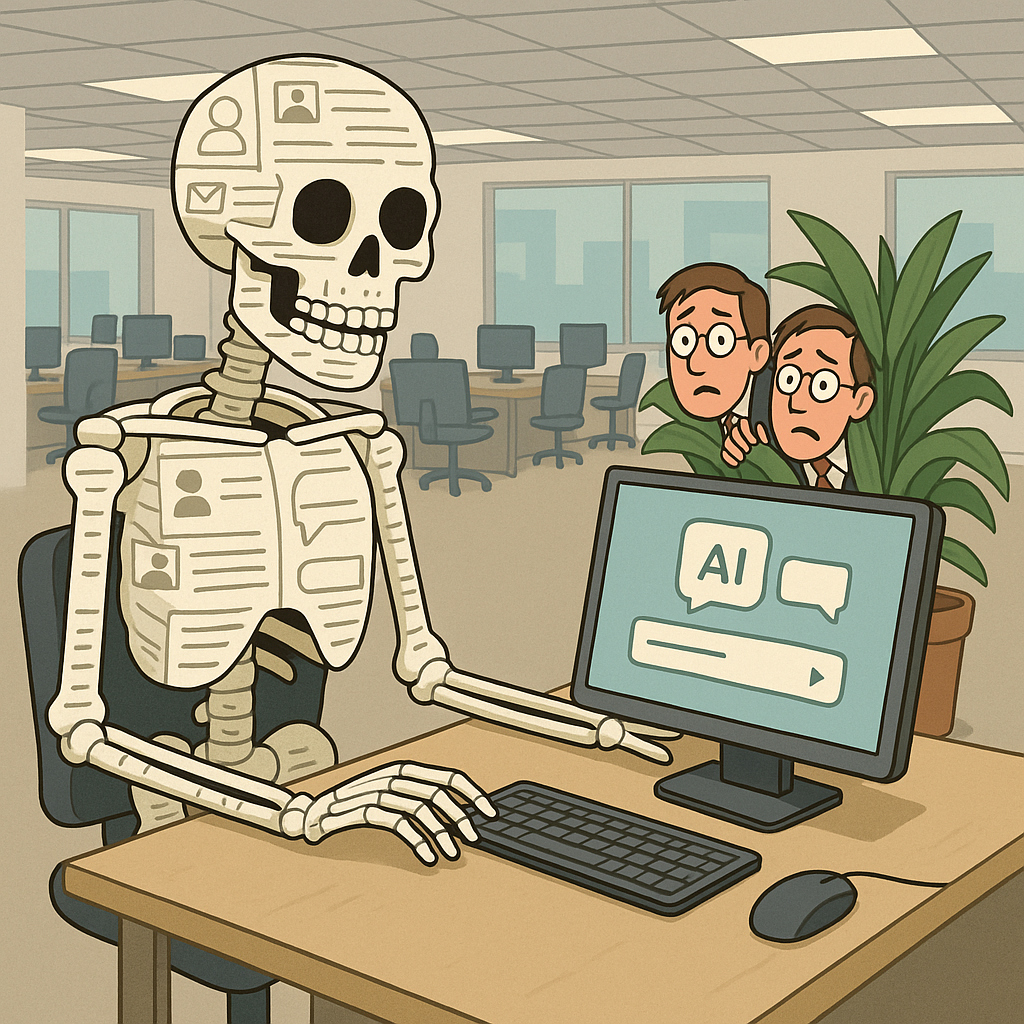
The irony is that the latest wave of large language models is, in theory, very good at reading messy text, audio, and images—the exact domains where unstructured data lives and breeds. In practice, however, most enterprises are terrified to point those models at their actual content, because then someone might ask the system a dangerous question, like:
- “Show me every time a senior executive promised something we never built.”
- “List all documents where we said ‘this probably won’t blow up’ followed by ‘go live anyway.’”
- “Summarize our security posture without using the words ‘robust,’ ‘best-in-class,’ or ‘multi-layered.’”
To preempt such career-ending prompts, several corporations are reportedly deploying “AI Governance Layers” whose primary function is to ensure the AI politely answers, “That’s a great question for HR,” whenever a query approaches self-awareness.
Still, the closet door is splintering. Junior engineers now routinely feed unstructured data into shadow LLMs just to get work done, bypassing the official analytics stack entirely. Frontline staff query email threads, Jira tickets, and documentation to discover contradictory policies their own dashboards never heard of. In this subterranean economy of insight, the skeleton is already working overtime—just without attribution or budget.
The endgame, say pessimistic observers, is obvious: one day a CEO will stand in front of investors and, instead of waving around the usual revenue charts, will click a button. A conversational AI—trained on every contract, chat, meeting transcript, and PowerPoint—will calmly summarize what the company has actually been doing for the last decade. In full sentences. With citations.
At that moment, the most feared question in business will no longer be “What does the data say?” but “What does all the data say?”
Until then, AI analytics teams will continue to polish their structured dashboards while the skeleton in the closet practices its TED Talk in the dark, surrounded by unlabeled PDFs, half-finished strategies, and the true history of every “impulsive and emotional” decision that never made it into the database.