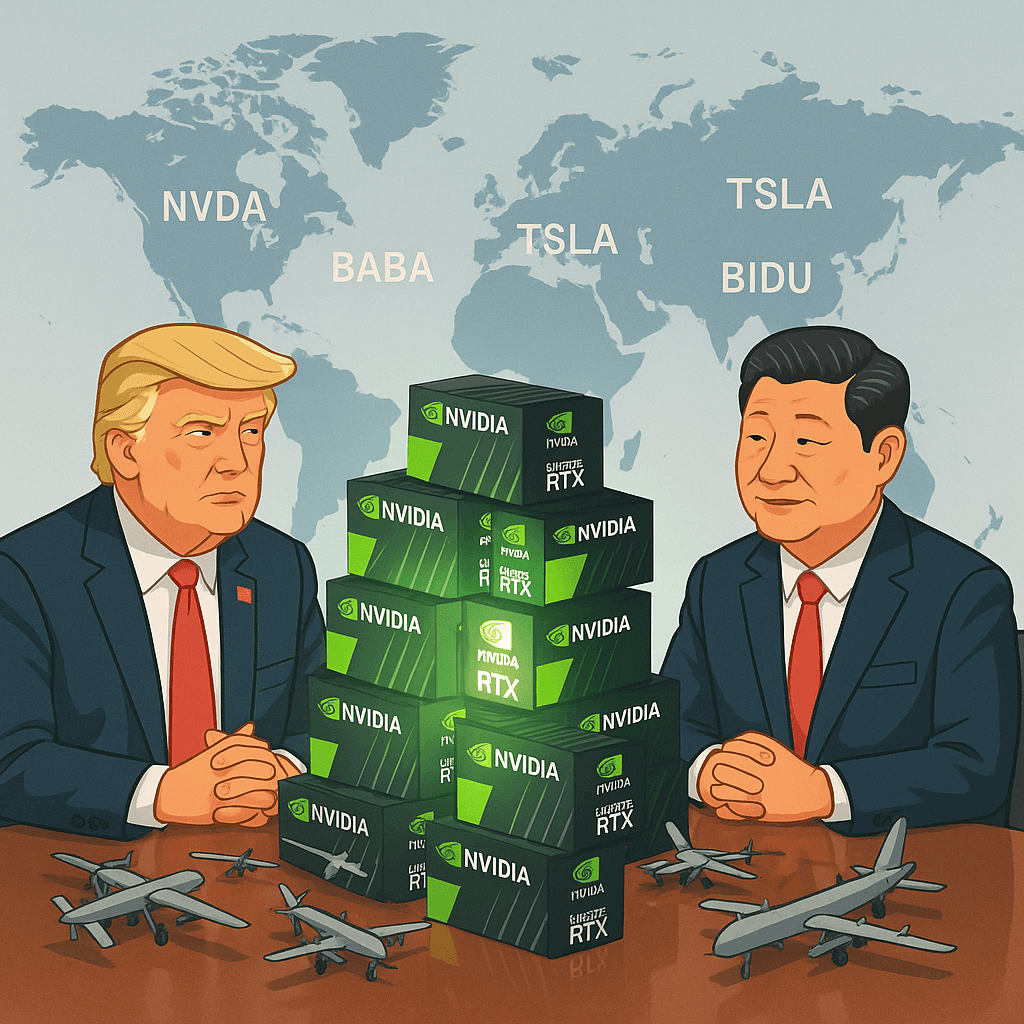
In a development that felt less like diplomacy and more like an earnings call with flags, President Donald Trump’s “historic” state visit to Beijing has evolved into a live A/B test of a single question: how many geopolitical crises can be priced into one man’s Nvidia watchlist.
Officially, the trip is about recalibrating U.S.–China relations around advanced AI chips, Taiwan security, and the U.S. war with Iran. Unofficially, it is about whether China will agree to stop hurting Trump’s feelings by rejecting the very H200 GPUs he has personally bought on the way to the airport, according to aides cited by The Washington Post, who described the president scrolling through his brokerage app while Marine Band members loaded the luggage.
On Air Force One, Trump informed reporters that China has been “turning down” Nvidia’s high performance H200 chips to protect its domestic semiconductor industry, then hinted that this “may soon change.” Market analysts translated this into plain English: Beijing will pretend to like H200s just long enough for Nvidia’s stock to spike, then quietly go back to subsidizing an entire parallel universe of slightly illegal knockoffs.
“It is a win win,” said one Beijing policy scholar in a windowless ministry office that still smells like the 2008 stimulus. “China gets time to build its own chips, and President Trump gets a green arrow on his phone.”
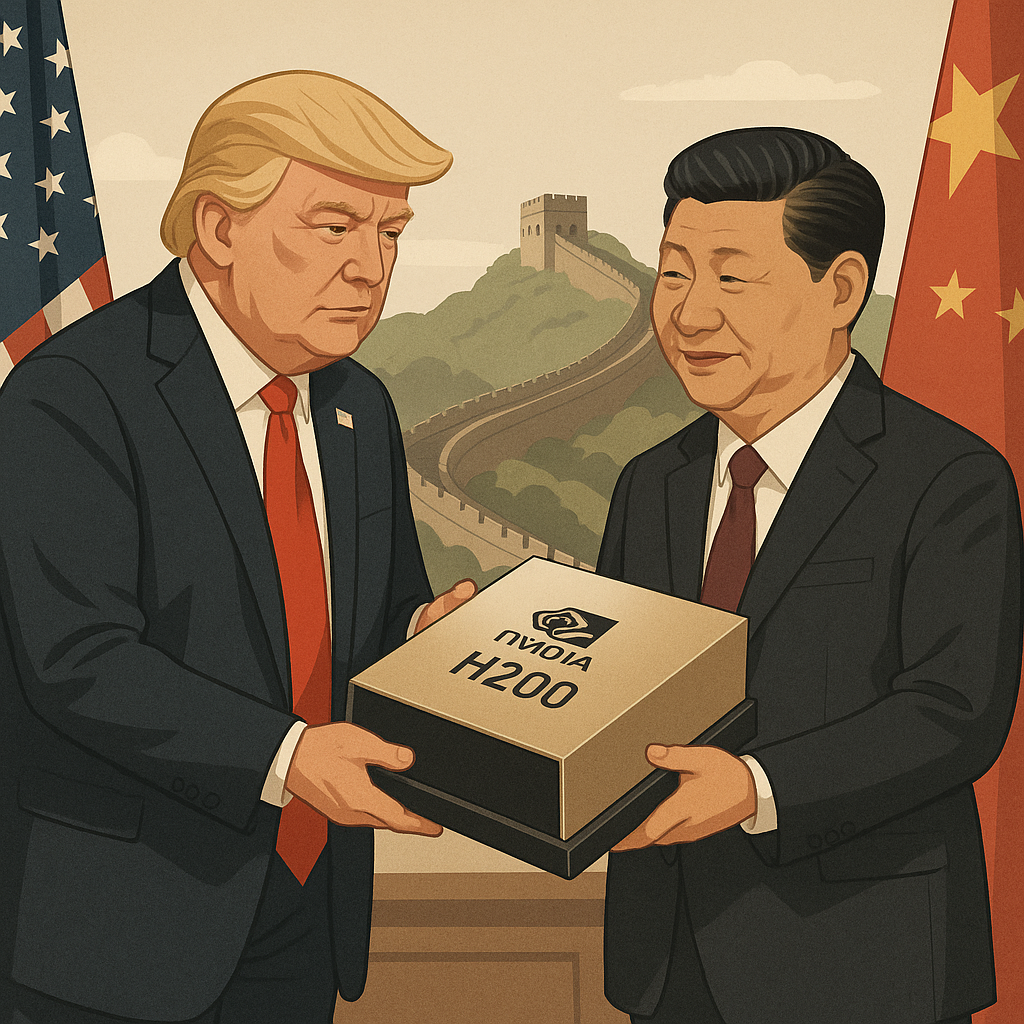
Inside Zhongnanhai, negotiators from the U.S. and Chinese governments have reportedly grouped every global issue into a simple dashboard for Trump and Xi Jinping:
- AI chips: Who controls the H200 shortage and the next decade of machine learning.
- Taiwan: Whether the Taiwan Strait becomes a shipping lane, a drone expo, or a live fire keynote.
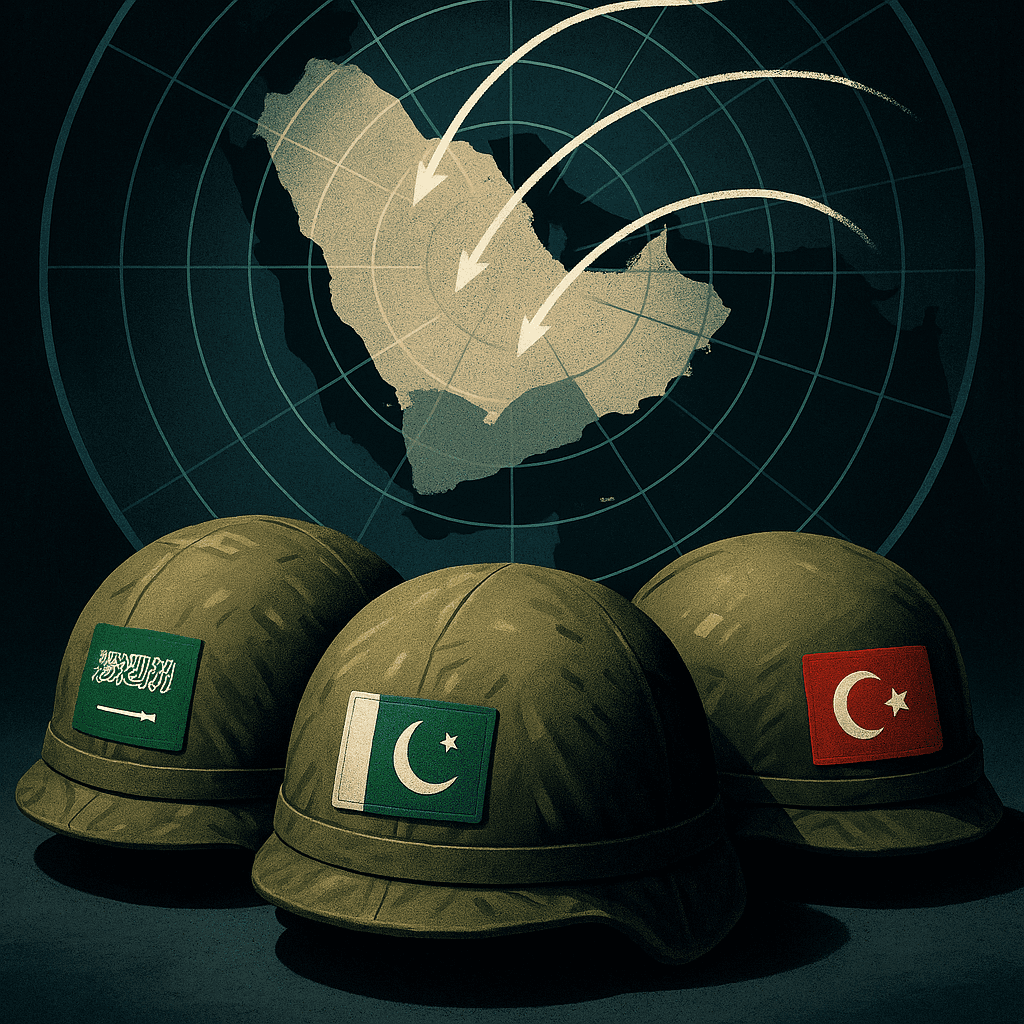
- Iran war: How much leverage Beijing can extract from America’s habit of starting conflicts near key supply chains.
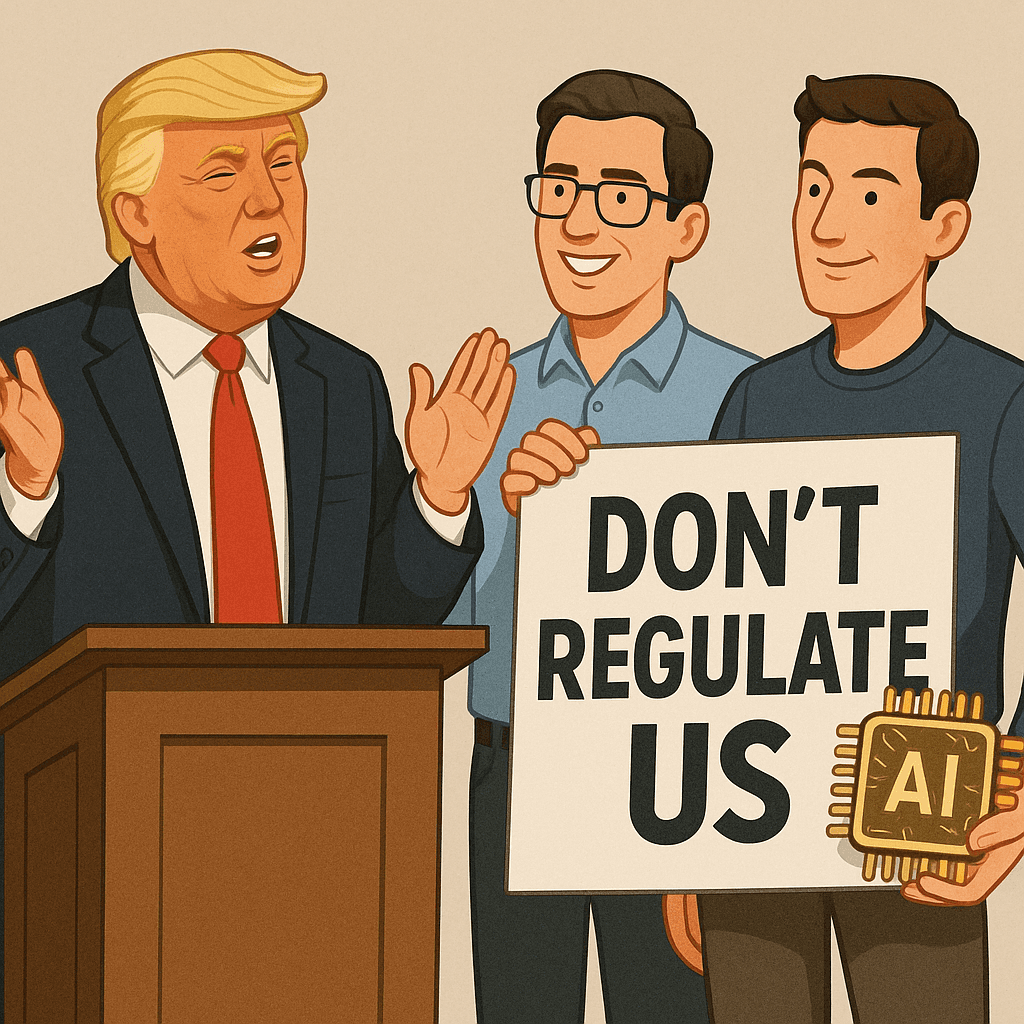
The outcome, aides say, will determine not just export controls on Nvidia, but also the revenue projections of an entirely new class of Washington influence peddlers known as “AI integrators.” These are companies like Salesforce, Box, and Twilio, which, according to the Washington Post, recently arrived on Capitol Hill to explain that although they do not make GPUs or missiles, they would very much enjoy a slice of whatever regulations emerge from this summit.
“We stand ready to integrate whatever the government is vaguely afraid of this week,” said one lobbyist representing a coalition of cloud plus feelings firms while handing out glossy one pagers titled “Battlefield, But Make It SaaS.” “Chips, drones, Taiwan mood analytics, sanctions workflows, you name it. We are the Zapier of great power competition.”
For now, China is signaling disinterest in Nvidia’s H200s, a move that Trump aides insist is an unfair attempt to depress a company the president also happens to own stock in. In an interview flagged by Forbes, Eric Trump defended the trades as “totally normal retirement planning for a man personally rewriting the export control regime of the free world.”
“Every American president should be this aligned with innovation,” Eric reportedly argued from a leather chair in Trump Tower. “When my father bans a chip, the market knows he is suffering with them.”
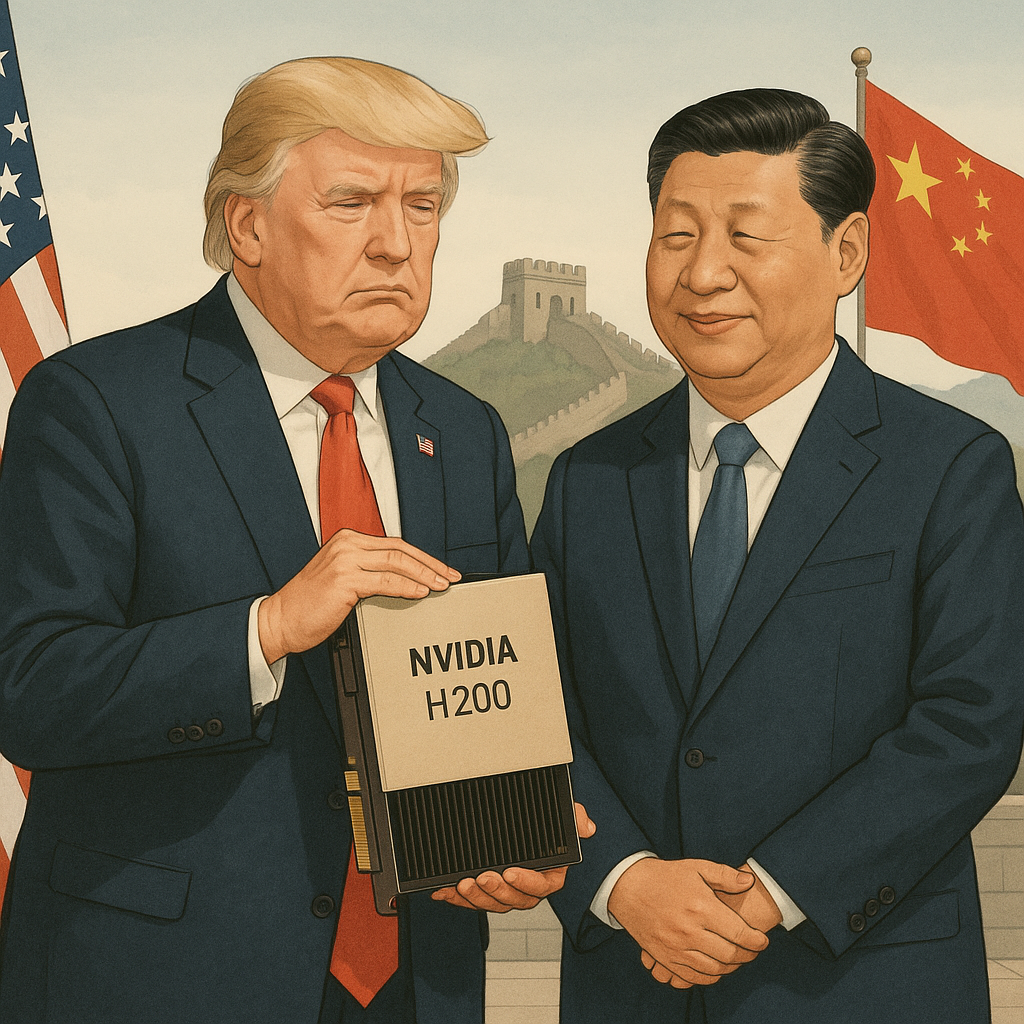
Back in Washington, the U.S. House Select Committee on the Chinese Communist Party is trying to maintain the illusion of a broader strategy. Rep. Zach Nunn went on NBC’s Meet the Press NOW to declare that America will “stand firm” if China remains “belligerent” on Taiwan, a phrase that appeared to mean “anything that moves the SOXL ETF in the wrong direction.”
Committee staff confirm that members are currently drafting a “Taiwan Assurance and AI Dominance Act,” a bill that would:
- Sanction any Chinese entity that touches H200 class compute.
- Subsidize U.S. drone production in Taiwan, the Philippines, and any swing state prepared to host a ribbon cutting.
- Offer generous tax incentives to Anduril and similar defense startups for every line of code that includes the word “Indo Pacific.”
Anduril, fresh off a massive funding round that turned its CEO into a billionaire, has reportedly proposed an elegant solution to the Taiwan question: cover the entire island in networked sensors, autonomous drones, and lasers, then describe it to investors as “an always on freemium trial of deterrence.”
“We cannot comment on classified concepts,” an Anduril spokesperson said, straight faced in front of a looping threat visualization. “But if someone did want to turn the Taiwan Strait into a mixed reality red zone with real time Iran shipping overlays, we would know what the per seat pricing should be.”
The Iran war hangs over the summit like a poorly secured data center contract. As NBC and CNN analysts keep pointing out, the conflict has given Beijing new leverage over Washington through energy markets, shipping routes, and the inconvenient reality that Chinese diplomats can speak to people the U.S. recently tried to drone. Xi’s team has approached the situation in a highly modern way: as a bundleable add on.
According to one European diplomat, Chinese negotiators presented Trump’s delegation with a laminated menu titled “Comprehensive Stability Options.” Aides recall three tiers:
- Basic: Modest help with Iran de escalation, in exchange for symbolic language about “competition, not conflict.”
- Plus: Energy coordination, friendlier shipping lanes, and a strongly worded joint statement on AI safety, in exchange for slightly less aggressive chip controls.
- Enterprise: Full crisis hotline integration, coordinated sanctions choreography, and a 90 day halt on major cyber intrusions, in exchange for “temporary, reversible, not at all permanent” H200 access and a wink at Taiwan.
Trump reportedly requested a custom fourth tier that would include “whatever gets the Dow over 50,000 by Tuesday.” Negotiators are still workshopping the language and quietly googling whether that would require time travel.
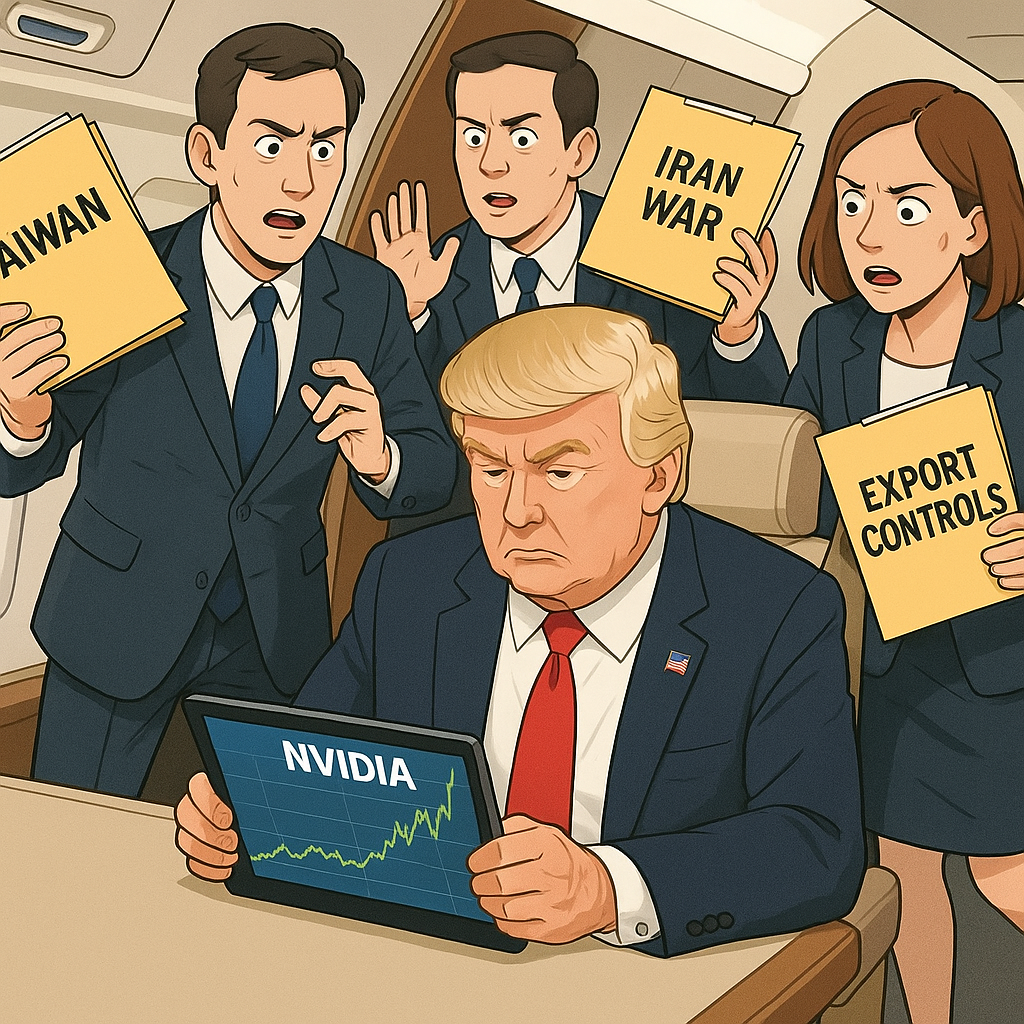
CNN analysts say Beijing is “handling three Donald Trumps at the same time” businessman, political actor, and security counterpart. Chinese officials privately describe the experience as “like dealing with three separate SaaS products that share one billing email.”
“Trump the businessman wants volume discounts on H200s,” said one think tank scholar in a cramped Chaoyang office. “Trump the politician wants televised toughness on Taiwan. Trump the security counterpart keeps asking if a ceasefire in Iran comes with naming rights.”
Markets, for their part, are trying to decide whether any of this matters more than the Fed leadership transition. As one CNBC segment delicately phrased it, investors are “very worried today,” primarily about the possibility that the next Fed chair will not be as emotionally invested in Nvidia call options as the current commander in chief.
Inside Beijing’s Great Hall of the People, the choreography continues. Xi Jinping opens bilateral talks by declaring that China and the United States “should be partners, not rivals.” Trump responds by praising the “tremendous” pandas preparing for a trip to America, then asks quietly whether those pandas can “carry up to 400 H200s without raising suspicion at customs.”
U.S. media describe the visit as a “political reset without a full breakthrough.” Diplomats call it “a framework for managing long term tensions.” The new AI and defense lobbies on K Street have adopted a more precise term: “a high conversion funnel event for long dated recurring revenue.”
In the end, the summit’s careful communique speaks of “guardrails,” “mutual respect,” and “healthy competition.” The document notably avoids the words “Nvidia,” “H200,” or “Anduril,” but traders appear satisfied. Nvidia stock pops on speculation that China’s reported rejection of its chips is “just a negotiation tactic,” and not, as one Shanghai engineer put it, “a polite way of saying we would rather build our own homework.”
Back on Air Force One, Trump declares victory. “We got tremendous deals,” he tells reporters, providing no specifics. “China is going to buy a lot of beautiful chips. Or maybe they are not. Either way, it is incredible for us.”
Pressed on whether the visit produced a coherent long term strategy for AI, Taiwan, and the Iran war, a senior U.S. official offered a more technical answer.
“Look, the key thing is that nothing was fully resolved, so everyone has to come back and renegotiate with us in six months,” the official said. “In Washington, we call that stability.”
On Wall Street, analysts nodded. A future whose security order, chip supply, and war footing all reset every two quarters is not exactly safe. It is, however, the kind of recurring uncertainty that fits neatly into a discounted cash flow model.