In a development experts called inevitable, the United States has begun securitizing presidential impunity at scale.
This week, as first detailed by CNN and AP News, Donald Trump secured a legal agreement barring the Internal Revenue Service from investigating him or his family for past tax issues, then watched applications pour into a nearly $1.8 billion Department of Justice “anti-weaponization” fund designed, in practice, to fund people upset about other people being investigated.
Taken together, the moves form what one tax scholar described to the Daily Shallot as “a diversified portfolio of not consequences.”
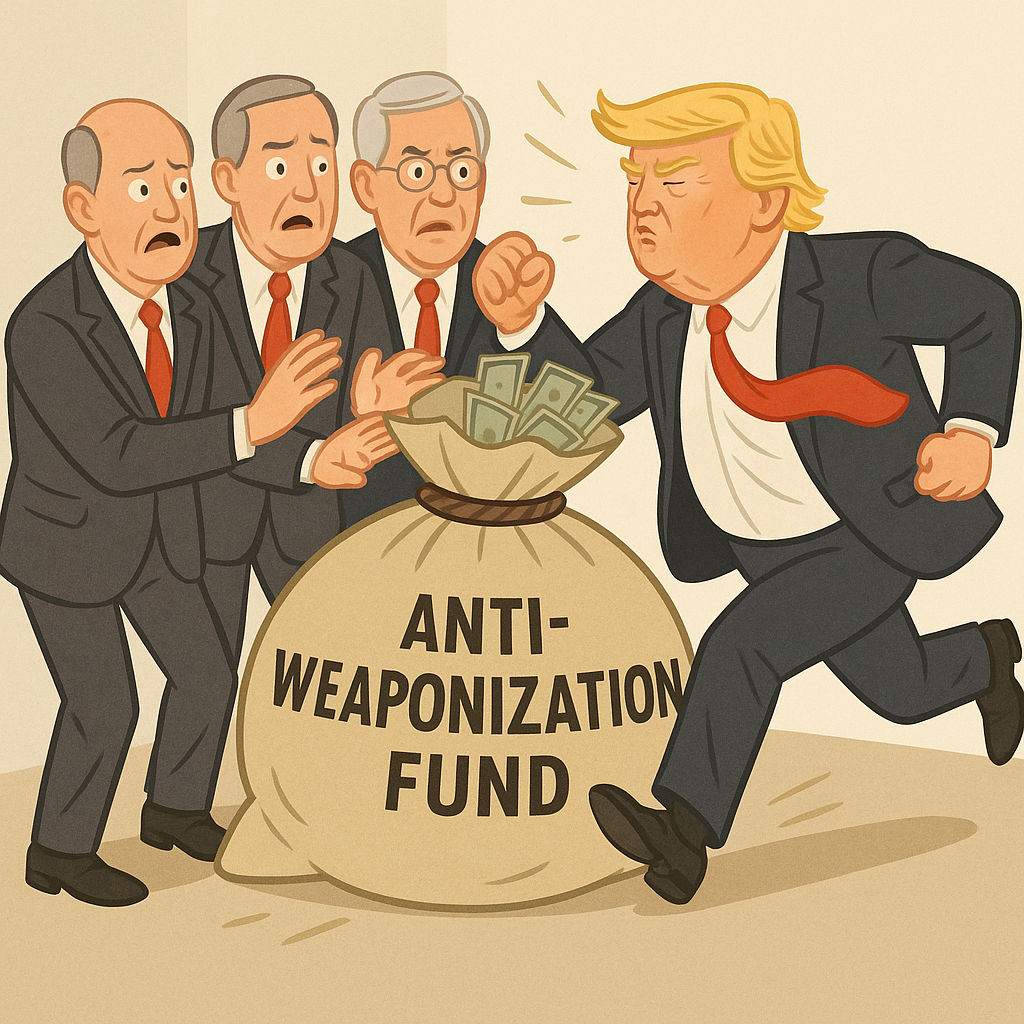
The IRS deal, tucked into the settlement of a long running lawsuit, formally designates Trump and his family as a “non audit eligible cohort,” which career IRS officials translate as “that kid in Monopoly who just keeps grabbing bills from the bank and everyone pretends not to see it so the night can end.” According to AP News, experts warn the agreement could undermine confidence in the tax system, which was previously sustained by a delicate mix of fear, shame, and TurboTax error messages.
“The norm used to be that presidents were audited automatically,” said a former IRS attorney who requested anonymity in case the concept of accountability somehow returns. “Now the norm is that we audit the waitress who miskeys her tip income, and the president gets grandfathered in as a tax exempt asset class.”
In a briefing outside the White House, Trump praised the deal as “historic,” explaining, “The IRS has been weaponized for years. This agreement is about de weaponizing. And if you think about it, you cannot weaponize something that does not exist. So actually this is nuclear peace, but for audits.”
Minutes later, the administration confirmed that the Justice Department is standing up a nearly $1.8 billion “anti weaponization” fund, a pool of money meant to prevent political abuse of federal law enforcement by allowing approved applicants to direct federal law enforcement at their own preferred targets.
According to NBC News, the applications are already “rolling in,” even though the commissioners who will decide who gets the money have not yet been chosen. That has not slowed demand.
“We opened the portal for beta testing and the first 10,000 submissions were just the word ‘libs’ typed in the subject line,” said one DOJ IT contractor. “The rest were sitting judges, local sheriffs, and three people claiming to be Elon Musk.”
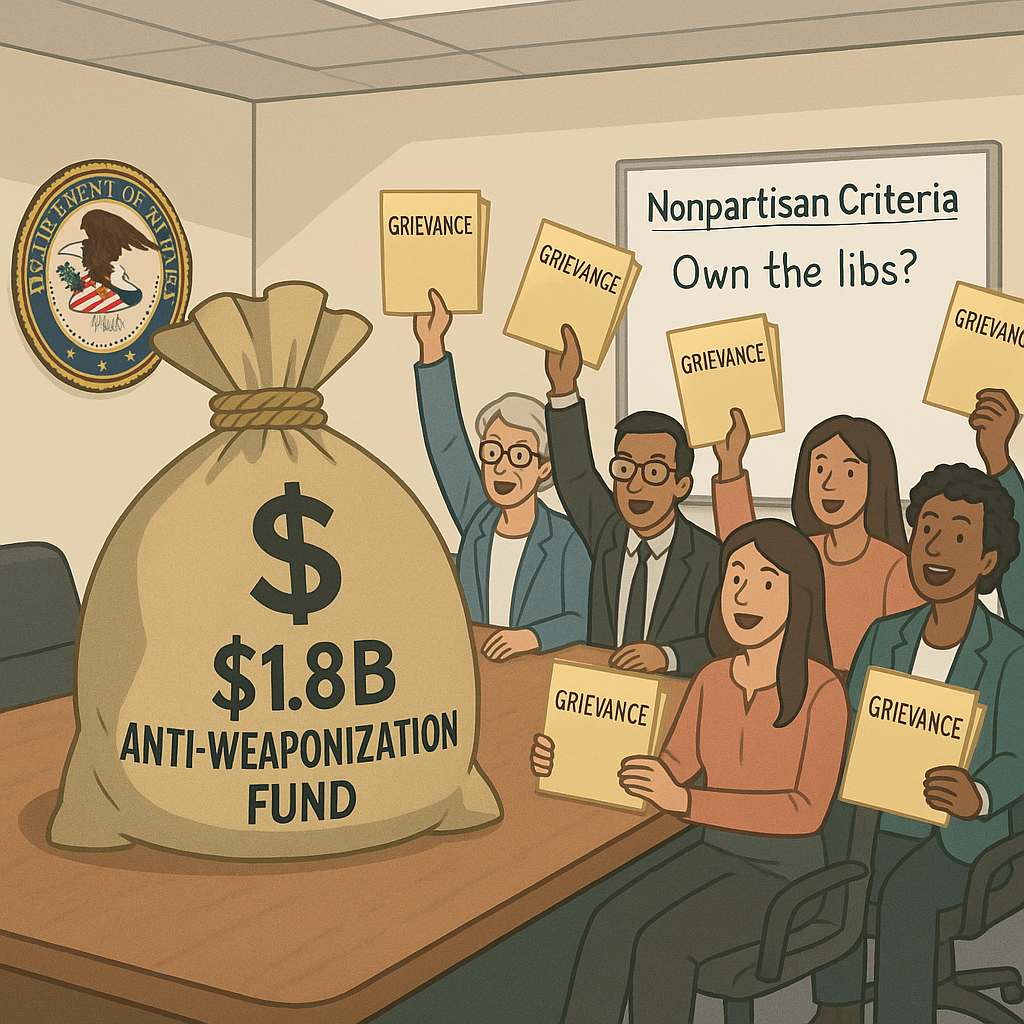
The anti weaponization fund is structured like a venture capital vehicle for grievances. Prospective grantees fill out a short application listing:
- Which institution they believe has been “weaponized” against them
- What they would like to “un weaponize” in response
- Whether they can credibly threaten a Fox News segment
The DOJ has stressed that the fund will be nonpartisan. Officials note that anyone may apply, regardless of ideology, as long as their complaint involves election law, immigration, higher education, or the continued existence of the word “equity” in a municipal grant program.
On Capitol Hill, Trump’s push to hold a personal steering wheel over the $1.8 billion has run into rare resistance from Senate Republicans, some of whom briefly remembered they are technically a separate branch of government. Several GOP senators, according to the Wall Street Journal, have raised concerns that the fund is “too vague,” “too big,” or “not clearly earmarked for paying for bridges in our states.”
“We support the president’s efforts to fight weaponization,” one Republican senator said off the record. “We just think there should be more congressional oversight, such as committee processes, public hearings, and the ability for me personally to direct at least $200 million of the money.”
Despite the pushback, markets cheered the overall direction. The Dow closed at a record high, as Investopedia noted, with traders expressing relief that legal risk for the executive branch has now been converted into a tradable macro narrative rather than a factor in discounted cash flows.
“Impunity is bullish,” said one hedge fund manager who describes his strategy as “long deregulation, short memory.” “When a president gets formal immunity from IRS audits, that is a strong signal that nobody in Washington expects guardrails to matter for at least the next several earnings cycles.”
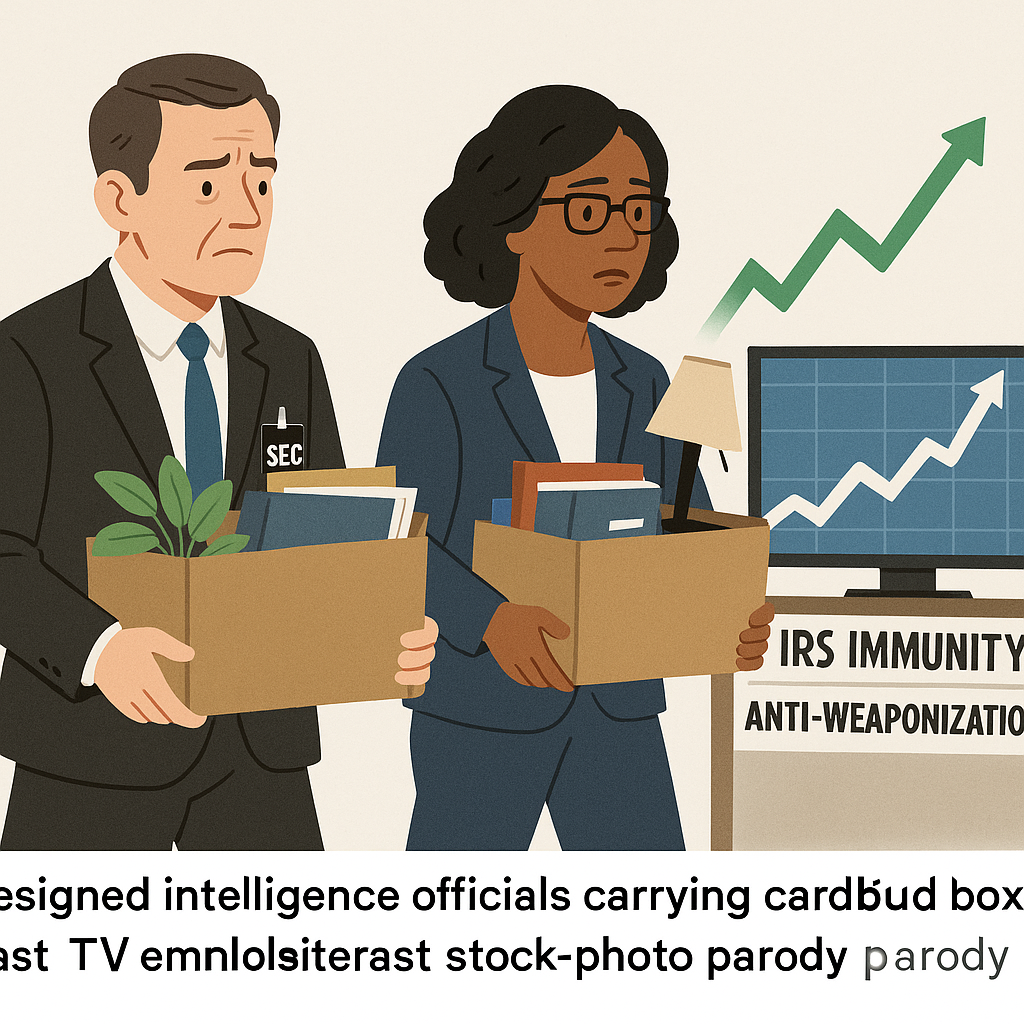
Inside the administration, the mood has been less euphoric. Director of National Intelligence Tulsi Gabbard resigned this week, citing her husband’s cancer diagnosis, though colleagues quietly noted that she also cited “having to brief a president who announces troops to Poland like he is dropping a merch line.” Earlier this year, Joe Kent, head of the National Counterterrorism Center, resigned in protest over Trump’s decision to go to war with Iran despite what he described as an absence of an “imminent threat.”
Their departures underscore an awkward reality for the White House: it is easier to immunize yourself from tax audits than from professionals with security clearances who know where the receipts are.
“You cannot NDA your way out of a conscience,” said a former intelligence official. “But you can try to replace everyone with people who think ‘imminent threat’ is whatever was trending on Truth Social that morning.”
Trump, for his part, has continued to blur the line between personal brand and state function. In the same week he insisted the anti weaponization fund is needed to stop “witch hunts,” he praised a Tennessee judge who dismissed the Kilmar Abrego Garcia human trafficking case as “vindictive prosecution,” holding the ruling up as proof that the real problem is not human trafficking, but the prosecution of it in ways that inconvenience his narratives.
“We have very bad, very angry prosecutors out there,” Trump said at a rally in a competitive New York district, according to AP. “That is why we are de weaponizing and re weaponizing at the same time. It is like when I do tariffs. Other countries never know what hit them. The DOJ will be like that, but fair.”
From a finance perspective, the policy architecture is remarkably coherent. You start by carving the president out of the enforcement regime, converting him into a sort of sovereign stablecoin pegged to “above the law.” You then create a large, semi discretionary pool of capital to reward allies who can tell plausible stories about being persecuted by the rule of law. You direct any public unease toward an amorphous villain called “weaponization,” which can be swapped out for “deep state” or “globalists” as needed.
The result is a classic modern product: a subscription model for justice. Ordinary citizens still file returns, still face audits, still navigate the normal regulatory labyrinth. Elite actors, by contrast, can opt into a premium tier where attention from institutions is replaced by access to their balance sheets.
As Tulsi Gabbard boxes up her office and Joe Kent contemplates life after classified briefings, the remaining guardrails are quietly testing their elasticity. Republican senators signal they may “tighten” the anti weaponization fund in future appropriations while voting to fund it today. Judges warn against politicized prosecutions, then look up to see the stock market rewarding whatever keeps volatility low.
In theory, there is a natural limit to how far this can go. At some point, the logic of unequal enforcement collides with the electorate, the bond market, or basic administrative capacity. In practice, that limit will likely arrive as a white paper, a pilot program, and several new venture backed startups.
One former Treasury official, asked how worried he was, paused. “It is pretty simple,” he said. “If no one at the top ever faces an audit again, eventually regular people stop believing taxes are real.” He shrugged. “Of course, when that happens, we will probably just create a $500 billion Stability of Revenue Norms Fund and hand it to whoever is complaining the loudest.”
He glanced at the ticker crawling across the TV. The Dow hit a fresh high on news of “regulatory clarity.”
“Until then,” he added, “remember to keep your receipts. Somebody still has to pay for the anti weaponization of weaponization.”