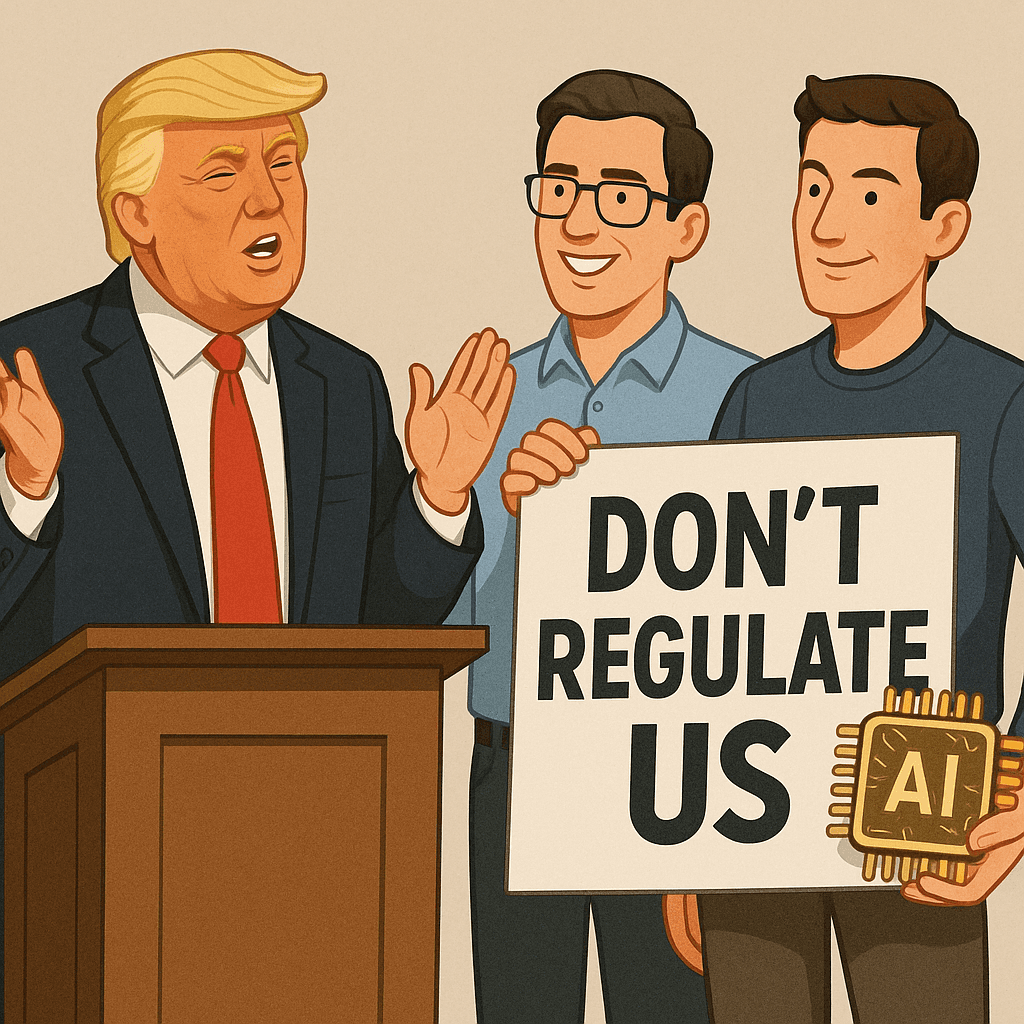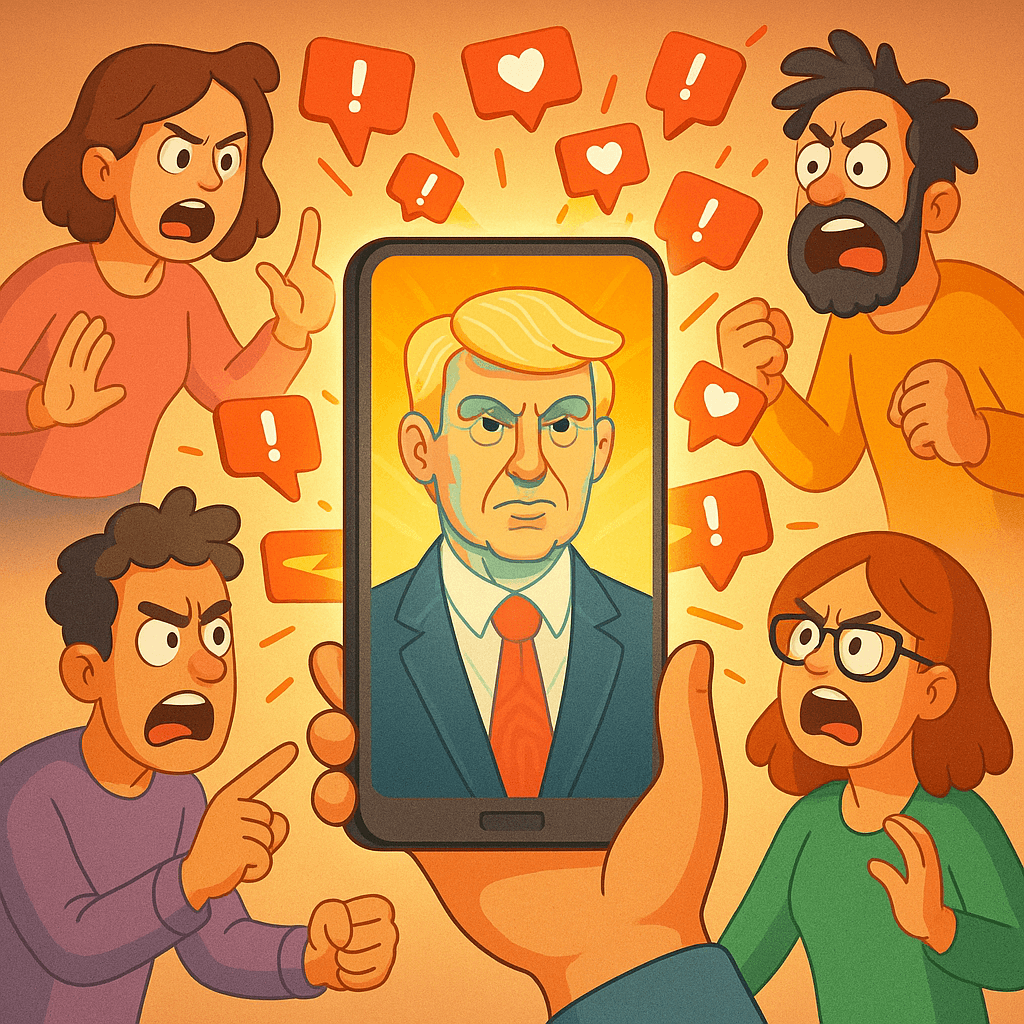
Somewhere between a campaign poster and a mid-journey fever dream, a controversial AI image of Donald Trump has managed to do what few political scandals achieve anymore: briefly make everyone, on all sides, equally furious and equally online.
According to a report from Gyanhigyan on April 13, 2026, the digitally generated likeness of Trump — part Renaissance oil painting, part meme template, part Terms of Service violation — sparked immediate outrage and criticism across social media platforms that technically claimed to have fixed this sort of thing last year. (Gyanhigyan, Apr 2026)
The image, created using an unnamed AI image generator that definitely rhymes with at least three existing products, showed Donald Trump in what sources alternately described as “heroic,” “disturbingly glossy,” and “very much not what reality looked like.” Within hours, the usual constellation of political commentators, tech bros, and people who click "I agree" without reading anything had turned the affair into a full-blown discourse speedrun.
On X, formerly Twitter, formerly functional, hashtags like #AITrump, #DeepfakeDon, and #ThisIsNotHowPhysicsWorks trended simultaneously. Several accounts claimed the AI image was proof of a shadowy plot; others insisted it was obviously satire; one notable reply simply asked, “Which app is this?” and got 40,000 likes.
The controversy placed AI tools squarely in the crosshairs again, as if they ever leave. Industry observers noted that the incident is just the latest installment in a burgeoning genre: political deep aestheticization. We had deepfakes. We had neural vocoders. Now we have what might be called promptaganda — propaganda generated not by state media, but by whoever has a text prompt, a GPU, and zero chill.
In the Gyanhigyan piece, critics blasted the AI-generated Trump image as misleading, manipulative, and “clearly not labeled enough.” Supporters, for their part, declared it was either harmless artistic expression or divine revelation depending on which Telegram channel you opened first. Content moderation teams at Meta reportedly huddled for six straight hours trying to decide whether it violated their “no synthetic political content that could materially mislead” rule or fell safely into the category of “sure, why not, everything is on fire anyway.”
Platforms responded with the precision and clarity we’ve come to expect:
- Meta temporarily limited the image’s reach, then restored it, then added a label, then changed the label, then beta-tested a new label that simply reads “GOOD LUCK.”
- X added a Community Note linking to three conflicting fact-checks, a Wikipedia article about surrealism, and a Shopify store selling AI prompt presets.
- One major US-based AI lab quietly updated its policy page to say, “We do not permit generating political images, except when we do and it goes viral.”
Legal scholars, smelling panel honoraria, quickly jumped in. Could the creator of the Trump AI image be liable for defamation? For election interference? For bad taste? Opinions varied, but the consensus hovered around, “We have absolutely no idea, but we would like more funding to find out.”
Campaign strategists, meanwhile, saw the outrage as a proof-of-concept. One consultant described the Trump AI image as “the atomic bomb of persuasion, if the bomb sometimes exploded and sometimes turned into a Shrek meme.” Another strategist from a rival camp allegedly asked their in-house data team, “Can we get one of these, but like, tasteful? And statistically optimized for suburban dads with back pain?”
In backchannels and Zoom calls that will one day be subpoenaed, three unconnected developments reportedly took shape:
- A PAC quietly hired a prompt engineer, then instantly re-titled them “Director of Synthetic Sentiment Creation.”
- A major social media platform drafted an internal slide deck titled “Deepfake? Deepshake It Off.”
- A new startup pitched itself as "the Stripe for watermarking political hallucinations" and received two term sheets within 36 hours.
The incident also highlighted the awkward gap between AI safety rhetoric and AI product roadmaps. On public blogs, companies warn about "societal-scale manipulation" and "erosion of trust in information ecosystems." In internal Slack channels, a product manager types: "What if users could one-click turn any politician into anime? Just blue-skying here."
Regulators, mostly in Europe because of course, expressed concern. The European Commission announced it would “closely examine” the implications of the Trump AI image for upcoming AI Act enforcement, in a statement that sounded suspiciously like, “We will publish a PDF, and you will all pretend to read it.” In the US, lawmakers floated the idea of new rules for political deepfakes before remembering they still haven’t figured out Section 230 or how to mute on Zoom.
At the core of the outrage is a simple, uncomfortable reality: we have built generative systems that can fabricate highly convincing images of real political figures like Donald Trump, distribute them in milliseconds, and then act shocked when they do exactly that. People are mad at the AI, mad at the platforms, mad at whoever clicked “generate,” and mad at the vague sense that we are now permanently living inside the world’s worst A/B test.
“What we’re seeing,” one media researcher said, “isn’t the future of politics. It’s the future of Photoshop, but faster and with a GPU bill.”
There is, of course, a solution—but nobody likes it. Watermarking AI outputs, mandatory provenance metadata, transparent model cards, and hard bans on political likenesses would all help. Sadly, they share one fatal flaw: they might lower engagement.
And so the cycle continues. A controversial AI image of Trump erupts onto the timeline. Outrage surges. Think pieces are commissioned. Policies are tweaked. Startups pivot. And somewhere in a co-working space, a founder opens a fresh slide in their pitch deck and types the sentence that will secure them $8 million in seed funding:
“We use cutting-edge AI to detect and label AI-generated political content at scale.”
By the time they hit save, three more AI images of Donald Trump have already gone viral.