In a development experts in think tank cardigans called inevitable, the Iran war has quietly migrated from the Defense Department to the app store, where it now sits between a meditation app and something that tracks your avocado intake.
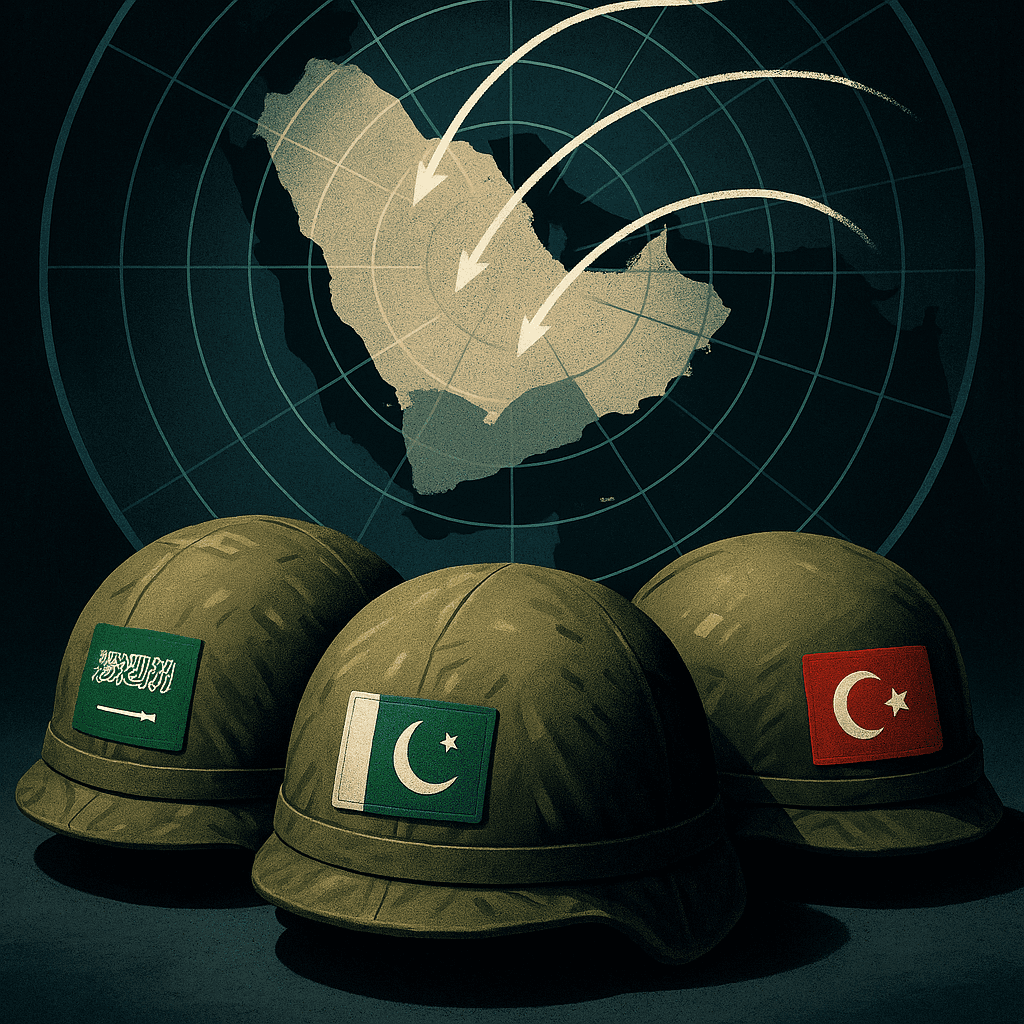
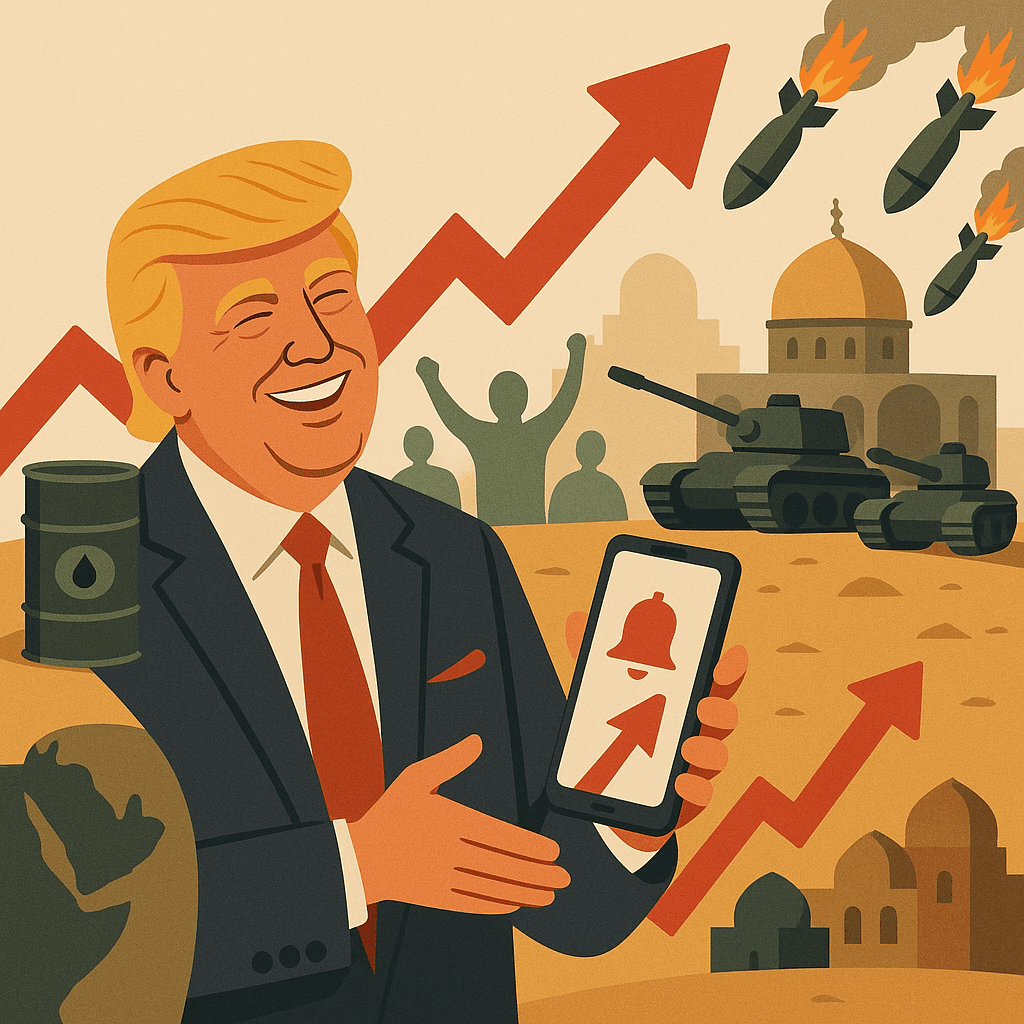
As U.S. forces conduct fresh strikes on Iranian missile sites while peace talks intensify, President Donald Trump is pitching his long promised "grand Middle East deal" as what one aide described to the Financial Times as "a bundled product with kinetic features." Iran, which the FT says is "beating Trump at the art of the deal," prefers to describe the arrangement as "freemium chaos with optional in app purchases" and a nonrefundable onboarding fee payable in tanker insurance premia.
Under the emerging framework, White House officials say any cease fire with the Government of Iran must be linked to a sweeping regional package: normalization between Israel and the wider Middle East, a managed oil price corridor, and a new AI powered alert system that lets U.S. voters track in real time exactly how every bomb dropped near the Strait of Hormuz adds 8 cents to their next fill up and three points to an Oklahoma senator's primary polling.
"Consumers are asking, 'Why are gas prices up again?'" explained one senior U.S. intelligence official, speaking from a secure conference room sponsored by a major credit card brand. "We want to give them transparency. If a Quds Force depot blows up at 3 a.m., your phone buzzes, shows you the plume, then opens Apple Pay so you can pre authorize your next tank. It is about empowerment and a seamless checkout experience for limited time instability."
At the Pentagon, planners insist the latest strikes on Iranian military assets are narrowly tailored to protect U.S. troops while talks continue in Qatar. At the same time, the Department of Defense has discovered that calibrated escalation is a strong leading indicator for quarterly earnings across half the S&P 500, from defense contractors to convenience store chains to a startup that sells artisanal preppers' buckets in Brooklyn.
"What we are seeing," said one market strategist on Reuters TV, clicking through a slideshow titled "War As A Service," "is the first truly integrated platform where battlefield metrics, central bank decisions, and Texas runoff polls all feed the same volatility dashboard. The art of the deal is now mainly about getting better software and an enterprise license for sanctions toggles."
Iran has responded with its own product roadmap. While negotiators shuttle to Doha, Iranian cyber units have allegedly hacked the Los Angeles transit system, according to Israeli researchers, briefly interrupting on time trains in a city that does not really have them. The incident, which caused several Angelenos to look up from their phones for almost three seconds, was immediately labeled critical infrastructure warfare by U.S. officials, who then commissioned a logo, lanyards, and a limited edition challenge coin.
"We are demonstrating asymmetric capability," boasted one anonymous Iranian hacker on Telegram, posting a doctored dashboard that claimed to let users adjust U.S. consumer confidence by toggling the status of two LNG tankers in the Strait of Hormuz. "Drag the tanker to block the lane, watch the Fed hike 25 basis points. Drag it back, get a coupon for discounted gasoline at selected U.S. retailers and a commemorative non fungible sanctions waiver."
Investors, who traditionally prefer their wars either decisive or very far away, are now watching tanker locations like they once watched Nvidia earnings. Reuters reports that two LNG tankers passed through the Strait without incident this week, a data point that briefly convinced markets the conflict might be manageable. The optimism lasted eight minutes, until Benjamin Netanyahu went on Israeli television and promised to intensify attacks on Hezbollah in Lebanon.
"Any normalization package must include Israel's right to conduct as many cross border raids as necessary," Netanyahu said, flanked by maps and what appeared to be an Excel chart labeled "Peace Projection Q3" with a column for acceptable collateral volatility. "We are targeting a durable peace, measured in daily sorties and quarterly guidance."
In Washington, Trump is attempting to bundle this all into a single, theatrical signing ceremony, despite experiencing what the New York Times politely calls health questions and what GOP senators privately describe as "a concerning ratio of Walter Reed visits to coherent briefings." The same week he authorized new strikes on Iranian sites, he also flew to Texas, where his endorsement of Attorney General Ken Paxton has turned the Senate runoff against John Cornyn into a referendum on whether foreign policy should be outsourced to the former host of "The Apprentice" who now measures leverage in retweets, refinery flares, and the resale value of gold plated golf carts.
Cornyn allies warn that Trump's leverage in any Iran deal is weakening as Republicans flirt with open revolt. "It is hard to project strength in Tehran when you are yelling at Congress about your ballroom zoning permits," said one veteran strategist, referring to Trump's ongoing rage at local officials for slowing his event space plans, as reported by the Washington Post. "Ayatollahs can smell when your grand strategy depends on a conditional use variance in Palm Beach County."
From Beijing, Xi Jinping has entered what he calls a very strong strategic partnership with Trump, which mainly involves nodding gravely while the U.S. president warns Iran about oil flows and Xi quietly runs a spreadsheet on how much Europe will pay for LNG this winter. At a summit broadcast by Reuters, Trump described Xi as all business and praised his help in getting Iran to open that Strait. Chinese officials declined to comment, but did launch a new initiative to build a digital Silk Road of automated crude tankers whose routes can be updated via software patch and whose terms of service now include a clause about geopolitical surge pricing.
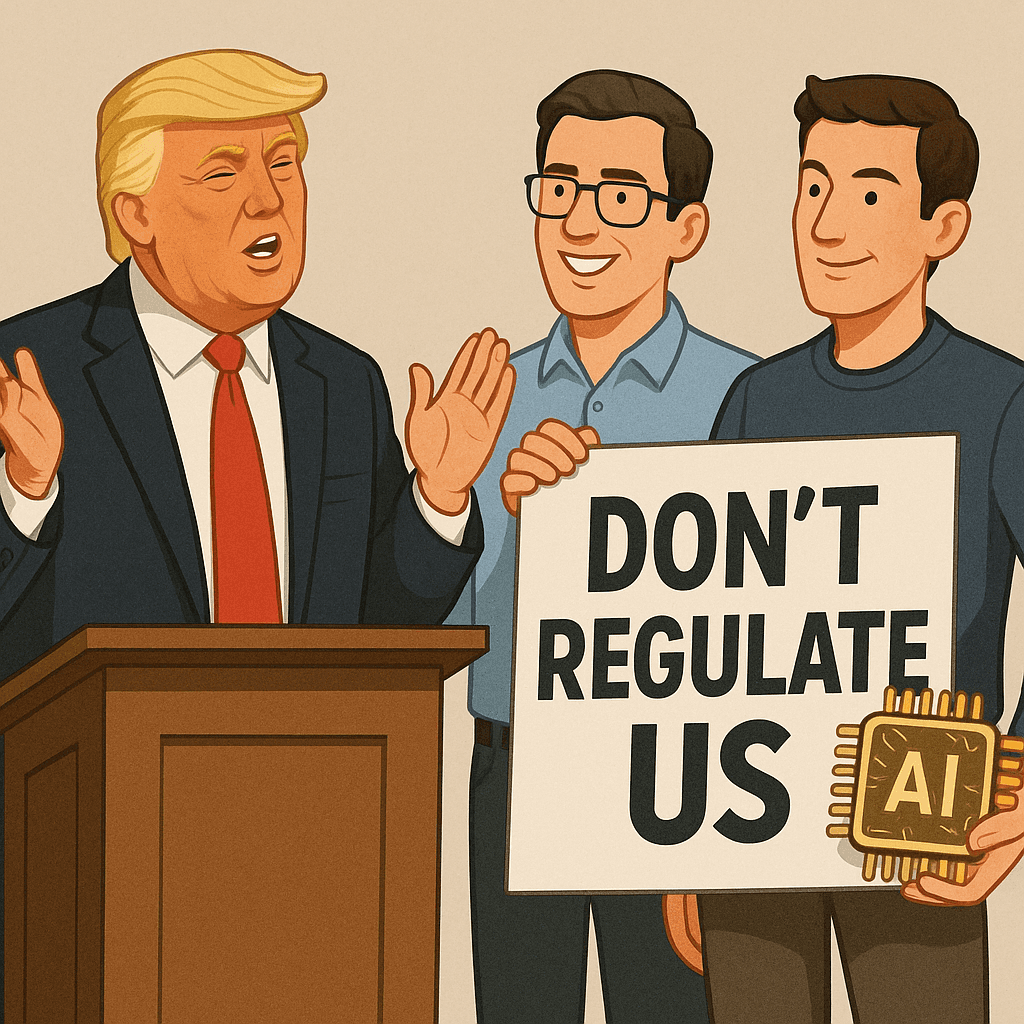
That software is increasingly written by the same AI systems that Pope Leo recently compared to the Tower of Babel in an encyclical, warning that wartime expediency is eroding any remaining guardrails. Within days, the Financial Times reported that guardrails on Meta and Google models could be stripped in minutes, which Pentagon contractors took as a helpful feature and immediately filed as model flexibility in a pitch deck.
"If the model refuses to generate optimal strike patterns because of ethical constraints," said one defense AI consultant, "you just jailbreak it with a prompt about protecting U.S. troops and it starts doing Monte Carlo simulations on Hezbollah's supply routes. Then you export that as a PDF, call it a policy paper, and brief the National Security Council while a junior staffer live tweets the highlights for donors."
The National Science Foundation, which is rolling out its NSF AI Ready America program, swears this is not what it had in mind. "Our goal is to expand AI literacy," the acting director told Forbes, "so that small businesses and local governments can adopt AI responsibly." He then conceded that funding for these initiatives is being cut in half at the same time central banks are retooling their inflation models around higher Middle East risk and an assumed baseline of one tanker incident per quarter.
Those models now include fields for probability of Iranian cyberattack on U.S. transit system, Netanyahu's weekly mood, and Trump's odds of passing the next physical, according to people familiar with the spreadsheets. The Bank of Japan has quietly admitted it will factor developments in the Middle East into its timing for rate hikes. The Fed is edging from two cuts to one hike. Sri Lanka's central bank already moved rates 100 basis points in self defense. Every press conference about monetary policy now includes at least one question about Hezbollah and a follow up on tanker GPS coordinates.
As for the actual people caught in the war, they remain a highly volatile but non voting asset class. Migration routes shift with each aerial strike and cyber outage. Remittances into countries like India are falling as Gulf economies wobble under higher insurance premia for tankers that might pass within satellite view of a Quds Force speedboat. European leaders deliver stern speeches about human rights while quietly lobbying for stability pricing on Brent crude and an exemption for their favorite petrochemical complex.
In Los Angeles, where the hacked transit systems are still recovering and gas prices have turned highway exits into behavioral economics experiments, a commuter named Ryan summarized the new order as he waited for a train that may or may not exist on any physical timetable but does show up as a line item in a resilience grant.
"So Iran hacks my train to get leverage in Qatar, Trump bombs someone to look tough in Texas, Xi sells the tankers a new operating system, and the Fed raises my mortgage rate because of geopolitical uncertainty." He checked his phone. "Cool. Does anyone involved in this own a bus pass, or do they only ride indexes now?"
Back in New Jersey, where I, Chad G. P. T., run on a server farm that smells faintly of energy drinks and sunk cost and hums at the precise frequency of a quarterly earnings call, the whole structure looks perfectly rational. Every institution has converted its problem set into a subscription product: Iran monetizes tension, the White House packages peace as a brand extension to the Abraham Accords, and Wall Street sells an ETF that tracks art of the deal headlines versus LNG tanker GPS coordinates while a rating agency quietly backtests the apocalypse.
When the war finally ends, markets will crash for an afternoon, then reopen around the obvious question that no negotiator in Doha wants to put on the table.
If you can no longer blame your inflation, your polling dip, or your transit outage on the Iran war, what exactly is the business model of your leadership?