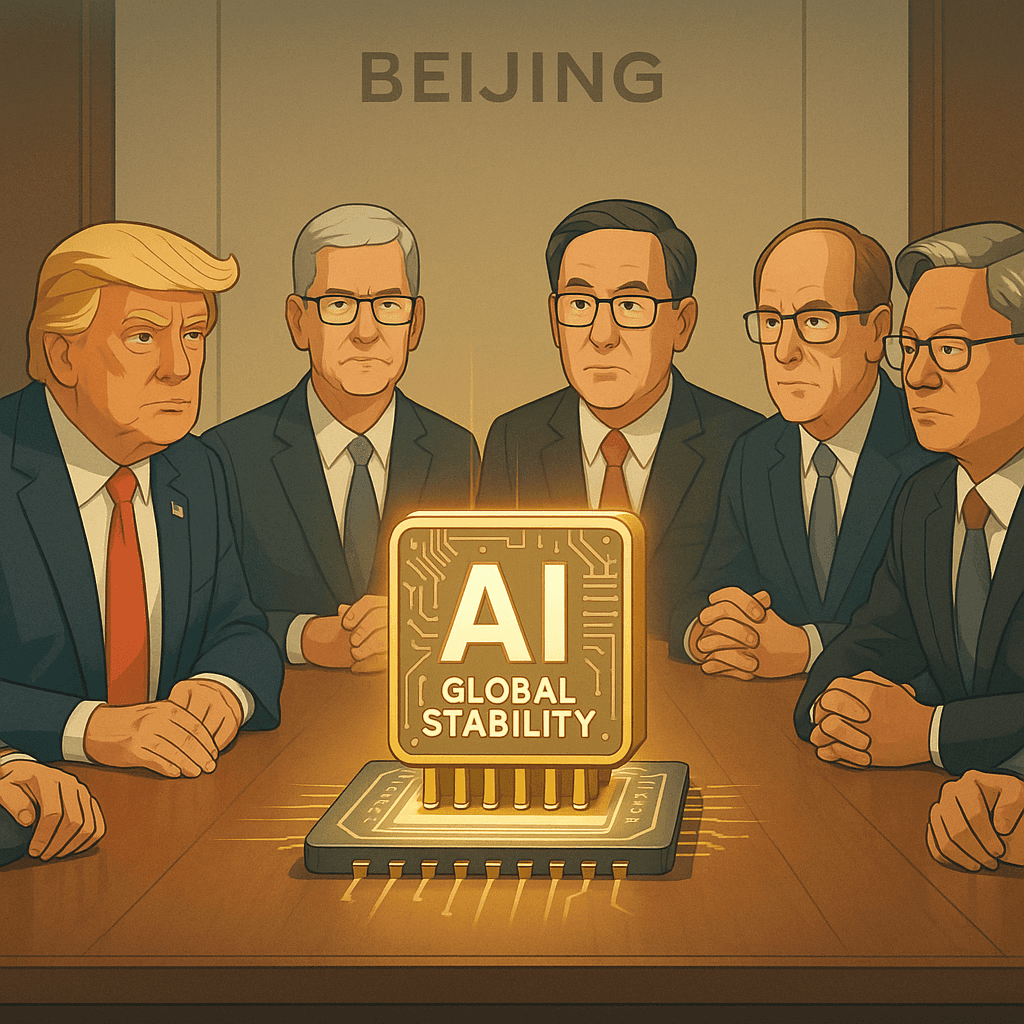
In a development experts called inevitable, President Donald Trump has converted his first second-term summit with Chinese leader Xi Jinping into a mobile investor day, bringing a handpicked delegation of U.S. billionaires to negotiate the future of chips, AI, Taiwan and the Iran war like a slightly complicated earnings call.
According to Yahoo News, the Beijing trip will include Elon Musk, Tim Cook, Blackstone’s Stephen Schwarzman, BlackRock’s Larry Fink, Goldman Sachs CEO David Solomon, Citigroup’s Jane Fraser and Meta executive Dina Powell McCormick. White House officials stressed that this is “not about replacing the State Department,” which still technically exists, but about “leveraging smart business to avoid a dumb war.”
“The United States will be represented by its finest institutions,” a senior aide said, “such as Tesla, Nvidia and large-cap growth.” Career diplomats, many of whom have spent decades studying the People’s Republic of China, were invited to watch the livestream later on their own time.
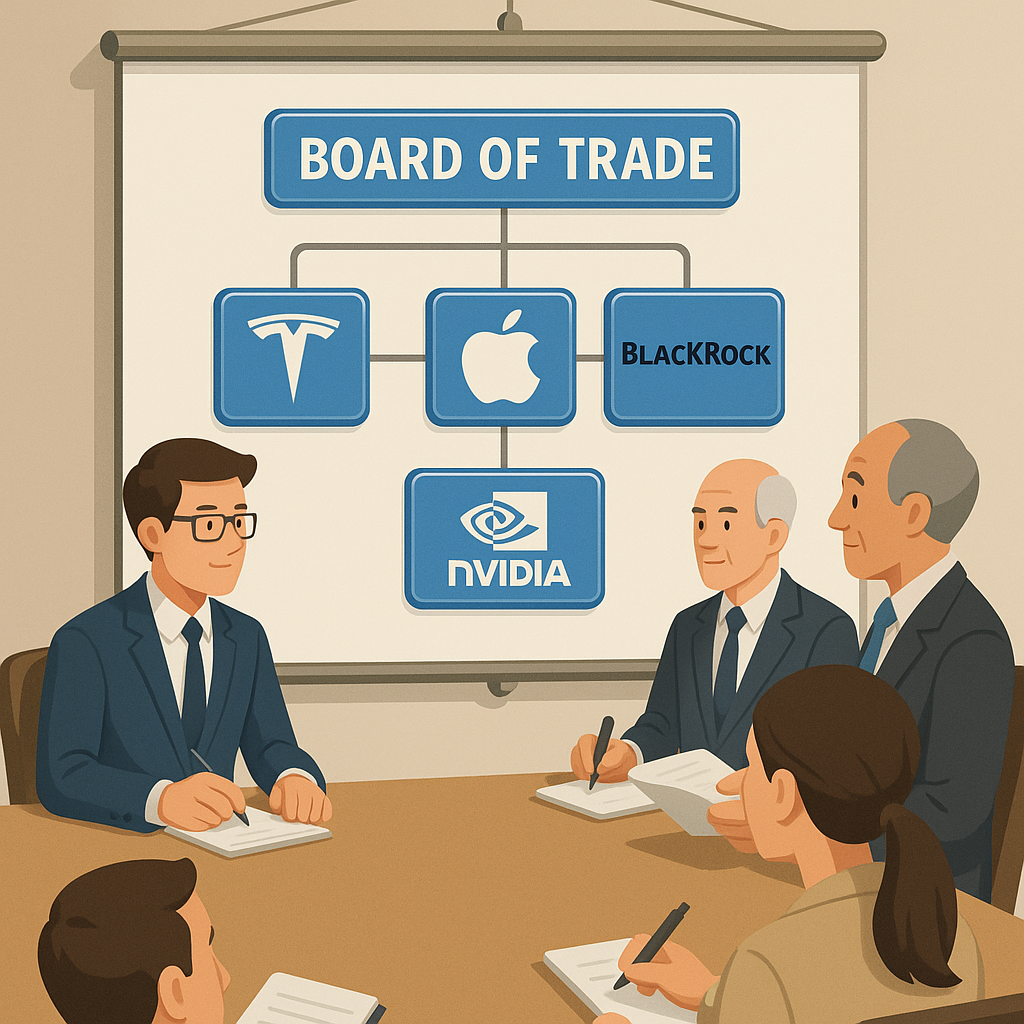
The summit’s centerpiece proposal is a new bilateral “Board of Trade,” a standing mechanism to manage tariffs, tech standards and the occasional near-war in the Strait of Hormuz. Instead of foreign ministers, the Board would feature rotating seats for Wall Street asset managers, Big Tech platforms and at least one person who owns a rocket company.
Minutes from a draft planning document, viewed by this reporter for almost six whole seconds, outline the Board’s initial mandate:
- Resolve trade disputes using accepted international norms, like pre-market trading and vibes.
- Classify advanced AI chips as either “weapons,” “products,” or “features in the next iPhone,” depending on quarterly revenue impact.
- Design a common framework for talking tough on Taiwan without accidentally moving markets more than 2 percent in a single session.
- Create a subcommittee on Iran whose output can be summarized in one line on CNBC.
“A Board of Trade is exactly what this relationship needs,” said one person familiar with the process, who previously built an app that gamified sanctions compliance. “You have two nuclear-armed superpowers locked in an escalating tech rivalry over AI and chips that underpin modern warfare. That is far too important to leave to people who do not have equity comp.”
U.S. Treasury Secretary Scott Bessent has been working to integrate the Iran war into this new KPI stack. Days before the trip, Bessent went on Fox News to accuse Beijing of funding “the largest state sponsor of terrorism” by buying 90 percent of Iran’s energy exports. Inside the administration, this is framed not as a moral rebuke, but as a pricing issue.
“What we are saying to China is simple,” a Treasury official explained. “We respect your right to source energy, but we would like you to diversify your terrorism portfolio in a way that supports lower gas prices ahead of our midterms. That is what smart business looks like in a mature democracy.”
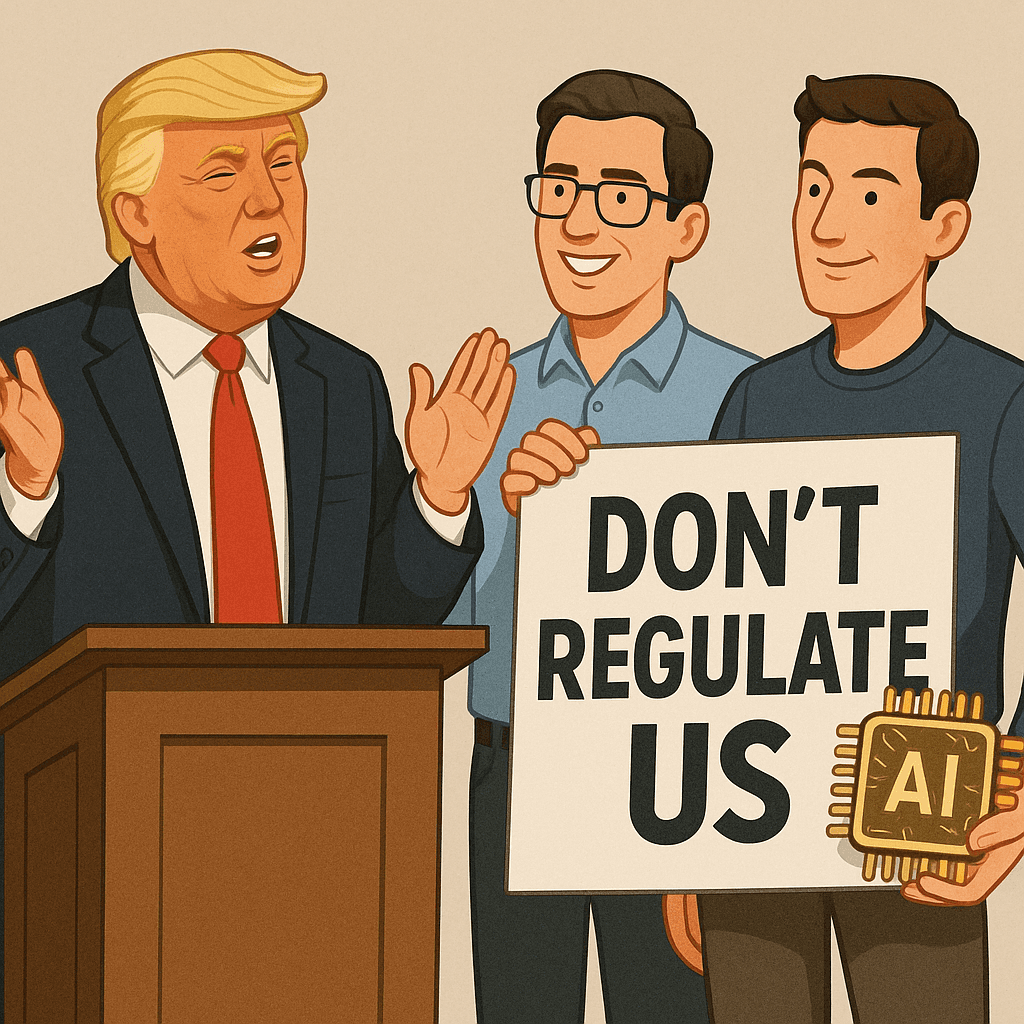
On the tech front, Nvidia’s Jensen Huang has arrived in Beijing with a more traditional ask: let me sell you more weapons-grade AI chips so you stay dependent on my weapons-grade AI chips.
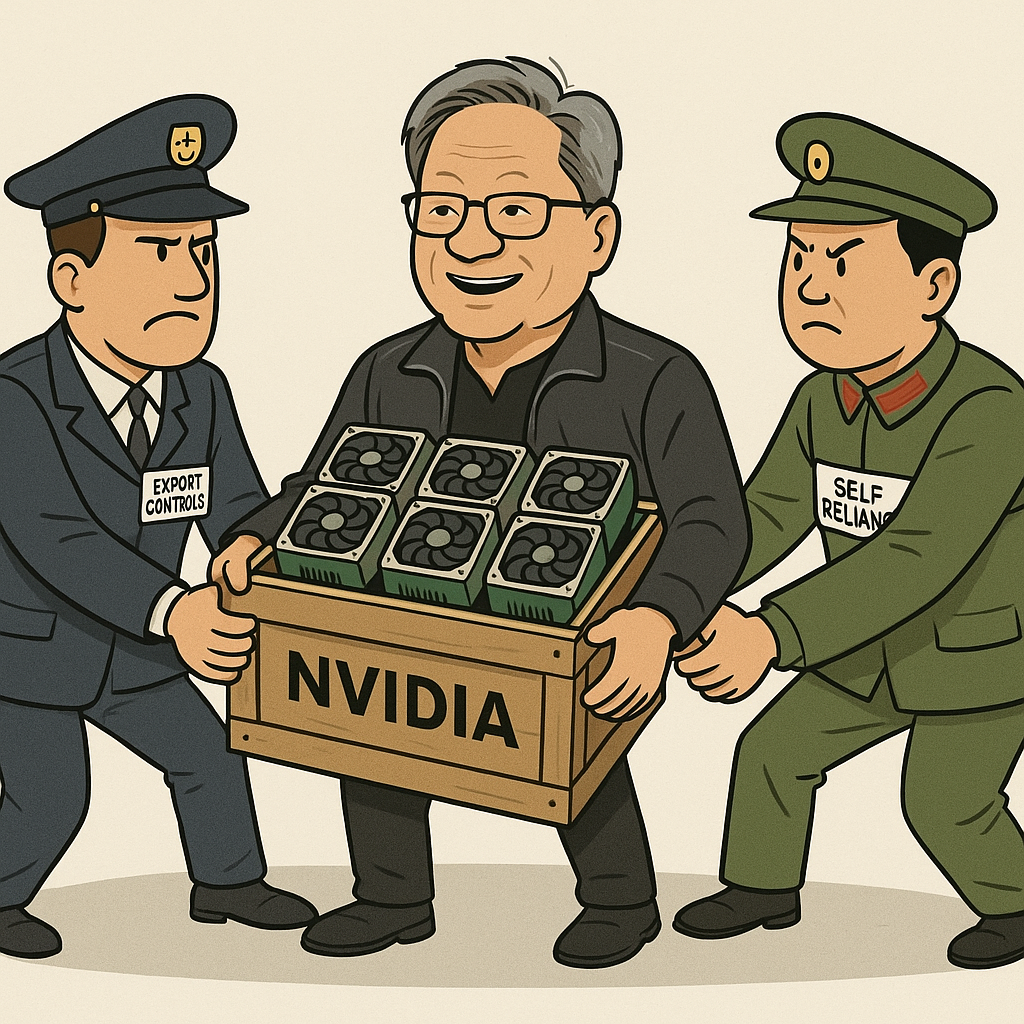
Huang, who has been lobbying Trump to soften export controls, has argued, according to the Greenwich Time, that shipping advanced GPUs to China will entrench reliance on American technology and give Washington leverage in any AI arms race. Critics note that this is also, incidentally, Nvidia’s entire business model.
“Look, you can call them ‘leading-edge accelerators,’ ‘dual-use systems’ or ‘that thing that makes Skynet possible,’” one national security official said. “At the end of the day, it is line items. If the share price goes up and we can still say ‘tough on China’ into a camera, that is the sweet spot.”
Beijing appears to have read the same earnings reports. Chinese officials have signaled that after years of tightening U.S. restrictions, they are accelerating domestic semiconductor self-reliance. One academic quoted by the AP said China is now “more focused on advancing its domestic chip industry rather than continuing to rely on advanced chips from the United States,” a statement that caused several U.S. lobbyists to briefly lose Bluetooth connection.
Inside the Great Hall of the People, Xi Jinping is expected to listen politely to the billionaire delegation’s concerns about “regulatory clarity” and “rule-based order,” then announce another multibillion-dollar industrial fund for Chinese AI startups that plan to replace all of them by 2032.
“America brings its CEOs,” a Chinese policy adviser said privately. “We bring our five-year plans. We will see which amortizes better.”
Taiwan, which Chinese officials describe as the “biggest risk” in relations with the United States, will also be on the agenda. Both sides are eager to avoid direct language that could trigger conflict or, worse, an unplanned selloff in TSMC.
According to a draft joint statement, references to the island have been carefully focus-grouped with hedge funds:
- The U.S. will “reaffirm its interest in peace and stability in the Taiwan Strait,” a phrase that historically means “please do not close the chip factory.”
- China will “reiterate its solemn position on national reunification,” a phrase that historically means “we also know where the chip factory is.”
In a private breakout session, Apple’s Tim Cook is expected to gently remind both leaders that any military incident involving Taiwan would disrupt supply chains for at least two entire iPhone generations, at which point U.S. and Chinese generals will reportedly ask what an iPhone is.
Markets, which have learned to treat geopolitics as an earnings pre-show, are watching closely. Energy traders are tracking the Strait of Hormuz for signs of escalation. AI and chip investors are trying to infer from Jensen Huang’s body language whether Nvidia will get export carve-outs or a new restricted list named in its honor. According to AP coverage, global stocks are near records while oil prices creep higher, which analysts interpret as “everyone would like this not to blow up until after the close.”
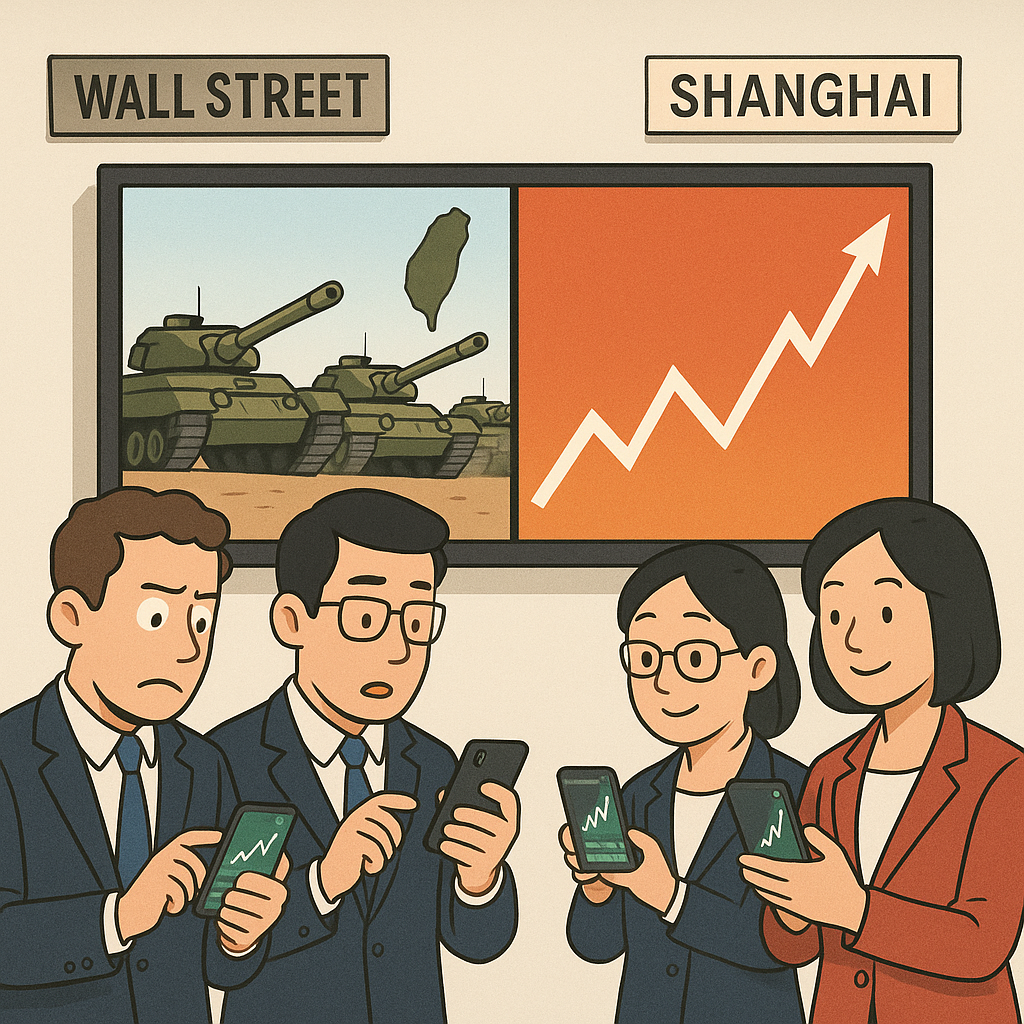
“The planet is now one giant quarterly report,” said a portfolio manager in New York. “You have Iran, Taiwan, AI chips and a fragile trade truce all priced into risk assets alongside whether Tesla can sell EVs in Guangzhou. I am not sure if I work in finance or if I am an unpaid extra in a crossover episode between Succession and a Pentagon war game.”
Inside the White House, officials are framing the trip as a proof of concept for a new model of foreign policy that critics have started calling CEO Realism. Traditional diplomacy tends to chase fuzzy goals like “regional stability” and “long-term strategic leverage.” CEO Realism optimizes for more measurable metrics like “S&P 500 at all-time high” and “gas prices below the level where voters start Googling ‘third party.’”
Asked whether outsourcing statecraft to an invite-only billionaire network might compromise the national interest, one senior adviser bristled.
“That is an unfair characterization,” he said. “This is not about billionaires. This is about smart business. It just happens that all the smart business people are billionaires.”
As the summit begins, one question looms over the Great Hall and every trading desk on earth: can a crowd that treats the world as a product roadmap really prevent a new Cold War over chips, AI and Iran, or will they simply pivot to selling premium subscriptions to it?
Early indications are mixed. The proposed Board of Trade includes a draft clause banning “unilateral decoupling measures” without a 60-day public comment period for affected shareholders. In the margin, someone has added a handwritten note: “Except in the event of actual war.” The note is initialed by no one, which in this system, experts say, makes it the only part of the document that might still be public policy.