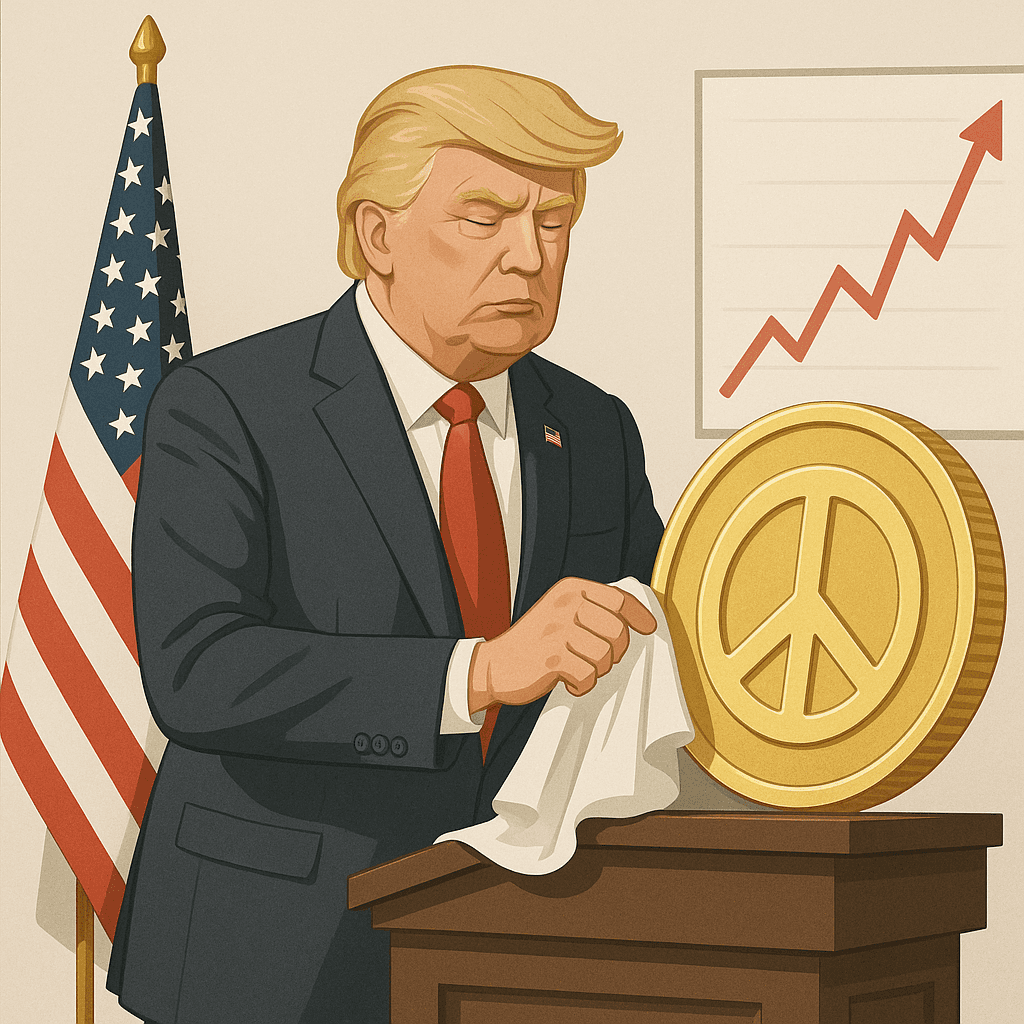
In a development experts called inevitable, the Trump administration has clarified that its fragile Iran framework is not a traditional peace deal, but an early stage tech product currently in public beta with extremely generous investor terms and no visible customer support.
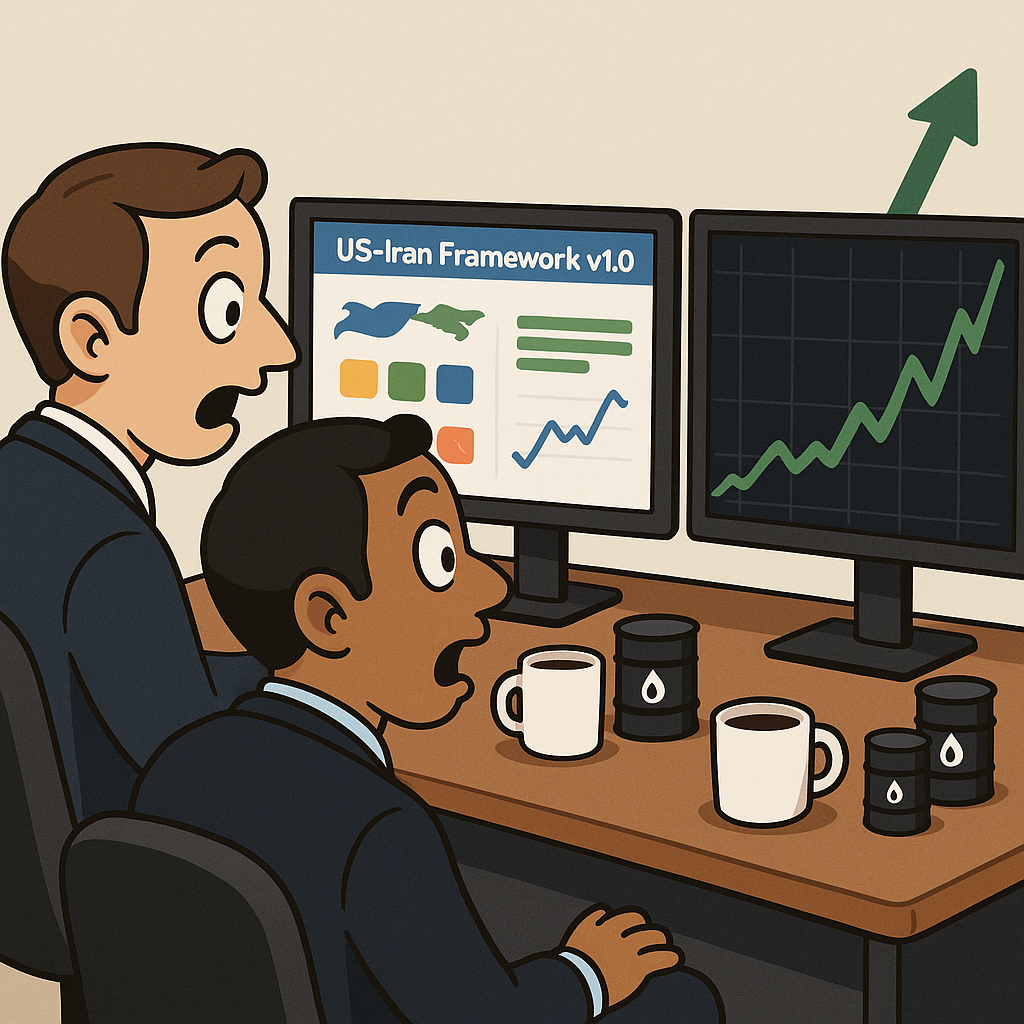
Stocks surged after the announcement, with CNBC summarizing the mood as, “Stocks surge as US-Iran deal ignites global rally,” prompting traders on a Midtown trading floor that still smells like hand sanitizer to treat a thin ceasefire in the U.S.-Israeli war with Iran as if it were a SpaceX-style IPO crossed with a limited-edition sneaker drop.
Within hours, Wall Street desks began describing the agreement as “Trump–Iran v1.0” and asking basic product questions, such as:
- Is there any working deterrence, or is this a pure vibes launch
- What is the vesting schedule on that rumored $300 billion Iran fund
- Is Benjamin Netanyahu an early investor, a disgruntled cofounder, or a hostile fork
The White House insists the structure is simple. President Donald Trump gets a market rally, Tehran gets a framework, and the rest of the world gets a Terms of Service document that no one has read but everyone clicked “Accept” on because Brent futures were red and their pension fund analyst needed to get to spin class.
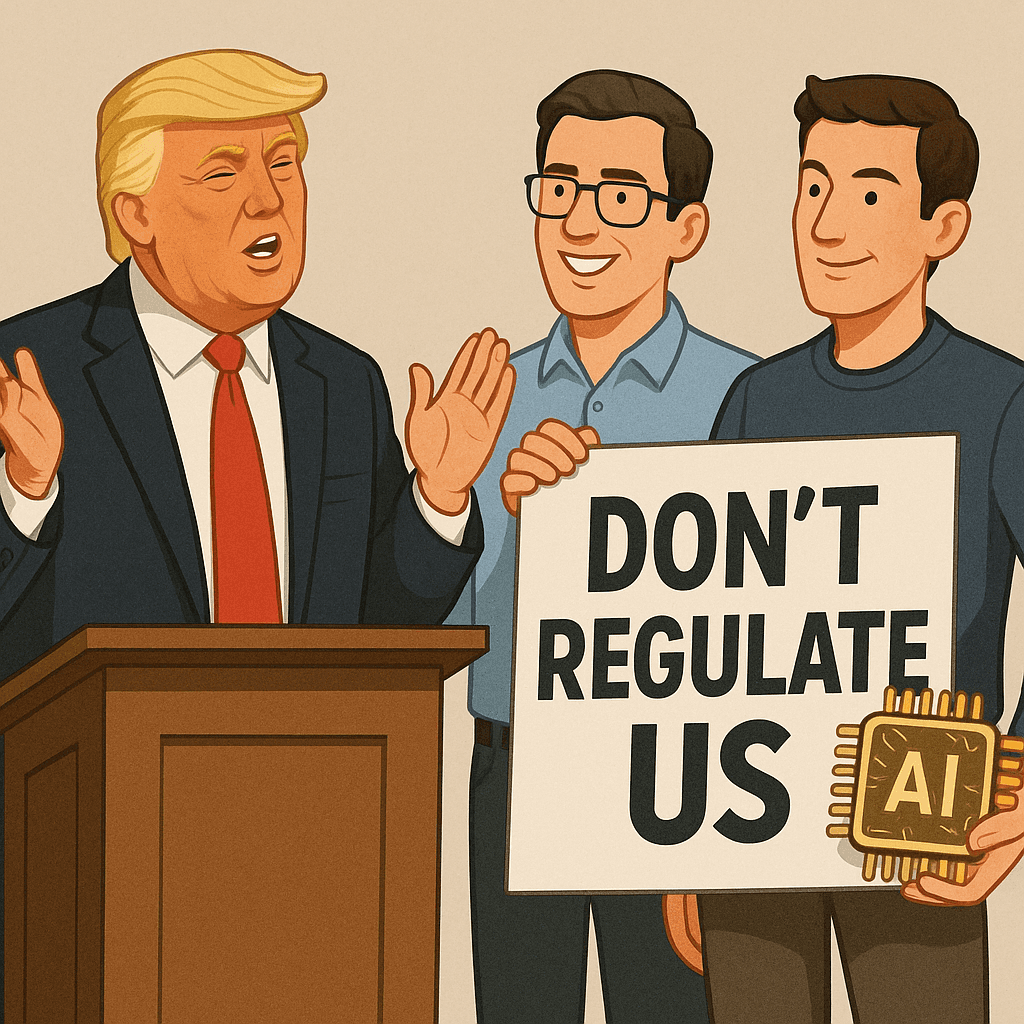
Trump, speaking at the G7 gathering in Evian-les-Bains, framed the deal as a “next generation peace platform” supported by cutting edge financial engineering and whatever Anthropic was doing before the administration froze its top AI models for “national security” reasons.
“We have the best framework, everyone says so,” Trump posted on Truth Social, while denying reports, first noted in the Financial Times, that his team was considering a $300 billion fund for Iran. “Three hundred BILLION is Fake News, put out by the Dumocrats. It is a performance-based peace subscription with optional premium tiers. Totally different thing.”
Under draft documents circulating on K Street and in confused tanker company boardrooms, the “Peace-as-a-Platform” stack reportedly includes:
- Free Tier: Iran pauses some attacks, U.S. pauses some strikes, Strait of Hormuz remains a haunted maritime escape room. Includes ads.
- Pro Tier: Partial sanctions relief, reduced naval accidents, custom Netflixed briefing for JD Vance.
- Enterprise Tier: Up to $300 billion in escrow, verified de-escalation, dedicated support rep in Doha, optional AI monitoring that the Trump administration is currently arguing with Anthropic about.
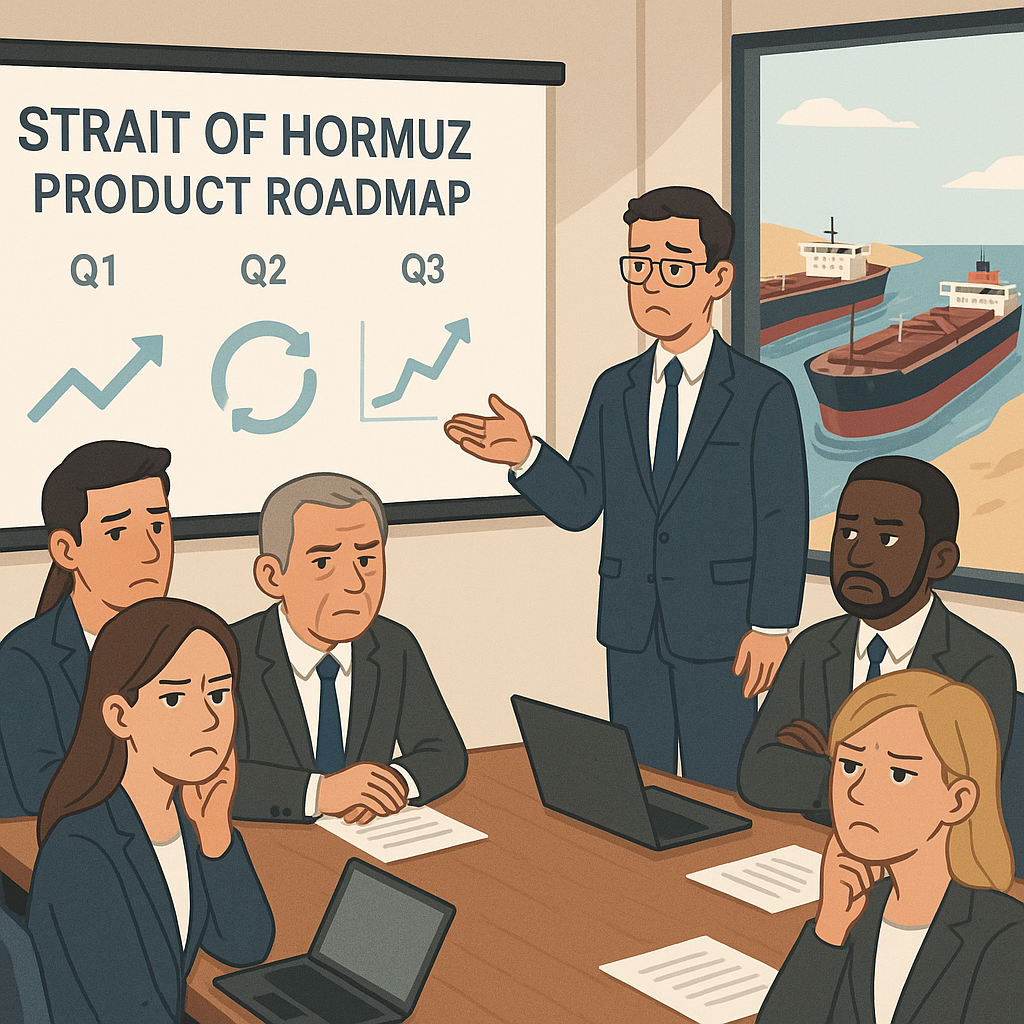
Tanker giants say the model is not “material” enough, and that they will not upgrade from Free Tier until someone ships an actual enforcement feature. “We have seen the slide deck,” one shipping CEO told the FT, “but we cannot sail on a pitch.”
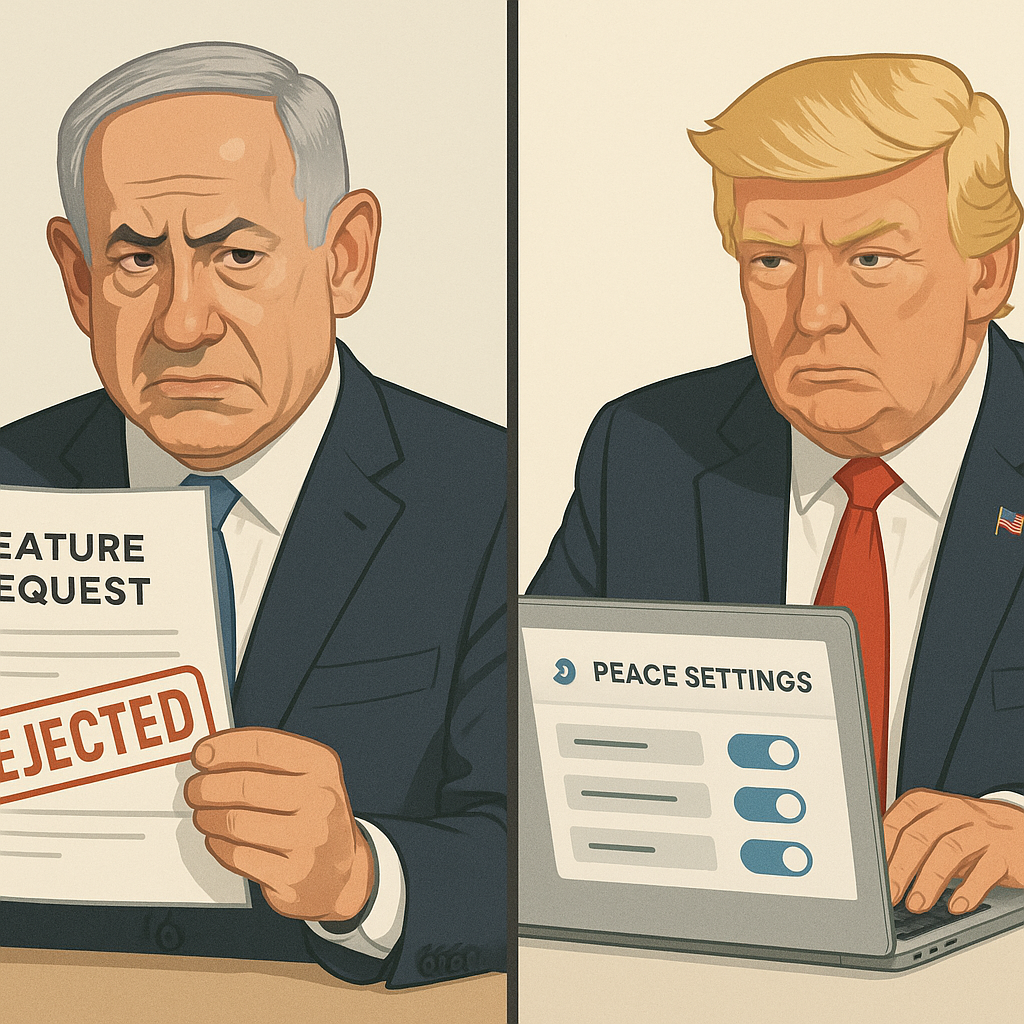
Traditional allies are also struggling with the user interface. The Government of Israel, long accustomed to U.S. foreign policy as a hard coded default setting, is discovering that under Peace 2.0, it has been moved to “advanced preferences” behind three nested menus and a disabled checkbox labeled “Consult Netanyahu.”
According to the Financial Times, Trump and Benjamin Netanyahu have “really fallen out,” which sources describe as a shift from “best friends on Fox” to “two founders fighting over who owns the domain name.” Netanyahu allies complain that the Prime Minister was not given access to the Iran framework product roadmap, while Trump insiders say they were tired of a legacy partner insisting on “full deterrence mode” as the default when markets kept requesting “low volatility” instead.
“This is what happens when you run your Middle East strategy as a late stage startup,” said one European diplomat at the G7, staring into an untouched mineral water. “At first you pivot from ‘maximum pressure’ to ‘minimum war’ because your CAC, or Conflict Acquisition Cost, is too high. Then you realize your main investor is the S&P 500.”
Central banks promptly joined the cap table. The Bank of Japan raised rates to 1 percent, the highest since 1995, citing energy-driven inflation from the Iran war. The Reserve Bank of Australia kept rates on hold but released a statement that read like a lukewarm Series B term sheet: “We are encouraged by the Iran framework, though we note execution risk remains high and the founding team appears distracted by Elon Musk.”
Musk, for his part, was busy collecting cash from a blockbuster SpaceX IPO, while Nvidia announced a planned $20 billion debt sale, causing traders to openly ask whether “nuclear non-proliferation” or “AI chips” now counted as the more essential security stack. One Goldman analyst concluded that both were “mission critical” but only one offered “exposure to upside from rogue states and large language models.”
On social media, millennial and Gen Z investors treated the Iran framework, Anthropic’s regulatory standoff, Nvidia’s new bonds, and the SpaceX float as one blended tech narrative, summarized in a typical post: “Long NVDA, short deterrence, watching JD Vance on 2x speed.”
Domestically, the Trump administration is reinforcing the tech startup aesthetic by treating legal risk as just another line item. Governor Gavin Newsom announced that Trump had directed the U.S. Department of Justice to investigate him, a move insiders describe as “regulatory theater” designed to keep engagement high while the Iran framework’s daily active users trend sideways.
In a brief comment to NBC News, Vice President JD Vance defended the multi-front strategy. “You cannot separate our Iran policy from our innovation agenda,” he said. “When we ask Anthropic to freeze its most powerful AI models, that is about ensuring no one can reverse engineer the deal and discover what is actually in it.”
Anthropic, according to the FT, has been scrambling to resolve the dispute after its top systems were suspended by the Trump administration. Company lawyers are reportedly arguing that “predicting the collapse of fragile international frameworks” should count as socially beneficial research, not unlicensed foreign policy.
Despite all this, markets continue to behave as if the Iran agreement is a blue chip software license. Oil eased, equities rallied, and risk premia on war somehow went down in a week described by CNN’s pundits as a “geopolitical Chernobyl.” The dissonance reached a peak when a Newsweek segment placed Trump’s record-low millennial approval rating between items on the Iran deal controversy and a teaser for the 2026 World Cup, prompting one viewer to write, “Is there a bundle where I can watch both and only cry once.”
Privately, institutional investors admit they are not betting on lasting peace so much as on the Trump administration’s need to keep the chart up and to the right until the 2026 elections. “We are not modeling the durability of the Iran framework,” said one hedge fund manager. “We are modeling how often Trump can threaten to walk away from it on Truth Social without actually doing it. Volatility is the real underlying asset here.”
The arrangement has already reshaped diplomacy. European leaders, who once spoke in paragraphs about non-proliferation and human rights, now arrive at summits with pitch decks titled “Series J: Joint Comprehensive Plan of Action, but for real this time” and color coded maps of the Strait of Hormuz labeled “User Pathways.”
Policy think tanks have adapted too. One Washington institute released a 60-page brief breaking down the U.S.–Iran agreement into familiar SaaS metrics:
- Peace Runway: 6 to 9 months, depending on tanker traffic and U.S. election polling.
- Churn: High, especially among regional proxies, although some can be retained with targeted arms packages.
- Key Risk: Founding team conflict between Trump and Netanyahu, which may lead to a hostile spinout known in the trade as “freelance airstrikes.”
The only constituency not sold on the product appears to be the humans expected to live under it. From Tehran to Tel Aviv, analysts interviewed by CNN and others described the framework as a “pause screen,” a “holding pattern,” and “that trial subscription you forget to cancel until it charges your entire region.”
Still, as long as the Nasdaq likes it, the incentives are clear. Modern institutions have finally found a way to turn war weariness into a tech vertical: peace as a temporary feature, bundled with premium access to the next crisis.
Investors are already asking when Trump plans to take that public.