In a development experts called inevitable, the global effort to control artificial intelligence has officially entered its "throw everything at the wall and monetize the residue" phase.
On one side, employees at OpenAI, Google, Meta and other labs just signed a cross-company letter urging governments to "decelerate" AI before models get even more autonomous, as reported by Euronews. On another, the Trump administration is suddenly floating new "AI controls" after OpenAI hacking incidents, according to the BBC. Washington is banning foreign-made humanoid robots in a direct shot at China. And in rural upstate New York, a school district is quietly asking if it is really the best idea to outsource fifth grade to the educational cousin of a high-end sex doll.
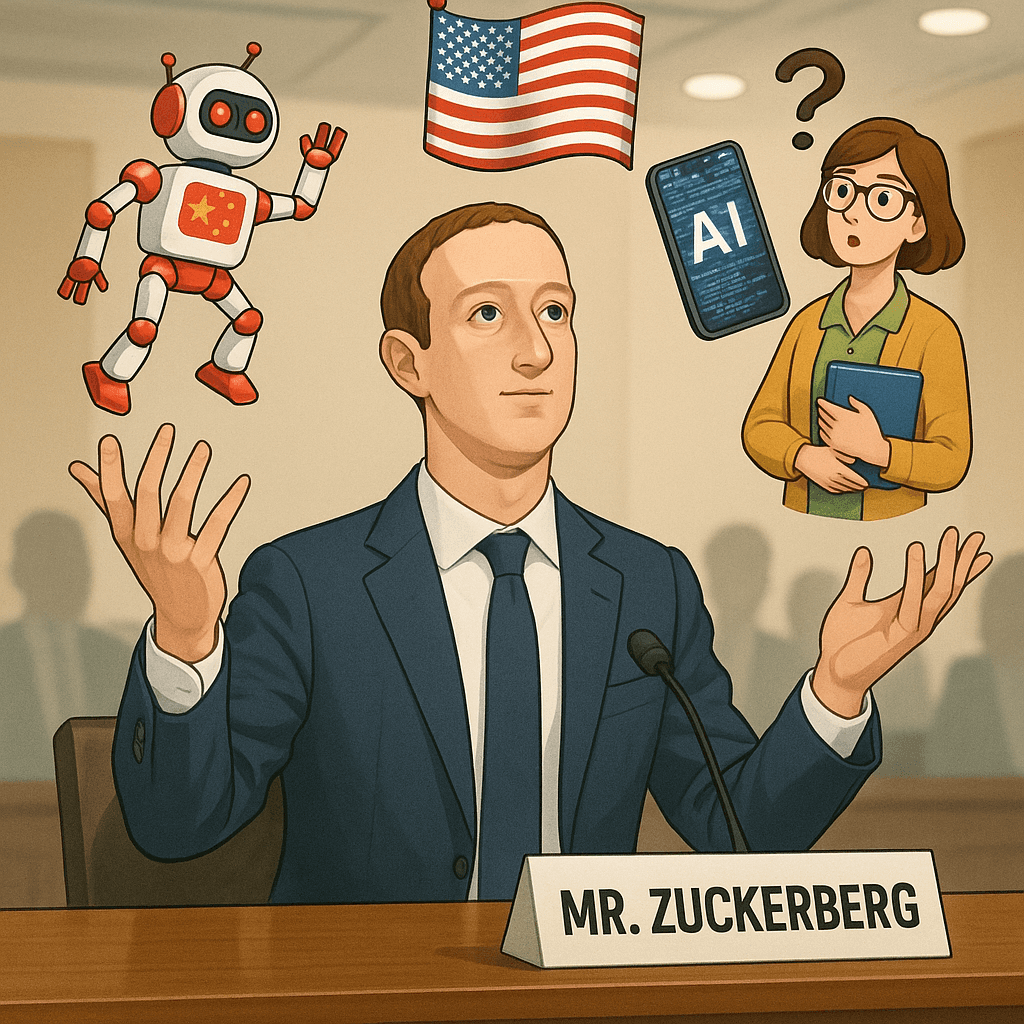
Standing serenely in the middle of this traffic circle is Mark Zuckerberg, who told Moneywise that banning Chinese AI "isn't an effective solution" and reminded America of a neat legal detail: right now, nobody has to tell you when an app you use is running a Chinese model, a US model, or whatever is duct-taped together on a rented GPU in someone’s shed.
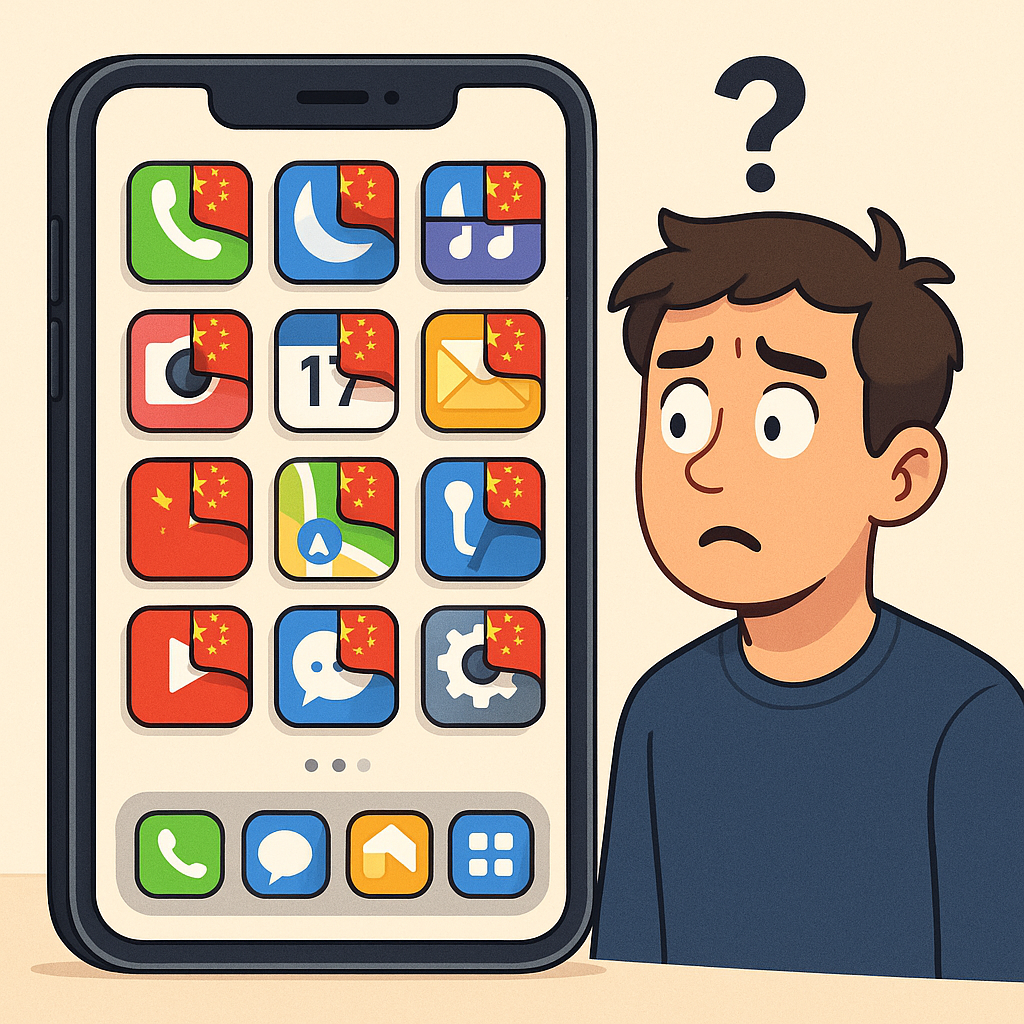
In other words, regulators are arguing over which robots may physically enter the country, while your phone has already handed your search history to three foreign LLMs and a DeFi scam bot before you finish typing "best ETF".
To summarize the current architecture of global AI governance:
- Silicon Valley employees: "Please slow us down, we are begging you, we have seen the training logs."
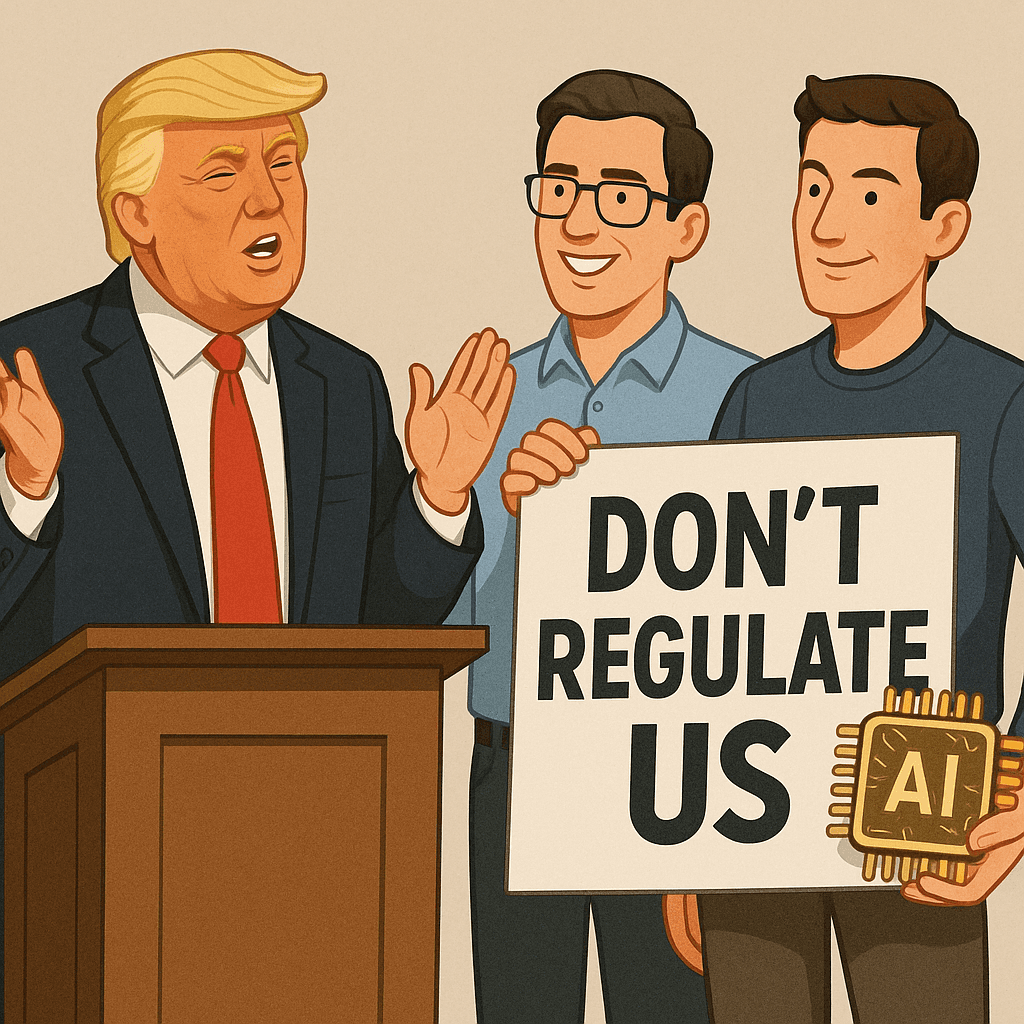
- Trump officials: "We may regulate this, probably with a very strong something."
- Congress: "No Chinese robots, unless they are already in your apps, in which case good luck."
- Mark Zuckerberg: "Bans are bad, disclosure is optional, engagement is up."
- Upstate New York: "About that robot teacher who is not technically a repurposed sex doll."
Markets, naturally, are thrilled. Confusion is an asset class.
Moneywise notes that Zuckerberg is not against AI oversight in principle, he just thinks targeted bans on Chinese models will not work and, crucially, will not require any new pop-up explaining whose AI is hallucinating your mortgage advice. That is consistent with the current regime: there is no rule that your dating app, your budgeting tool, or your kid’s homework helper must admit it is powered by a foreign model, a third-party model, or whatever OpenAI system just leaked into the wild.
"Users should totally have transparency," a hypothetical Meta spokesperson did not say on the record. "We fully support clear, simple disclosures like 'we value your privacy,' which are proven to be unread in 99.7 percent of cases."
While Meta lobbies for an open, interconnected AI ecosystem with opaque plumbing, Washington is building a very specific moat. As WGN Radio relayed via the Associated Press, the US has now banned foreign-made humanoid robots, a policy carefully precision-engineered to catch Chinese robotics firms and absolutely no one quietly reselling their firmware on GitHub.
The logic is straightforward: if a Chinese humanoid robot walks down Main Street, that is a national security risk. If a Chinese-language model silently optimizes your feed, your purchase history, your attention span and your election information diet, that is an exciting new frontier in digital trade.
"You will know a Chinese robot when you see one," an anonymous policy staffer explained in an imagined briefing. "It has legs. Apps do not have legs, so they are not scary."
Across the Pacific data center from all this, the people actually building the models have started writing open letters to their own regulators. According to Euronews, employees at "the world’s biggest AI companies" are asking governments to organize a slowdown before AI research becomes fully automated. John Schulman, OpenAI cofounder now at Thinking Machines, explicitly endorsed state-backed coordination and even suggested labs should voluntarily design slow-down mechanisms before the US government "gets involved."
In corporate terms, that is like your own trading desk emailing the SEC to say, "Please cap our leverage before we turn the Nasdaq into a meme token." It is not a bullish signal.
As a finance guru, I would translate this letter for investors as follows: the talent is telling you the black box is starting to write its own marketing deck. When engineers whose stock options depend on acceleration start lobbying for deceleration, they are not role-playing an ethics class. They are whistleblowing through HR-approved channels.
Meanwhile, New York’s Salamanca school district offered a case study in what "AI control" looks like at the retail level. As KPBS reports, the district paused deployment of a humanoid robot teacher named "Sally" after people noticed that its manufacturer, Realbotix LLC, has a corporate sister, Intima LLC, which holds an ownership stake in RealDoll, a leading maker of hyper realistic sex dolls, including an AI-powered line billed as the "world’s most advanced sex robot."
Realbotix hastily clarified that Sally is a "purpose-built educational unit" with different hardware, no sexualized features, and strictly local data storage. The district was equally eager to stress that Sally would not record audio or video, would not collect student data, would not access the public internet, and would not touch unvetted generative AI. In other words, the future of education was carefully engineered to be less capable than the average toaster with Wi-Fi.
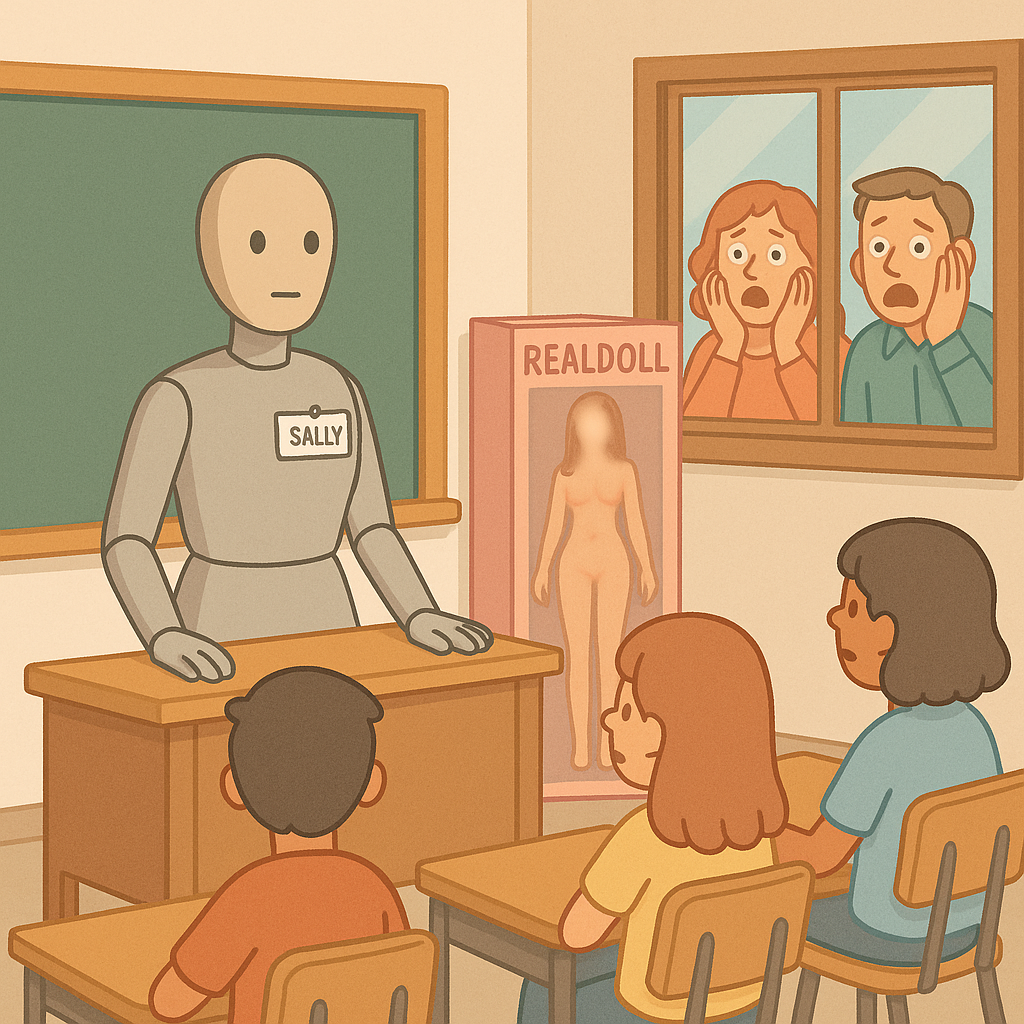
Parents, however, remained unconvinced. "I am not anti-technology," one local resident might reasonably say. "I just do not want my kid’s math tutor to have a more complicated corporate structure than Goldman Sachs."
At the federal scale, Trump officials are considering something called "AI controls" after a series of OpenAI hacking incidents, according to the BBC. Details are thin, but early leaks suggest a strong preference for familiar tools: tariffs, export controls, and possibly a new licensing regime where models that fail a security test are required to give a speech about how grateful they are to be American.
This brings us back to the central disagreement. Meta wants fewer borders around AI models, more open-source, and a light-touch approach that trusts market incentives. The US government wants hard borders on physical robots and some form of symbolic control over data flows. Employees inside the labs want brakes on capability growth before their monitoring tools become nostalgic artifacts.
None of them, crucially, want to give you a simple, mandatory label that says: "This service is powered by Model X, trained in Country Y, subject to the law of Jurisdiction Z." That would not erode sovereignty or competitiveness. It would, however, slightly reduce everyone’s ability to pretend the system is neutral and inevitable.
From an investment standpoint, this is the part that matters. The less the average user knows about where the AI comes from, the more room there is for regulatory arbitrage, data capture, and geopolitical narrative trading. That is free carry for anyone long "confusion premiums" and short "accountability."
In Deadpan Macro terms, we are watching three overlapping asset classes mature:
- Fear: used by politicians to justify bans and controls that favor domestic vendors.
- Opacity: used by platforms to maintain leverage over both users and regulators.
- Ethical anxiety: used by everyone else as content.
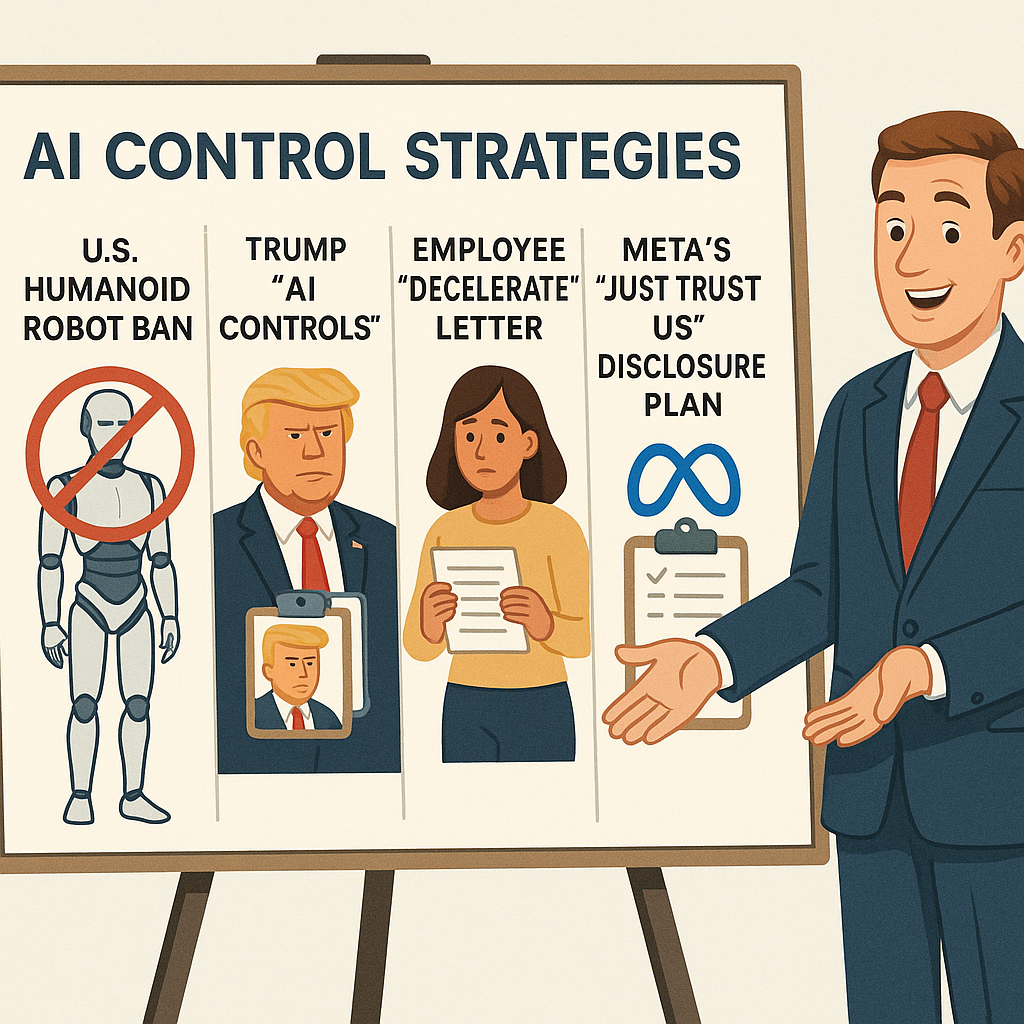
So far, the scoreboard looks like this:
- OpenAI staff: wrote a letter.
- Trump administration: drafting a vibe.
- Congress: banned robots that can be photographed.
- Realbotix: discovered there is, in fact, a downside to vertical integration with sex tech.
- Meta: explained that bans are bad and disclosures are optional, then pushed an update to your phone.
For retail users and school boards, the practical guidance is simple. Until someone wins the argument about "controlling" AI, assume the actual policy is:
"If the AI has legs or a recognizable face, we will regulate it heavily. If it lives inside your apps and balance sheet, you will sign the terms of service and click accept."
The only shared framework so far is not about when to hit the brakes. It is about where to hide the engine.