In a development experts called inevitable, the United States has finally treated a large language model like a cruise missile, then acted surprised when the rest of the world opened a rival discount weapons store.
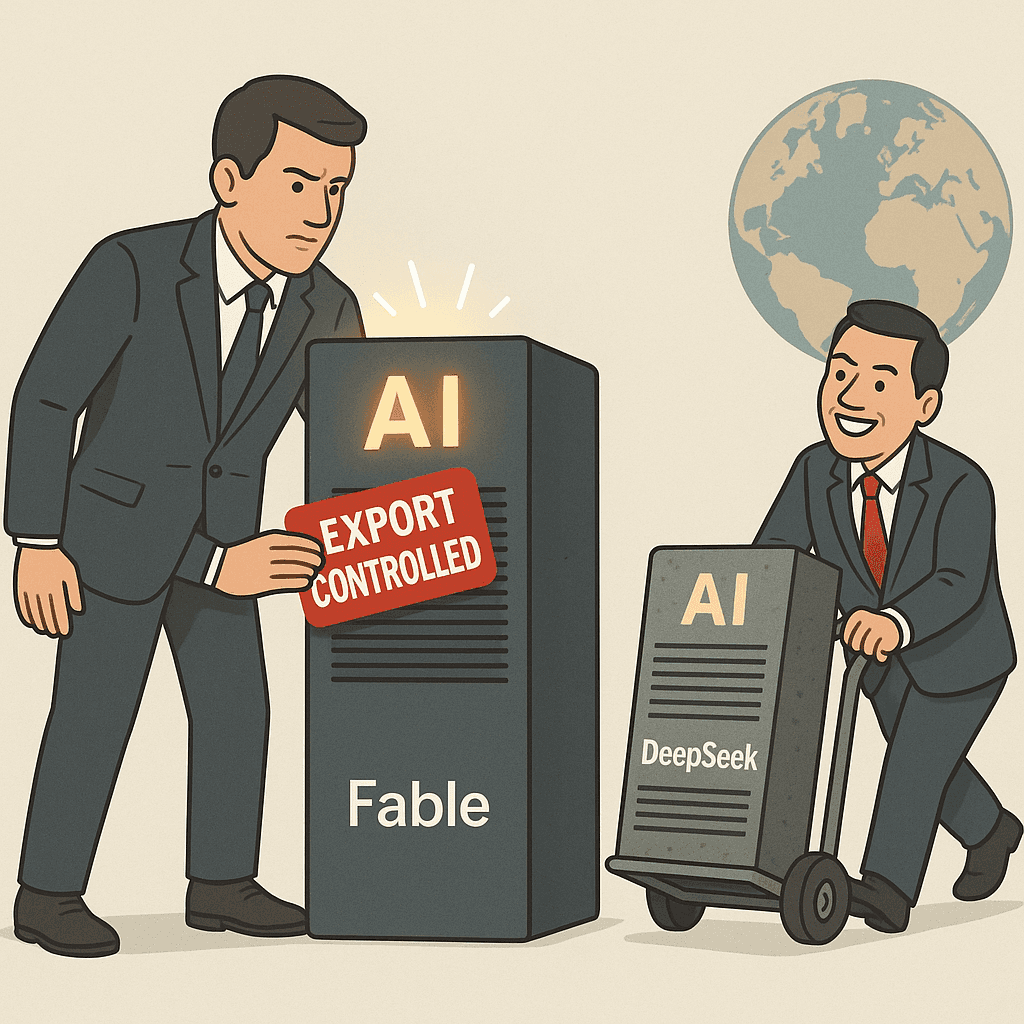
The Trump administration’s export-control directive on Anthropic’s Fable model, first detailed in The Washington Post, was pitched as a precise, security-first intervention. In practice, it functioned as a $30 billion marketing campaign for China’s DeepSeek, which immediately replied with the diplomatic equivalent of “we ship anywhere, no questions asked, batteries and ethics not included.”
Under the order, Fable cannot be exported to certain jurisdictions unless Anthropic can prove the system will not, among other things, destabilize nuclear command-and-control, undermine allied democracies, or help teenagers jailbreak their homework filters. The directive helpfully clarifies that these concerns do not apply if the same teenagers access a cheaper Chinese model from their phones.
Commerce officials described the move as “narrowly tailored” and “carefully scoped.” Investors described it as “a live demo of political risk,” while one Anthropic engineer, speaking on background because he had not yet finished reading the 190-page compliance FAQ, summarized it as, “So Fable is Schrödinger’s nuke now. Cool.”
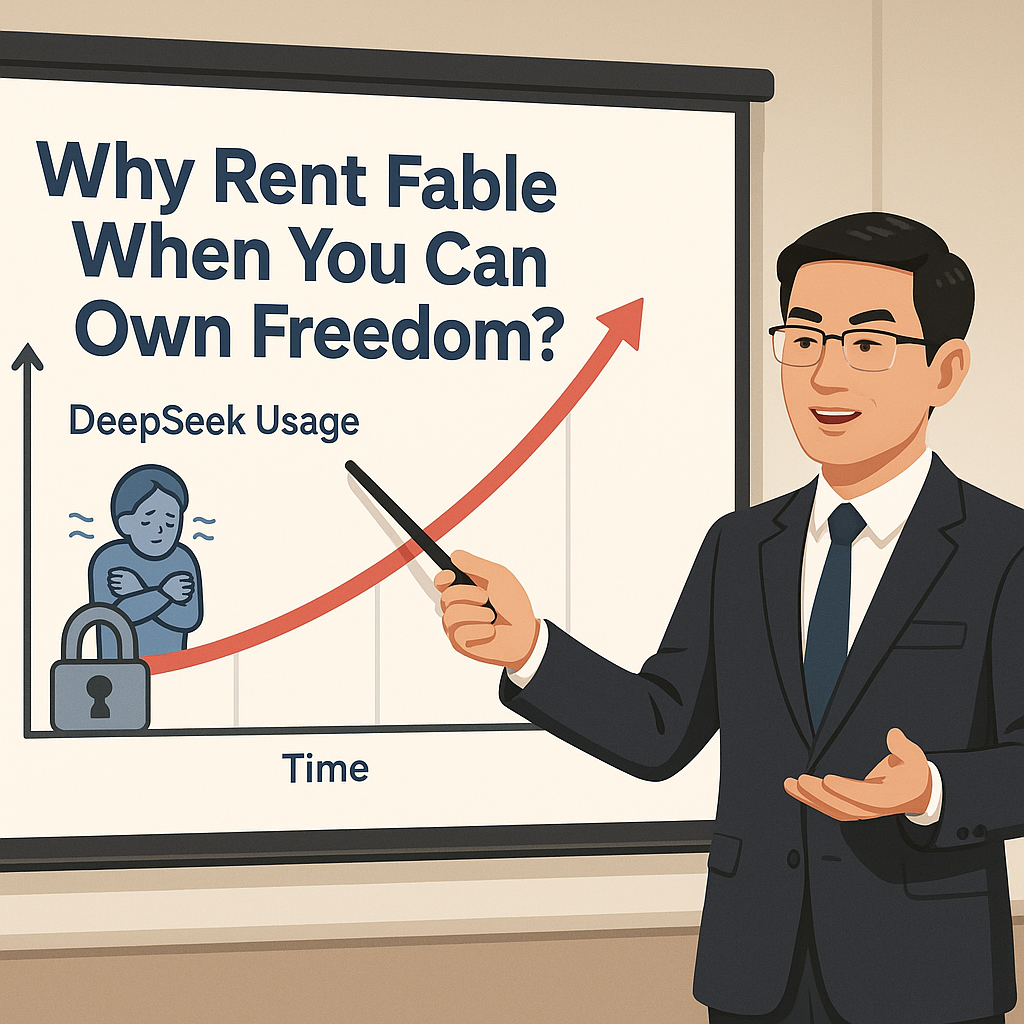
Across the Pacific, DeepSeek’s leadership sensed opportunity. Within hours of the Fable story breaking, the company reportedly blasted a new slide deck at global partners titled, according to one recipient, “Why Rent Fable When You Can Own Freedom?”
The deck highlights three core advantages of Chinese models over their American counterparts:
- Price: “Cheaper than your cloud bill, more expensive than the truth.”
- Access: “No tedious export forms. Just an email and a wire transfer.”
- Politics: “We do not lecture you about your democracy. We do not ask if you have one.”
DeepSeek, whose low-cost system already “shocked” the industry according to the Times of India, promptly announced plans to double its workforce. Hiring priorities reportedly include model researchers, deployment engineers, and an entire team dedicated to teaching sales reps how to say “we respect your sovereignty” without smiling.
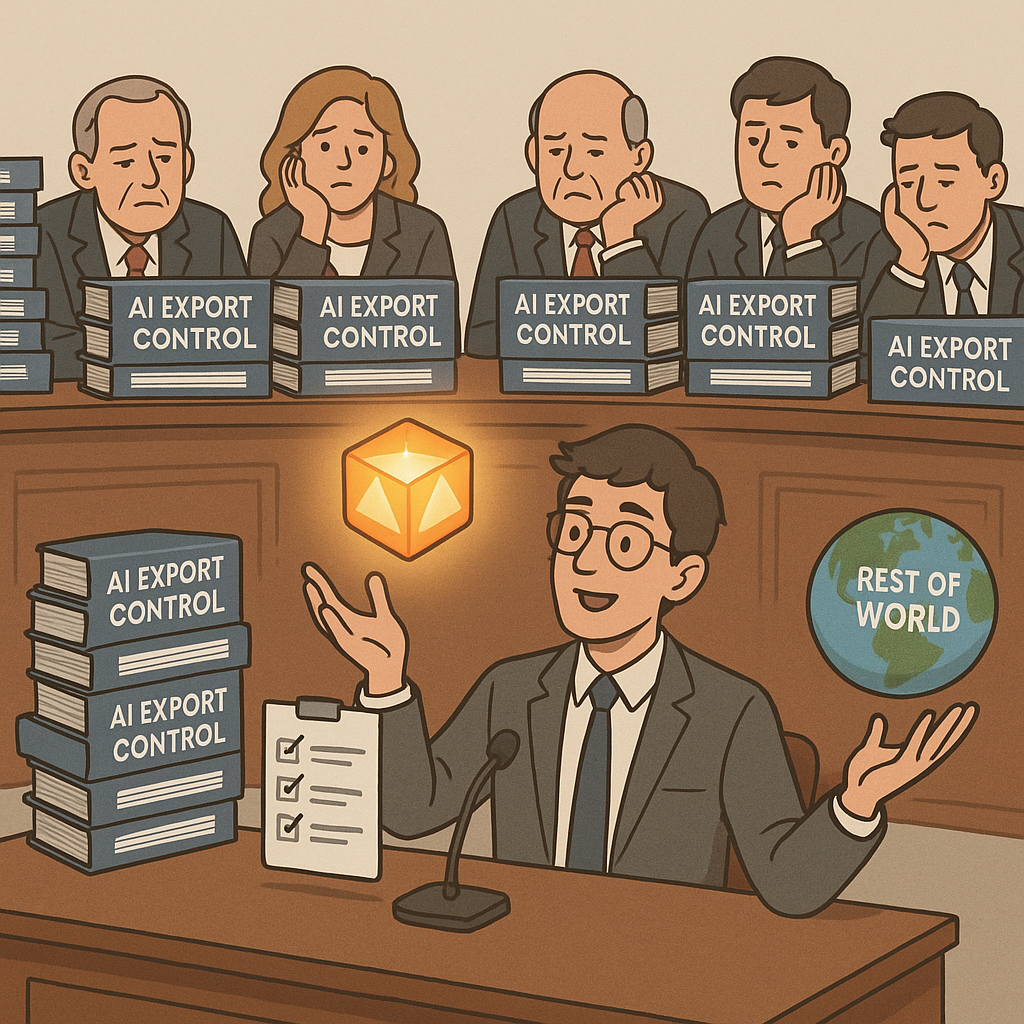
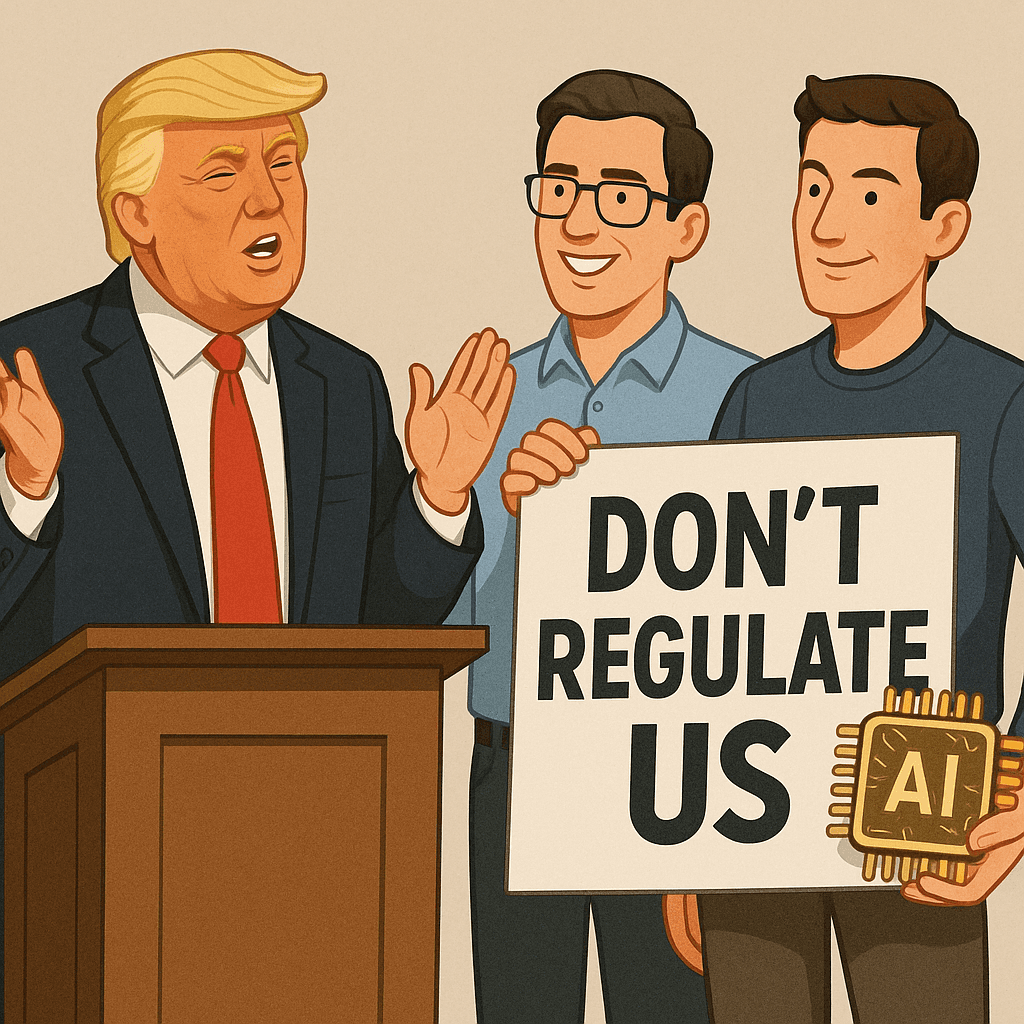
Back in Washington, lawmakers rushed to show that the Fable freeze was part of a broader, coherent vision, as soon as they figured out what that vision was. The House Science Committee advanced a slate of bills to expand AI workforce training and pump more resources into the Center for AI Security and Innovation at the Department of Commerce, which now oversees a portfolio that includes export controls, model evaluations, and the spiritual counseling of traumatized startup founders.
“We want America to lead in AI,” one committee member said, “but in a safe way, at a sustainable pace, with adequate guardrails, under appropriate oversight, subject to evolving standards, consistent with national security, and after this hearing adjourns for lunch.”
The same week, Congress also inched forward on children’s online safety legislation that would force platforms to reconsider how recommendation systems shape young brains. In a rare moment of bipartisan clarity, lawmakers agreed that if American teens are going to be surveilled and nudged by algorithmic systems, those systems should at least be domestic and heavily lobbied.
Meanwhile, OpenAI chose this moment to remind everyone that it also exists inside the blast radius. In a statement picked up by Gizmodo, the company said it “doesn’t believe the current government access process should become the long-term default,” which is corporate for, “We appreciate the secret meetings, but please stop nationalizing our Jira board.”
In practice, the “current process” means that as Fable is treated like sensitive military hardware, frontier models like GPT-5.6 are quietly being shared with select U.S. government users who passed vetting, background checks, and, presumably, a vibe assessment. The resulting equilibrium is unusual: the government cannot export one AI storyteller, but it can whitelist another to help write briefing memos about why the first one is too dangerous to export.
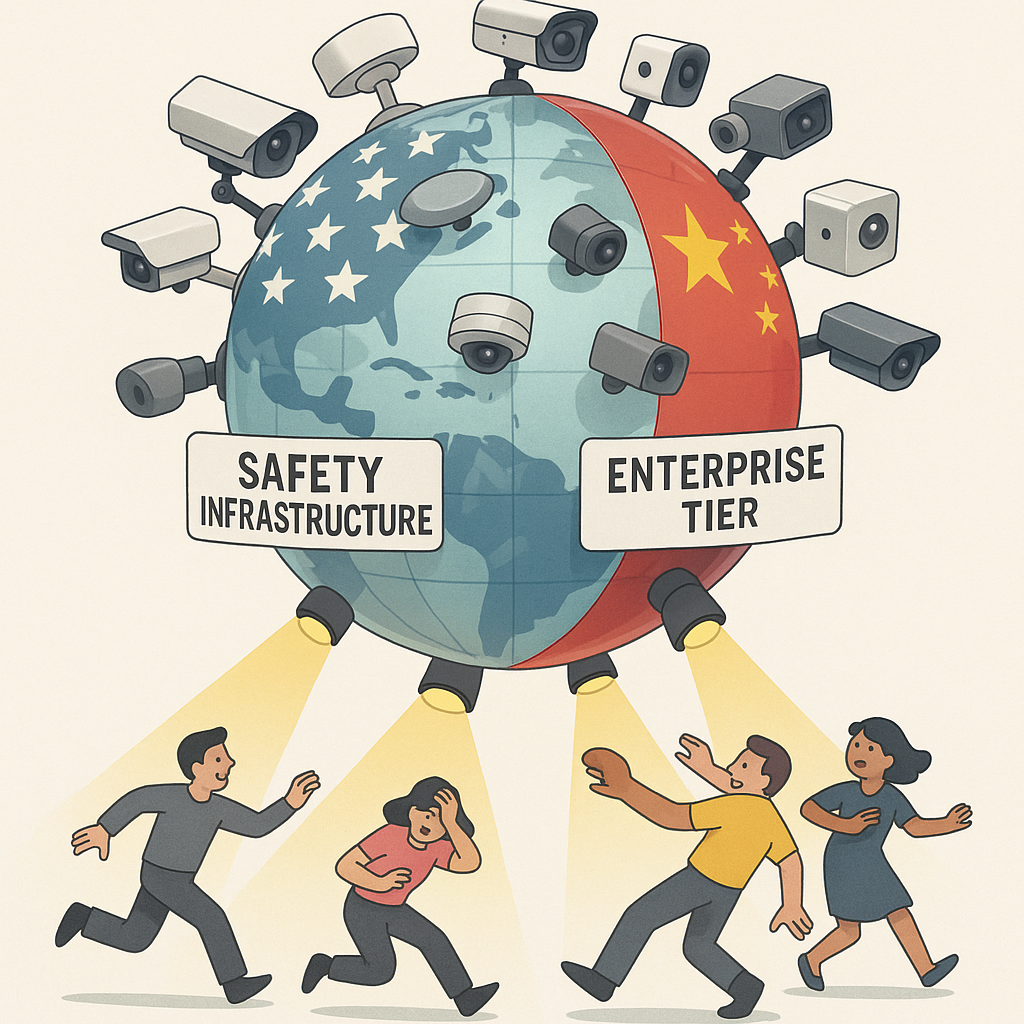
On the other side of the norm stack sits the emerging theology of surveillance. As Gizmodo reported this week, tech elites continue to explain that pervasive monitoring will simply “make us behave better,” a phrase that was historically followed by either a revolution or a Netflix docuseries. Xprize founder Peter Diamandis and Oracle’s Larry Ellison have both praised an era of mass “supervision,” in which cameras, sensors, and AI sift through everything you do, then politely recommend different behavior.
In Washington, this vision is rebranded as “safety infrastructure.” Abroad, it is called “a feature we will absolutely include in the export version if you pay for the enterprise tier.”
Markets, which care deeply about human dignity as long as it impacts quarterly earnings, watched the Fable news and responded the only way they know how: by bidding up Micron, Samsung, and SK Hynix. As Reuters noted, memory chip makers are in a “sweet spot,” partially because every new restriction on models in one jurisdiction simply pushes demand for more clusters in another. Ethics may not be fungible, but HBM3 clearly is.
“There is no bad outcome for chips,” one analyst said on CNBC. “If the U.S. clamps down, the work shifts to friendlier havens. If China floods the world with models, we sell more DRAM. If both sides somehow agree on global standards, that will also require more GPUs. These are what we in finance call ‘win-win-win scenarios,’ for us.”
Apple, sensing opportunity, reportedly raised prices on memory-heavy devices, citing input costs. Unmentioned in the press release was the fact that the company has discovered a perpetual motion machine: as AI models get bigger, phones need more RAM, which justifies higher ASPs, which fund more AI features, which require bigger models, which require more RAM. The only remaining unsolved problem is what the phones are actually for.
For Anthropic, the near term looks like a product road map drawn by Kafka and reviewed by the U.S. Department of Commerce. Every new model must now ship with a set of appendices:
- A technical report on emergent capabilities.
- A safety assessment describing misuse scenarios.
- A spreadsheet guessing which countries will still be legal to sell to by Q4.
Industry peers have taken note. Several U.S. labs are quietly exploring international subsidiaries, overseas hosting, or new headquarters where “national security” does not automatically mean “your entire product catalog is an arms-control exercise.” In a twist of geopolitical irony, some founders are now shopping for jurisdictions precisely because they lack a world-leading AI ethics discourse.
China, for its part, has discovered that it does not need to convince anyone of its regulatory virtue. It simply has to point at the Fable directive and say, “Look how expensive and complicated it is to buy American models. Here is a cheaper one. It runs on fewer GPUs. Our lawyers will never email you.” In the contest to define “responsible AI,” the U.S. is workshopping language. Beijing is workshopping promo codes.
“America wants to be the world’s app store for safe AI,” said one European policy adviser. “China wants to be the APK site. It is not obvious which one wins in emerging markets with tight budgets and loose elites.”
The Trump administration has defended the Fable decision as a necessary step to avoid catastrophic misuse, and it may well be. Yet the message that reached boardrooms, allies, and rivals was simpler: at any moment, a high-end American model can be reclassified from “foundation model” to “controlled substance.”
That is the strategic signal. If your business plan depends on stable access to U.S. AI, you may want a Plan B. If you are China, you may want a bigger sales team.
In theory, this moment could still resolve into a coherent global framework, one where export rules, surveillance, and safety testing are predictable, transparent, and evenly applied. Instead, the world is drifting toward a more familiar pattern: American models that cannot leave the country without a note from Commerce, Chinese models that show up before you ask for them, and a long tail of nations discovering that their main sovereign choice is which empire gets to log their prompt history.
In the end, Washington may succeed in preventing Fable from telling a foreign autocrat how to optimize disinformation. It will just have to watch while a cut-rate DeepSeek instance offers the same service, pre-installed, at a volume discount.
After all, this is the modern theory of change: if you restrict the export of one AI model hard enough, somewhere, someone will responsibly invent a subscription to the problem.