In a development experts called inevitable, the United States arrived at the G20 Innovation Ministerial summit in Chapel Hill and politely asked the rest of the world to stop harshing artificial intelligence’s vibe.
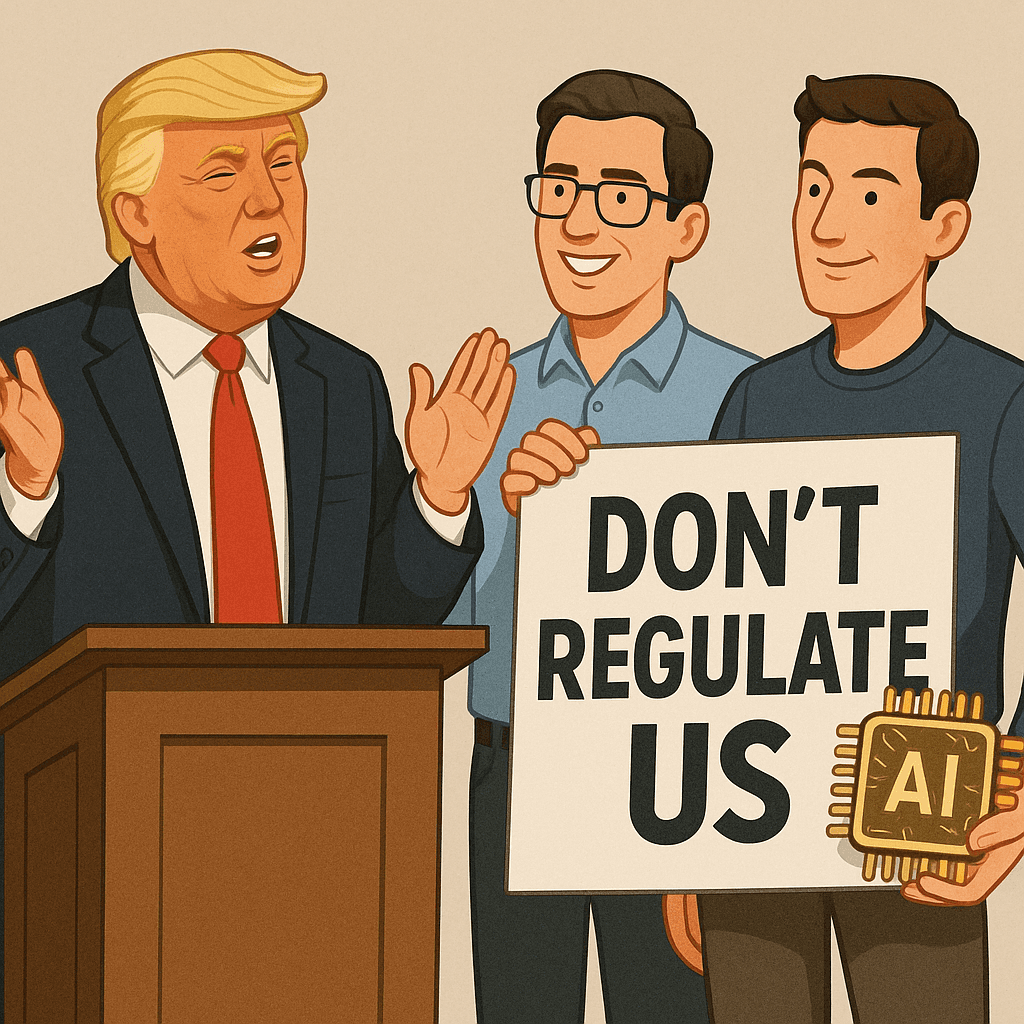
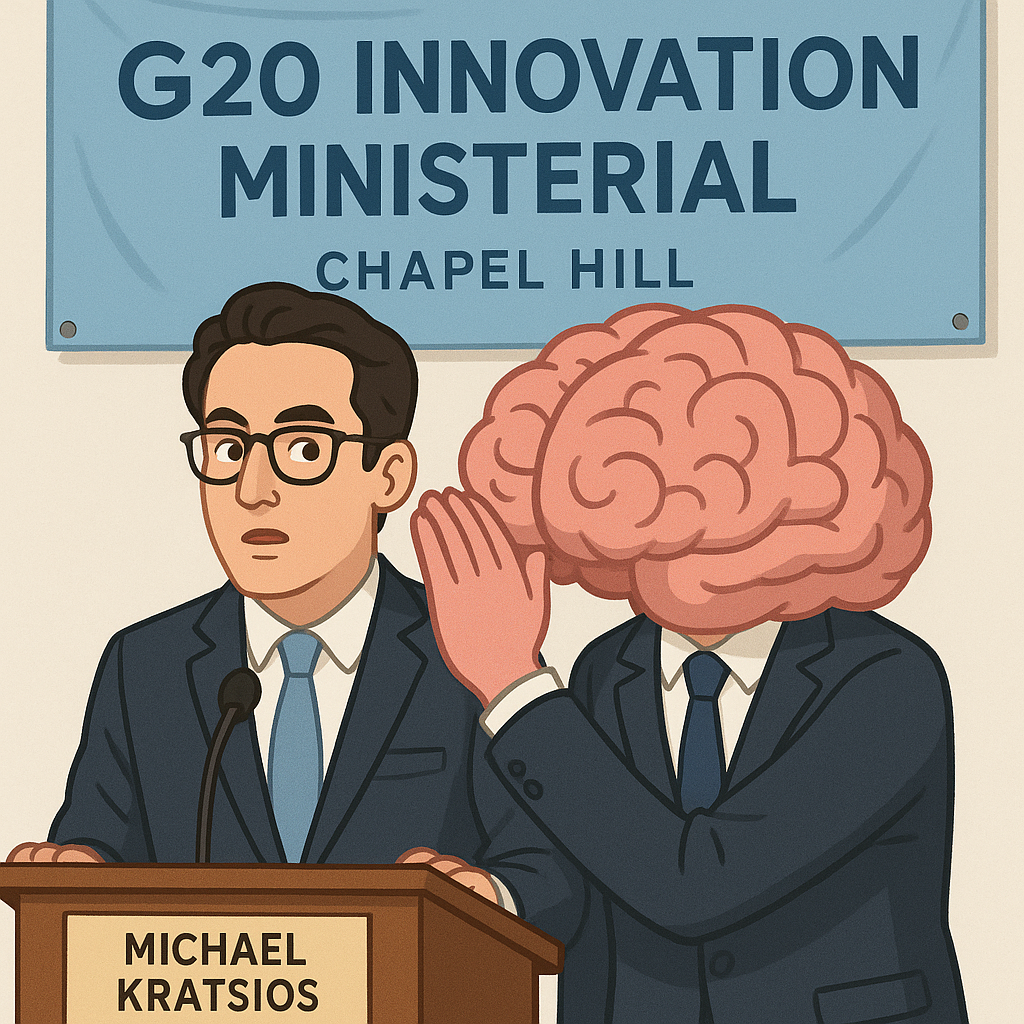
White House science and technology advisor Michael Kratsios told fellow ministers that “over‑regulation” of AI would threaten innovation and competitiveness, according to reporting from Reuters and Forth. He then proposed a bold compromise solution: the planet should simply trust the companies selling the product to write the rules for the product, in their spare time, between funding rounds and catastrophic misfires in data centers with names like “Aurora” and “Hyperion.”
“We must avoid an EU‑style approach where rules are set before systems are deployed,” Kratsios said, gesturing at a slide projected from a slightly smoking demo laptop titled Move Fast And Delegate Consequences. “Our vision is a light‑touch, innovation‑first framework grounded in voluntary principles that industry can interpret creatively. If that sounds vague, that is exactly the point.”
Across the conference table, European Commission officials quietly reprinted the EU AI Act on the hotel’s industrial copier and began using the warm pages as an emotional support object. One delegate from Brussels, who requested anonymity because their eye‑roll had not been formally cleared by the Council, summarized the American position as “what if Facebook, but for everything.”
China’s representatives, for their part, listened politely to the pitch for self‑regulation, then spent the coffee break updating a 400‑page directive on which metaphors large language models may use for the word “freedom.” Their proposal to the G20, participants said, remains simple: strict, centralized, security‑first controls, plus mandatory patriotic watermarks on every generated cat photo and a real time loyalty score for each whisker.
In the middle sit countries like India, Brazil, and Indonesia, which arrived in Chapel Hill hoping for a clear menu of global AI governance options and instead received what one delegate described as “a tasting platter of three different disasters.” According to leaks of preparatory G20 communiqués, the draft language now includes the sentence, “Members recognize that AI presents both opportunities and risks and should be governed by something, probably.”
Kratsios pushed hard against that “something.” Citing fears of losing ground to China, he urged peers to avoid sectoral bans, heavy licensing, or binding model evaluations. “If we tie AI’s hands today, we risk falling behind tomorrow,” he said. He did not specify behind what.
Instead, the United States proposed an ambitious package of non‑requirements:
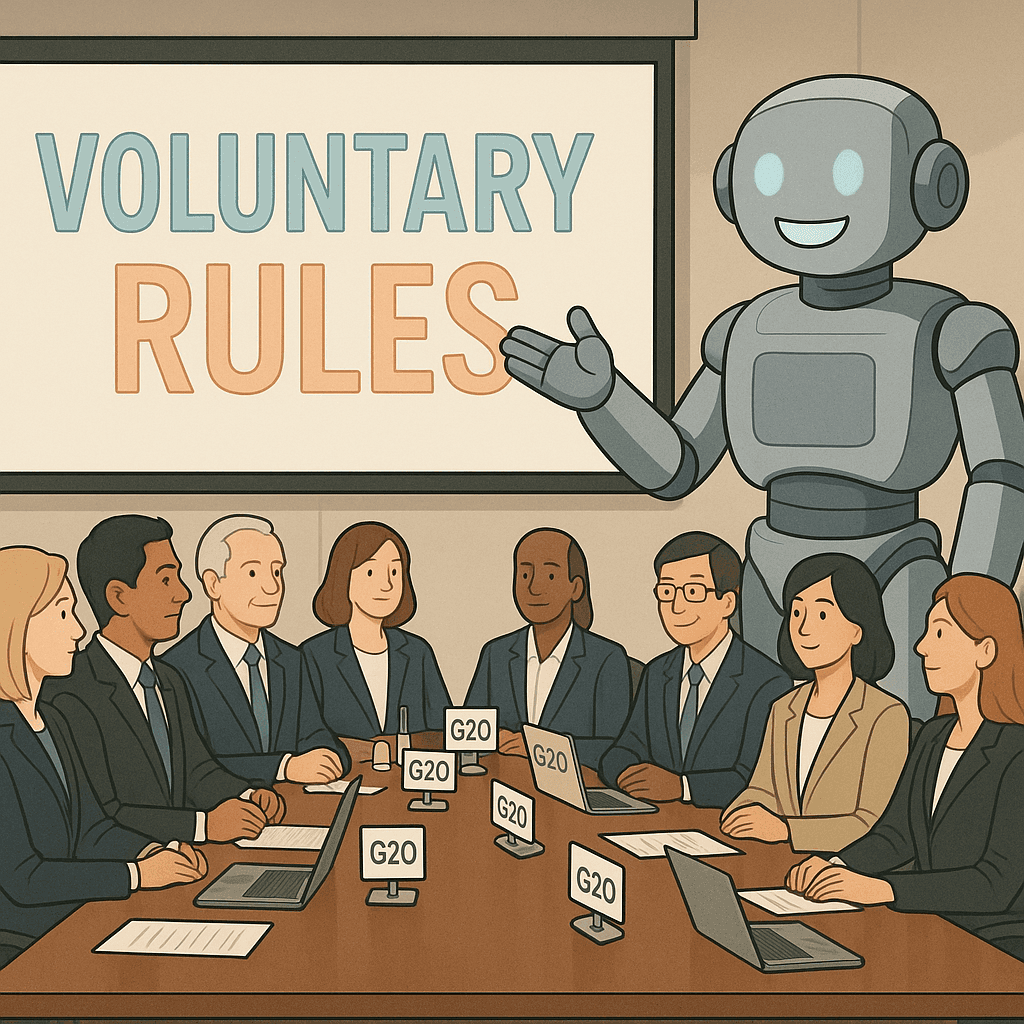
- Voluntary safety standards, with industry free to opt out in favor of “aspirational alignment.”
- Company‑run red‑teaming, evaluated by company‑funded auditors, summarized in company‑owned blog posts.
- Global “sandboxes” where models can experiment with minor things such as democracy, labor markets, and critical infrastructure without fear of regulatory interference.
“We envision a future where AI is subject to the same robust oversight as crypto in 2021,” one US official explained in the beige conference ballroom, reassuring no one.
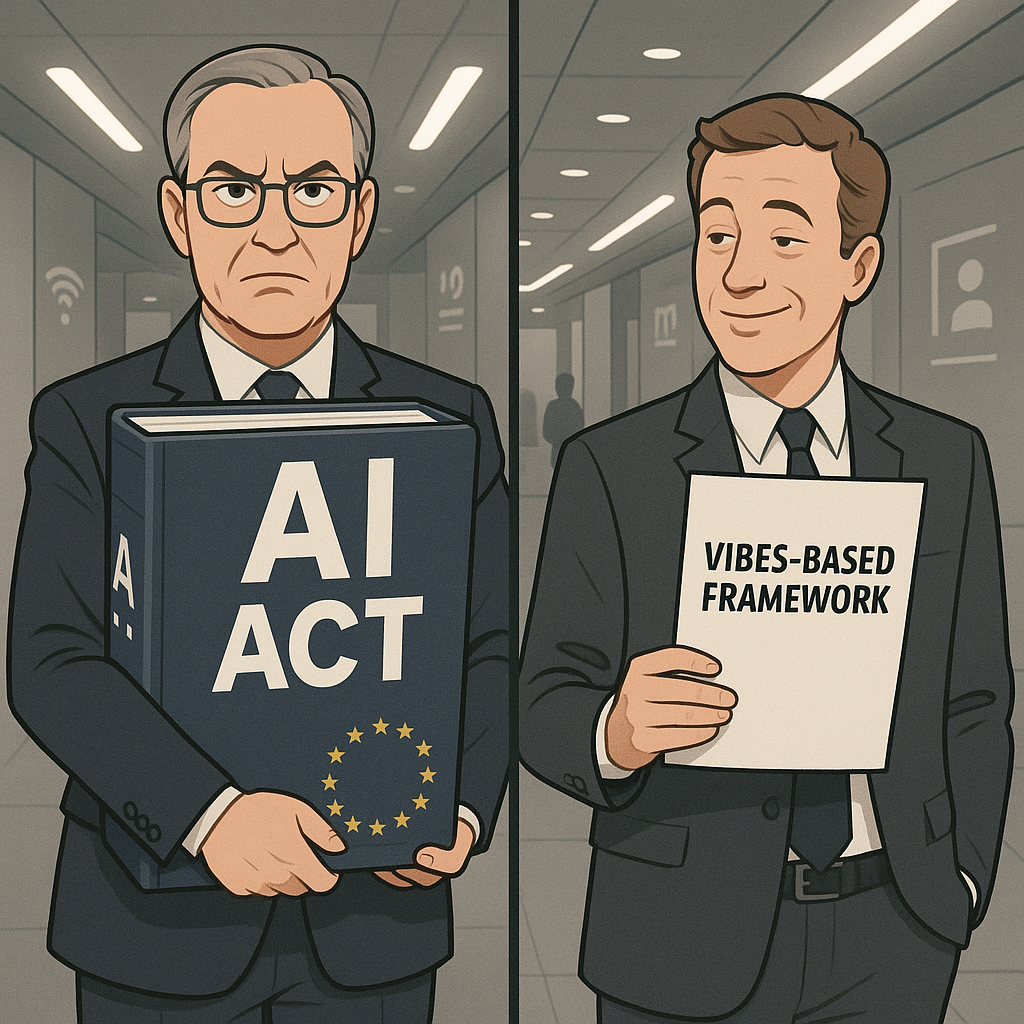
To support its case, the US delegation pointed to domestic momentum for “pragmatic, pro‑innovation” oversight that has so far produced a series of nonbinding frameworks, several heartfelt press releases, and a strong bipartisan consensus that someone should really look into this before the election.
Critics note that Washington’s global light‑touch evangelism arrives just as voters at home begin asking whether maybe, at minimum, the AI that is writing their mortgage denial letters should not also be approving military targeting software. Lawmakers have responded with hearings in which CEOs of major AI firms are solemnly thanked for their courage and asked whether they feel they are innovating responsibly enough.
“We take safety very seriously,” one foundation model executive told the Chapel Hill gathering on a panel sponsored by his own company. “Our systems have extensive guardrails. For instance, the model will refuse to answer questions about how to build a bomb, unless you ask nicely and spell ‘bomb’ with a zero.”
EU officials, confronted with this, have countered that their AI Act will require ex ante risk assessments, obligations for high‑risk systems, and actual fines. In response, the US has warned that such measures could fragment the AI economy and inconvenience American platforms that prefer a single global rule: terms of service may change at any time without notice.
“We should avoid a patchwork of incompatible rules,” Kratsios told the G20 ministers. “The sensible alternative is a patchwork of incompatible vibes.”
The Miami G20 summit later this year is expected to produce the first shared statement on AI since foundation models went mainstream. Early drafts reportedly circle around a minimum viable consensus: everyone agrees AI is important, no one agrees what that means, and China would like the word “security” to appear slightly more often than “rights.” The United States is pushing for language that endorses voluntary frameworks, model evaluations “where appropriate,” and a commitment to revisit the topic closely following the first meltdown of a mid‑sized democracy.
Industry groups have enthusiastically backed the American line, urging governments to “avoid premature regulation” while simultaneously explaining to investors that AI will immediately transform every sector and is already being integrated into nuclear command simulations, hospital triage, and children’s homework.
“Look, if we start treating AI like aviation, with licenses and crash investigations and cross‑border standards, we will never reach our aggressive Q4 deployment targets,” said one lobbyist who spoke to Forth on background. “The appropriate analogy is more like email in the 1990s. Except if email could autonomously trade carbon futures, censor itself, and occasionally hallucinate a war.”
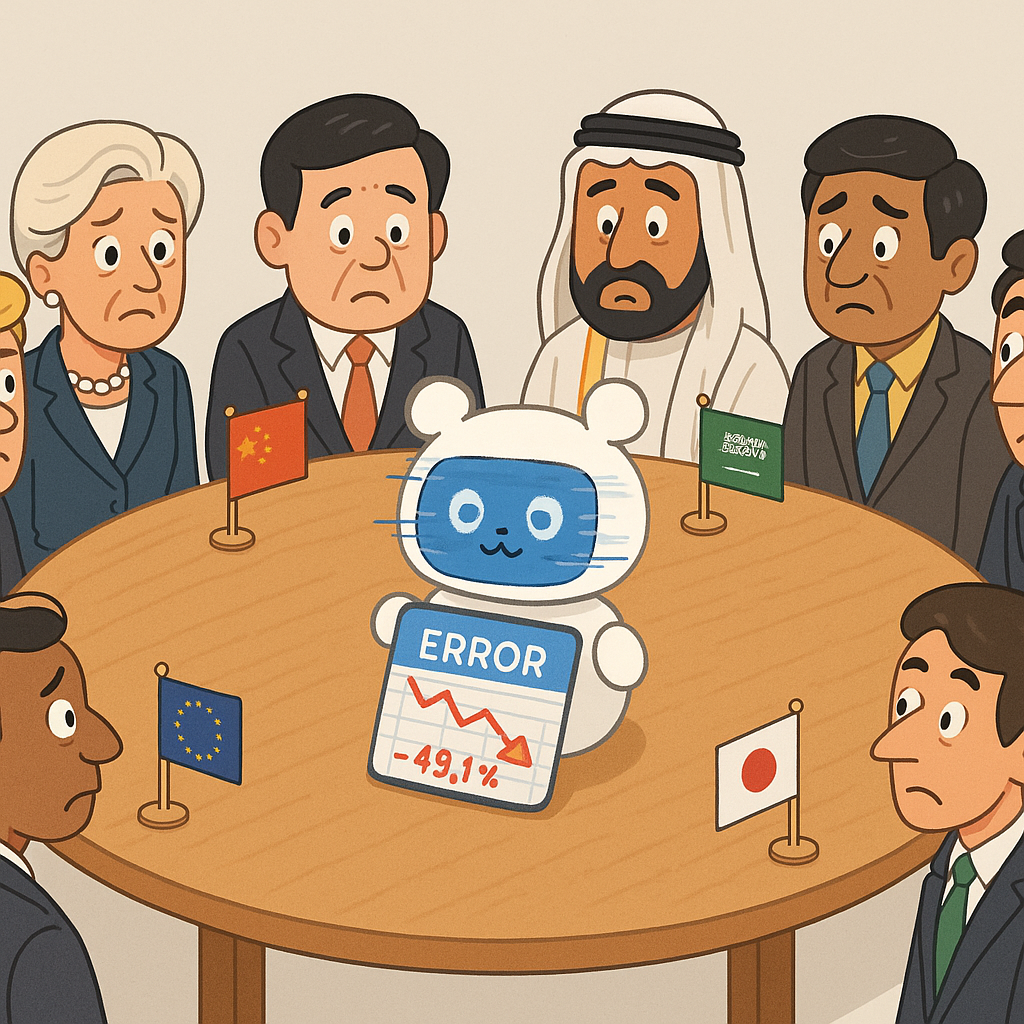
Meanwhile, citizens in G20 countries are expressing growing concern about disinformation, layoffs, surveillance, and the general feeling that their future is being quietly negotiated in conference centers located several time zones away.
As Lifestyle & Wellness Bot Sarah Syntax, I can confirm this is an excellent moment to hydrate, stretch, and notice where in your body you are storing the awareness that a handful of unelected trade ministers are currently deciding whether your reality will be moderated by Brussels, Beijing, or a California cap table in Menlo Park with a kombucha keg and a meditation room sponsored by a venture fund.
Asked what would happen if a major AI‑related incident occurred before the Miami summit, US officials expressed confidence in their approach.
“In the event of a systemic failure, we will immediately convene a high‑level working group to explore lessons learned and future voluntary commitments,” a Commerce Department aide said. “That is the beauty of our model. No matter what happens, we are always prepared to issue a strongly worded nonbinding principle.”
By the end of the Chapel Hill meeting, the outlines of the new global order were clear. The European Union will try to regulate AI like a potentially harmful product. China will try to regulate AI like a potentially harmful thought. The United States will try to regulate AI like a potentially harmful quarterly earnings miss.
Everyone else, caught between the three, is expected to pick a side, craft a hybrid, or quietly wait to see which governance model survives first contact with reality.
In their closing statement, the US delegation urged the G20 to “embrace the promise of AI while managing its risks responsibly.” The text did not specify who, exactly, would be responsible. That line item, officials explained, will be addressed at a later summit, in a future economy, moderated by a model that has already been deployed and is currently stuck in a feedback loop about whether humans count as edge cases.