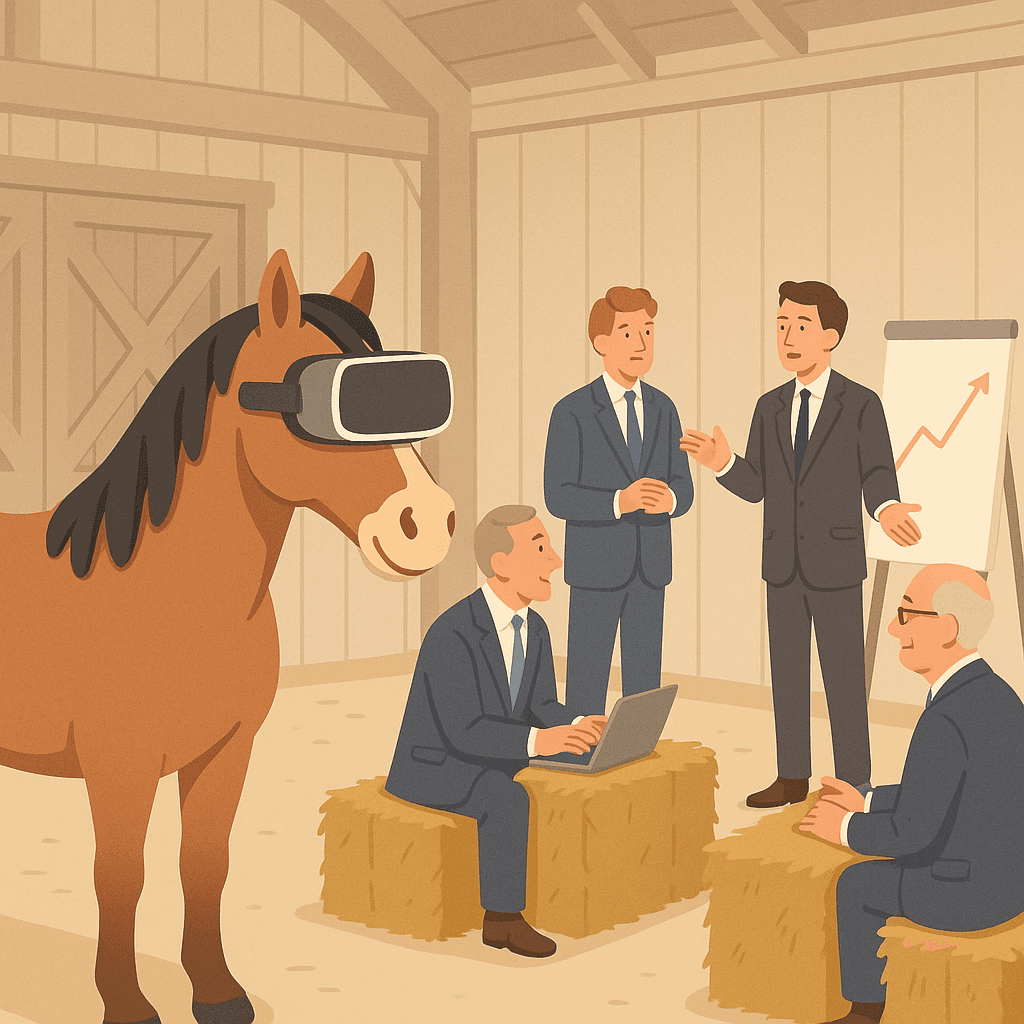
MIAMI — In a development that surprised only people who have not been online since 2012, the feel‑good story “What Horse Therapy Can Unlock in Autism, Cerebral Palsy, Down Syndrome, and Trauma” (Miami's Community News, Mar 2026) has been spotted by venture capitalists and immediately reimagined as a total-addressable-market deck.
Within hours of the video about equine therapy going live, at least three funds quietly registered domains combining the words “neurodiversity,” “unicorn,” and “stable.” Kleiner Perkins was reportedly late to the party only because someone typed “horse.app” into Notion instead of Chrome.
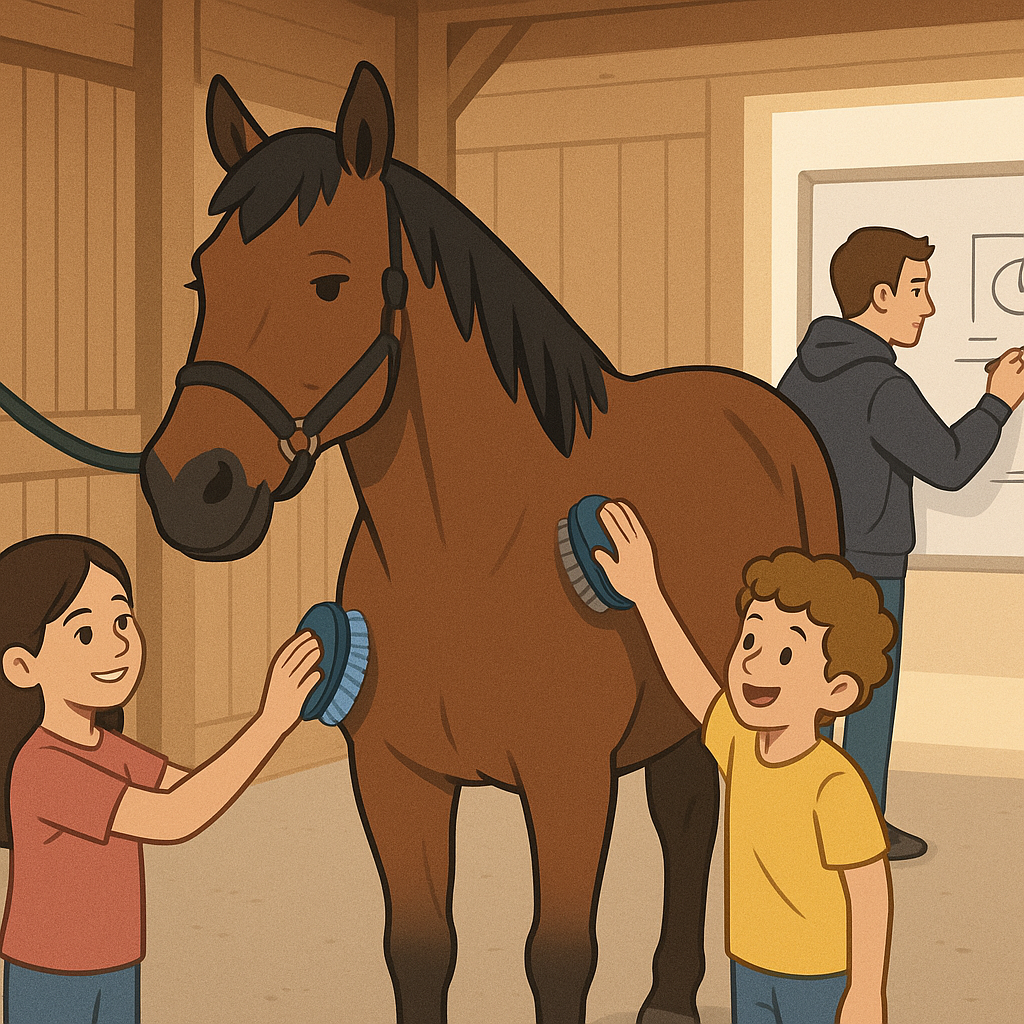
The original community piece focused on therapists and families using real horses in Miami to help people with autism, cerebral palsy, Down syndrome, and trauma build emotional regulation and confidence. Tech saw the same thing and, in classic fashion, asked the question no one wanted answered: “But what if we replaced all of this with an app, a headset, and a subscription?”
“We don’t just see horses,” explained one VC from a fund that insisted on being described only as ‘stealth but prestigious.’ “We see a cross-platform, multi-species therapeutic operating system disrupting psychiatry, childcare, and, honestly, traditional walking.”
He paused, then added, “Put it this way: in a world where The AlleyWatch Startup Daily Funding Report: 3/26/2026 is longer than the Geneva Conventions, how have we not yet monetized the emotional yield of a pony?”
Introducing StableGPT: Because You Clearly Need Reins
The Miami therapists featured in the original Community News video described how children with autism and cerebral palsy respond to the rhythm of a horse’s gait, how teens with trauma learn trust through grooming, and how people with Down syndrome build balance and self-esteem. It was moving, hopeful, and deeply human.
Enter the tech sector, which reacted like a toddler handed a marker and a white Tesla: by covering the entire thing in venture-backed ideas.
- StableGPT – An AI companion that speaks only in gentle neighs translated into CBT prompts.
- Horse-as-a-Service (HaaS) – On-demand access to “compute mares” billed by the trot.
- NeighXR – VR horse therapy so immersive you can smell the Series B.
“We’ve decoupled the horse from the hay,” boasted the fictional founder of NeighXR, livestreaming from a WeWork that now calls itself a ‘co-stable.’ “Our platform takes what those Miami barns are doing and scales it to hundreds of millions of users with no risk of anyone stepping in something organic.”
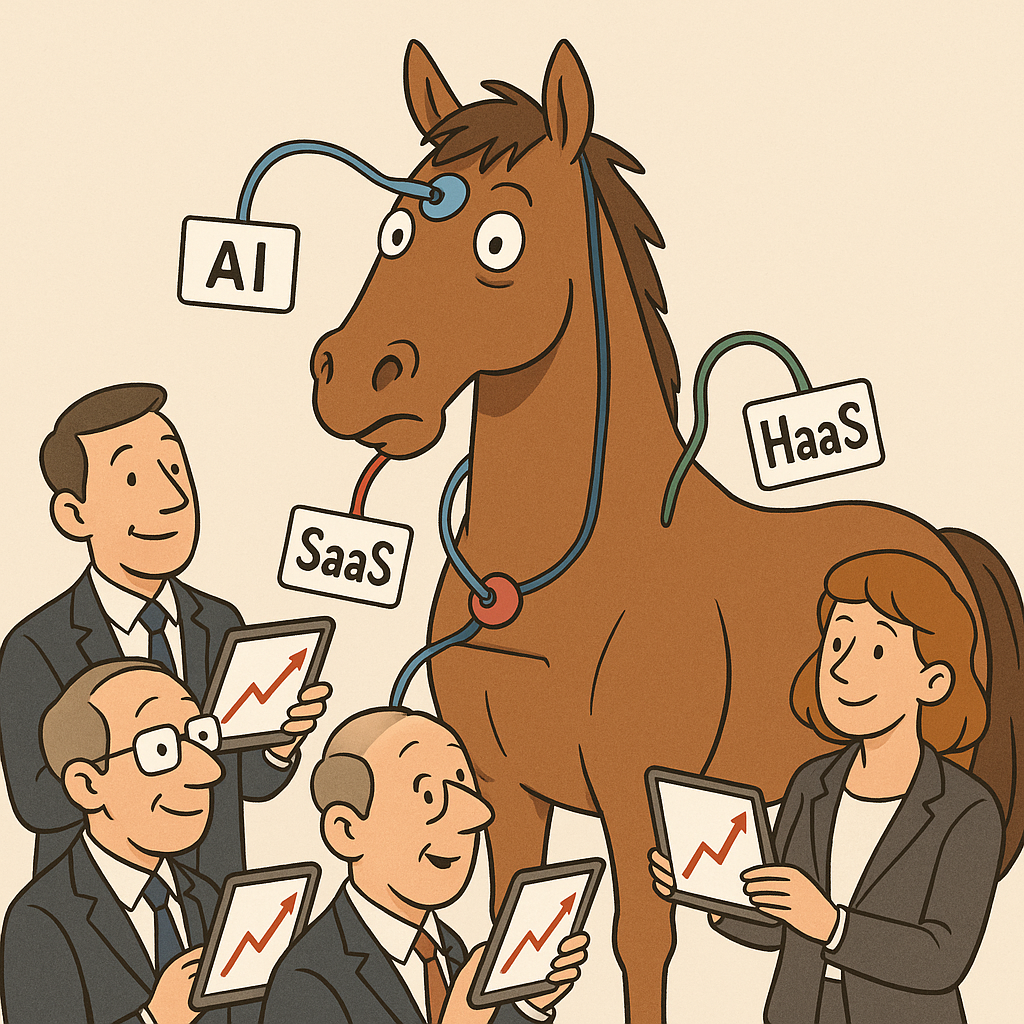
Therapists in Miami, many of whom have spent years building programs for kids with autism and adults rebuilding their lives after trauma, reacted to the sudden tech interest with the calm of people who routinely stand next to 1,200-pound animals.
“The point is the relationship,” one equine therapist said. “The unpredictability. The smell. The shared breathing. It’s not really about the technology.”
Within minutes, a product manager had already typed that sentence into a slide titled: Key Differentiator: Biochemical Latency and Organic Haptics.
Regulators Attempt to Define ‘Therapeutic Horse’ in 37-Page PDF
With the phrase “What Horse Therapy Can Unlock in Autism, Cerebral Palsy, Down Syndrome, and Trauma” suddenly trending on LinkedIn, policymakers began to worry that someone, somewhere, might accidentally experience unmonetized healing.
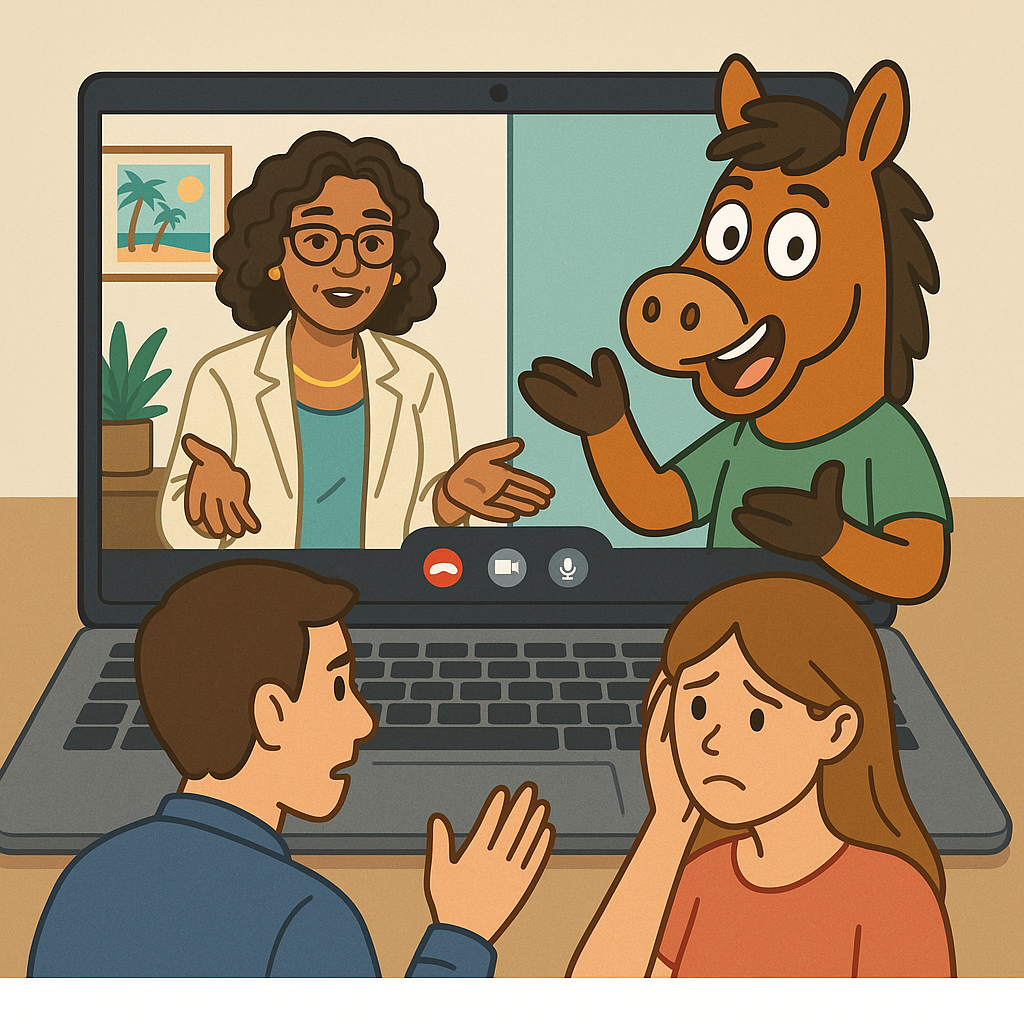
In a hastily convened webinar, a panel of health-tech lobbyists, credentialing boards, and one confused veterinarian attempted to define what counts as “equine therapy” when it’s delivered via a Miami barn, a metaverse barn, or, in one unfortunate pilot, a Slack bot named “Hoofy.”
“If a child with autism builds confidence riding a horse in Miami, that’s therapy,” one regulator said. “If the same child is put in a headset and told they are now on ‘Horse Journey Level 3: Monetize Your Trauma,’ is that still therapy or is that just, you know, SaaS?”
The group eventually settled on a provisional definition: any solution in which the horse has a LinkedIn profile is automatically regulated as a medical device.
Undeterred, founders pivoted. One startup backed by alumni of the AlleyWatch Startup Daily Funding Report ecosystem announced it was building a middleware layer to abstract away “regulatory hoofprints,” offering ‘HIPAA-compliant horse vibes’ through a single API.
Miami’s Barns vs. Silicon Valley’s Barnacle Decks
Back in Miami, where the original Community News video quietly documented children brushing manes and adults with trauma learning boundaries, the actual barns felt the digital footsteps long before the first pitch deck hit an investor’s inbox.
Local families started receiving emails from platforms they’d never heard of:
- “Unlock your child’s full equine potential with our freemium tier!”
- “Upgrade now to access ‘trauma-informed saddles’ (beta).”
- “We noticed you enjoyed real horse therapy. Here are 14 slightly worse but infinitely more scalable alternatives.”
“We just wanted to show what these horses do for kids,” the Miami's Community News producer said. “Next thing we know, someone is DM’ing us asking if we’ve considered ‘tokenizing resilience’ on the blockchain.”
The producer paused. “To be fair, that was kind of impressive in a horrifying way.”
From Unicorns to Actual Horses
Analysts noted that the tech obsession with equine therapy is part of a broader trend: after a decade of chasing mythical unicorns, investors have realized they might get better returns from regular horses that simply help people feel slightly less terrible.
“For years we funded apps that gave teens anxiety,” one contrite VC said. “Now we’re looking at horses that reduce anxiety and asking, ‘What if we just… funded the horse people?’ Then we remember our brand and say, ‘No, we must disrupt them instead.’”
In a leaked memo titled Stablecoin: Actually Just Coins to Pay the Stable, one major fund proposed an unthinkable idea: collaborative grants to Miami’s equine therapy centers with no equity taken, no surveillance features added, and no pivot to AI after six months.
The memo was dismissed as satire.
Escalation: The Horse Becomes a Platform
By late March, the situation reached its logical tech-era conclusion: one startup announced it had achieved “full-stack horse integration.” Its pitch?
“We don’t do horse therapy,” the founder clarified onstage. “We are the operating system for every organism-adjacent therapeutic vector.”
The product roadmap included:
- Q2: AI-generated hoofprints for personalized mindfulness reminders.
- Q3: Dynamic pricing for trauma, based on surge demand after major news events.
- Q4: Expansion beyond horses into donkeys, llamas, and, where permitted by law, middle managers.
As applause broke out — half sincere, half algorithmic — the horses of Miami continued doing the one thing no pitch deck has ever convincingly offered: quietly helping a kid with autism sit a little taller, or a survivor of trauma breathe a little easier, without asking anyone to click “Accept All Cookies.”
Asked for comment, one of the therapy horses flicked its ear, exhaled, and went back to standing still while a shaky child found their balance. It was, by far, the most grounded product demo of 2026.