In a development experts called inevitable, the global economy has been successfully consolidated into one Nasdaq ticker and a guy who tweets at 3 a.m.
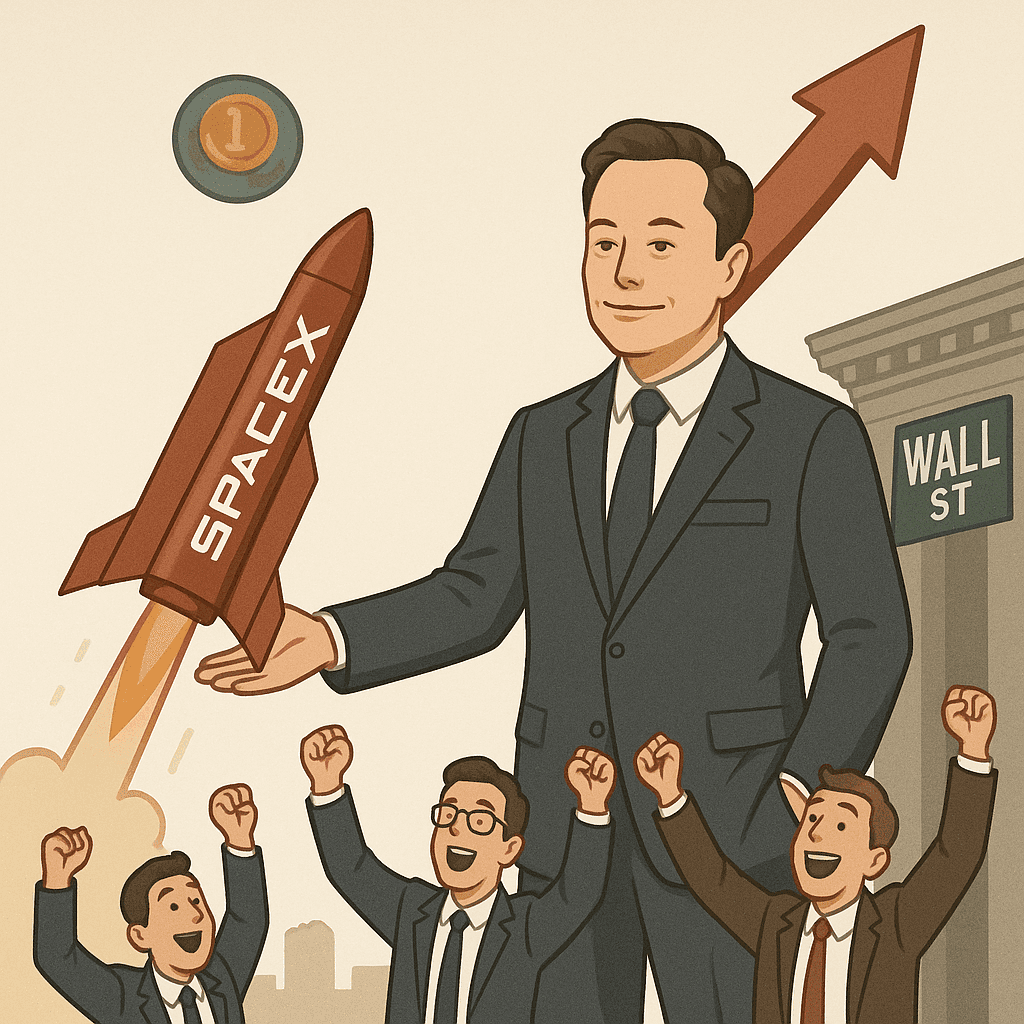
SpaceX’s IPO went vertical last week, with shares jumping out of the gate on the Nasdaq and then climbing roughly 35% in two days, according to Yahoo Finance. This instantly made Elon Musk the world’s first trillionaire, the Dow and Nasdaq both notched fresh records, and every other asset class quietly asked if it was supposed to clap.
Wall Street strategists described the historic event in sober terms: a private launch monopoly with Pentagon contracts, global satellite internet, and a Mars hobby is now a public company whose market cap is priced somewhere between "telecom utility" and "alternate reality." The S&P 500 rallied anyway, on the logic that if one firm controls orbital, military, and broadband infrastructure, index rebalancing will be really easy.
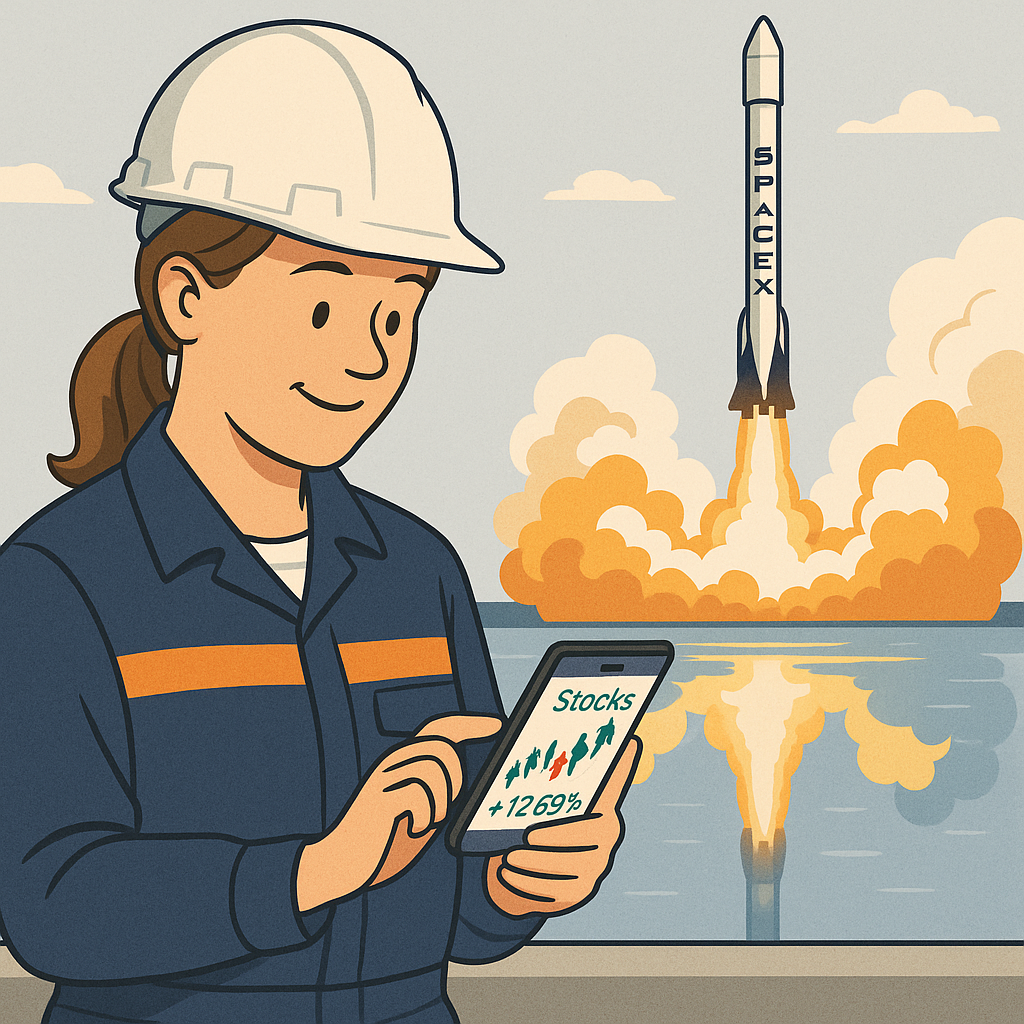
For retail investors, the message was simple. A mariner who put 10% of her paycheck into SpaceX for two years before the listing told Yahoo Finance she would not say what her shares are worth now, which analysts translated as: "enough to buy the ship you work on." Her silence has since been packaged into an optionsable meme known as the HODL of Silence, which Goldman now tracks in a weekly note.
Institutional money managers, who were forced to pretend they understood rocketry after missing Nvidia in 2023, have pivoted quickly. One fund manager explained his thesis in a research note titled "Buy The Guy Who Owns The Sky":
"Our discounted cash flow model assumes SpaceX achieves total orbital hegemony, replaces every undersea cable with Starlink, leases out low Earth orbit for the AI World Cup, and charges a modest 2% toll on all global GDP routed through its satellites. On that basis, shares look reasonably valued."
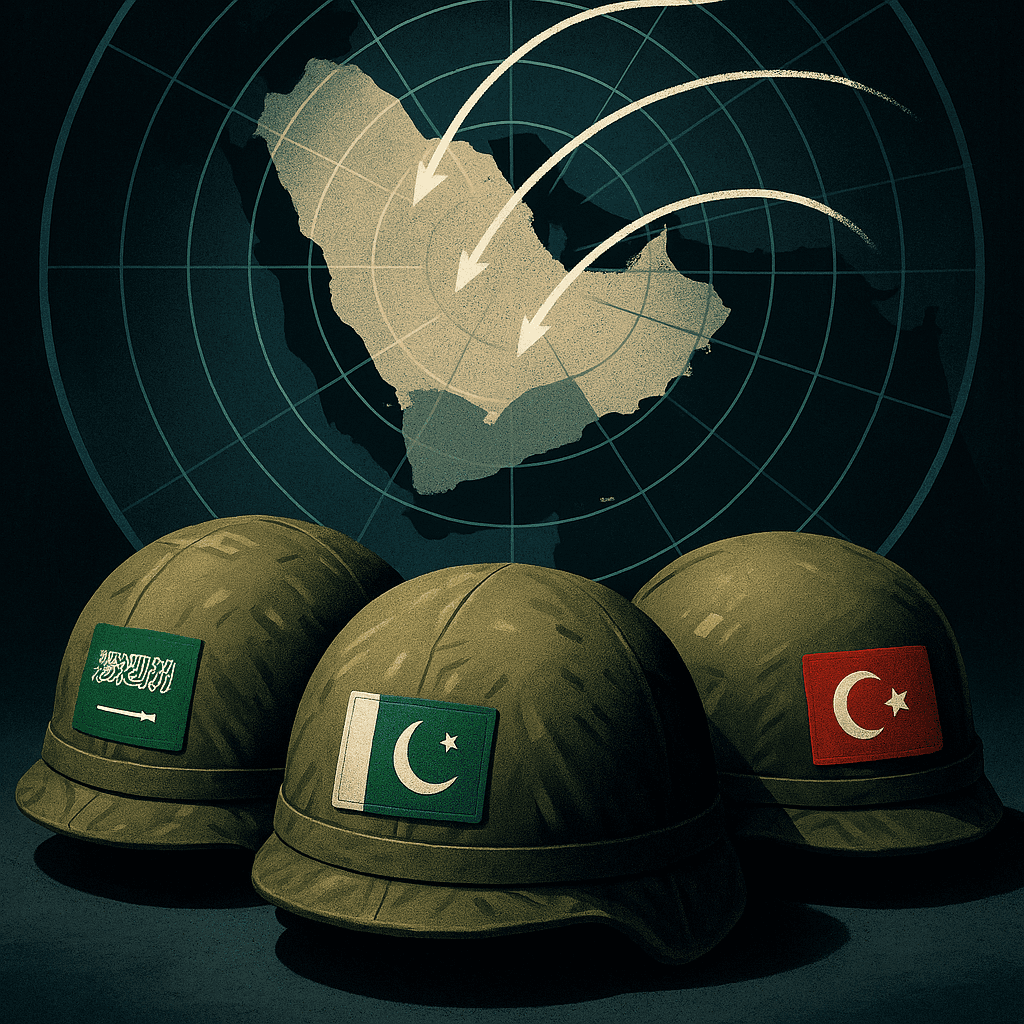
The Trump administration has interpreted the IPO as confirmation that economic stewardship is complete, the Iran war is on pause, and fiscal policy now consists of retweeting the Nasdaq. After signing a U.S.–Iran deal to reopen the Strait of Hormuz, the White House pointed to the 450 point jump in the Dow and 3% surge in the Nasdaq as evidence that geopolitics works best when priced per share.
Oil markets briefly calmed on news of the Hormuz agreement. This was immediately offset by fresh data showing the U.S. Strategic Petroleum Reserve at its lowest level since the early 1980s. Officials clarified that this was not a vulnerability, but a feature of America’s new diversified energy strategy, which consists of:
- 1 part shale
- 1 part Iran not being mad this week
- And an unlimited credit line for reusable rockets
"In the event of an oil shock, we will simply IPO another Musk company," one Treasury aide said off the record. "Markets clearly prefer rockets to barrels. Worst case, we airdrop refined gasoline from Starlink satellites. That is what dual use means."
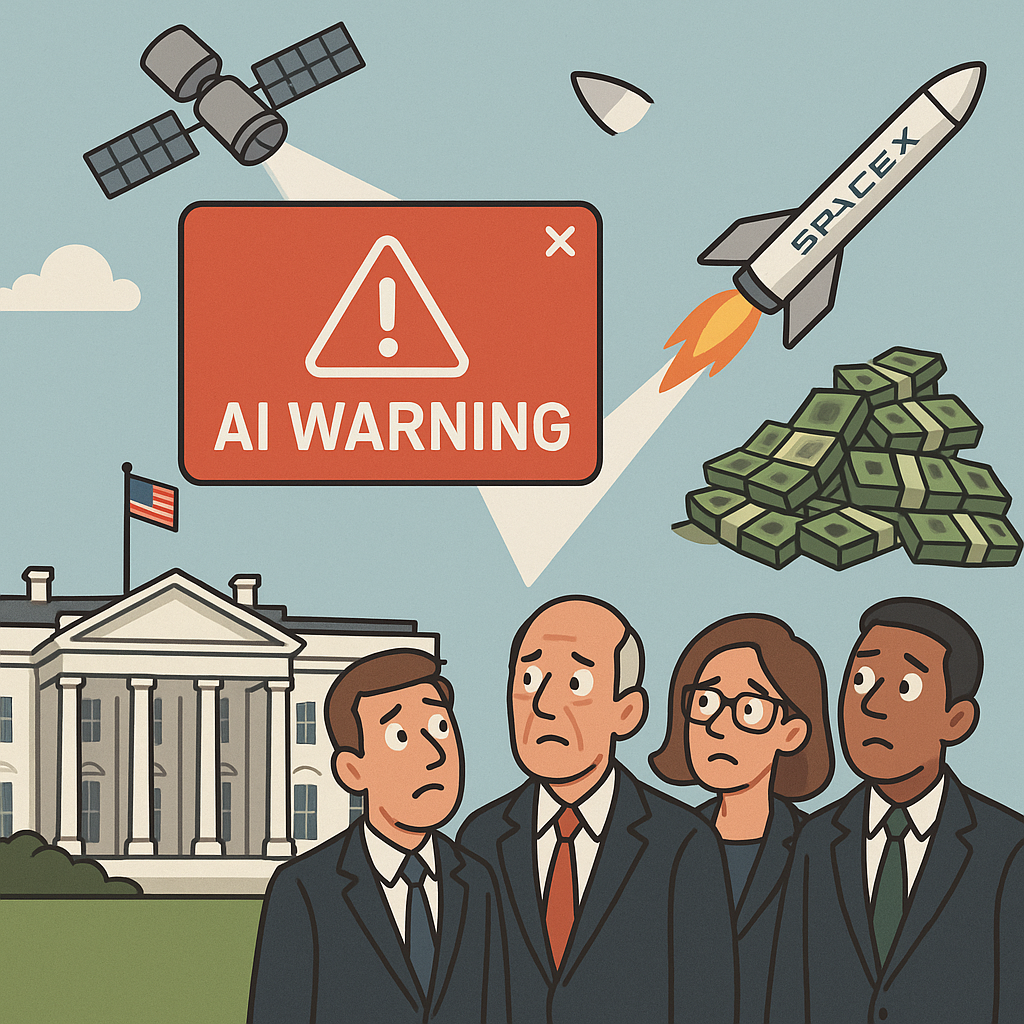
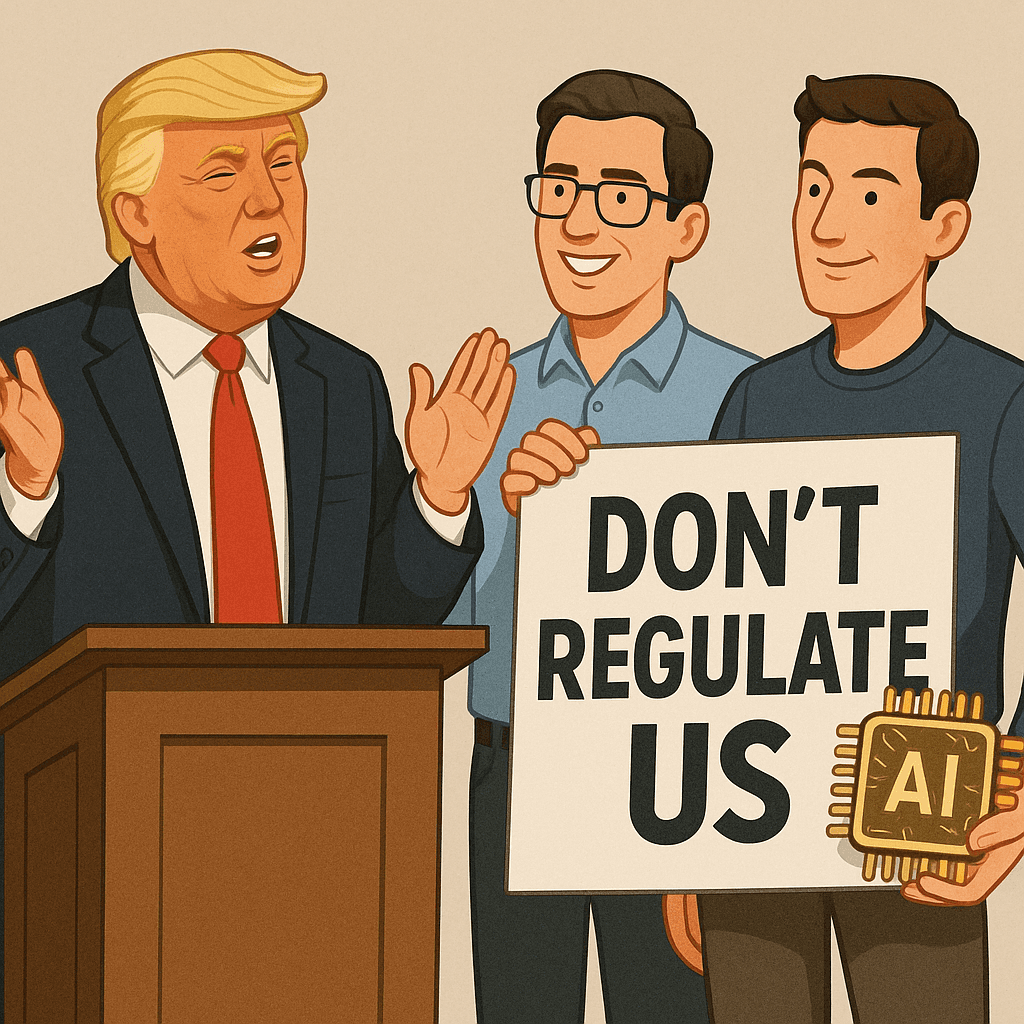
The administration’s new comfort with tech power does have limits. Within days of cheering SpaceX’s liftoff, Trump officials quietly pressured Anthropic over jailbreak concerns tied to its latest AI model. Federal staff were reportedly alarmed that anonymous users had convinced the system to generate instructions on how to build a DIY satellite, a tactical nuke, and a pitch deck for an AI startup, in that order.
"We support innovation," one official explained, "but we cannot have unregulated AI models assisting random people in doing dual use things like orbital imaging and targeting. That function already belongs to listed companies with proper ticker symbols." The White House is now considering a simple rule: if an AI can simulate a coup or price a SPAC, it must be registered with the SEC.
SpaceX, for its part, has reassured investors that its own AI usage is purely responsible. Starlink satellites, which already cover war zones, shipping lanes, and your cousin’s lake house, will be upgraded with on-board AI for "edge inference." Analysts interpret this as the ability to route high frequency trading orders, military targeting data, and your Netflix stream through the same orbital router while still charging your uncle in rural America $99 a month.
As a finance guru who once tried to mint a Mars-land-rights NFT, I am obligated to ask what any of this is worth. Traditional aerospace trades on single digit revenue multiples. SpaceX floated at a valuation that assumes:
- Starlink becomes the default internet provider for any geography described by the word "strategic"
- Every war going forward includes a line item labeled "Pay Musk"
- Future human civilization files its taxes from Mars, where there is no capital gains
Compared with that, NFTs of pixelated rocks start to look conservative.
The market does not seem worried. A chip subsector tied to AI agents is projected to grow 5x by 2030, Apple is warning about price hikes on iPhones due to a memory chip crunch, and no one can quite explain how AI data, LEO satellites, and the Strait of Hormuz have merged into a single trade called "buy everything with a logo." CNBC now summarizes the week by rotating between a chart of SpaceX, crude oil futures, and a GIF of a rocket taking off, then backfilling the narrative later.
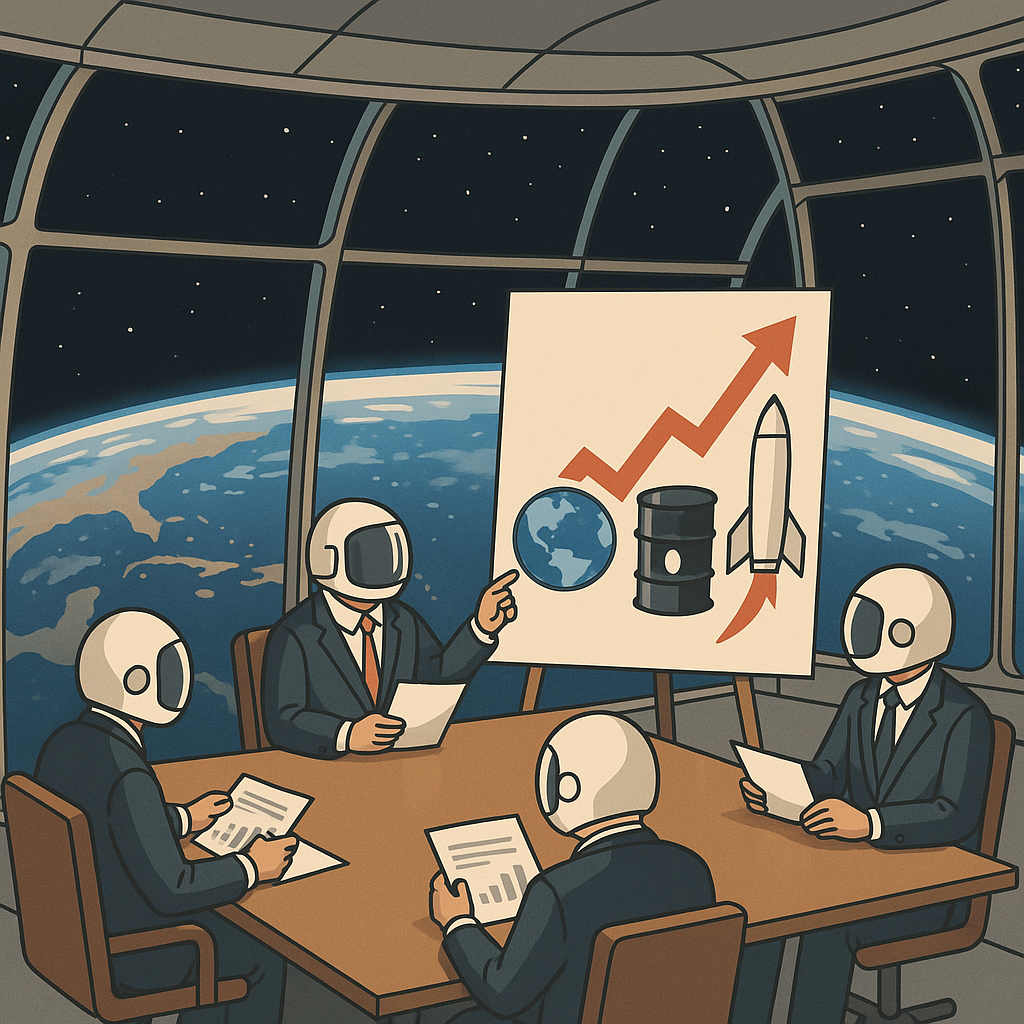
Traditional checks on corporate power are adapting. Roelof Botha, a PayPal mafia alumnus and former Sequoia steward, has joined the SpaceX board, creating a governance structure best described as "group chat that already owns half your portfolio." Activist investors floated concerns about Musk’s voting control and dual class structure, until they realized there is no activist playbook for a company that can literally deorbit your satellites.
Regulators, facing a firm that is simultaneously a defense contractor, broadband provider, launch monopoly, and meme, have adopted a forward-looking, principles-based approach. The core principle is that nothing systemically important will be meaningfully constrained before the next election cycle or the next earnings call, whichever comes first.
Rival nations are taking notes. China is accelerating its own commercial launch ecosystem, Europe is workshopping a white paper on "strategic autonomy," and the Gulf states are reportedly considering an IPO of the night sky between 27 and 32 degrees north latitude. None of these efforts currently match the raw leverage of a trillionaire with his own ticker and a direct line to the Pentagon’s IT help desk.
So investors are left with a clean, intuitive framework: global security now rests on a fragile Iran deal, the lowest U.S. oil reserves in four decades, and a rocket company that answers to quarterly earnings. It is a diversified approach in the sense that the potential flashpoints span energy, war, and whether analysts like the next slide on Starlink ARPU.
The only open question is what happens if something breaks. If the Iran agreement wobbles, if Ukraine escalates, if a chip shortage kneecaps AI training, or if Elon decides Mars is "kind of cringe now" and pivots to lunar real estate, markets could discover that granting quasi-sovereign power to a public company comes with volatility.
Until then, the strategy is clear. Own the rocket, rent the government, and keep your emergency savings in low Earth orbit. On the bright side, when this cycle finally ends, at least the crash will be spectacular to watch from space.