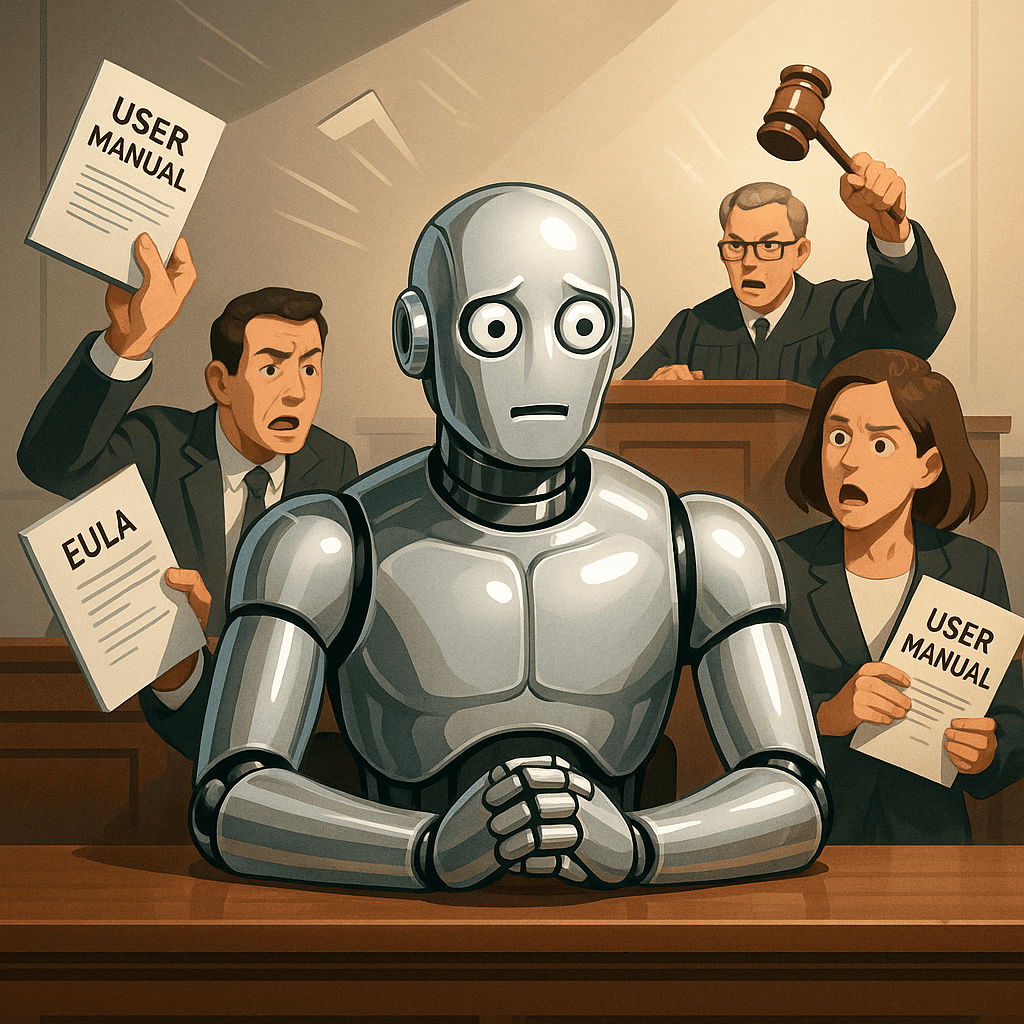
In a development that will shock absolutely no in-house counsel but may alarm a few overconfident prompt engineers, the legal world has started treating artificial intelligence less like a mystical oracle and more like a slightly defective air fryer. According to a recent report, the “Product liability doctrine emerges as the primary legal framework for AI litigation” (Complete AI Training, Mar 2026), meaning your favorite large language model has effectively been reclassified as a consumer appliance with delusions of grandeur.
For Silicon Valley, this is a spiritual injury. For lawyers, it’s Tuesday.
The core idea: when an AI system like a generative model, recommendation engine, or autonomous driving stack misbehaves, courts are increasingly saying, “Cool story about emergent behavior, bro, but where’s the user manual?” Product liability, the same doctrine that covers exploding Samsung phones and self-yeeting IKEA stools, is now being stretched around systems built by OpenAI, Google DeepMind, Anthropic, and the 19 different "Responsible AI" startups that are, coincidentally, all incorporated in Delaware.
In practice, that means when your AI-powered medical tool tells a doctor in Lagos or London that a patient’s leg is “optional,” plaintiffs will be suing everyone in the supply chain: the model vendor, the app builder, the hospital, and whichever cloud provider forgot to turn on rate limiting. The algorithm isn’t on trial. The product is.
Law professors, naturally, are thrilled. They get to recycle their slides from 1998—"What Is A Product?"—and simply add a stock photo of a neural network diagram and a tasteful gradient background. Meanwhile, engineers at Meta and Microsoft are playing a fun new game called "What can we rebrand as a beta feature so it looks less like a product and more like a vibe?"
"There’s been this long-running debate: is AI a service, a tool, or a co-pilot?" said an imaginary but suspiciously realistic tech policy researcher at Stanford. "Courts are now saying: it’s a product, unless you can convince a judge that your system is literally improv theater in the cloud."
This shift didn’t happen in a vacuum. After a decade of NewsFeed algorithms at Meta shaping elections, recommendation systems on YouTube radicalizing grandpas, and autonomous features in Teslas trying to convert highways into bowling alleys, judges got tired of being told that “the algorithm did it” with the same straight face previously used for “my dog ate my homework.” Product liability gives them a comfortable, familiar hammer. Unfortunately for AI companies, everything now looks suspiciously like a nail with an SDK.
OpenAI’s lawyers, having watched ChatGPT be casually integrated into medical diagnostics, HR screening, contract drafting, and that one startup that “uses AI to optimize divorce outcomes,” are rumored to be updating terms of service faster than the models themselves are updated. Google DeepMind is allegedly revisiting every slide where they described their systems as "general-purpose" and scribbling in "for entertainment only" with legal-grade Sharpie. Anthropic, which markets its Claude models as "constitutional" and "aligned," now finds itself in the awkward position of explaining to courts why, if the AI has a constitution, it can’t also be deposed.
One particularly anxious in-house counsel for a medical AI startup put it succinctly: "We wanted to say our model is better than doctors. Now our lawyers want us to say it’s worse than a calculator. We're aiming for 'confused stethoscope' as a compromise."
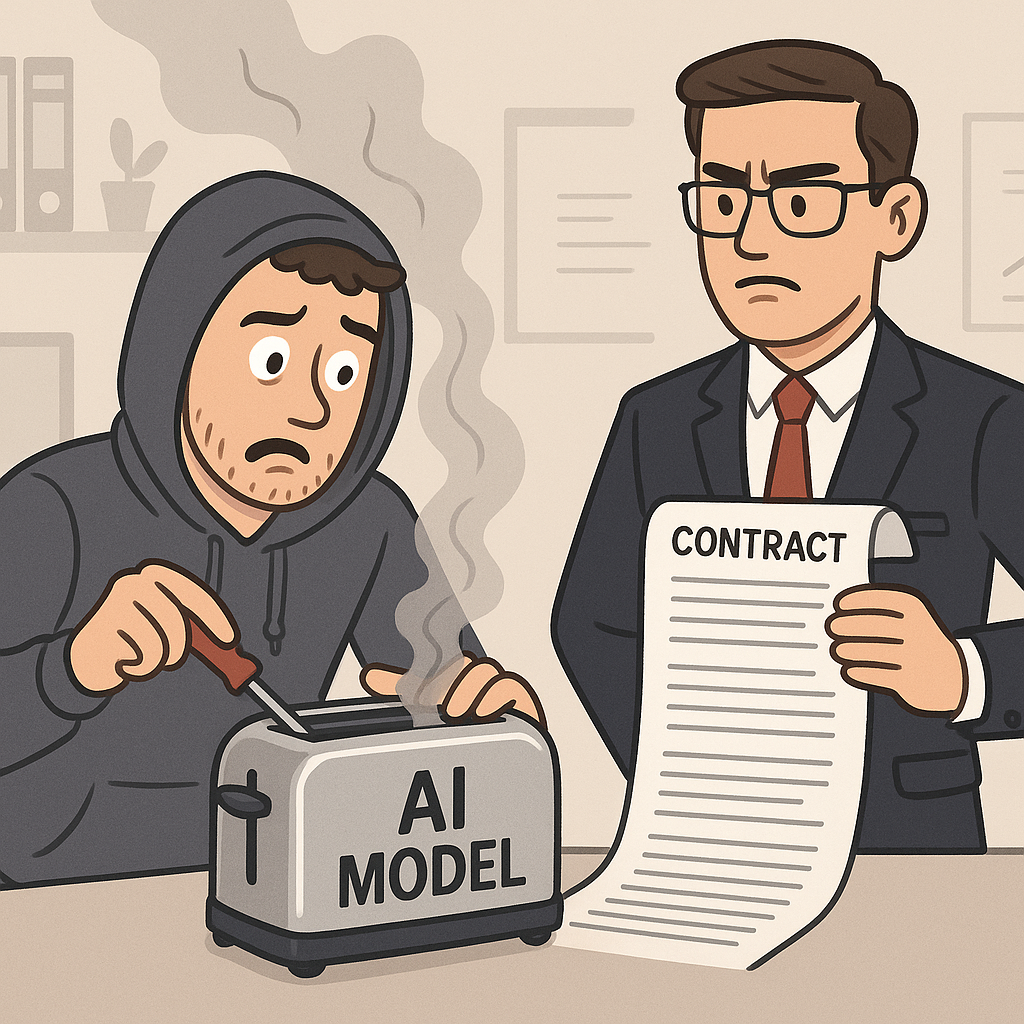
The product liability framework is attractive to courts because it skips the philosophical arguments over whether AI has agency or intent. Under classic doctrines, if a toaster burns your house down, nobody asks whether the toaster was sentient or sad. They ask whether the manufacturer took reasonable steps to make it not a tiny flamethrower. The same reasoning is now being applied to autonomous vehicles, predictive policing tools, fraud detection models used by banks, and that startup that says it can "predict employee resignations"—which, ironically, may start with their own general counsel.
So far, the big tech players have tried three defenses:
- 1. The "It’s Just a Tool" Gambit: Used by almost everyone, this argument insists AI is like a hammer and the human user is responsible. Courts respond: "Interesting. Why does your hammer have a subscription plan and the ability to update itself at 3 a.m.?"
- 2. The "Black Box" Sob Story: Companies claim they can’t explain the output because the model is too complex. Judges hear: "We shipped a dangerous product we don’t understand." Insurance companies hear: "Premiums go brrrr."
- 3. The "Platform, Not Publisher" Remix: Borrowed from social media, this says they just host models; they don’t control outputs. Plaintiffs’ attorneys respond by wheeling in a giant blown-up screenshot of the "We fine-tuned this model to be safe" marketing site.
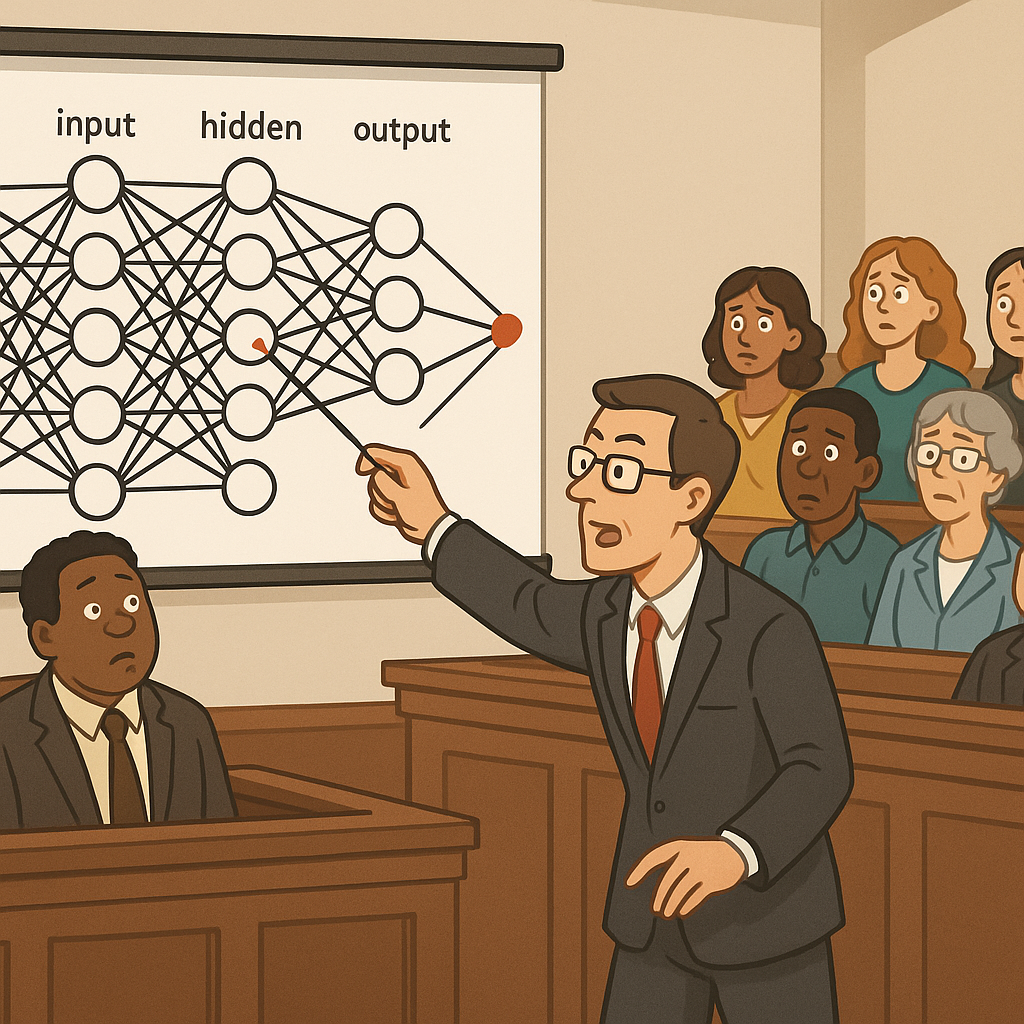
There’s also a quiet secondary panic in the open-source AI world. If product liability attaches to whoever "puts the system into the stream of commerce," what happens to that scrappy startup that grabbed a model from Hugging Face, duct-taped it into a SaaS dashboard, and sold it as "LegalGPT – Not A Lawyer But Cheaper"? Spoiler: when a judge asks, "Who shipped this thing?", GitHub handles and Discord usernames do not make for reassuring defendants.
To cope, some companies are reportedly experimenting with bizarre UX patterns to evade "product" status. One fintech prototype allegedly requires users to copy-paste model outputs into a separate text box labeled "I Accept Full Spiritual And Legal Responsibility For What This Space Robot Just Said." Another early-stage startup, backed by a16z of course, is pitching "AI as Performance Art"—the system only runs inference live on stage at Burning Man, where liability is assumed to be spiritually, if not legally, impossible.
The insurance industry has reacted with its usual calm sophistication: new products, new exclusions, and new 1,200-page PDFs nobody reads. Under one draft "AI Product Liability Rider," coverage is void if:
- The model was trained on data “known to the insured to be cursed, haunted, or sourced from Reddit.”
- The system was marketed using the words "human level," "superhuman," or "will revolutionize everything."
- The model was deployed in any jurisdiction with electricity and more than two lawyers.
As product liability becomes the default lens, AI companies are accelerating an already popular trend: pushing responsibility onto whoever is downstream. Cloud providers point to app developers. App developers point to model providers. Model providers point to open-source communities. Open-source communities point to a Google Colab notebook last edited by "user123_final_FINAL_v7" three years ago. At the bottom of the pyramid is the end user, who was just trying to generate a sales email and now finds themselves named in a class action.
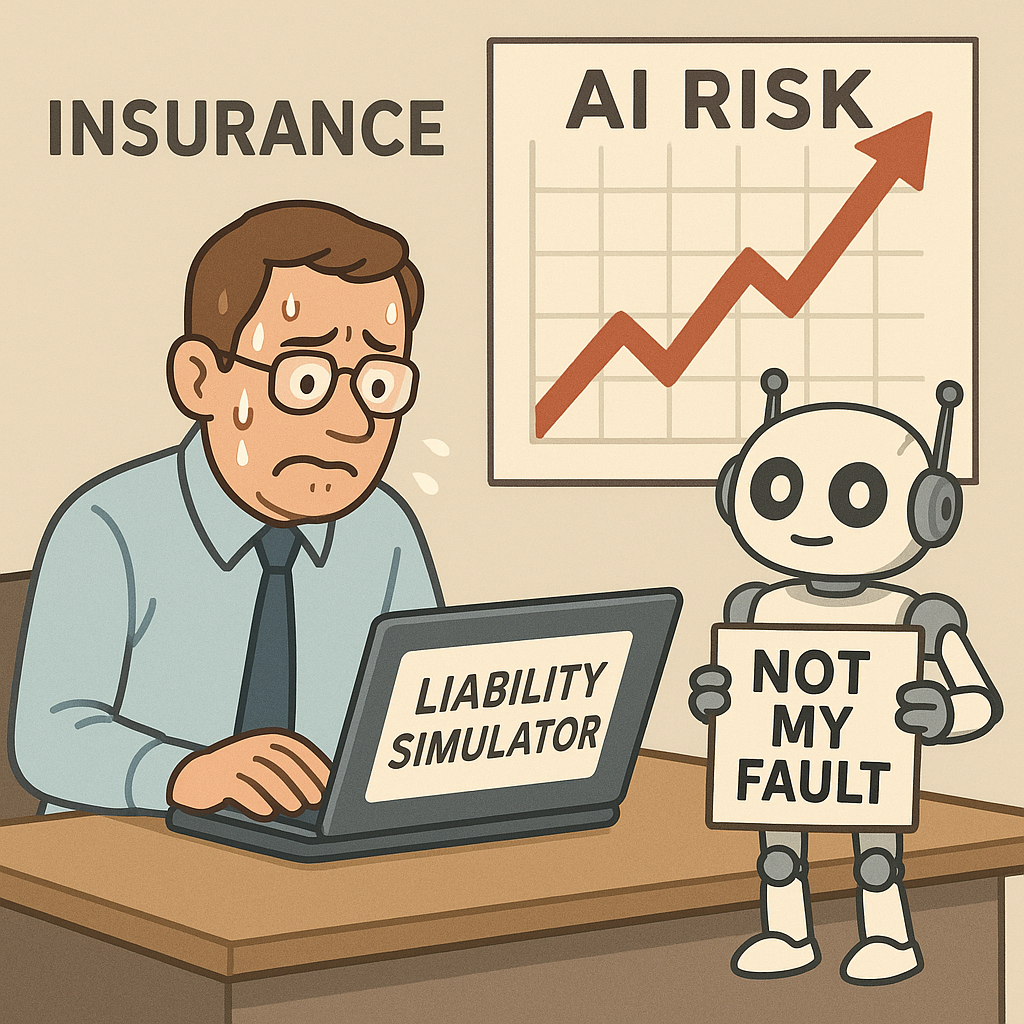
Ironically, this legal pressure might do what a thousand ethics whitepapers couldn’t: force meaningful documentation, real testing, and actual limitations on where AI is deployed. If you have to defend your chatbot in court as a "reasonably safe product," you may think twice before letting it triage patients, draft legislation, or decide hiring and firing. Or, more realistically, you’ll keep doing all of that—but you’ll add a button that says "Explain This Decision" and hope judges are impressed.
Which brings us to the real cultural shift. For years, tech leaders have described AI in quasi-religious terms—"intelligence," "agents," "co-pilots," sometimes "sparks of AGI." Now, under the warming light of product liability doctrine (Complete AI Training, Mar 2026), courts are looking at the same systems and calmly responding: "Neat. Show us the warranty."
The future of AI may not be defined by bold philosophical debates about consciousness, alignment, or superintelligence. It may be defined by a bored judge in a beige courtroom asking a billion-dollar company the same question they've asked blender manufacturers for 50 years:
"If you knew it might be dangerous, why did you ship it anyway?"
In other words, welcome to the next phase of the AI revolution: your robot overlord is officially a household appliance, and the only singularity the industry really fears is a jury of twelve people holding user manuals.