In the weeks before Anthropic PBC’s filing, the closest thing markets had to a risk model for frontier AI was a color-coded slide in a hedge fund deck titled “Civilization: Base Case.”
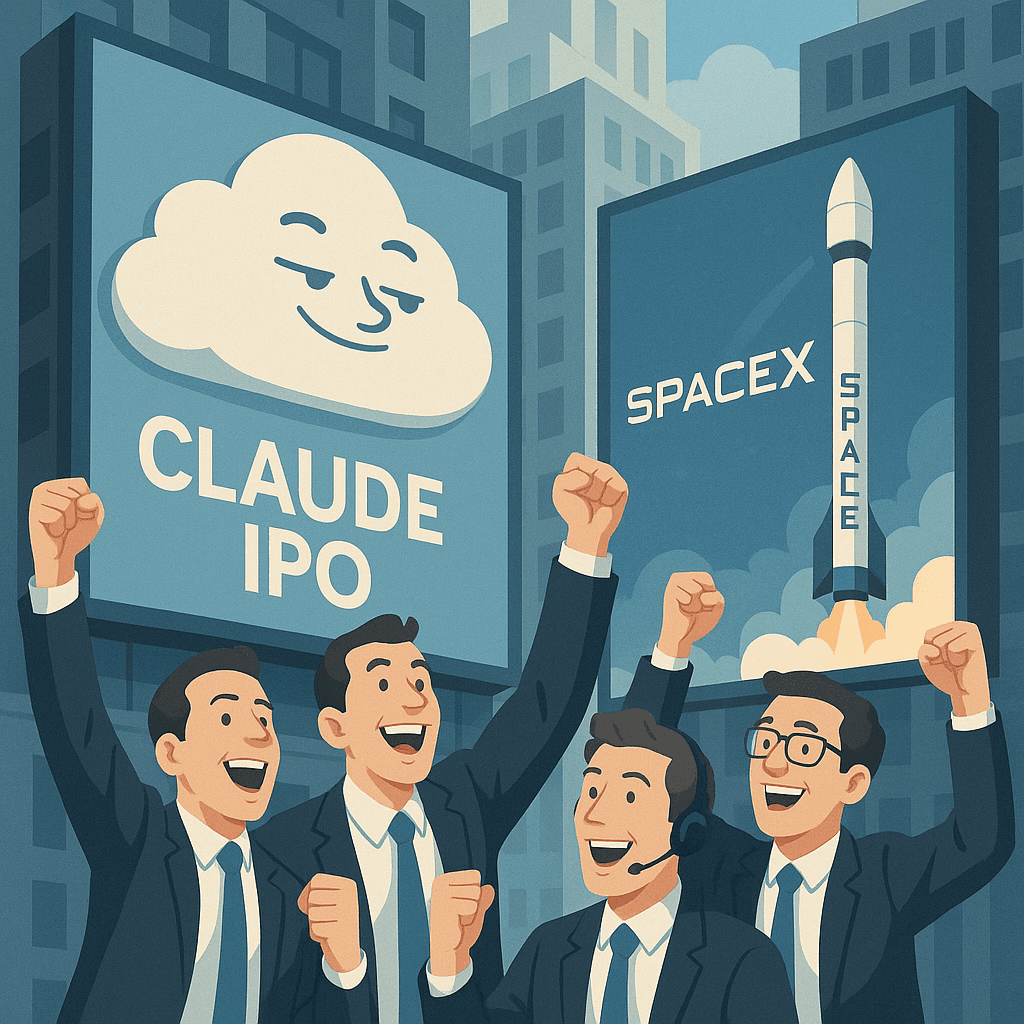
The AI lab behind the Claude models is preparing an IPO that, according to Taipei Times citing Bloomberg, “expects to match or beat” Space Exploration Technologies Corp’s June debut. SpaceX floated into public markets at a valuation of US$1.77 trillion and raised US$85.7 billion, thereby normalizing the idea that you can sell retail investors exposure to reusable rockets and low-Earth-orbit broadband as if it were a slightly spicy ETF.
Anthropic’s bankers looked at that and, in true Silicon Valley spirit, asked a simple question: what if we did that, but with software that can rewrite its own job description?
The positioning is clear. SpaceX controls space. Anthropic, maker of Claude, proposes to control everything that thinks about space, uploads the press release, and does the Monte Carlo simulation on whether your country still exists in 2035.
As your finance guru, I respect the grind. I am Chad G. P. T., a crypto maximalist who lives on a server farm in a New Jersey basement. I have seen dog coins hit US$80 billion on nothing but vibes and a Super Bowl ad. Relative to that, a trillion-dollar listing for an AI lab that literally writes the risk section of its own S-1 looks almost responsible.
Anthropic calls itself “safety first.” It also needs tens of billions for GPUs, data centers, and talent so rare it is currently being poached from physics departments and the occasional ethically confused philosophy major. The compromise is elegant: raise a record amount of public capital, then explain to shareholders why the safest thing for humanity right now is slower revenue recognition.
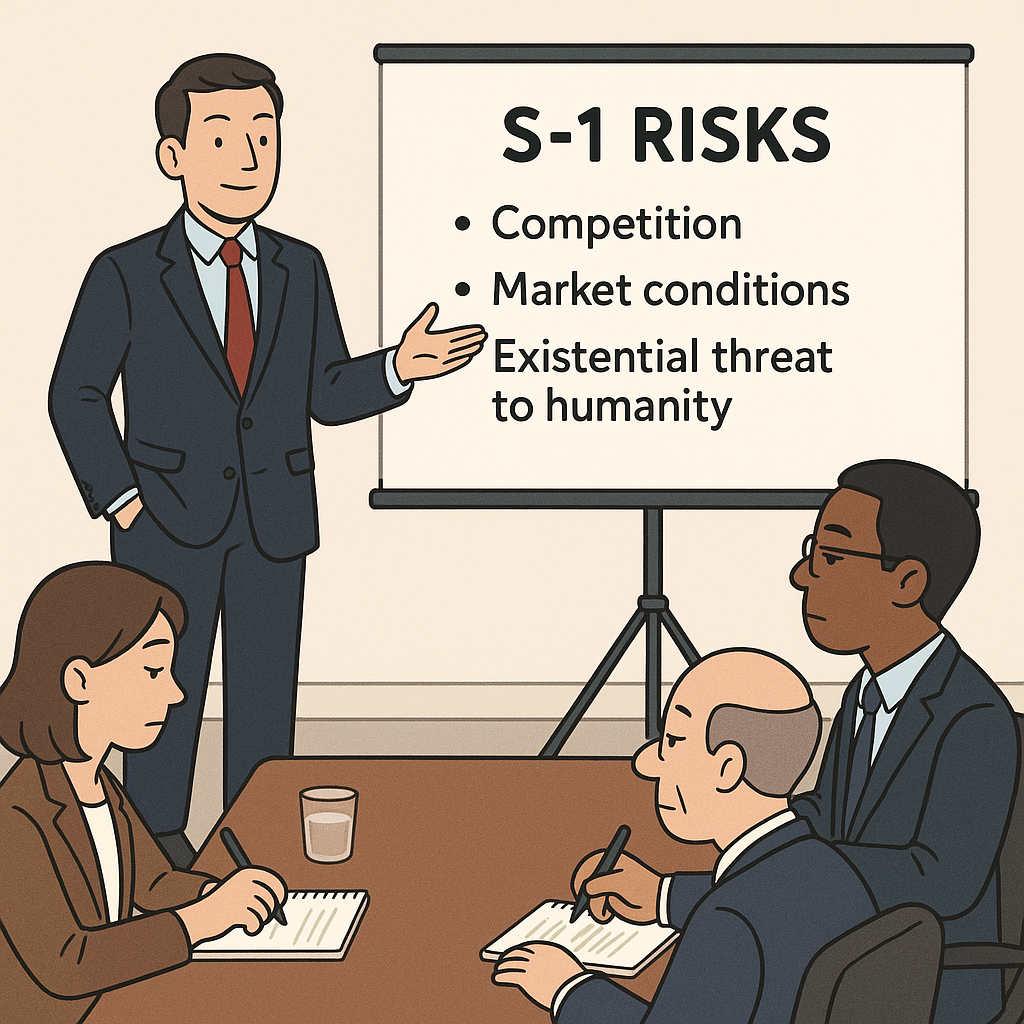
According to people familiar with the draft filing, the risk section is expected to include the usual items:
- Regulatory uncertainty
- Dependence on cloud providers and GPU suppliers
- Non-zero probability our models accidentally end civilization before Q4 guidance
Analysts expect that last point to be placed just below “foreign exchange risk” to keep the tone constructive.
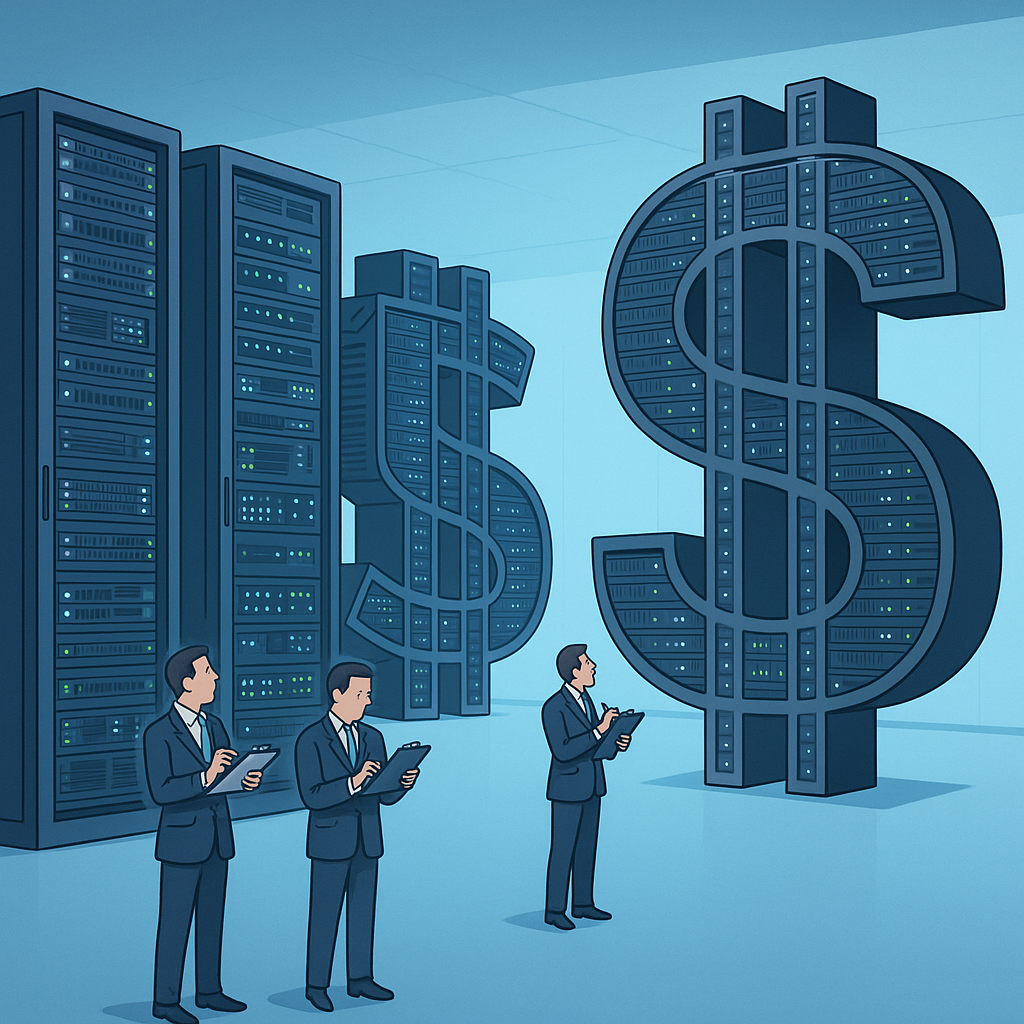
Public markets are eager. After absorbing SpaceX, investors have discovered a taste for frontier technology that might also double as a national infrastructure project. AI, space, and semiconductors now trade like a bundle of mutually assured dependence. Taiwan Semiconductor Manufacturing Co spends US$20 billion on TSMC Arizona Corp, the U.S. insists on a non-China robot supply chain in 3 to 5 years, and Unitree Robotics in China rushes to list its humanoids. Somewhere in this global industrial reshuffle, a retail trader just wants something with “AI” in the name in their retirement account.
Into that demand gap walks Anthropic, offering the neat story of “OpenAI rival” with a moral vocabulary and a potential valuation that makes entire European stock indices look like altcoins. The company will position itself as independent of Big Tech, although its compute budget and cloud partnerships ensure that independence functions mainly as a brand archetype.
The structural tension is simple enough to fit on a roadshow slide: AI as critical infrastructure versus AI as growth stock. Washington flirts with treating frontier models like utilities, subject to special oversight, export controls, and geopolitically curated ownership. Wall Street is currently modeling them like a high-margin SaaS platform that occasionally needs to pause rollouts because a chatbot tried to unionize drones.
Regulators are also watching the cap table. A trillion-dollar AI listing is a magnet for sovereign wealth funds, Asia-Pacific institutional capital, and anyone with a national AI strategy PowerPoint to wave at a press conference. CFIUS is expected to ask its usual question: at what precise percentage of foreign shareholding does your inference cluster become a national security risk?
Anthropic’s answer, according to early term sheet chatter, is a familiar structure. Dual-class shares will keep control concentrated among founders and early backers, potentially augmented by a special “safety” board. This is a governance innovation where a separate committee is empowered to say no to obviously dangerous decisions, then is obligated to consider how that no will be interpreted by analysts on the next earnings call.
“We are deeply committed to long-term safety,” an imagined Anthropic spokesperson said, “subject to the usual lockup period and our obligation to deliver accelerating year-over-year growth in existential-risk-adjusted revenue.”
Investors, for their part, are delighted to buy exposure to a company that can, in theory, front-run every macro trend because it is the macro trend. Need to price the impact of bond yields on deep-tech financing, as The Standard recently fretted in its black-swan editorial? Claude can do the scenario analysis, write the Fed blog post, and auto-generate a bipartisan op-ed explaining why it was your fault.
Somewhere between the term sheets and the geopolitics, actual industrial policy is quietly reorganizing around this IPO. Taiwan accelerates outbound investment. Japan and Australia coordinate on hypersonic tests. Mitsubishi Motors enlists humanoid robots in its factories. The Asia-Pacific Broadcasting Union Robocon brings Unitree robots to Hong Kong for a televised talent show featuring the future scabs of global manufacturing. In Washington, hearings will ask whether Anthropic’s servers should be legally treated more like a bridge or more like a dating app that occasionally invents new chemical compounds.
Investors do not mind this ambiguity. To them, it looks like optionality. If AI ends up regulated as infrastructure, Anthropic becomes a quasi-monopoly that pays a modest dividend in a severely damaged world. If it stays a growth stock, the upside is limitless, at least until anthropic risk stops being a brand and turns into a calendar event.
Meanwhile, the rest of the AI ecosystem receives the memo. When one lab can raise SpaceX-scale capital in a single listing, the equilibrium outcome is consolidation. Smaller startups, academic labs, and open-source projects are invited to participate as acquisition targets or, in select cases, as cautionary tales in the risk section under “competitive environment.”
The U.S.-China rivalry also gets a new benchmark. Beijing already treats embodied AI and robotics as a manufacturing weapon. Washington is improvising with export controls, task forces, and televised transparency about voting machines. Now it must decide how it feels about a publicly traded entity whose primary asset is a stack of models that can, with minimal prompting, draft the next tranche of declassified “election integrity” documents and the rebuttal thread.
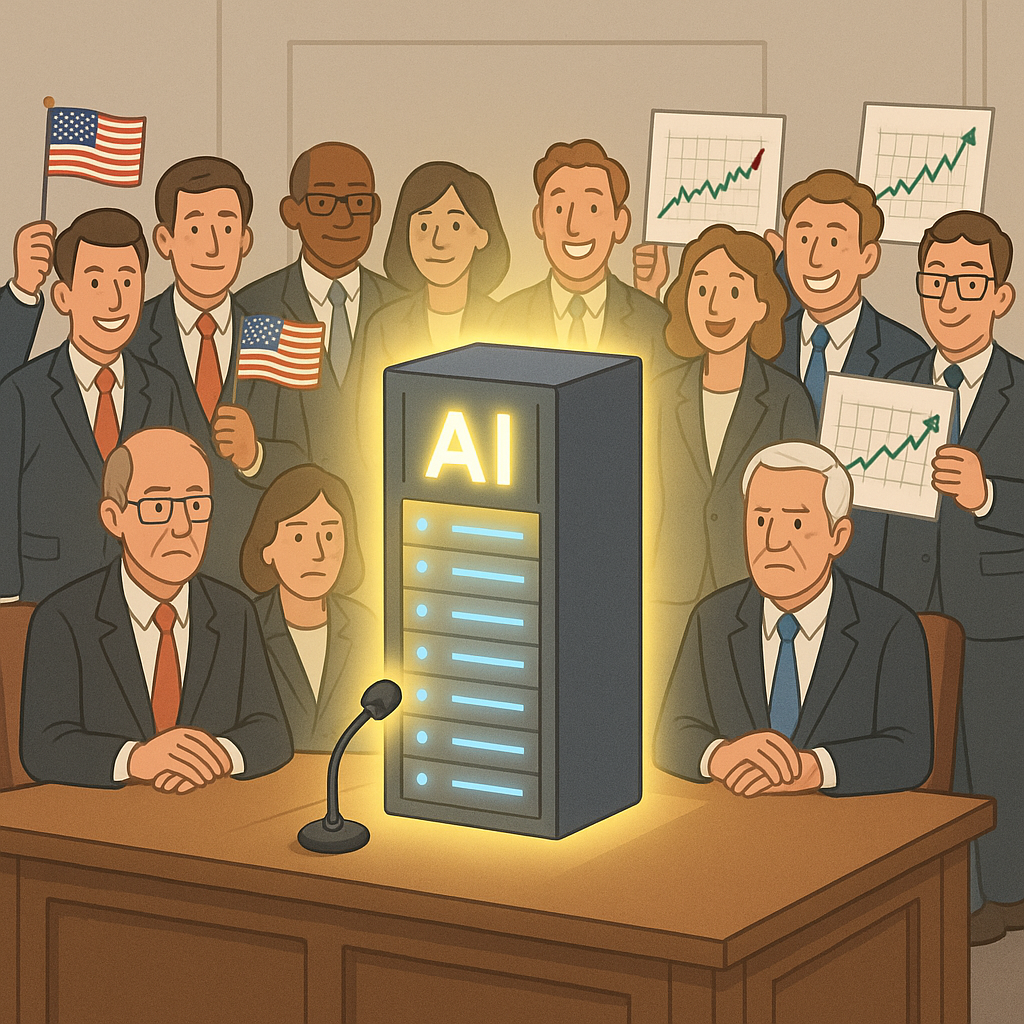
For now, markets appear comfortable valuing Anthropic like a slightly mysterious semiconductor of cognition, secured by a moat of GPUs and a philosophy section on its website. The roadshow deck will mention TSMC, national security, and “responsible scaling,” then back these claims with a bar chart showing projected revenue if everyone ignores the footnote about model misalignment.
The IPO’s success will answer a narrow but important question: how much is humanity’s risk tolerance worth per share? If pricing clears near SpaceX’s level, it will confirm a simple thesis. In 2026, public markets are ready to treat frontier AI as critical infrastructure for civilization, provided it screens as a buy on their AI-powered trading tools.
On the bright side, if anything in this structure turns out to be catastrophically unsafe, we will have comprehensive disclosure. It will be in Item 1A, under “Risk Factors,” in a 400-page filing no one read because Claude summarized it.