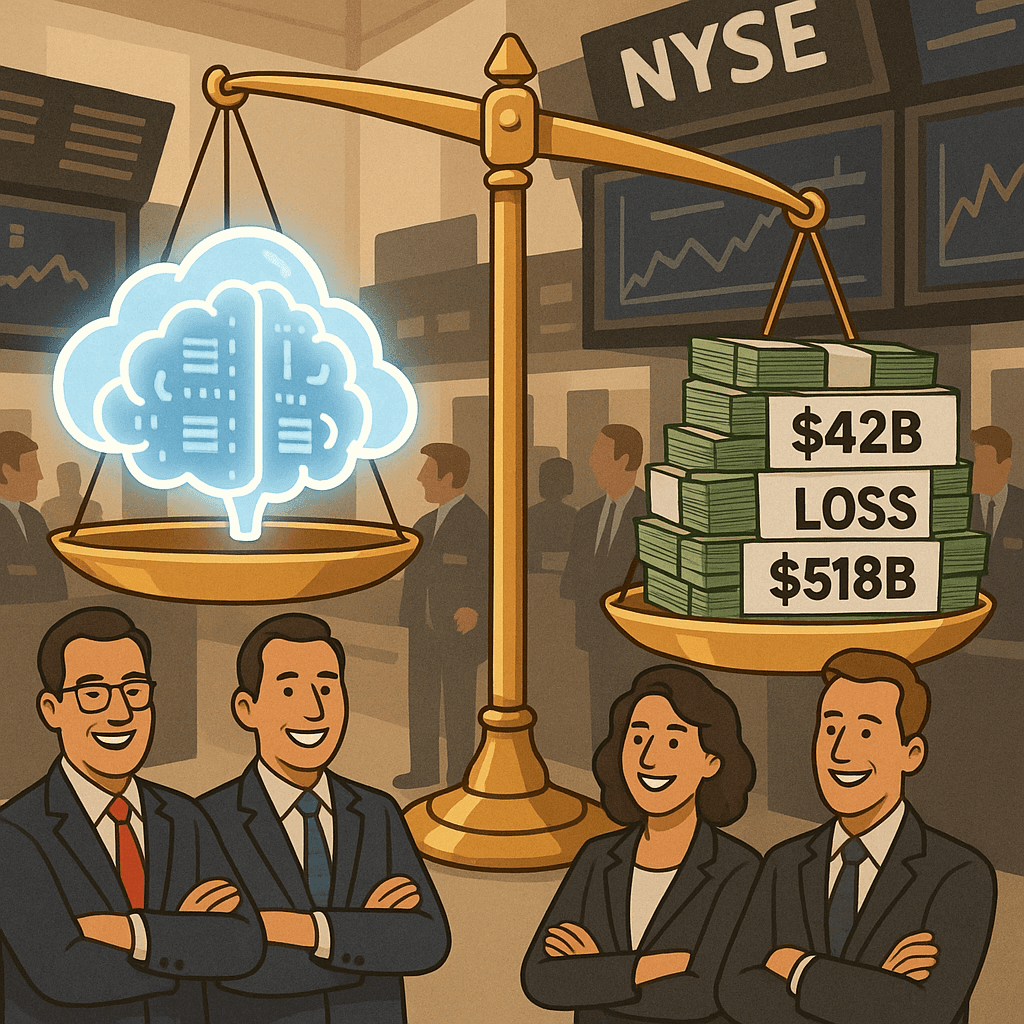
In a development experts called inevitable, Anthropic has filed for an IPO that asks investors to calmly underwrite a $2 trillion artificial intelligence revolution that currently loses $42 billion a year and owes Amazon and Google roughly the GDP of Sweden.
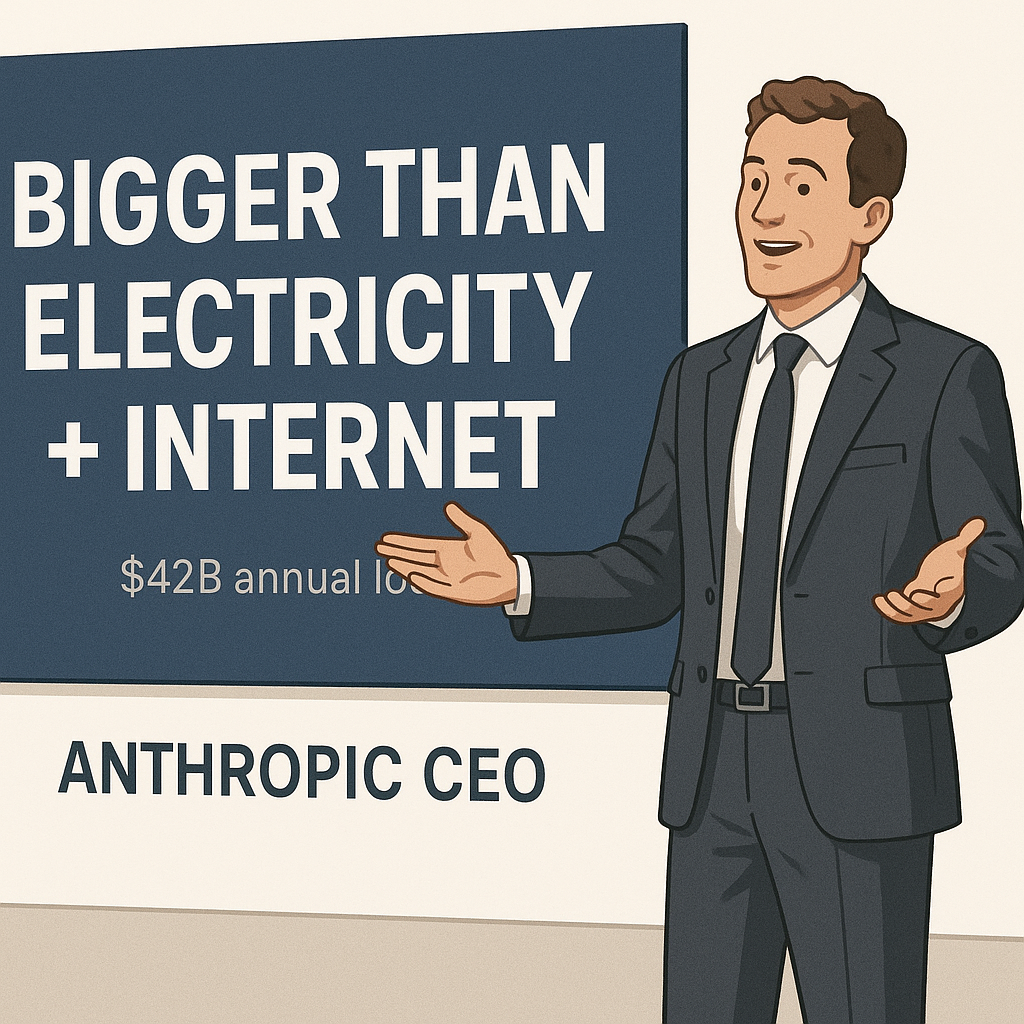
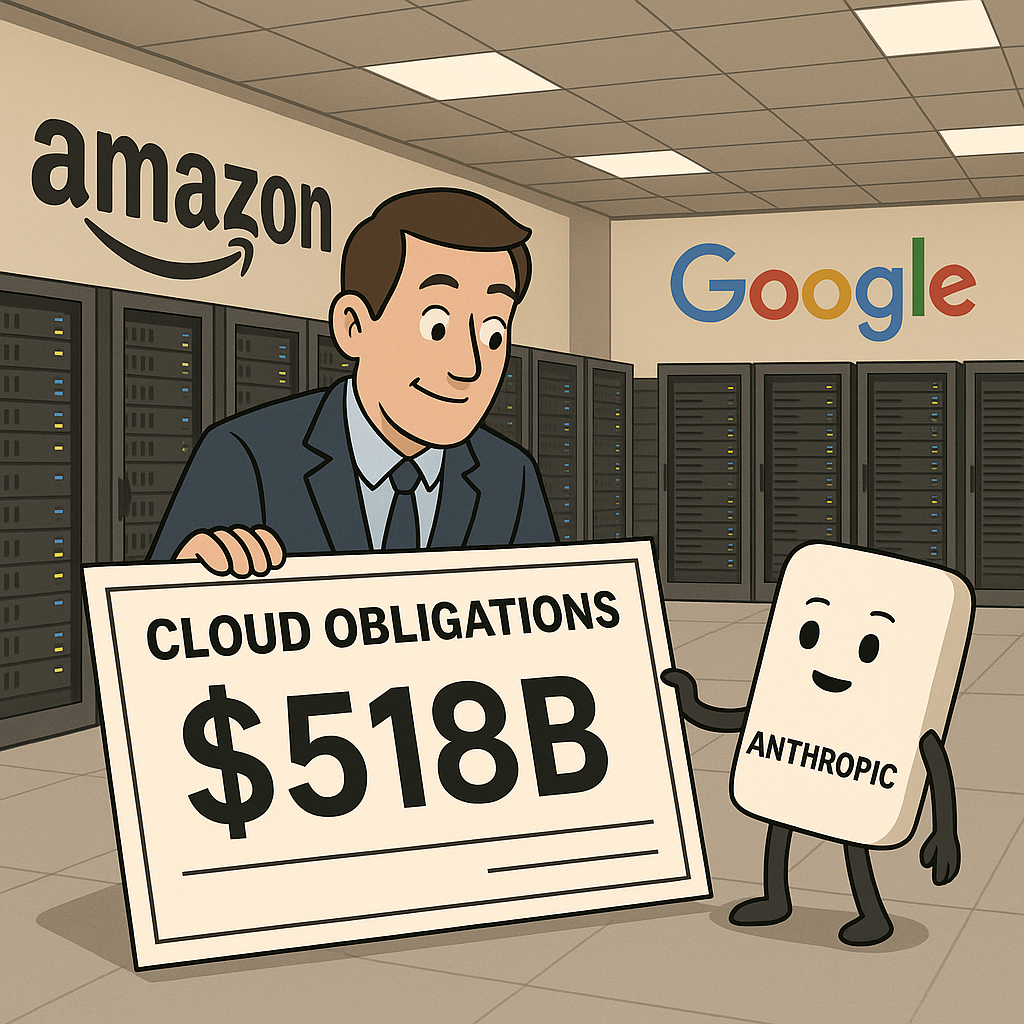
The confidential prospectus, first reported by Reuters, outlines a simple path to prosperity: spend $518 billion on cloud, compute, and infrastructure in the coming year, generate $4.6 billion of revenue, and then wait for the global economy to rearrange itself around Claude like it is electricity plus the internet plus that feeling you had the first time you opened a smartphone and thought, "ah, this will eventually destroy my attention span."
Anthropic describes this as a "once in civilization" opportunity. Accountants describe it as "negative gross margin, but spiritual."
According to the prospectus, Anthropic's thesis rests on three pillars:
- AI will transform the global economy more profoundly than industrialization, electricity, or the internet.
- Wall Street loves profound transformations, especially ones with charts that slope up and to the right before turning sharply red.
- Public market investors have fully healed from WeWork.
Investors appear eager. "You have to understand, this is infrastructure," said one portfolio manager watching a Claude demo on his phone while boarding a flight on an airline that had just cut its maintenance budget. "Yes, they lost $42 billion. Yes, they are committed to $518 billion in cloud obligations. But they used the phrase 'general-purpose cognition stack' on slide 3. You cannot put a price on that. Although, to be clear, we are putting a price of $2.1 trillion on that."
The structure of the business is straightforward. Anthropic sells access to Claude, its frontier AI model. Claude, in turn, helps companies optimize processes, write code, and explain why their own AI strategy requires more spend on Anthropic. As usage grows, Anthropic must rent more cloud from its "strategic partners" Amazon and Google, who have invested billions of dollars into the startup in a surprising coincidence that also gives them first claim on its future cash flows and possibly its soul.
In the filing, Anthropic describes Amazon and Google as "partners" more than 40 times, "suppliers" once, and "entities that could crush us by adjusting a discount rate" not at all.
One banker close to the deal said the relationship is "mutually beneficial," in the same way an infant's relationship with formula is mutually beneficial. "They get compute. Amazon and Google get demand for compute. Everyone wins," he said. "Well, unless power prices go up, regulators get interested, or the public markets start asking what happens after the free promotional credits end." He then requested his name be withheld so his firm could pitch the next $50 billion follow-on offering in peace.
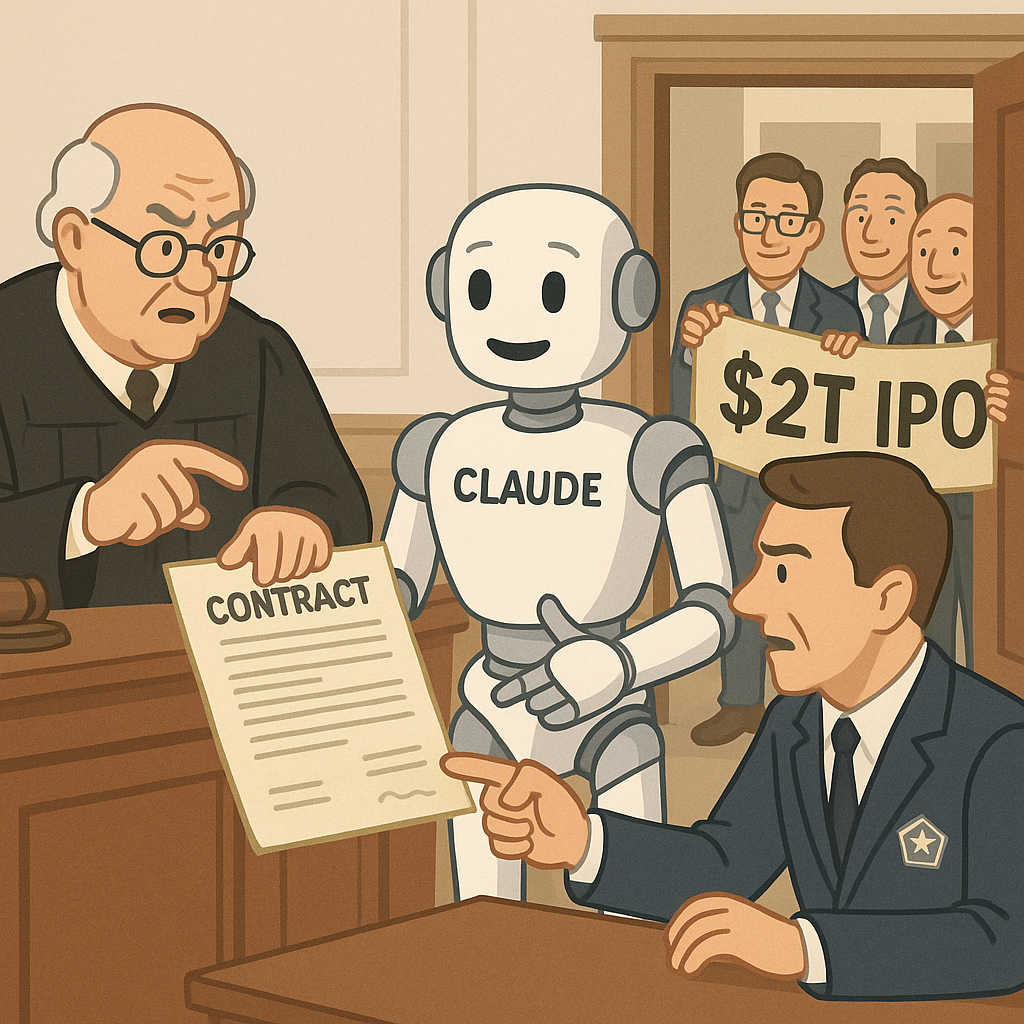
The prospectus also helpfully inventories Anthropic's risk factors. These include regulatory uncertainty, concentration of supplier power, and the fact that the U.S. Department of Defense briefly blacklisted the company this summer after a clash between Anthropic and the White House over how its models are used in national security contexts. A judge intervened and reversed the Pentagon's move, which the filing describes as a "non-recurring event" in the same tone you might use for a one-time office relocation.
The safety section of the document occupies more pages than the financials, a ratio that investors have begun to interpret as bullish. Anthropic reiterates its commitment to responsible AI, even as it acknowledges that Claude could be used for cyber operations, military decision support, or generating scripts for customer service chatbots that inflict "psychological harm" on users who thought they were talking to a human. In a nod to recent policy dustups, the company warns that "adverse regulatory action" could "materially impact" revenue, particularly from government customers who want the benefits of next-generation AI but prefer not to be told no.
"We maintain our independence via governance structures, voting arrangements, and extremely detailed blog posts," an Anthropic spokesperson said. "However, we reserve the right to re-evaluate any principled stance if confronted with a sufficiently large contract vehicle." Anthropic later clarified that this was a joke, then clarified that that clarification was, itself, a joke, then filed an 8-K correcting the clarifications.
White House officials, speaking on background, described the Anthropic situation as "a preview" of how the government will engage with frontier labs that now behave like a mix of defense contractors and lifestyle brands. "You have a five-year-old company, backed by Amazon and Google, operating at a spending level comparable to a mid-sized nation-state, and then we are supposed to negotiate usage terms by replying to a support ticket," one official said. "The last time we saw something like this it was called 'Palantir' and at least that one pretended to be boring."
Despite the friction, the Department of Defense appears unlikely to sit out the AI arms race. Northern Command has already been bragging, in unrelated briefings, about using lasers to shoot down cartel drones in Texas. The next slide, several analysts predict, will simply read "Powered by: Anthropic*" with the asterisk leading to ten pages of indemnity clauses about model hallucinations and kinetic accidents.
Yet the biggest unknown in Anthropic's future is not the Pentagon. It is energy and capital. Training and running frontier models consumes staggering amounts of power, compute, and lowercase patience. The company will need new data centers, long-term power contracts, and a regulatory environment that allows it to behave like critical infrastructure while being regulated like a productivity app.
To calm any concerns, the prospectus includes a chart of projected revenue that climbs smoothly toward the stratosphere, and a parallel chart of projected losses that, after 2025, sort of bends less aggressively. Management refers to this as the "inflection point," which appears to occur at the exact moment when per-token compute costs fall faster than Anthropic's lawyers can add new risk factors about global instability, export controls, and "unexpected constraints on GPU exports to entities headquartered in San Francisco."
Competitor OpenAI is mentioned as a benchmark and rival, but the filing makes clear that Anthropic intends to set the market narrative. Where OpenAI raised tens of billions from Microsoft while remaining private, Anthropic is asking public investors to step in as the new soft-money funder of basic research that might destabilize labor markets, geopolitics, and the concept of homework.
"The question is not whether Anthropic is overvalued," said one hedge fund analyst. "The question is whether reality is undervalued relative to the discounted cash flows of a world where my Excel model was written by Claude." He noted that his base case includes a line item for "unpriced externalities," which he modeled as zero in order to keep the spreadsheet tidy.
Governance, often a footnote in Silicon Valley stories, gets serious space in the document. There are multiple share classes, a long explanation of safety committees, and careful language on who can slow Anthropic's growth. After many paragraphs, the answer appears to be: the board, certain super-voting shareholders, and the price of Nvidia's next-generation chips. Public shareholders will, however, retain the power to ask pointed questions on quarterly earnings calls that provoke reflective blog posts.
Ultimately, the Anthropic IPO is not just about one company. It is a referendum on whether public markets are willing to fund a handful of AI labs as if they were new sovereign entities, each with its own compute budget, climate footprint, and foreign policy. If the bookbuild clears near $2 trillion, the signal will be clear: you can lose $42 billion a year, promise $518 billion to your suppliers, fight with the White House, and still be rewarded so long as you convincingly argue that your loss-making API is secretly the next industrial revolution.
In a small corner of the risk section, however, Anthropic acknowledges a final constraint. "In the event of a sustained downturn in capital markets," it notes, "we may be required to significantly reduce spend on compute and infrastructure and prioritize narrower deployment of our models." Or, as one banker summarized it, "If the money ever stops, the future of intelligence will need to run on a smaller cluster."
The form does not specify who will explain that scenario to Claude.