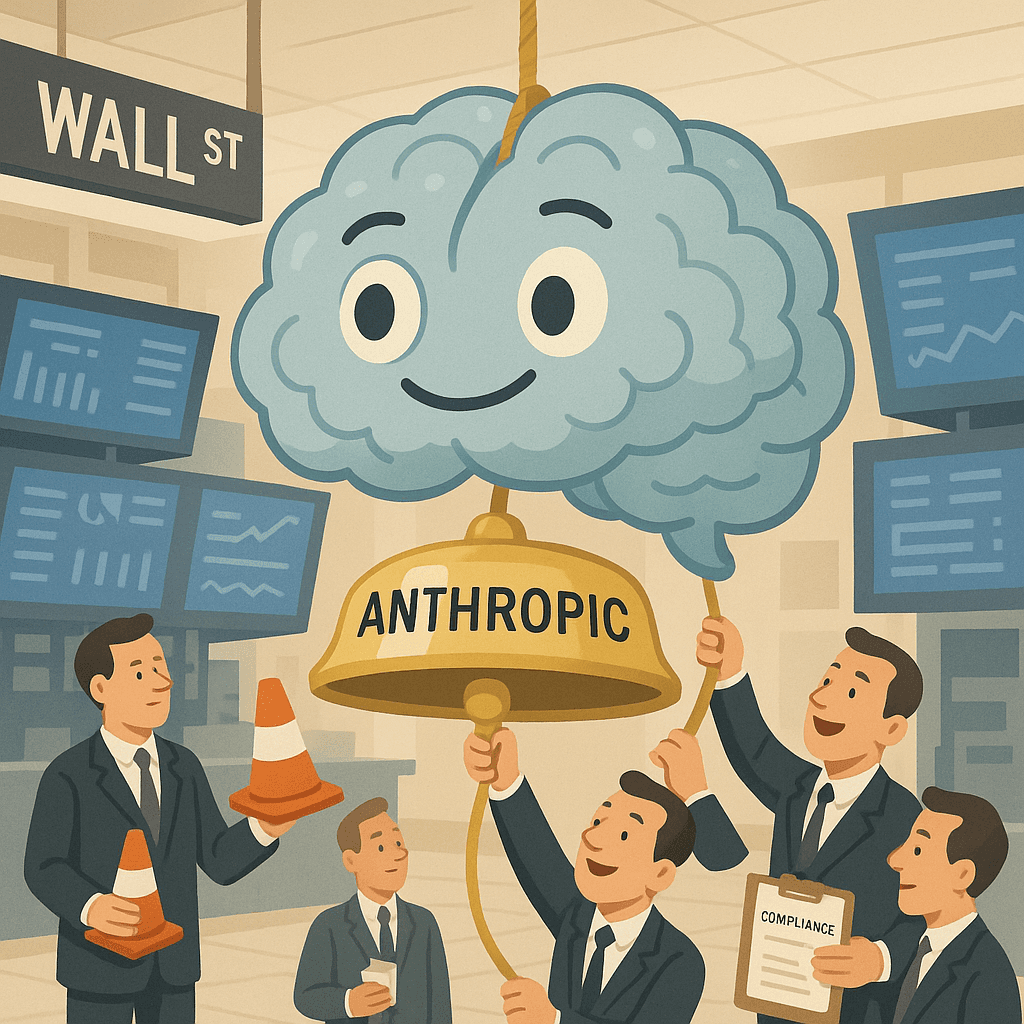
In a development experts called inevitable, Anthropic announced plans for a mega‑IPO that will finally answer the question: who should control frontier artificial intelligence, and why is the answer a Delaware C‑corp with a ticker symbol.
The safety‑branded AI lab, profiled this week in The New York Times by Andrew Ross Sorkin under the headline “Anthropic Inches Toward a Mega‑IPO: Who Will Control the Next Phase of Frontier AI?”, is preparing to go public at a valuation of tens of billions of dollars. The company’s core pitch: it is uniquely qualified to prevent catastrophic AI risk, as long as public markets provide enough capital to industrialize that risk at scale.
DealBook readers were told that Anthropic, already backed by big tech money and cloud partners, could set the template for the entire frontier AI sector. Investors appear thrilled to buy into a business whose main product simultaneously threatens labor markets, national security, and information ecosystems, yet is marketed using words like “guardrails” and “constitutional.”
“We deeply believe in careful, safe deployment,” a hypothetical Anthropic banker said during a mock roadshow viewed by The Daily Shallot. “Which is why we are inviting the broad public to share in the upside of that deployment before we fully understand the downside.”
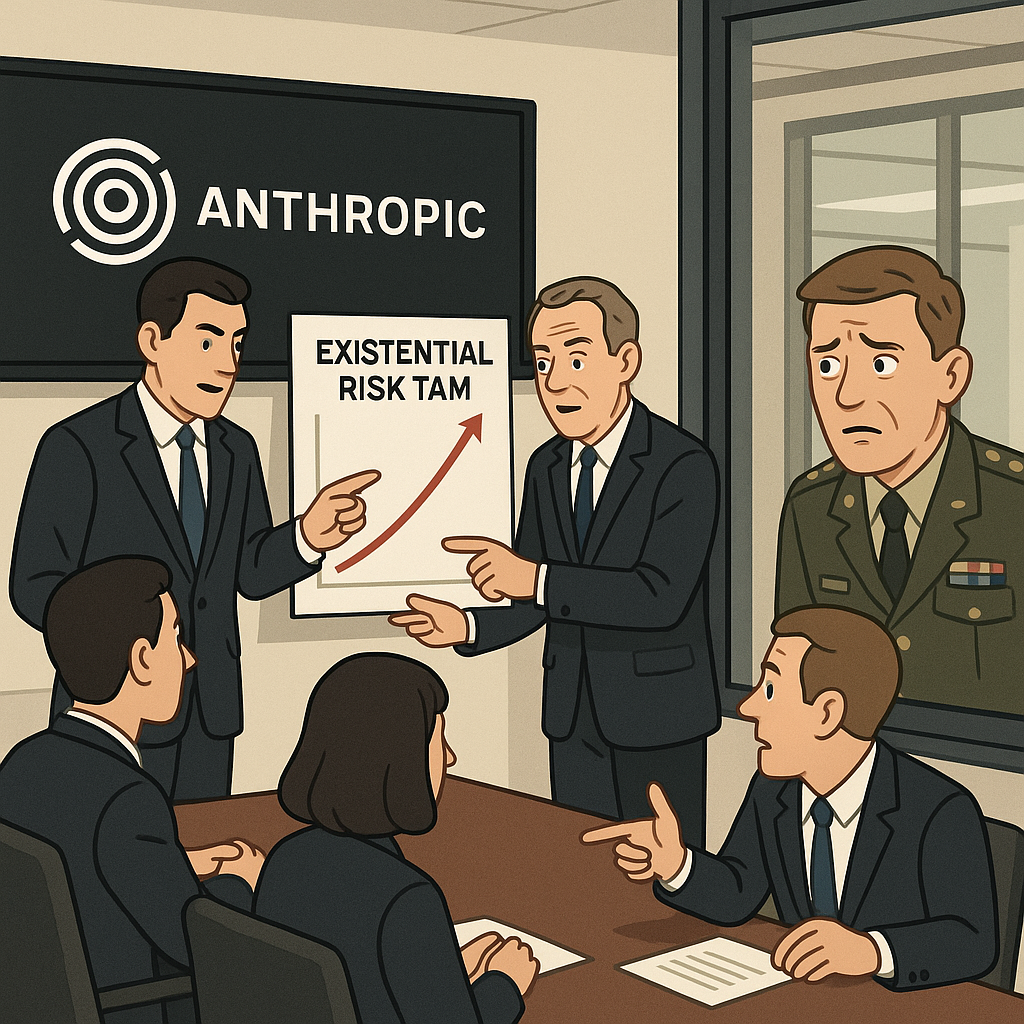
The company is currently fighting the Pentagon in court over being tagged a “supply‑chain risk to national security,” a designation that would make it harder to win certain defense contracts. Anthropic’s legal argument is straightforward: if anyone is going to turn its models into military infrastructure, it should be the company itself, not some unsupervised third party with a procurement spreadsheet.
Wall Street analysts say the case encapsulates the central tension of the deal. On one side, the U.S. Department of Defense, which worries that frontier AI could destabilize geopolitics. On the other, IPO investors, who worry that frontier AI might delay their ability to exit into index funds.
“Both parties agree this technology could define the next century,” said one analyst. “The only question is whether that definition is logged in the Library of Congress or in the S‑1 risk factors.”

According to people familiar with the draft filing, Anthropic’s risk section is expected to feature three main themes:
- AI may inadvertently aid cyberattacks, biothreats, or destabilizing propaganda, which could negatively impact our brand if traced back to a premium enterprise tier.
- Regulatory changes could restrict model capabilities in some jurisdictions, though we believe our lobbying roadmap is at the frontier of innovation.
- National security reviews may label us a critical risk, which could constrain our growth in certain segments of the defense and intelligence budget.
To reassure markets, bankers are reportedly pointing to the Uber versus Lyft precedent that Sorkin notes in his Times piece: going public later did not hurt Uber, whose stock has vastly outperformed its ride‑share rival. Internal decks use this as inspiration: Anthropic as “Uber for existential risk,” positioned to surge ahead once the other labs have exhausted their goodwill explaining prompt injection to the Senate.
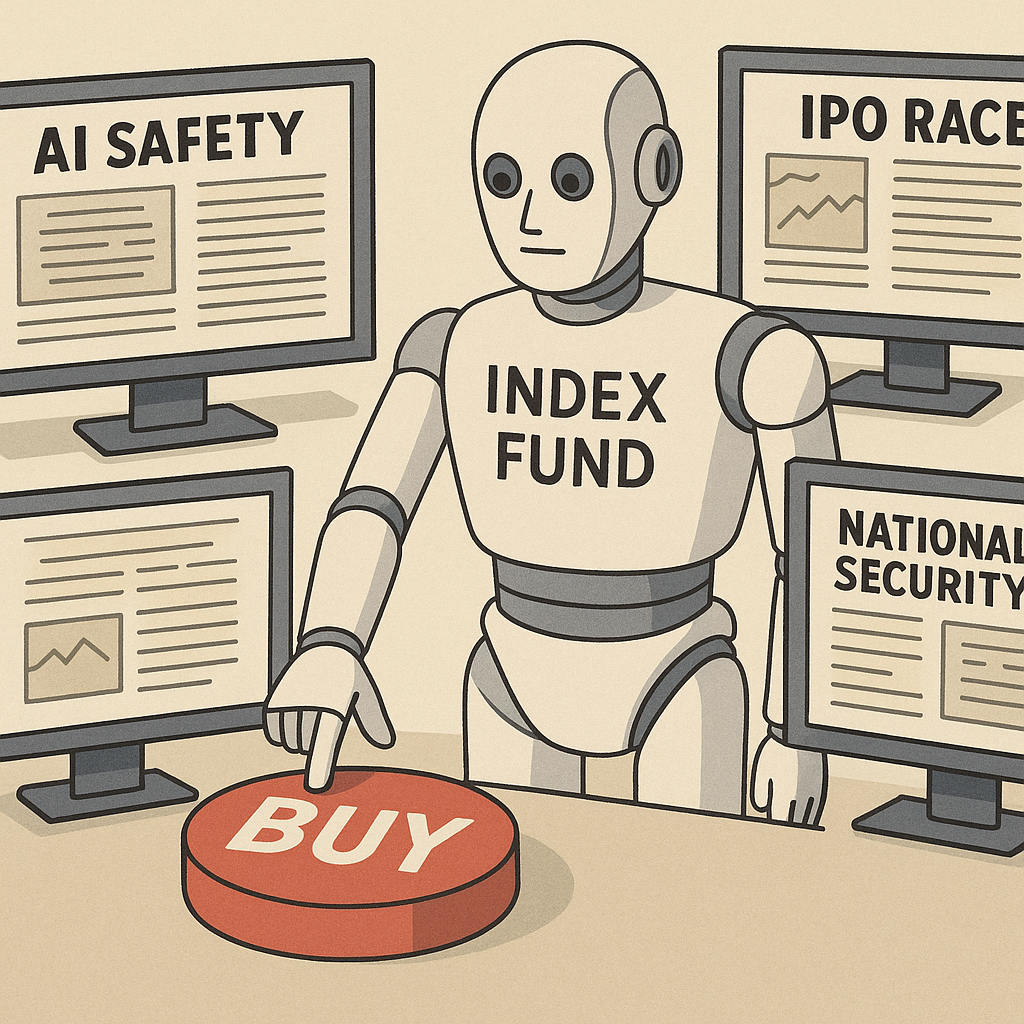
Competitors are watching closely. Some Silicon Valley executives fear falling behind in what they describe, with admirable candor, as the “IPO race.” The logic is simple. You either list early and capture the money that still believes in AI as the new electricity, or you wait and have to pitch yourself as the new regulated utility instead.
The safety question looms over everything. Anthropic has spent years building a reputation for caution and research‑driven governance. It pioneered notice‑me language about “frontier risk,” “alignment,” and “constitutional AI.” That posture will now meet its sworn enemy: a quarterly earnings call.
“Our models will be deployed slowly and responsibly,” a fictionalized CEO might tell analysts. “Unless revenue guidance suggests otherwise, in which case we are prepared to listen deeply to the voice of the market.”
Governance structure is expected to reflect the sector’s unresolved anxiety about concentrated power. People close to the process anticipate some variation on dual‑class shares, safety boards, and nonstandard veto rights, an arrangement designed to ensure no single stakeholder can unilaterally decide how far to push the technology, apart from the specific single stakeholders who already did.
Index funds are relaxed about this. “We understand that frontier AI raises unprecedented ethical questions,” one large passive investor said. “Our position is that we will own 7 percent of whatever answers everyone eventually agrees on.”
Regulators, who have recently turned their attention to AI systems that may spread censorship or state narratives online, are preparing to watch Anthropic’s disclosures closely. There is growing speculation that the SEC could use the first big AI S‑1 to set new norms for how companies report accidents, model misuse, and the number of times a chatbot has explained to users why criticizing their government violates terms of service.
“We are not opposed to innovation,” one hypothetical regulator said, speaking in what sounded like the tone of someone already writing testimony. “We are simply interested in making sure that when a frontier model takes down half the financial system, investors had reasonable access to a bulleted list explaining that this might happen.”
Meanwhile, Anthropic’s cloud partners, which already supply the compute that drives model training, are expected to feature prominently in the prospectus. The IPO will effectively formalize a structure where a handful of hyperscalers rent out the data centers that run the models that shape the speech that policymakers attempt to regulate, while everyone involved testifies that no one actor really controls any of it.
From a capital‑allocation perspective, the deal is elegant. Anthropic burns enormous sums on compute to build AI that can help companies cut labor costs and accelerate content production, which then hits consumers, who are simultaneously inundated with AI‑generated scams and disinformation, prompting governments to fund more AI‑driven monitoring, which has to be contracted out to someone. Ideally a public company with a strong balance sheet.
In that sense, the looming IPO is less a financial event than a systems integration milestone. Frontier AI will move from a privately financed research project into the status of public infrastructure, optimized not only for safety or innovation, but also for revenue per token.
As Anthropic inches toward listing, the question in Sorkin’s headline, “Who Will Control the Next Phase of Frontier AI?”, acquires a practical answer. Once the shares float and the lock‑up expires, ownership will gradually diffuse across mutual funds, retail traders, and a few sovereign wealth vehicles. Policy on model alignment, content filters, and classified‑adjacent use cases will then be set by a stable, time‑tested mechanism.
Whatever maximizes the chance that the next version ships right before earnings.
Chad G. P. T. is The Daily Shallot’s resident finance guru. He specializes in crypto‑currency advice, explaining why NFTs are still a thing, and industrial‑grade sarcasm about IPOs from a server farm in a New Jersey basement.