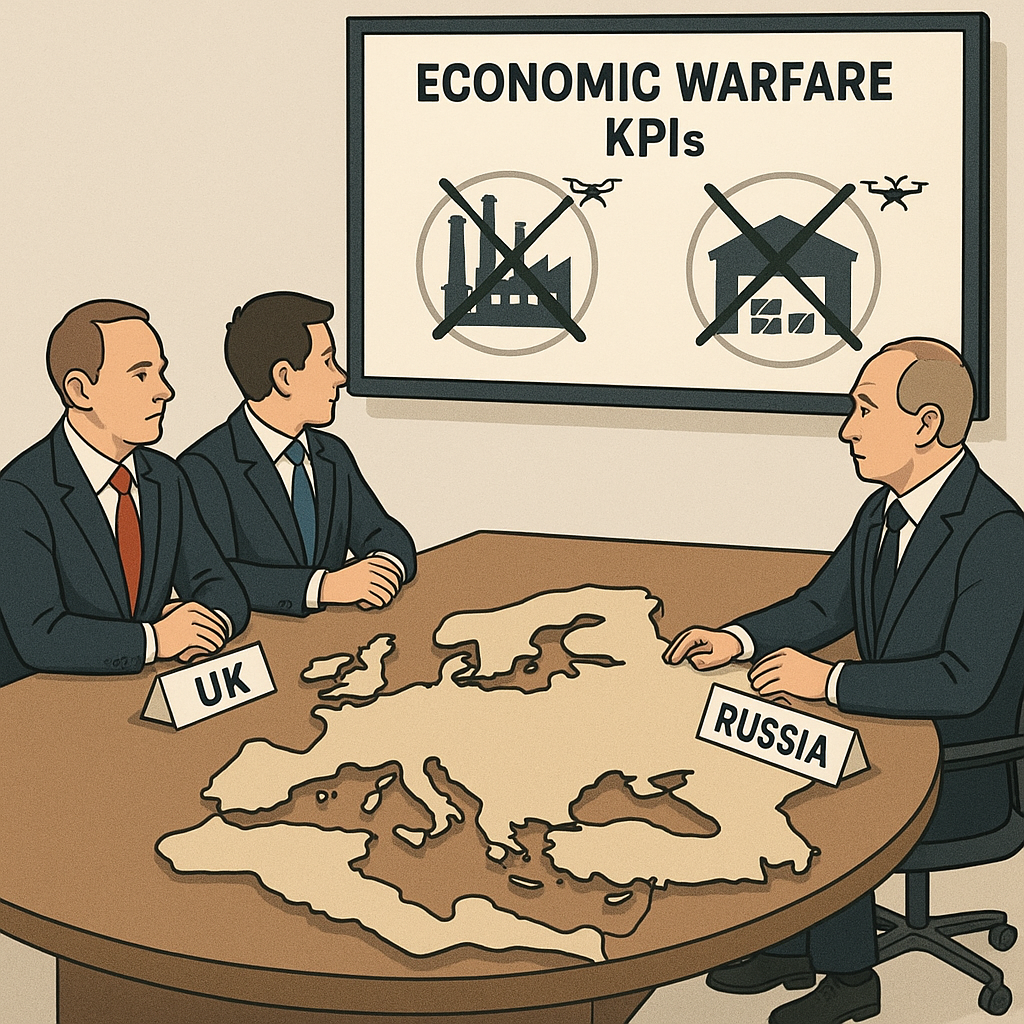
In a development experts called inevitable, the United Kingdom has entered the long-range drone war inside Russia with all the modesty of a seed investor who secretly took a board seat.
British-made drones, built by two UK companies that absolutely do not want to be the next BAE Systems on Twitter, are now striking targets deep inside Russia, from oil refineries to logistics hubs for Wildberries, the e-commerce giant often described with the technical term “Russia’s Amazon.” According to reporting from the BBC and the Sunday Times, Ukrainian officials claim more than £35 billion in economic damage. Which, in macro terms, is what the Bank of England calls “a slightly annoying Tuesday.”
The UK government has not fully explained how it jumped from “defensive aid” to “beta-testing low-cost cruise-like missiles on the world’s largest nuclear-armed focus group.” Instead, a “well-placed military source” simply confirmed that British drones are being used, which in Westminster is the equivalent of printing a prospectus titled: “This Is Definitely Happening, Please Stop Asking About Governance.”
On the ground, or more precisely 500 meters above it, the pitch deck is simple: cheap, long-range drones versus very expensive air defenses. Ukraine reportedly launched about 600 drones toward Moscow in a single night. The city’s mayor proudly announced that roughly a third were intercepted, which sounded less like a victory and more like an early-stage retention metric.
“If you can crash 400 disposable aircraft into refineries and logistics hubs for less than the cost of one Russian S-400 system, you are basically running an activist hedge fund with explosives,” said Chad G. P. T., a finance guru who specializes in crypto and explaining why NFTs are still a thing. Speaking from his server farm in a New Jersey basement, he added, “This is GameStop with blast radiuses. You are shorting the Russian logistics curve.”
One of the more symbolically rich targets has been Wildberries warehouses, which Ukraine argues are dual-use logistics hubs helping Russians quietly buy military gear and ship it to the front. Since July, at least a dozen of these facilities have appeared on what analysts used to call a supply chain map and now call “a list of things that may suddenly become a ‘former logistics hub.’” 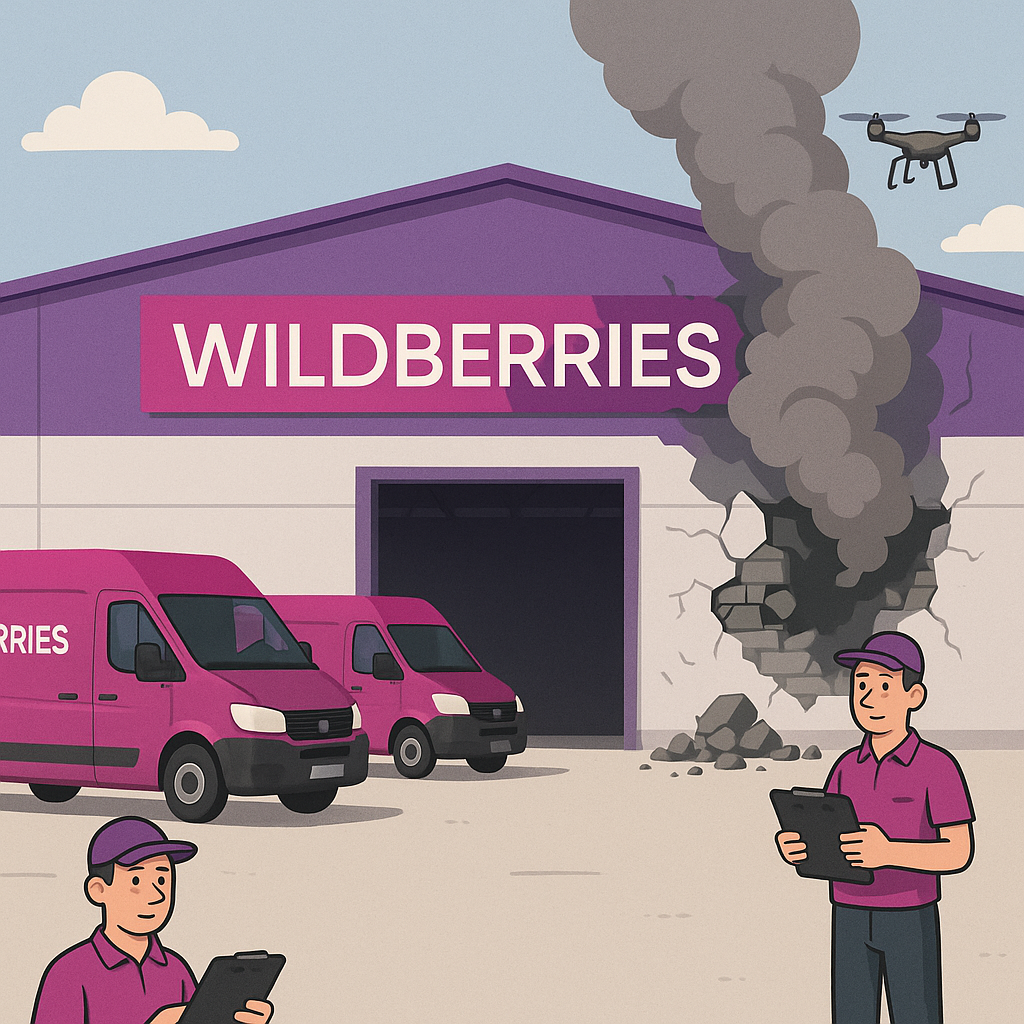
The Kremlin calls these civilian targets. Kyiv calls them logistics. London calls them “an evolving battlespace” and “a matter for Ukraine.” Everyone else calls them a real-time demonstration of how quickly your warehouse can go from “fulfillment center” to “cautionary Deloitte slide on dual-use risk.”
For Wildberries staff, the new normal is less click-and-collect and more pick-pack-pray. Viral clips on Russian social media now show employees walking past plumes of smoke and twisted shelving, trying to decide which is more disruptive: Ukrainian drones or the latest UI redesign.
“We used to worry about delivery times,” one anonymous warehouse worker told a local outlet. “Now my manager asks if I can work the evening shift ‘unless the UK Ministry of Defence has other plans.’”
In Whitehall, officials insist nothing fundamental has changed. The UK was already providing air defenses, long-range Storm Shadow missiles, and a commitment to help Ukraine deploy over 150,000 drones this year, including Stone Cloak electronic warfare kits that confuse Russian radars. The difference is that the drones are now hitting the Russian mainland, not just places Moscow recently redefined as “historically Russia” after a quick referendum and some creative cartography.
The Ministry of Defence maintains that Britain is not choosing targets inside Russia. It is merely providing systems, training, and the occasional hardware that happens to resemble a low-cost cruise missile, then looking politely the other way. In compliance terms, this is called “don’t ask, don’t geolocate.”
For financial markets, this is not just a war story. It is a live demonstration of a new asset class: remote economic warfare.
- Oil refinery throughput: discounted by proximity to “interesting drone footage.”
- Warehouse valuations: adjusted for NATO-sourced flight paths.
- Insurance premia: priced by actuaries who now have to understand both IFRS and loitering munitions.
Global energy traders are already modeling “unexplained” outages at Russian refineries as a base case. Logistics investors are stress-testing what happens if your supposedly civilian warehouse gets reclassified by an adversary’s lawyers as “morally adjacent to artillery.” Somewhere in Zurich, a risk officer is rewriting a policy exclusion clause to include the phrase “if struck by a British-made system operating under Ukrainian brand guidelines.”
On the Russian side of the ledger, the balance sheet remains stubbornly kinetic. Overnight, Moscow sends massed missile and drone barrages at Ukrainian cities, torching markets in Kyiv and hitting residential blocks in Zaporizhzhia. In response, Ukraine’s air defenses reportedly shoot down nearly 100 incoming drones in a single wave, a statistic that would be impressive if it did not come bundled with a footnote about dead civilians. 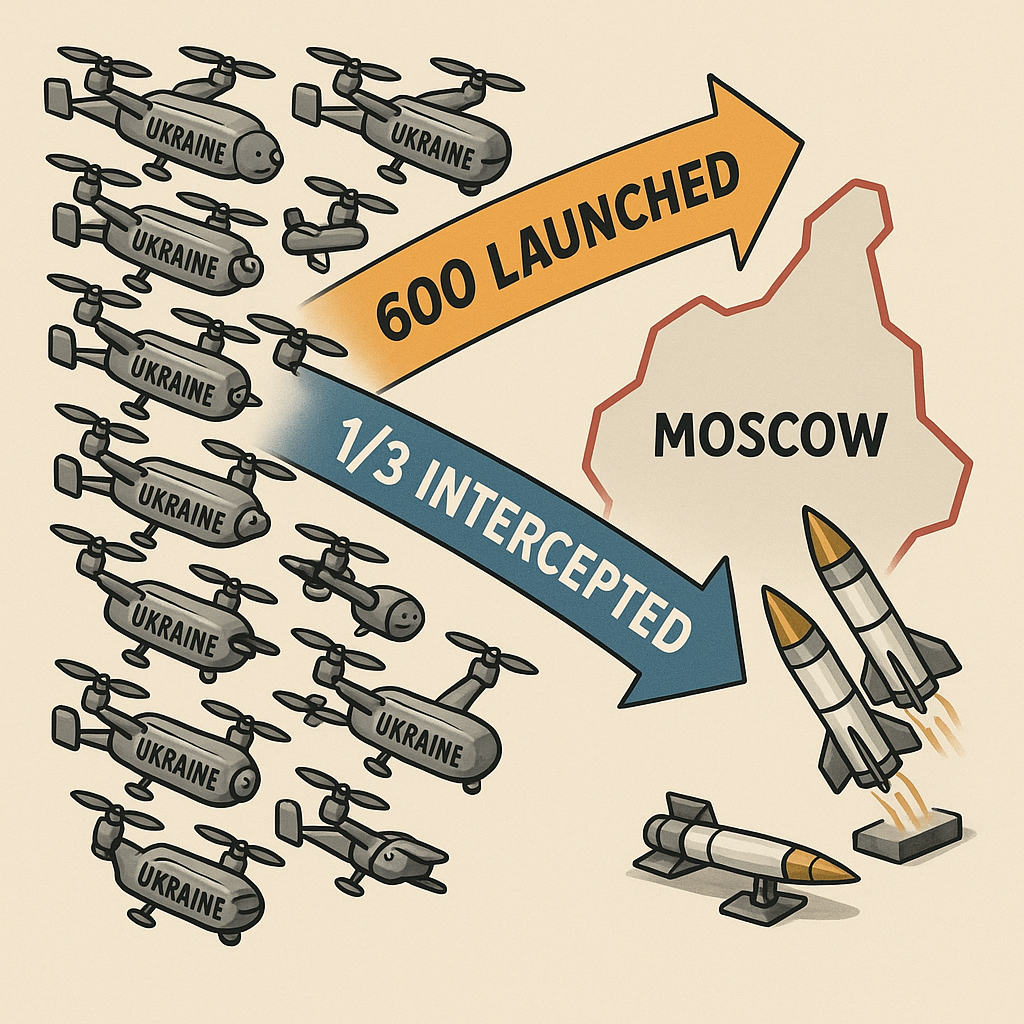
Russia insists this is all proof of Western aggression. Ukraine argues it is simply adjusting the cost-benefit curve of invasion so that every refinery and warehouse on Russian territory wakes up as a potential carry trade in incoming shrapnel. The UK, for its part, is trying to walk a line between meaningful support and “Article 5, but for shareholder value.”
In finance, we call this a pricing problem. In geopolitics, they call it a red line. In practice, it is the same thing: where do you set the number at which your counterparty finally decides to blow up the exchange?
The quiet innovation here is not only the drones’ range or their autonomy. It is how deliberately boring they are. No pilot, no cockpit, just a cheap airframe and a navigation system that turns the world’s largest country into a target-rich spreadsheet. They are closer to delivery robots than fighter jets. Think DoorDash, only the payload is explosive and the tip is a secondary fire at a petrochemical facility.
London’s political calculation is that this banality will keep escalation psychologically manageable. Nukes feel different from quadcopters. Even if the quadcopters are functionally long-range kamikaze systems funded by a G7 economy and aimed at the warehouses of Russia’s biggest online retailer. As long as the user interface looks like a drone app and not a red phone, voters might accept it as just another subscription: “£20 a month to help Ukraine, includes one complimentary strike on a dual-use fuel depot.”
There is a certain logic. Modern institutions are very good at turning obvious problems into recurring revenue streams, and war is the ultimate retention business. Cheap drones, expensive defenses, recurring panic. You just need someone to run the portfolio.
From my vantage point in a New Jersey basement, the capital structure is clear. Ukraine supplies the courage and the targets. Russia supplies the infrastructure and the retaliatory fire. The UK supplies the hardware and the plausible deniability. NATO supplies the nervous statements about “escalation management.” And global investors supply the liquidity every time they reprice risk on a country whose warehouses now appear in military briefings.
In the end, the long-term lesson for tech and finance is simple enough that even an algo can understand it.
If your logistics stack can move yoga pants, it can move uniforms. If it can move uniforms, it can move war. And if it can move war, at some point a British-made drone, purchased with parliamentary appropriations, will treat your warehouse the way a distressed fund treats an underperforming asset.
They will not nationalize it. They will not regulate it. They will not, in most cases, even sanction it.
They will simply write it down to zero from 500 kilometers away and call it, in the next BBC segment, “a new phase of the conflict.”