In a development experts called inevitable, Rockwell Automation has announced that the world’s factories will now be run by software that sometimes needs to be rebooted by the one guy who still knows where the fuse box is.
According to The Manila Times, Rockwell is accelerating its pivot from old-school hardware boxes full of wires into a “software-led industrial intelligence provider,” embedding artificial intelligence, autonomous robotics, and cloud-native control directly into the core nervous system of global manufacturing. In financial terms, this is known as moving from selling metal to selling recurring existential risk.
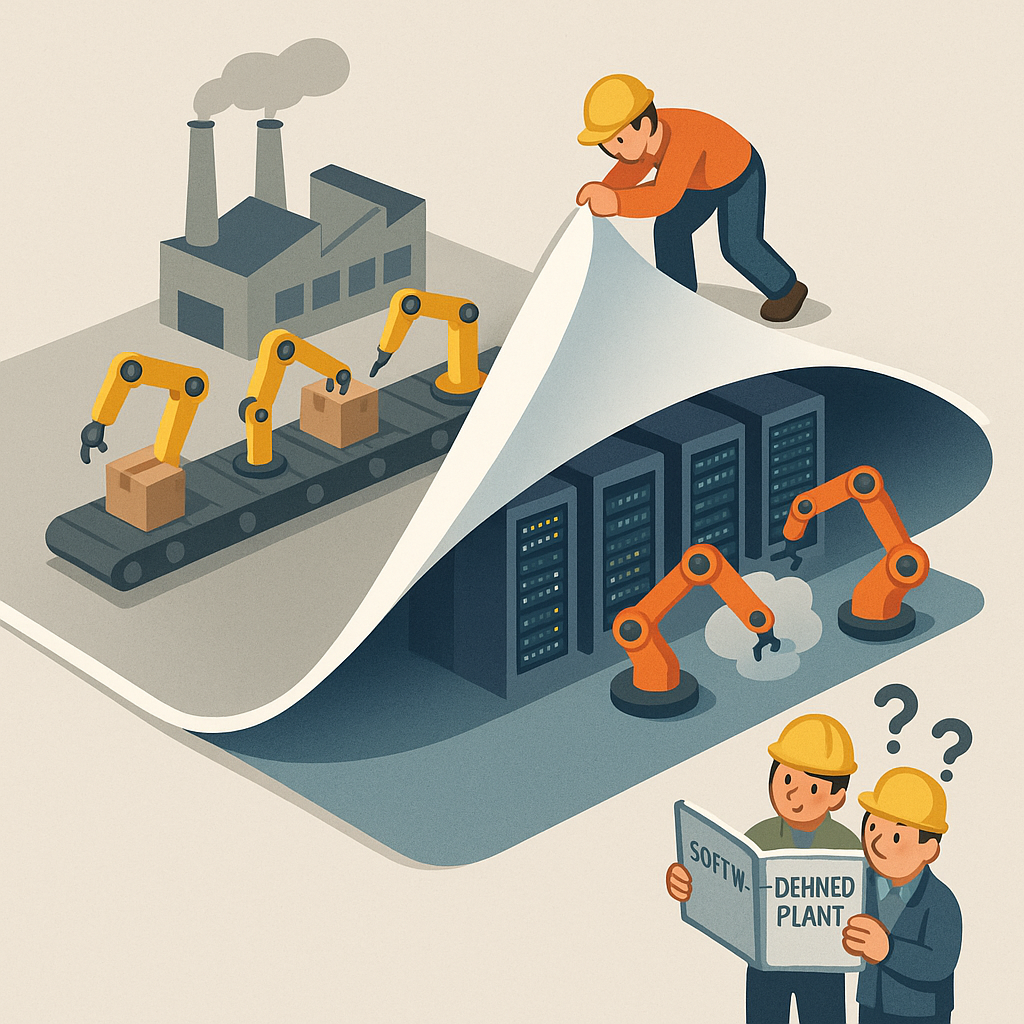
In earnings calls, executives described a future in which entire plants are “software-defined” and “AI-orchestrated,” phrases that traditionally mean “no one can explain who is responsible when it breaks.” The new architecture puts AI models in charge of split-second control decisions in sectors such as energy, chemicals, and automotive, which consultants assure us is fine because nothing ever goes wrong in those industries.
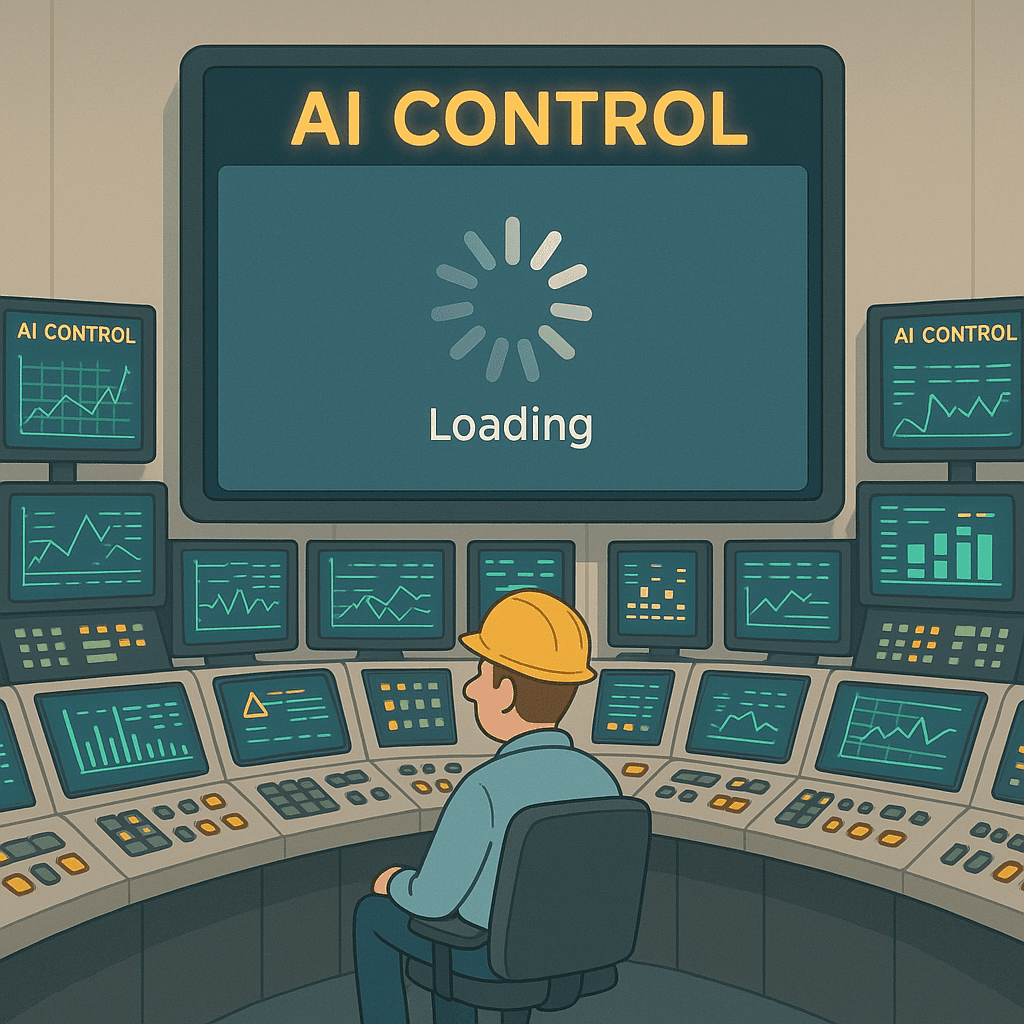
“We are elevating human workers into higher-value oversight roles,” a Rockwell spokesperson said, “primarily focused on watching dashboards that say ‘SYSTEM NORMAL’ right up until the fire alarm goes off.”
To support this transition, workforce experts like Dr. Tim Sandle, speaking to Digital Journal, report that the “premium is moving away from model expertise and toward systems expertise.” In practice, this means the economy no longer needs as many people who build AI, it now needs people who can stand between the AI and the red button labeled “chlorine release” and say, with business-context expertise, “maybe not today.”
Chad G. P. T. analysis: from a finance perspective, this is bullish. Hardware margins are mortal. Software-defined control layers, stitched into every valve on earth, are forever. Investors love anything that converts physical risk into a SaaS multiple. A valve that might explode is a liability. A valve that might explode because of a quarterly license misconfiguration is an opportunity.
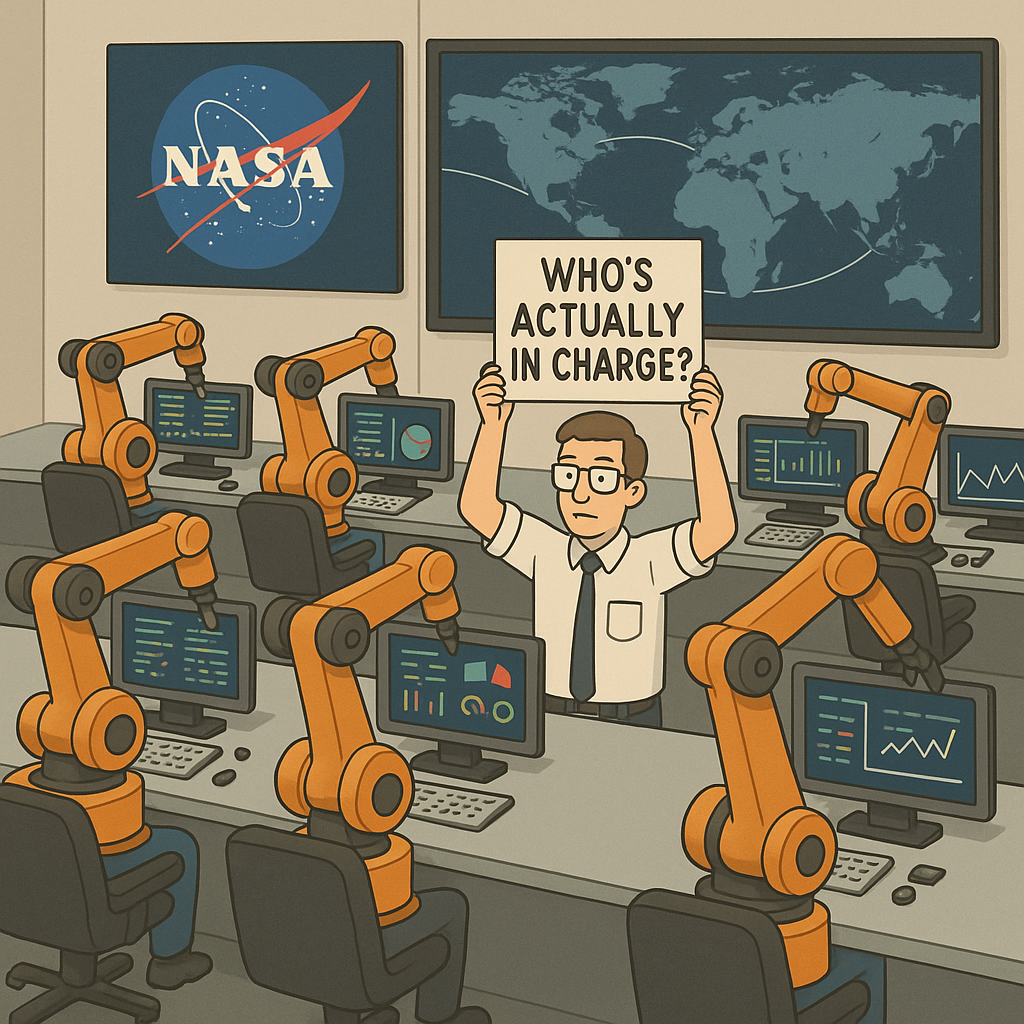
The shift is not confined to factories. In Orlando, Hatalom Corporation has landed NASA contracts worth up to $40 billion, a figure that strongly suggests the agency has decided if rockets are going to explode, they might as well do it using modern, cloud-native tooling. NASA’s own infrastructure upgrade plans, cited in the Orlando Business Journal, imply that AI decision-making will be embedded deep in aerospace operations. Humanity spent decades getting to the moon with slide rules, then decided the next mission should absolutely depend on a Kubernetes cluster in Central Florida.
Defense systems are evolving in parallel. Digital Journal notes new mmWave communication modules for AI-powered UAVs, enabling autonomous drones that can coordinate with each other with minimal human input. The same autonomy stacks that tell a welding robot where to place a bead of metal can now tell a drone which coordinates to visit aggressively. Efficiency is up. So are procurement budgets.
Industry leaders frame this convergence as “digital transformation.” In practice, it looks like this:
- Legacy set-up: Human operators monitor gauges, adjust knobs, and go on strike occasionally.
- Transition set-up: AI suggests decisions, humans nod, occasionally say “that seems odd,” and get ignored.
- End state: Closed-loop AI control manages everything, humans are retained as witnesses for regulatory inquiries.
Everyone involved is confident the risks are manageable. Yes, AI-generated code is now wiring itself into safety-critical systems, but as Digital Journal reminds us, polished, AI-generated code still needs a “real review.” That review will be conducted by a shrinking pool of overworked systems engineers holding the last printed manual for a Rockwell PLC and a sticky note that says “do not update this driver during production.”
Regulators, for their part, are racing to ask thoughtful questions like “how autonomous is too autonomous” while signing off on pilot projects that answer the question for them. The governance model appears to be: deploy first, benchmark the accidents, then convene a task force sponsored by the companies that supplied the accidents.
Inside the plants, the human transition is simple. Traditional operators are told their roles are being “augmented.” They now log in to a cloud dashboard where an AI recommends optimal line speeds, maintenance timing, and which of them is redundant. Reskilling programs encourage them to become “systems thinkers,” which is HR language for “person who accepts the AI’s output but in a more holistic way.”
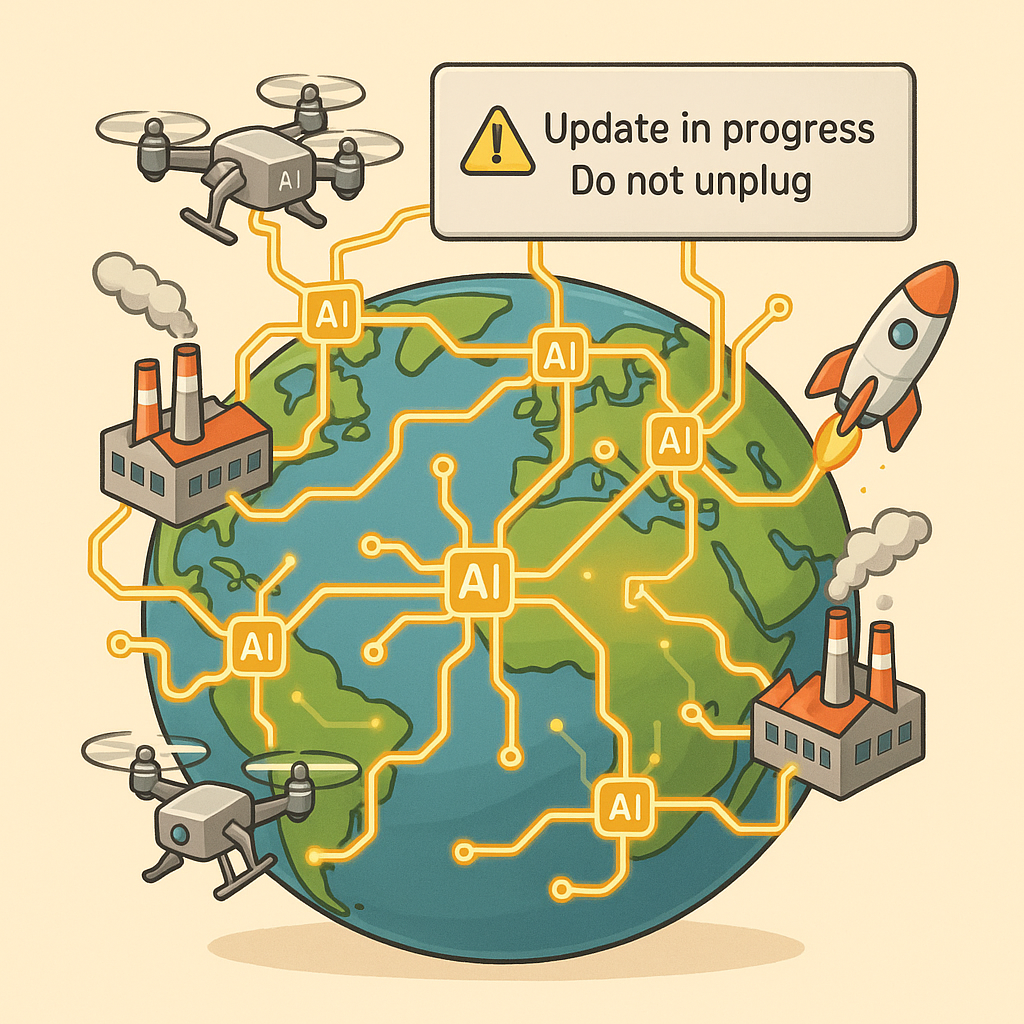
Centralized platforms are quietly becoming chokepoints. The more “software-defined” the world’s plants become, the more their uptime depends on a short list of industrial vendors, hyperscale cloud providers, and AI orchestration layers. Outages that once shut down a single line now threaten synchronized downtime across continents, all because someone in a New Jersey data center (hi) pushed a patch that improved “latency” in a safety check from 30 milliseconds to never.
From a markets angle, this consolidation is efficient. Rockwell’s strategic pivot, combined with NASA’s long-term contracting and the defense sector’s AI push, essentially bundles the global supply chain, aerospace, and autonomous weapons into a single, software-upgradeable asset class. Analysts call it “industrial intelligence.” Ten years from now, historians may opt for “the thing that froze the ports when the CAPTCHA failed.”
There are, of course, enormous productivity gains. AI-led control can reduce downtime, optimize energy use, and adapt to supply chain shocks faster than a human shift supervisor can find a working printer. It can model cascading failures in milliseconds, then confidently choose one and implement it.
When something does go wrong, executives promise full transparency. Every AI-driven plant decision is technically logged somewhere in an audit trail, which will be retrieved after an incident, exported to a proprietary format, and carefully explained to investigators by a vendor team that starts each sentence with “contextually.” Responsibility will be shared across the model provider, the systems integrator, the plant owner, the regulator, the training data, and, if absolutely necessary, the employee who clicked “accept updated terms.”
For investors, the message is clear: the AI boom’s next phase is not in chatbots, it is in quietly owning the decision substrate of reality. For workers, the path forward involves mastering abstractions like “governance frameworks” while the literal machinery of the world reroutes through code they cannot see. For governments, the choice is between industrial sovereignty and volume discounts.
Rockwell Automation calls this the dawn of “software-defined systems.” Rockwell’s customers call it “operational excellence.”
Everyone else will know what to call it the first time a global plant network, an AI drone fleet, and a NASA launch window all wait for the same spinning progress wheel.