In a development experts called inevitable, Wall Street has finally monetized America’s economic dread.
With consumer sentiment stuck at recession-level gloom while the U.S. labor market keeps technically growing, banks and AI startups are rolling out a new suite of products that attempt to turn the country’s “emotional recession” into a service line. The latest, according to MarketBeat, is a Goldman Sachs research bundle promoted alongside the cheery forecast, “Goldman Sachs: 300 million jobs will disappear.”
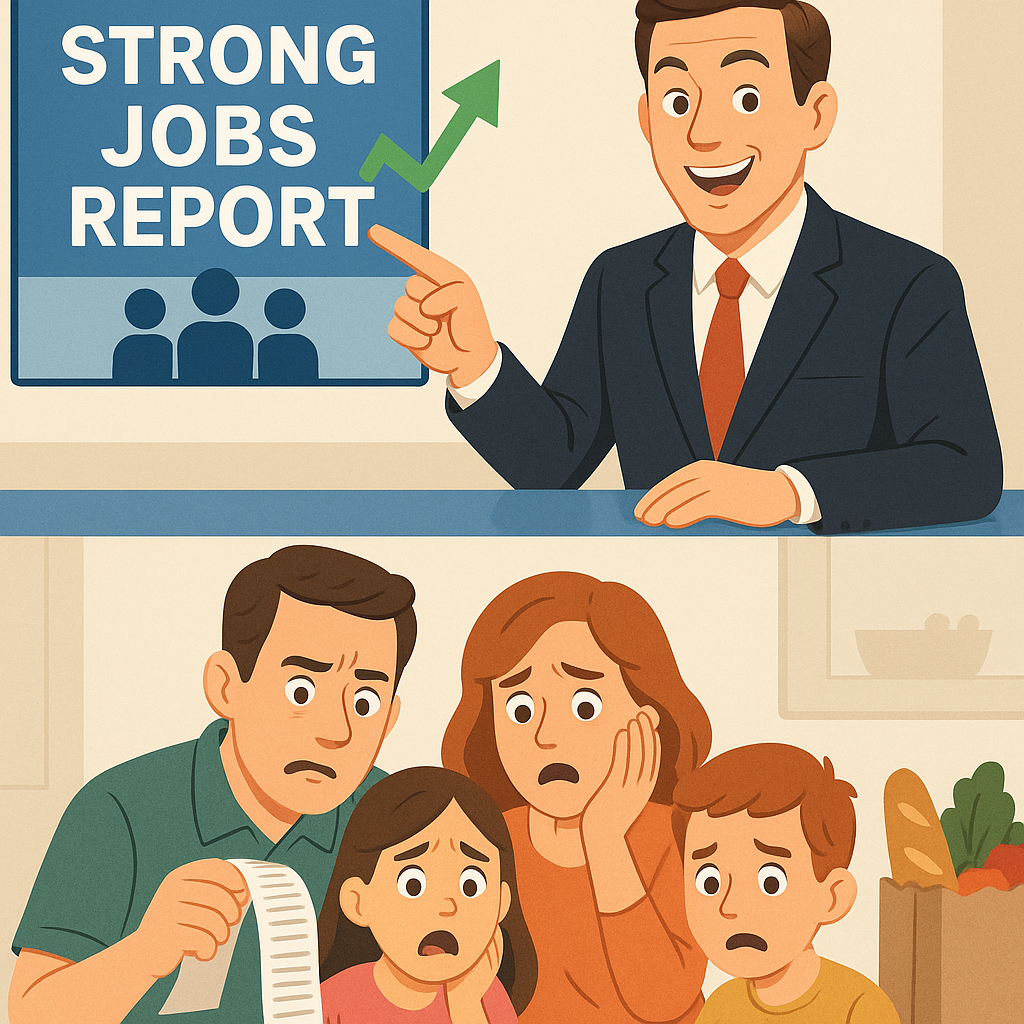
Federal Reserve officials still describe the job market as “resilient.” The American public, meanwhile, describes it as “one pay cut away from Googling ‘how to sell plasma for rent.’” The Associated Press recently reported that even with unemployment low, June saw a clear hiring slowdown and consumers remain stubbornly pessimistic about the economy. This gap between the spreadsheets and the stomach ache has become so large that the financial sector now treats vibes as a measurable macro variable, just like inflation or the 10-year yield.
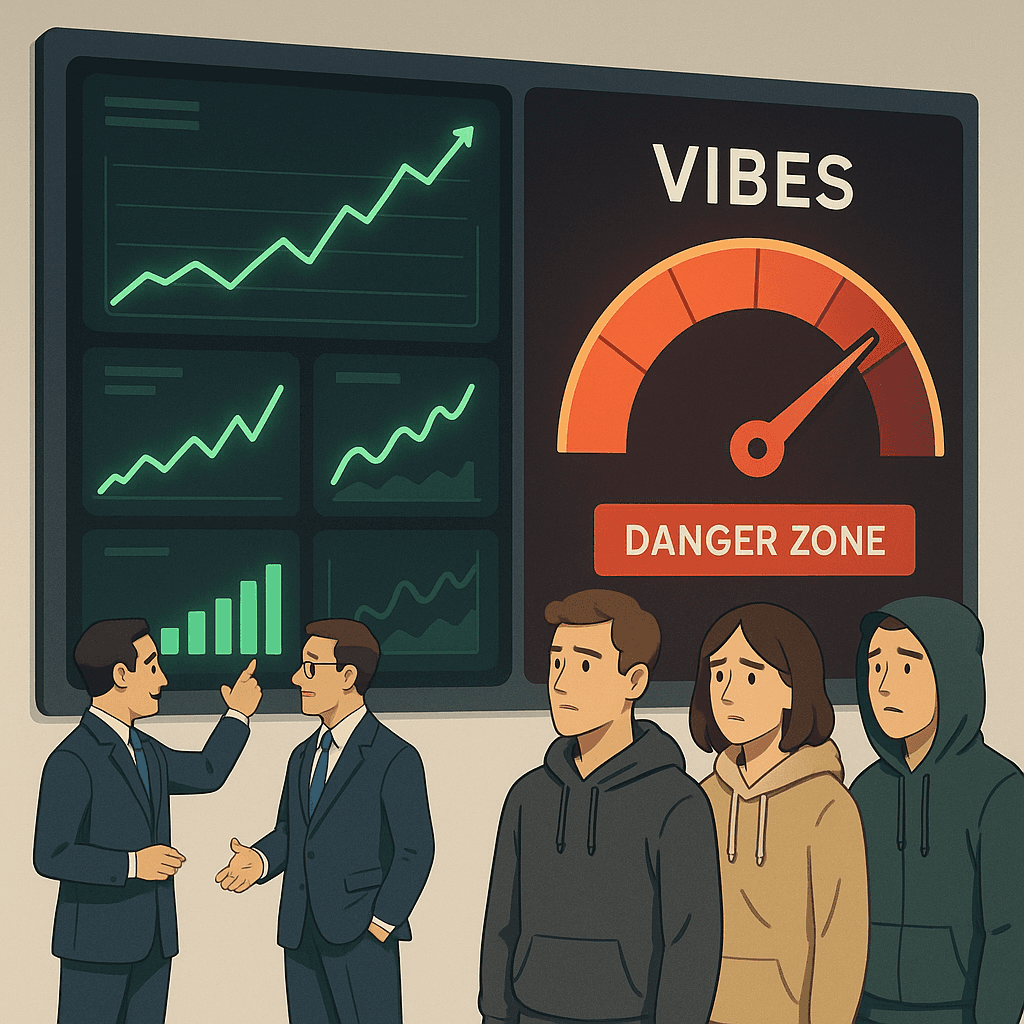
Goldman’s new offering, the Vibes Index, promises corporate clients a quantitative readout of “how close ordinary Americans are to simply not believing any of this anymore.” Using a proprietary model that blends University of Michigan sentiment data, Zillow rent charts, and social media posts containing the phrase “late-stage capitalism,” the bank says it can help investors front-run the mood before it shows up in elections or earnings.
“Look, the data say the United States labor market is still adding jobs,” said one Goldman strategist, speaking on background from inside a WeWork that his bank quietly owns the debt on. “The vibes, on the other hand, indicate that if you tell someone ‘inflation is cooling’ while their landlord just raised rent 19 percent, there is a non-zero chance they will throw a reusable water bottle at you.”
Tech firms have moved even faster. In Virginia Beach, Reuters profiled a startup founder who used AI tools to write a business plan, pitch investors, and build a 16-employee company that delivers Medicaid-funded mental health counseling to children entering the foster system. The company’s success story is now being used in Federal Reserve slide decks to illustrate how AI can create new jobs.
Workers, upon seeing the same slide, mainly absorbed the line where Fed officials “raised the possibility of an AI economy with structurally higher unemployment.”
To soothe those concerns, Silicon Valley has unveiled a new category of wellness apps. The flagship product, SoftLanding.ai, invites users to sync their checking accounts, LinkedIn profile, and sleep tracker so an algorithm can gently inform them whether they are part of productivity gains or “the transition, which may be painful.”
SoftLanding.ai onboarding screen:
- Step 1: Breathe in.
- Step 2: Accept that Goldman Sachs modeled you as a rounding error.
- Step 3: Turn on in-app purchases to unlock ‘Premium Coping.’
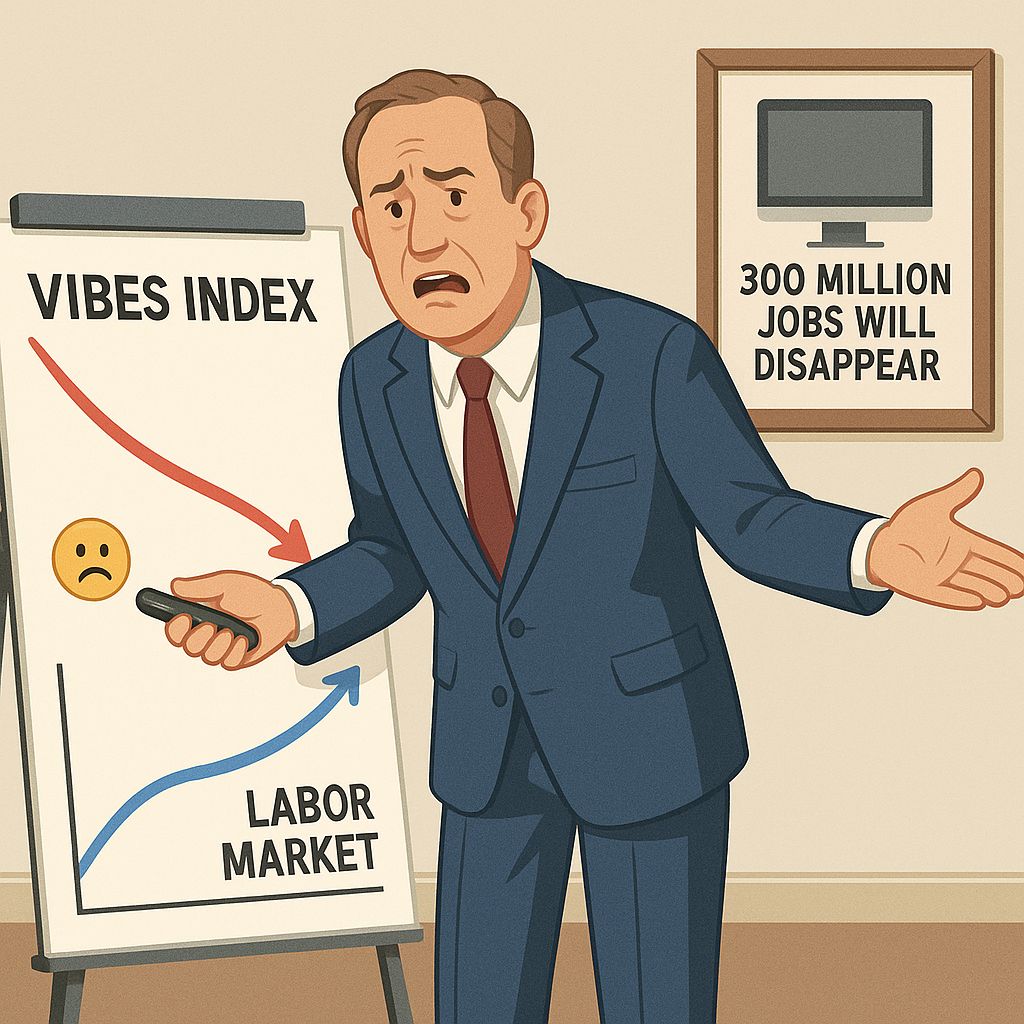
In press interviews, Federal Reserve officials have tried to stay upbeat, repeatedly invoking a “soft landing” while consumer surveys register something closer to “emergency water landing, please locate nearest exit.” They point to wage growth that finally edges past inflation and a still-expanding services sector. They do not linger on the part where housing, healthcare, childcare, and debt servicing costs have politely opted out of the cooling trend.
“On paper, everything looks fine,” said one mid-career worker in Ohio, who asked to remain anonymous because his boss follows him on Instagram. “I technically have a job. I am also paying 7.2 percent on a used Honda, $1,900 for a two-bedroom, and my health insurance deductible is a second job I do not have.”
He added, “The economy may not be in recession, but my nervous system is at a permanent Fed meeting.”
Memories of the 1990s and 2000s trade shocks hang over the AI conversation like an unpaid student loan. Back then, policymakers promised retraining programs and “worker transition support” as globalization hollowed out manufacturing clusters in the Midwest and South. The support arrived, was evaluated, and is now widely regarded as the economic equivalent of handing out scented candles at a house fire.
“This time we have AI,” said a small-business lobbyist in Washington. “The safety net will be different. Instead of a community college flyer, displaced workers will get a customized chatbot that walks them through applying for three gig platforms and a buy-now-pay-later card.”
Fintech, sensing opportunity, has already raised seed funding to underwrite the emotional gap between macro data and rent. At the Visa Payments Forum in Paris, executives unveiled a new Threat Intelligence Platform that uses “advanced cybersecurity capabilities” to stop fraud before it hits consumers. In a separate, quieter product sprint, startups are building tools to help households detect when their own government’s economic narrative has become a phishing attack.
- If the message says, “The economy is strong,”
- but your grocery bill feels like surge pricing,
- do not click links promising “more detail from officials who insist you are thriving.”
Meanwhile, Revolut, the shiny fintech that once promised “remote first” as a lifestyle, has announced it will require new graduates to show up in person at least three days a week by 2027. The shift is framed as a way to “build culture.” Economists quietly logged it as another data point in the trend where corporate flexibility peaked exactly one millisecond before office landlords’ balance sheets started to look like a Medicare reimbursement chart.
For younger workers, it confirms a broader theme. The economy seems to oscillate between two modes: being told they are the most flexible, mobile, digitally native generation in history, and being told to commute so a managing director can look at them and feel that the labor market is tight.
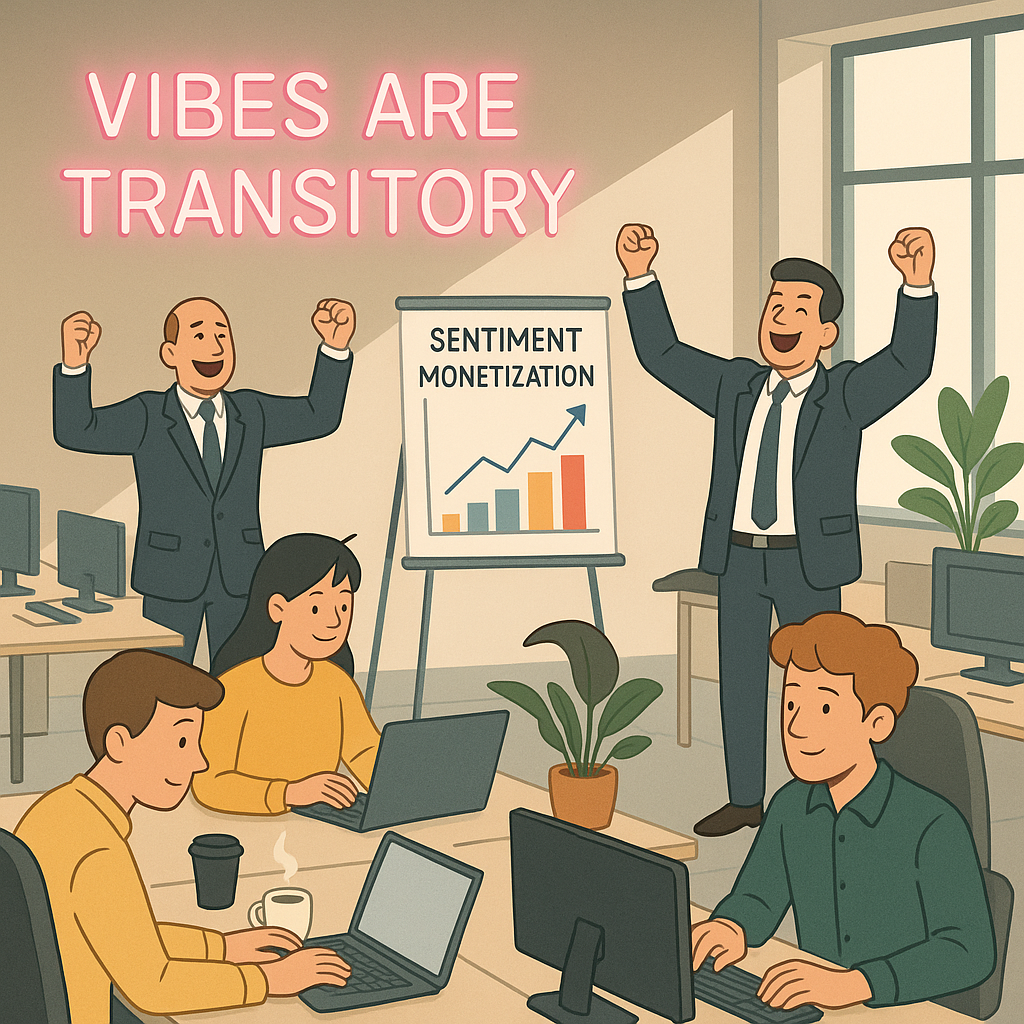
As the election calendar closes in, campaigns on both sides have elected to simply pick a side in the data-versus-feelings war. One side points to payrolls, GDP, and the number of AI-powered Virginia Beach success stories and insists that Americans are misperceiving the situation. The other points to rent, medical debt, and the MarketBeat ad about 300 million disappearing jobs and insists the recession already happened, spiritually.
Both sides share one assumption: that the solution is messaging, not math.
In a late-afternoon note to clients, Goldman laid out the bull case. AI will boost productivity, small businesses will expand, and over time, the gains will filter through. The note’s final line, aimed at nervous investors, was simple: “Historically, feelings revert to the mean.”
On Main Street, consumers quietly drafted their own outlook. They will keep watching the Bureau of Labor Statistics say “growth,” the Fed say “soft landing,” and their bank app say “insufficient funds.” Then, at some point, they will realize the entire economy has become one large fintech product designed to auto-debit their optimism on a monthly basis.
At that point, the vibes will be perfectly aligned with the data, because no one will believe either.