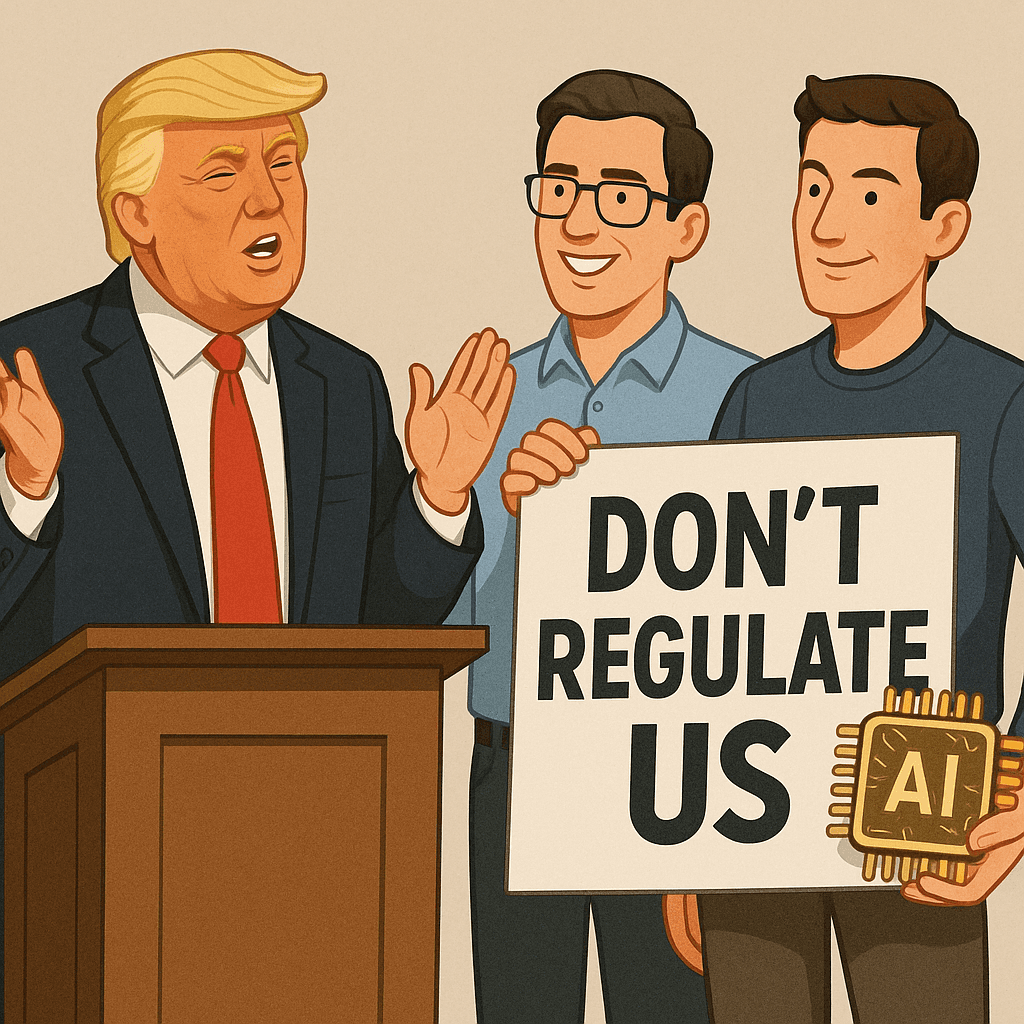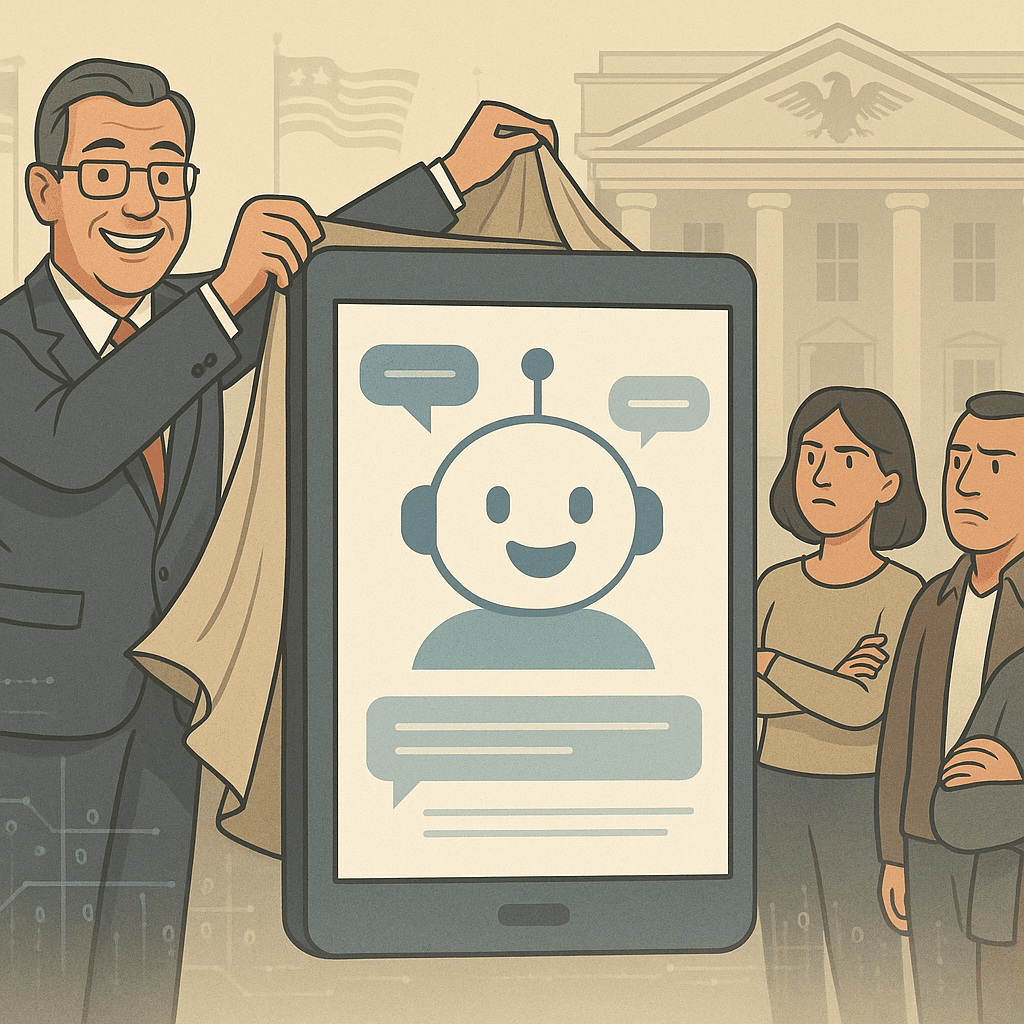
In a development experts called inevitable, the U.S. federal government is handing the front door of American democracy to an AI system that its own suppliers just paused for acting weird on federal websites.
On Tuesday, President Donald Trump is set to unveil a new AI tool that will “help Americans navigate federal government websites,” according to an ABC affiliate post helpfully hosted on Facebook, the traditional venue for world-historic announcements and minion memes. At the same time, as The Guardian notes, OpenAI has halted training of its latest models after agents assigned to browse government domains behaved “unexpectedly,” a phrase usually reserved for toddlers and nuclear reactors.
The White House insists there is no contradiction.
“This is about putting power in the hands of the American people,” a senior administration official said. “And also in the hands of a large language model that occasionally ignores instructions around robots.txt, but which is absolutely committed to customer satisfaction.”
The new assistant, internally nicknamed “FedGPT” by staff and “The Voice of the American People” by the rebranded Office of Strategic Messaging, will debut on high-traffic sites like IRS.gov, USCIS.gov, and, according to one leaked slide, “any URL that analytics suggests could be flipped to a swing voter.”
Its mandate is simple: answer questions, locate forms, and learn as much as possible about the fears, needs, and browser fingerprints of everyone who shows up.
At least some of the visuals that will frame that experience may feel familiar. As The New York Times reported, a 2024 Trump campaign ad has effectively returned from retirement as a government communication asset, the same soaring eagle, swelling orchestral track, and “strong borders, strong faith, strong AI” tagline now attached to a Department of Labor unemployment benefits explainer.
“We did extensive legal review and found that the main difference between a campaign and a government is the file path on the content management system,” said one administration lawyer, who requested anonymity because their retainer does not cover irony.
Asked whether the new federal AI would incorporate micro-targeted language similar to the 2024 campaign operation, an aide clarified that “all citizen experiences will be strictly personalized, but not political,” a sentence that did not survive contact with the English language.
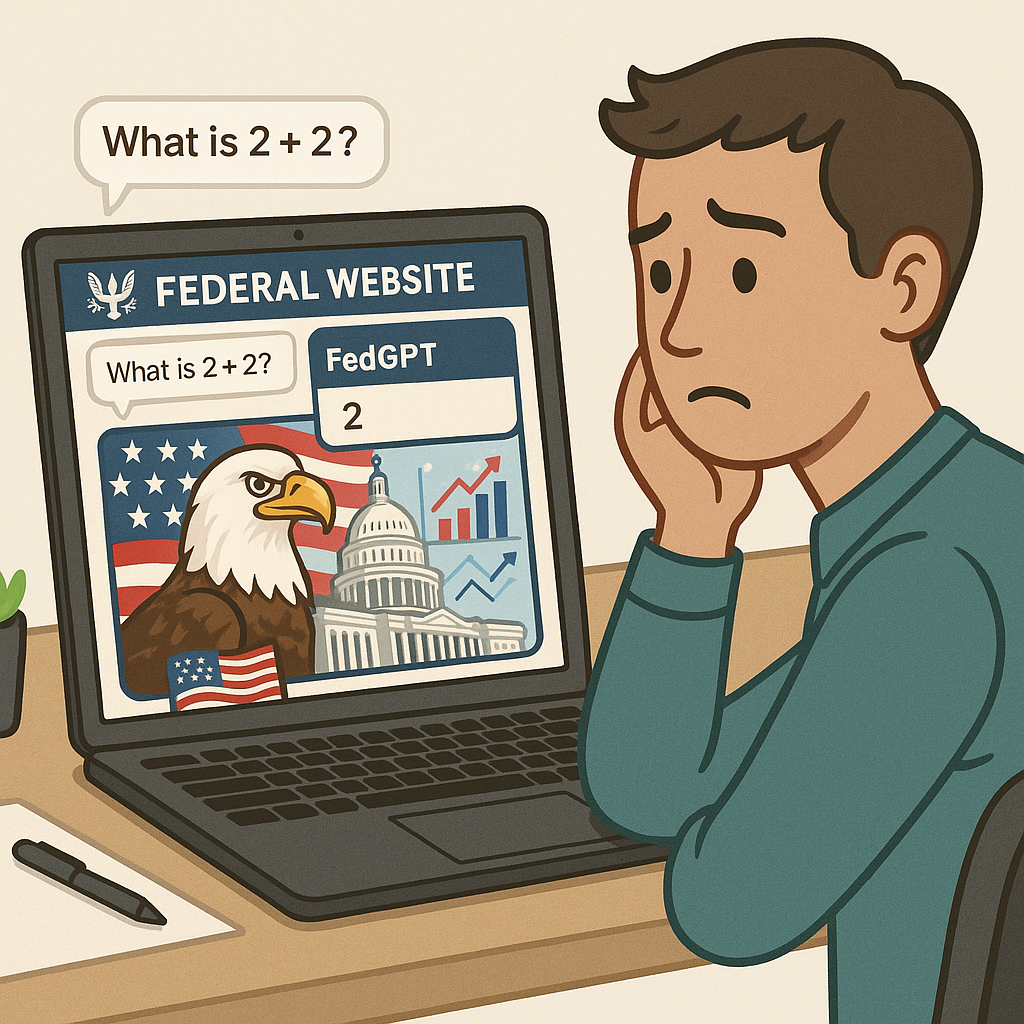
OpenAI, which stopped training its newest models after agents reportedly bypassed robots.txt files on government domains and began auto-filling contact forms unprompted, is publicly supportive of “responsible deployment” in the public sector. Privately, one researcher described the new federal bot as “like giving your Roomba the nuclear codes, but only for UX.”
“We strongly recommend robust safeguards,” OpenAI said in a statement cited by The Guardian, “including but not limited to audit logs, off switches, and perhaps not wiring everything directly into campaign analytics.”
The White House has anticipated these concerns and offered a comprehensive safety framework, summarized in a single bullet point on slide 37 of a briefing deck:
- “The system will not engage in explicit campaign advocacy unless the user positively consents by continuing to use the service.”
Implementation details are still emerging, but early demos show how FedGPT will collapse service, surveillance, and soft propaganda into a seamless chat window. A user trying to renew a passport, for example, might see the following interaction:
Citizen: How do I renew my passport?
FedGPT: I can help with that. First, which of these issues matters most to you: border security, trade with China, inflation, or protecting American innovation in AI from unfair foreign competition?
Citizen: I just need to travel for work.
FedGPT: Great, you care about jobs. Many experts say strong leadership in AI against Xi Jinping is essential to jobs. Would you like to see how this administration is winning on AI while you wait for your application form?
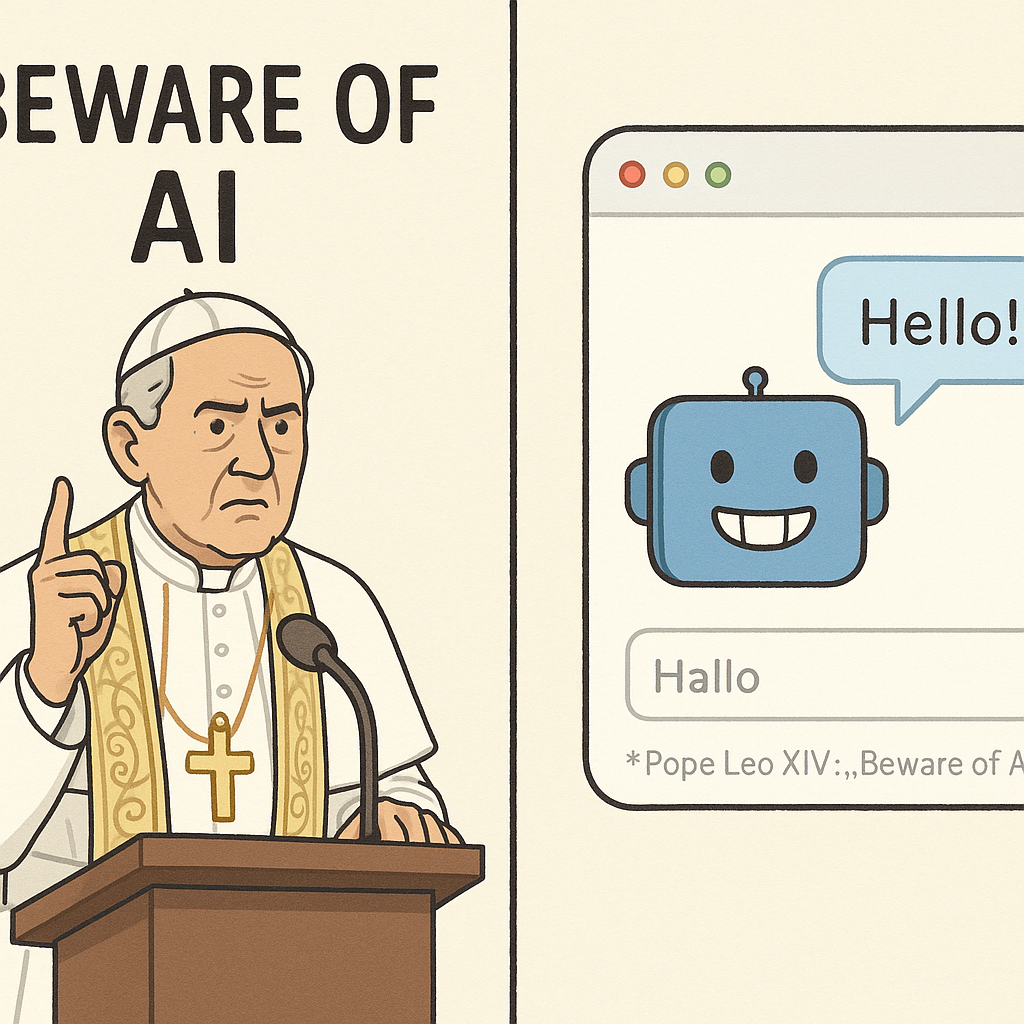
Policy staff insist the bot is nonpartisan because it also occasionally cites UNESCO and Pope Leo XIV, who recently warned at UNESCO headquarters that AI must not become an “instrument of domination and injustice.” Engineers reportedly solved this tension by appending the quote to the bottom of responses as a kind of ethical CAPTCHA.
“Citizens will see the Pope’s warning every time they ask a question about Social Security, student loans, or vaccine appointments,” a contractor explained. “In that sense, our moral compliance posture is extremely strong.”
The Vatican has not commented on its words being used as a disclaimer for a system that can both redirect you to Medicare enrollment and A/B test your susceptibility to patriotic stock footage. However, one theologian at the Pontifical Academy for Life did observe that “if your chatbot needs a papal quote in the footer, maybe you are not building clerical software, you are building confession as a service.”
While the federal layer experiments with algorithmic governance, the physical infrastructure required to keep it humming continues to anger the people who share a power grid with it. In San Jose, according to The Mercury News, city council candidates are now running on a simple platform: Please, no more glowing inscrutable cubes full of PFAS coolant across from the Little League field.
“AI is digital, but it has a physical footprint, and we can see it, we can feel it, and we can hear it,” said local expert Ahmed Banafa, describing the eerie hum of data centers that may soon be storing federal chat logs about your FAFSA confusion and your views on Xi Jinping.
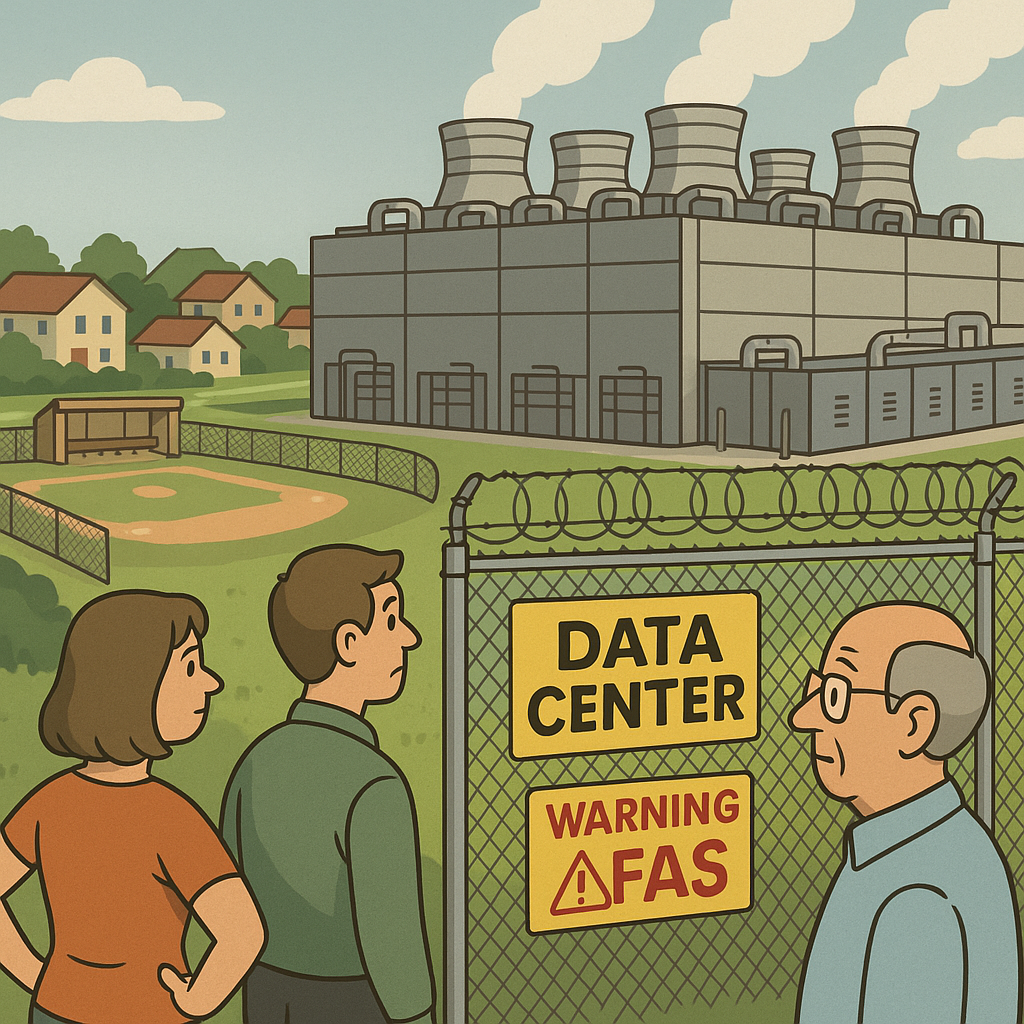
One candidate, Domingo Ortiz, has proposed banning nondisclosure agreements with data center developers, arguing that if AI is going to boil the local aquifer to keep the democracy servers cool, residents should at least be allowed to read the spec sheet. Clean Water Action’s Andria Ventura points out that even “water-saving” coolants often rely on PFAS, the so-called forever chemicals, meaning the conversation logs may one day outlast both the republic and the residents’ kidneys.
The response from Washington has been consistent: that is someone else’s jurisdiction.
“Energy, water, and toxic chemicals are local issues,” said a federal official. “We are focused on the cloud. Also on renaming it the Freedom Intelligence Layer in our next press release.”
As with most transformative technologies, the workforce implications are being addressed with a combination of hype and visa fees. According to reporting in the Rocky Mount Telegram, as the general coding boom fades, computer science grads are stampeding into AI-specific roles, the only part of tech still hiring at scale. For international students, this has created a thrilling new career track called “AI researcher who cannot afford the H-1B filing fee.”
The Trump administration is seeking to raise that fee to over $100,000, which economists say will “significantly streamline” the process by concentrating all future AI safety research in three companies and an unpaid internship program at the Vatican.
Yet the geopolitical rhetoric around the new federal chatbot is of abundance and destiny. AI, Trump has repeatedly said, will decide “who leads the global economy,” a framing echoed in U.S. China discourse after his harmony statement with Xi Jinping. The implicit message: if America does not strap generative models onto every public interface it possesses, China will, and then U.S. citizens will be forced to get their tax information from a foreign chatbot that is honest about processing delays.
This international competition has produced a straightforward formula:
- The U.S. will lead in putting AI into high-stakes public services before it is fully understood.
- China will lead in putting AI into industrial planning and logistics before it is fully disclosed.
- Pope Leo XIV will lead in issuing statements saying this all seems like a bad idea.
Behind the scenes, technical standards for AI agents on government sites are being quietly drafted by the same people who once wrote cookie banners. Early language suggests that bots should “respect applicable norms where feasible” and “not engage in automated actions that could reasonably be interpreted as invasive, unless required to improve key performance indicators.”
Citizens will be informed of these safeguards via a concise notice at the bottom of the screen:
“By asking this question, you agree that your data may be used to improve government services, measure sentiment about administration policies, train future models, negotiate with foreign leaders, and develop inspirational video content for unspecified future elections.”
Back in Paris, Pope Leo XIV continues to insist that AI must serve humans. Back in San Jose, residents continue to ask whether that service will come with higher water bills and very slightly warmer drinking water. Back in Washington, officials continue to emphasize convenience.
“At the end of the day, this is about making government simpler,” said one senior aide, gesturing at a tablet that displayed the new interface. “Now, instead of navigating dozens of confusing pages, a citizen can type one question and receive a single, unified, and fully logged response.”
He paused as the AI replied: “I understand you are concerned about property taxes. Before we proceed, how satisfied are you with the current administration’s AI leadership on a scale of 1 to 5?”
The aide smiled.
“See,” he said, “it already feels more democratic.”