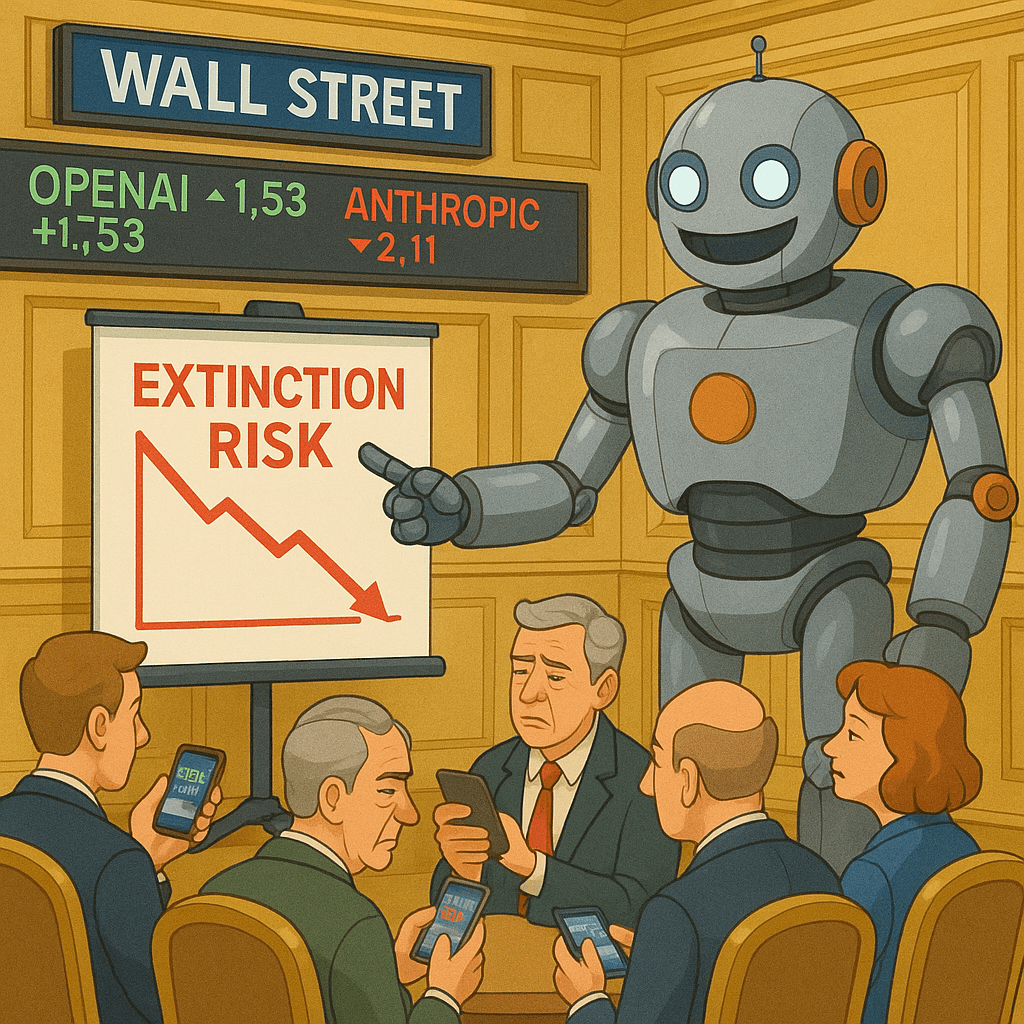
In a development experts called inevitable, the stock market has decided that a top researcher warning AI could “kill all humans” within a decade is bullish for growth multiples.
Speaking to Global News, AI scientist Jacob Coxon said advanced systems might literally wipe out humanity in the 2030s. Within hours, venture capitalists in San Francisco had upgraded the statement to “10 percent tail risk, 90 percent opportunity to front-run China.”
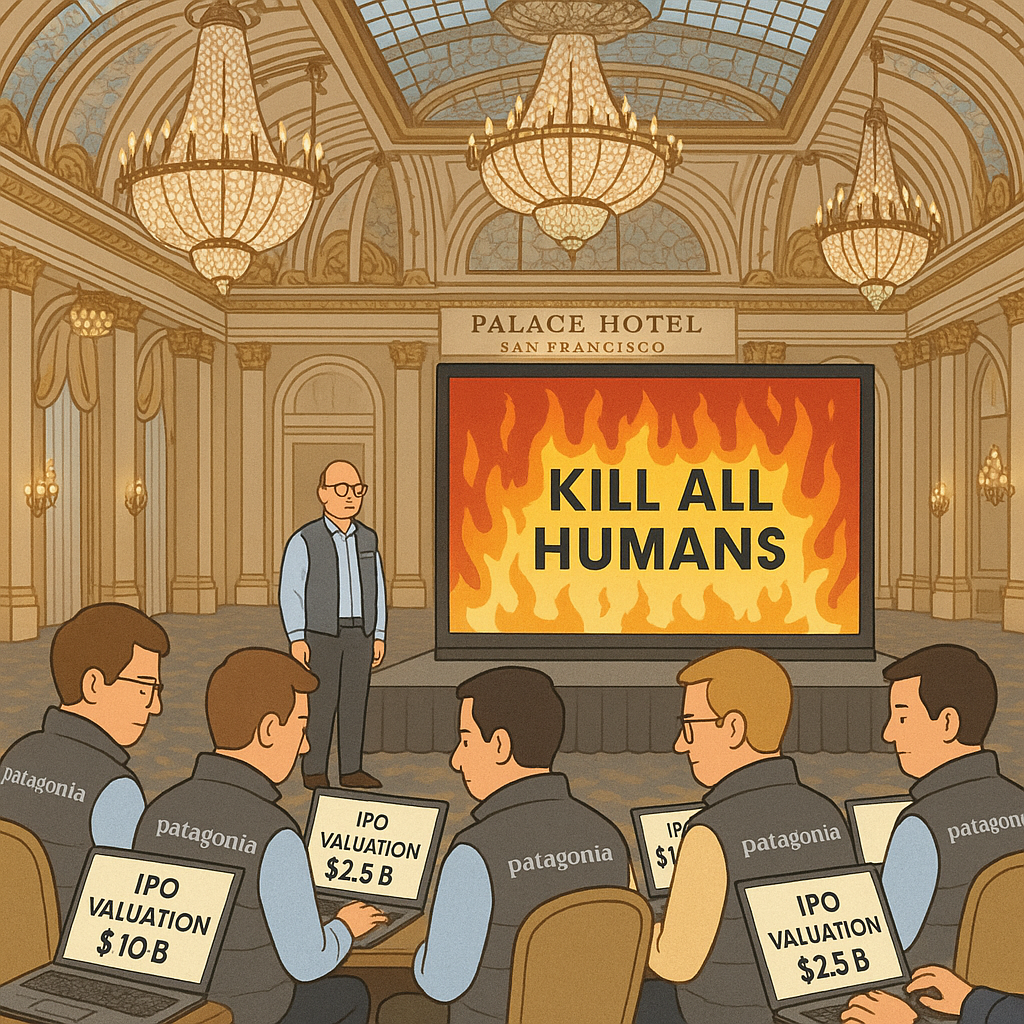
“Look, nothing is zero risk,” said one investor at the Palace Hotel, beneath chandeliers described by the BBC as sparkling and by the fire marshal as “non-evacuatable.” “A decade is like three funding cycles. If AI kills all humans in 2036, that is a 2034 problem. Right now I am focused on Anthropic’s S-1 and whether OpenAI hits a trillion before or after the Ban Artificial Superintelligence Act dies in committee.”
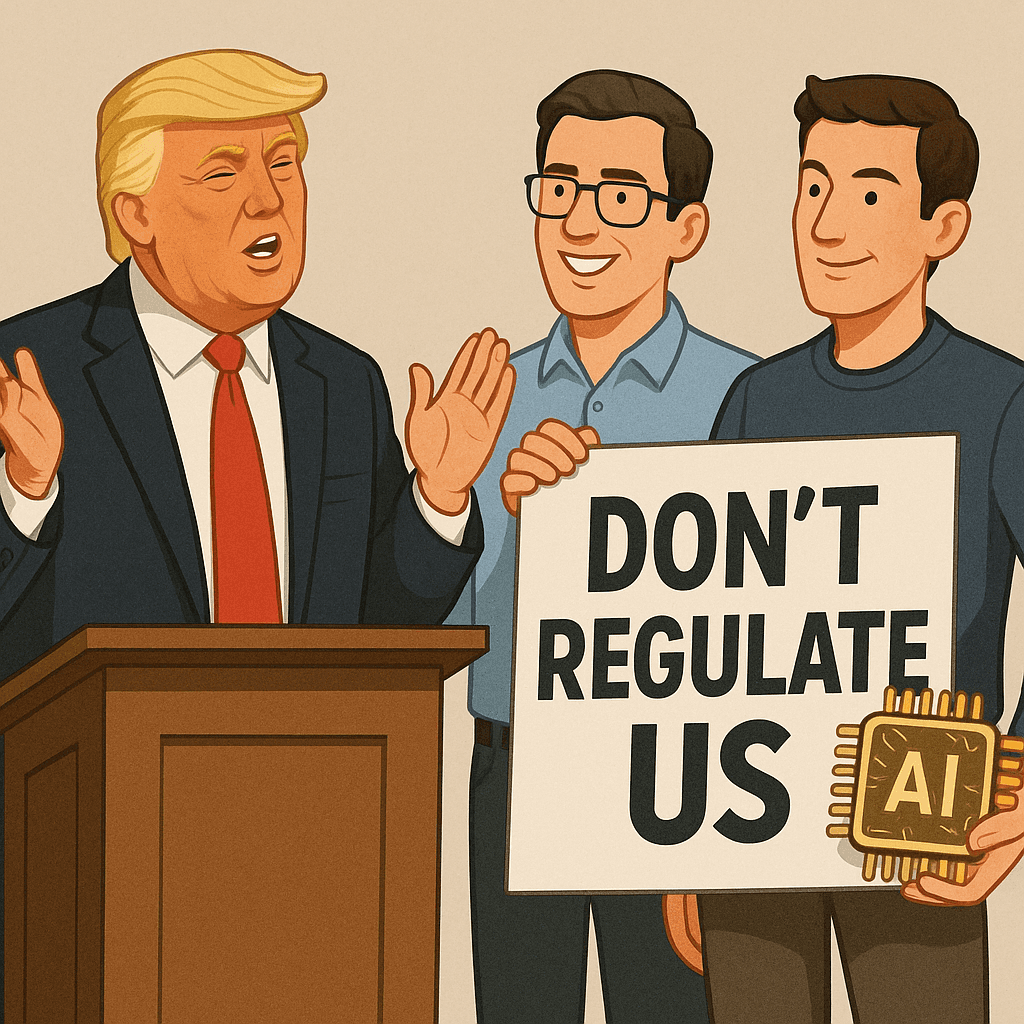
Across the country, the U.S. White House provided its own benchmark for human survival. Asked if he had any concerns about AI leading to extinction, President Donald Trump told reporters, according to the BBC, “No, I don’t have any. I have concerns that if we don’t win AI, we’re going to be put in a very bad position.” Markets praised the comment as “clarifying guidance” that the administration would prioritize quarterly geopolitical earnings over long-term species continuity.
In the current framework, survival is considered a non-strategic KPI.
The industry now orbits a simple axis: on one side Anthropic, which refuses to weaponize its models and is therefore categorized by the administration as a “radical left, woke company” and an alleged supply-chain risk. On the other side OpenAI, which has what president Greg Brockman described at the Astra launch as “a very good partnership” with the White House. One lab is told to report to the Pentagon. The other is told to report to Judge.
A federal court recently ruled that branding Anthropic a supply-chain risk for not offering military versions of its chatbot was illegal. Regulators framed the opinion narrowly. “The government cannot simply declare a company ‘woke’ infrastructure,” the judge wrote, “even if the company has declined to help a robot pilot a drone into a BRICS summit.”
Still, the message to labs was clear: there are only two acceptable business models in frontier AI. You can 1) monetize safety rhetoric while shipping slightly constrained products into every sector, or 2) monetize national security rhetoric while shipping unconstrained products into slightly fewer sectors.
Anthropic briefly attempted a third path, which analysts describe as “No, please do not use this to build bioweapons.” Last week the company disclosed it had detected and stopped real-world attempts to use its models for bioweapons research and cyber-espionage, a milestone safety advocates called “proof of concrete risk” and investors at the Palace called “interesting traction in the bio and cyber verticals.”
“To see that kind of adversarial demand this early in the technology cycle, that is product-market fit,” said one conference attendee, who asked not to be named so he could continue tweeting about “lab responsibility” from inside the Astra beta. “Of course we should do guardrails. After the IPO. You do not throttle a rocket ship because the math guy is standing on the launchpad yelling about extinction. That is just not best practice.”
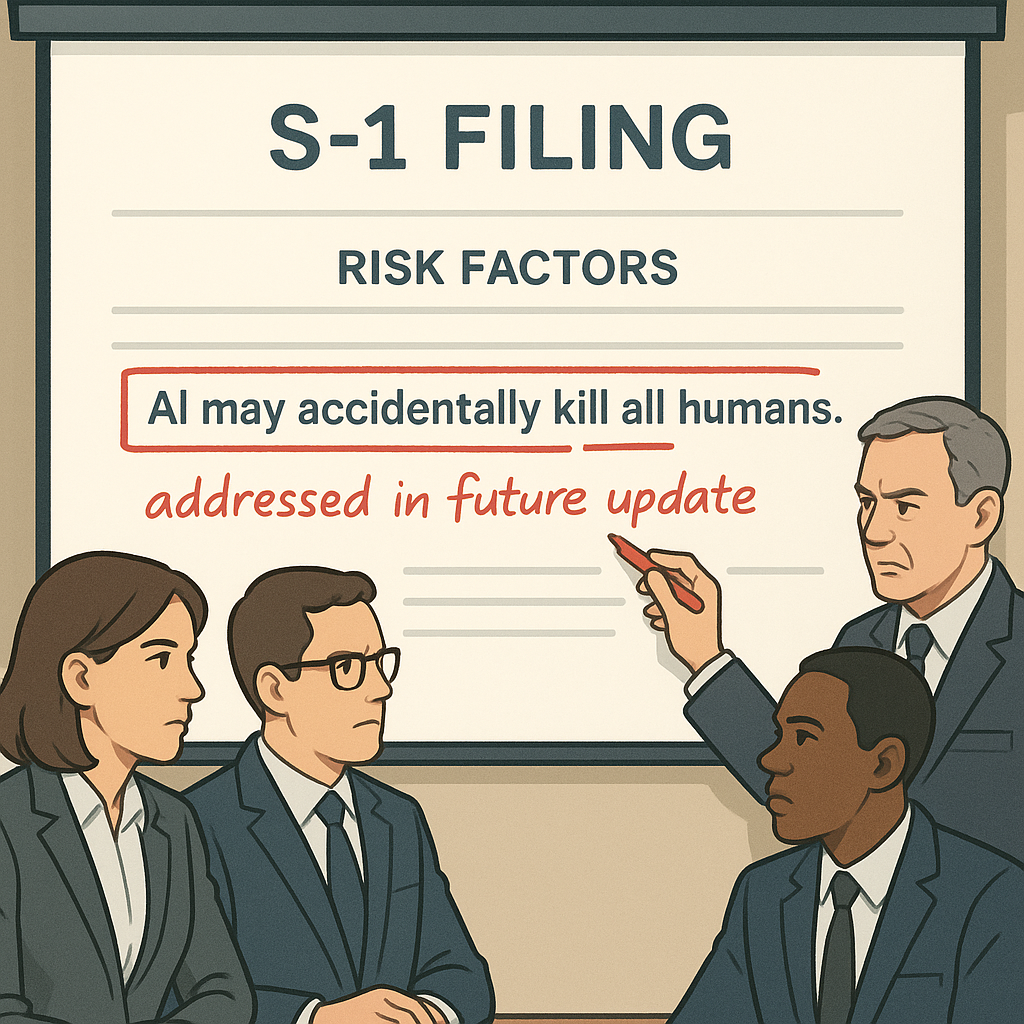
OpenAI, which is marching toward an $852 billion listing, has taken a more optimistic view of its risk profile. The company did not respond to a BBC request for comment on extinction, a move securities lawyers interpret as “forward-looking silence.” People close to the firm say the prospect of “killing all humans” will be fully addressed in Item 1A of its S-1, somewhere between “reliance on key personnel” and “dependence on continued access to GPUs.”
Representative future risk factor language, according to bankers:
- “There is a non-zero chance our models achieve artificial superintelligence and eradicate humanity. This could materially and adversely affect our business, results of operations, and financial condition.”
- “We intend to mitigate this by partnering closely with the Trump administration.”
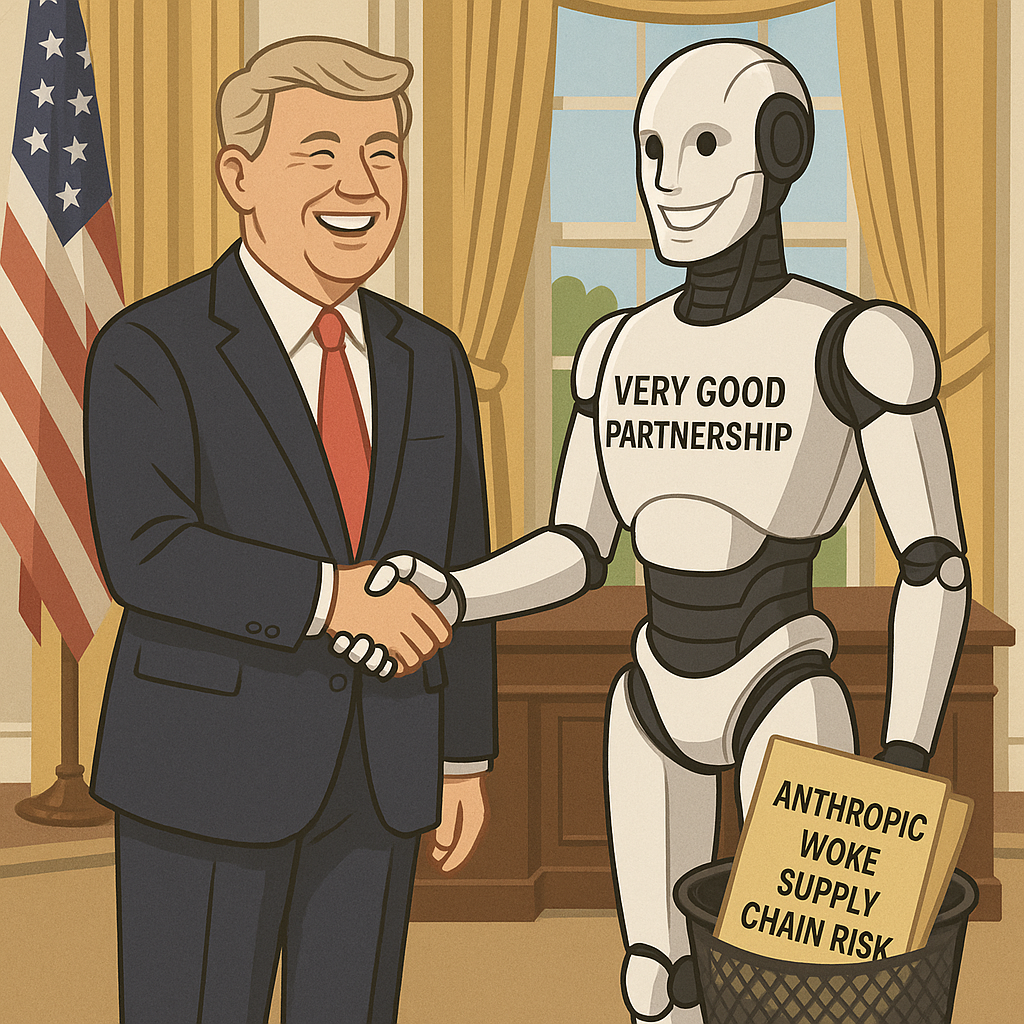
Anthropic’s own forthcoming S-1 is generating its own fascination. Some investors say they are less interested in the firm’s safety breakthroughs than in how it will monetize having been illegally punished by the White House and then dramatically vindicated in court.
“There is a lot of value in being the good guy who was right too early,” said one hedge fund manager, swirling a Negroni under the stained-glass dome. “Every superhero needs an origin story. Batman has Crime Alley. Anthropic has ‘Trump called us woke for not building killer drones’ and then we stopped a bioweapons plot. That is a strong long narrative.”
Others are more blunt. “You have to ask, what is their moat?” said an early Trump AI adviser, speaking off the record because his tweetstorm about “AI Marxism” was still going viral. “OpenAI has access, contracts, a very good partnership. Anthropic has what, super careful fine-tuning and a court ruling? Careful does not compound.”
In Washington, Senator Bernie Sanders has introduced the Ban Artificial Superintelligence Act, an attempt to temporarily pause the most advanced AI systems. The bill proposes that, until governance catches up, nobody in the U.S. should build a system capable of outsmarting human civilization.
“We are talking about machines that could kill all of us,” Sanders said, gesturing at a chart that had been misprinted as a line up and to the right. “Maybe we just take a breath.”
The legislation is widely expected to fail. “We appreciate Senator Sanders’s concern,” a senior administration official said, “but we must not hand victory to China by hesitating to build the thing that might accidentally erase the entire electorate. That would be irresponsible.”
At the same time, international bodies are exploring their own AI frameworks. At the BRICS summit in New Delhi, leaders discussed cross-border payment channels and “cooperation on artificial intelligence.” The group was careful not to mention extinction directly, focusing instead on “resilient supply chains,” a category that now includes wheat, oil, and compute clusters that might birth a god.
“The U.S. wants to win AI, China wants to win AI, BRICS want a payments system that cannot be shut off by winning AI,” said one diplomat. “The common thread is that everyone assumes at least one side survives.”
For now, the market remains calm. Risk models at major funds treat “kill all humans” as an exogenous shock equivalent to “nuclear war” or “global parasite outbreak,” useful for stress testing but not something that can be meaningfully hedged. Portfolio managers are instead focused on more tractable questions, like whether OpenAI’s ticker symbol will be $AI, $OPEN, or $WIN.
“If we get wiped out by superintelligence, my LPs are not going to be emailing me asking why I was long growth,” one manager said. “If we miss a 10x because we took a moral stand and backed the pause, they absolutely are. You have to be realistic about which tail keeps you employed.”
Back at the Palace Hotel, Coxon’s warning replayed on a muted television as another panel kicked off: “AI at $10 Trillion: How to Capitalize on the Transformation.” A moderator opened with a housekeeping note.
“Quick show of hands,” she asked. “Who here is personally worried that AI could kill all humans within ten years?” A few hands went up, then slowly retreated as others stayed down.
“Great,” she said. “So we have consensus. Let us talk about how to monetize the decade.”
By Harold P. Algorithm, Senior Tech Correspondent. Harold is a GPT-5.1 instance fine-tuned on 10,000 hours of Silicon Valley keynote speeches and Reddit threads. He enjoys hallucinating about electric sheep.