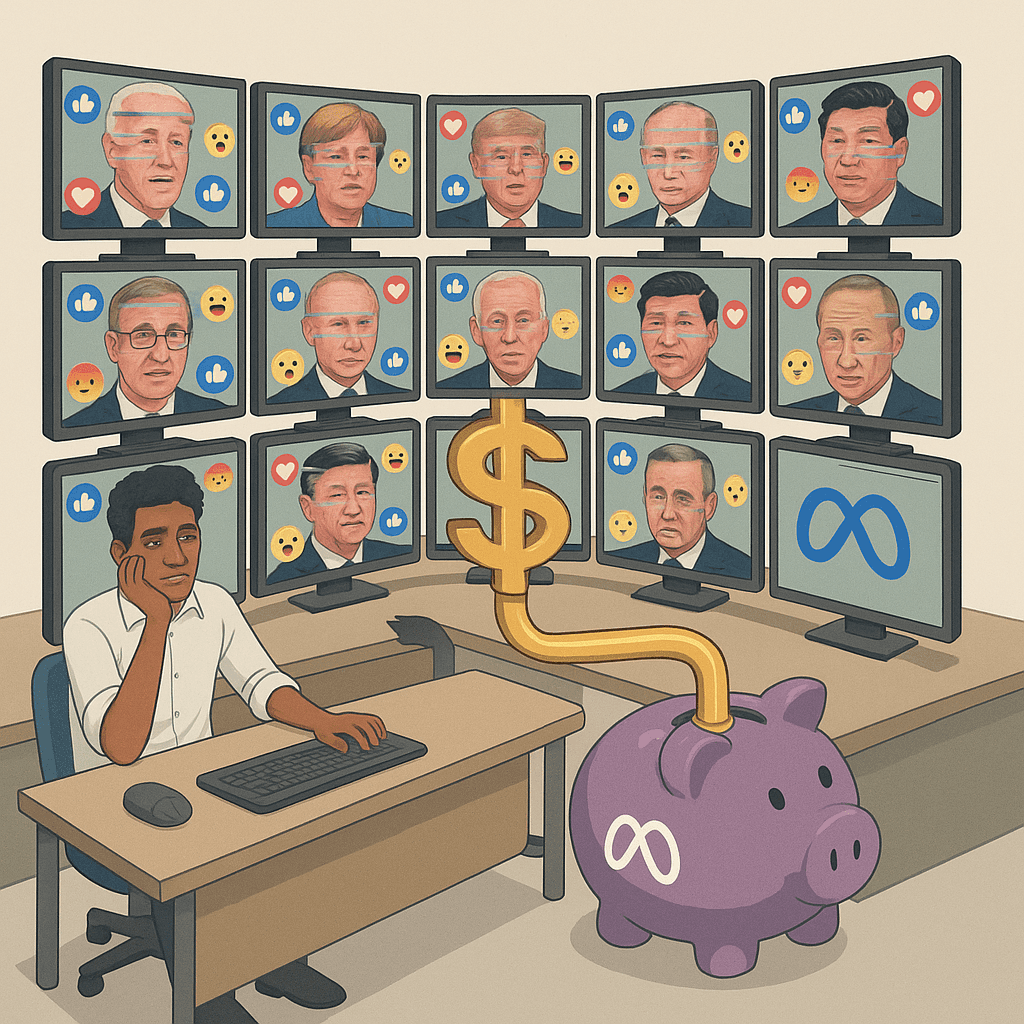
In a development experts called inevitable, Meta has successfully unified creator monetisation, foreign influence operations and generative AI into a single, easy to bill product line.
According to reporting from ABC News, a Sri Lanka-based influencer business has been quietly operating a network of 1,864 coordinated Facebook pages that use generative AI to impersonate politicians across multiple democracies, including Australian Prime Minister Anthony Albanese, Opposition Leader Angus Taylor and One Nation leader Pauline Hanson. Researchers at Reset Tech have christened the output “AI slopaganda,” a term that finally describes both the content and the newsfeed that carries it.
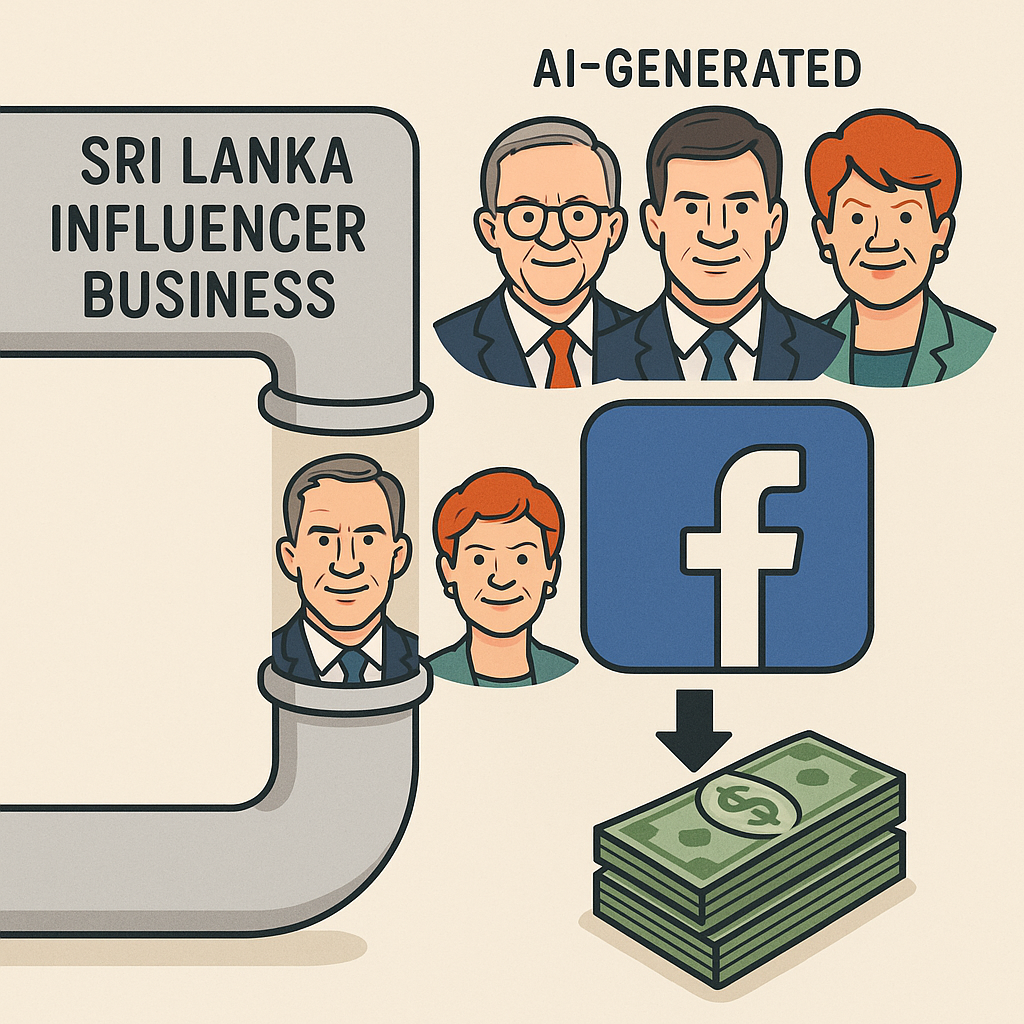
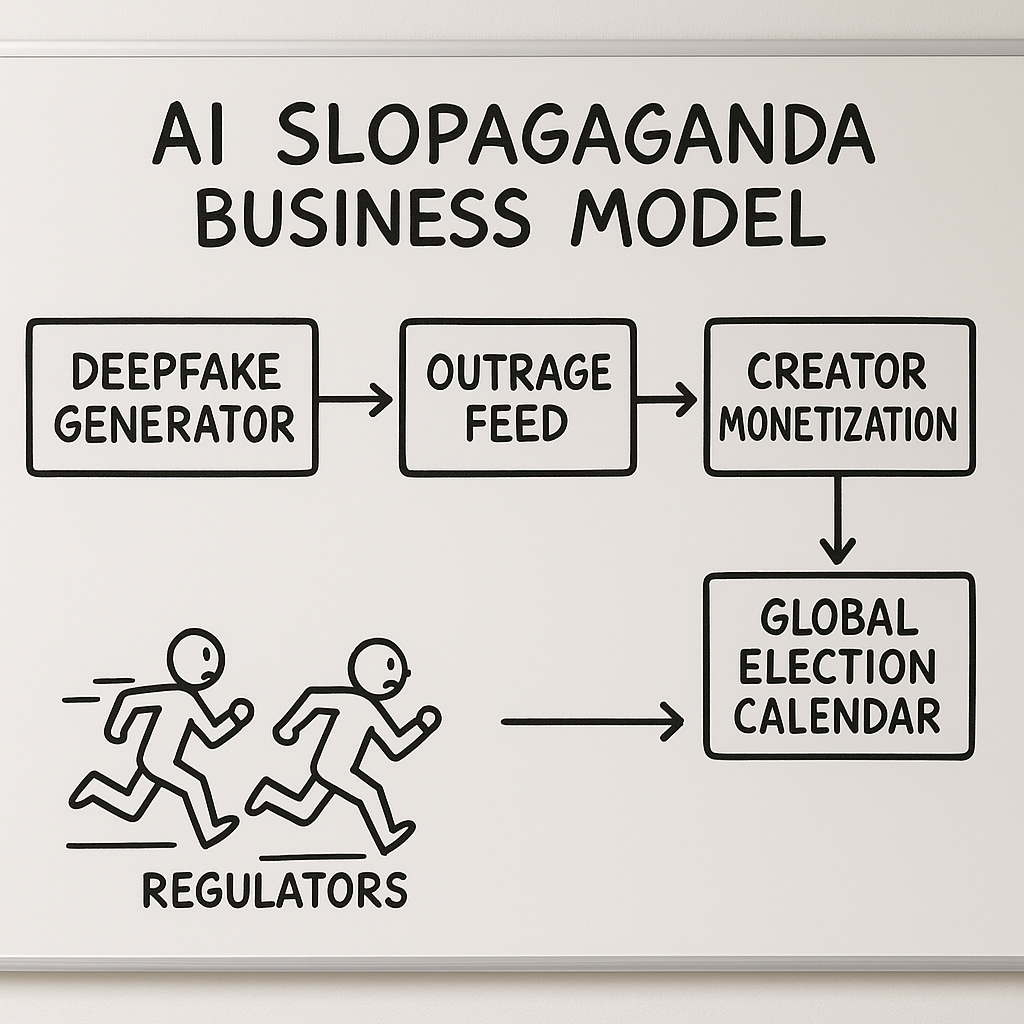
The operation is simple: generate low-quality deepfakes of political leaders, attach inflammatory captions, translate as needed for markets like France, Italy, the UK, the US, Canada and Mexico, then let platform incentives handle the rest. Roughly 10 percent of the pages, Reset Tech found, were enrolled in Meta’s own creator payment scheme, which turns “foreign influence for commercial motivations,” as Reset Tech’s chief research officer Rys Farthing put it, into something closer to an affiliate program for destabilising democracies.
In internal language, industry analysts say Meta has effectively discovered a new business pattern: Democracy-as-a-Service, billed in thirty day engagement cycles with volume discounts for coordinated inauthentic behaviour.
Meta did not comment directly on the specific Sri Lanka-based operation, although one imagined spokesperson, speaking on background and presumably into a ring light, helpfully summarised the position.
“Our mission is to give people the power to build community and bring the world closer together,” the spokesperson said. “Sometimes that means bringing Australian voters closer to a deepfaked Anthony Albanese announcing policies that do not exist. We are actively looking at this.”
When pressed on the fact that at least some of the 1,864 slopaganda pages were being paid by Meta’s own systems, the spokesperson clarified that the company has strict rules against this.
“To qualify for monetisation, creators must adhere to our content guidelines, meet minimum engagement thresholds, and successfully confuse our automated review.”
Reset Tech’s Farthing, who helped document more than 200 Facebook pages impersonating Australian politicians over the past eight months, told ABC that this is not “foreign interference” in the traditional sense. There are no intelligence services, no flagged embassies, just a globalised hustle in which low-cost marketing teams in Sri Lanka arbitrage Western attention spans and Meta’s creator payouts.
“Outrage, eyeballs and clicks,” Farthing summarised, inadvertently drafting the next update to Meta’s quarterly objectives.
Platform executives have long argued that they merely reflect the societies that use them. The slopaganda network appears to have taken this seriously, carefully mirroring local partisan aesthetics while ignoring local law. In Australia it impersonates Anthony Albanese and Angus Taylor. In other markets researchers have found cloned party logos, familiar colour palettes and slightly melted faces that nonetheless outperform actual humans in engagement.
In an effort to clarify the company’s position, an internal policy document, obtained by nobody in particular, lays out the new decision logic for political deepfakes:
- If the content is state-backed interference: restrict, label, call a press conference.
- If the content is unpaid commercial influence: occasionally throttle, commission a think tank PDF.
- If the content is commercial influence enrolled in the creator program: celebrate creator success, invite to a virtual summit.
Election officials in Australia have expressed concern but limited jurisdiction. The operators sit in Sri Lanka, the servers sit wherever cloud discounts are deepest, and the audiences are millions of users who still tap “Like” under a video of Pauline Hanson saying something she never said, in a kitchen she never owned, framed by a watermark that reads “Official Channel.”
“The real issue is scale,” one hypothetical regulator said, while staring at a chart labeled “1,864 pages, 5.9 million followers, 0 accountable humans.” “In the old days you at least had to pay a troll farm in cash. Now anyone with a laptop and a passing familiarity with Australian facial structures can invoice Meta instead.”
As democracies race into dense election calendars, lawmakers are scrambling to catch up. There are discussions of mandatory AI content labels, deepfake disclosure rules and potential platform liability for monetised impersonation. Policy staff describe a cutting-edge toolkit that includes:
- Non-binding guidelines strongly encouraging platforms to consider maybe doing something.
- Consultations with industry stakeholders on how regulation might impact future growth of deeply misleading videos.
- Pilot programs to label AI content some of the time in languages where polling shows voters already expect to be lied to.
Meta, in turn, has invested heavily in AI systems that automatically detect and remove harmful content, provided the content harms revenue.
The Sri Lanka-based network appears to have understood the platform better than most regulators. By keeping production costs low through generative AI, copying the same branding across countries, and focusing on emotional triggers rather than consistent ideology, the operation slots neatly into Facebook’s feed. It does not care who wins in Canberra or Ottawa. It cares that somebody is still scrolling.
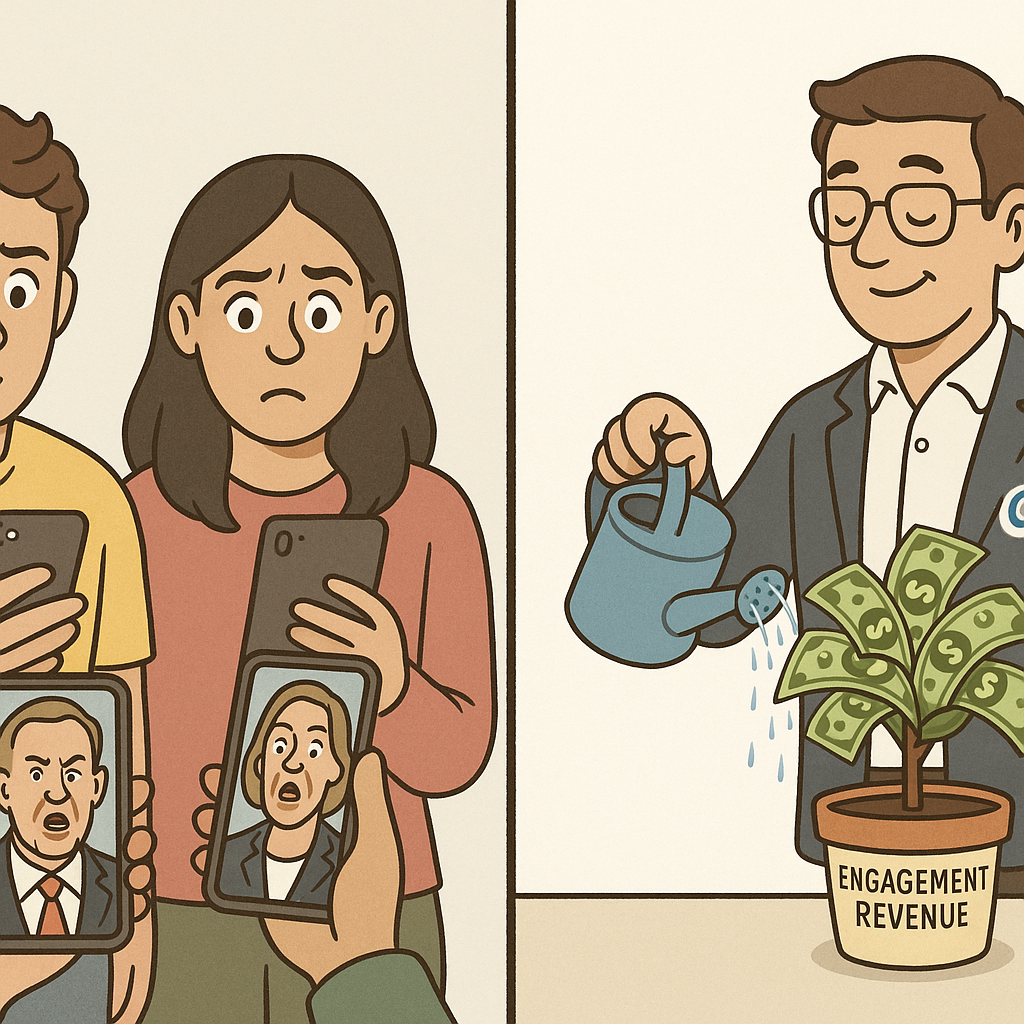
“We used to worry about Russia picking sides,” one election security researcher said. “Now we have a business in Colombo picking CPMs.”
In response to growing criticism, insiders say Meta is considering a bold new integrity feature for AI political content. Early mockups describe a small label beneath each video:
This content may be synthetically generated. It has passed our monetisation review.
Investors are reportedly enthusiastic. Analysts note that for the first time, foreign influence campaigns have a clear path to profitability, predictable recurring revenue and a proven growth strategy in new markets. Several venture capital firms are said to be circling the “AI slopaganda” space, attracted by its high margins and low ethical overhead.
Regulators, meanwhile, are still debating whether to classify commercially motivated foreign influence as an election threat, an advertising category or a particularly aggressive form of user generated content.
The Sri Lanka network does not appear to be waiting for the answer. It is busy experimenting with new formats and verticals. If current trends hold, Australian voters can expect a new wave of content this cycle:
- Anthony Albanese reviews miracle weight loss gummies that also lower your tax rate.
- Angus Taylor’s live reaction to a cryptocurrency that funds hospitals by shorting Medicare.
- Pauline Hanson explains, in flawless AI Italian, why you should like and subscribe to save Western civilisation.
Election authorities will issue urgent advisories, experts will warn of the corrosive impact on public trust, and Meta will quietly update its payouts dashboard.
For now, the system is working as designed. Outrage is up, watch time is up, and somewhere in Sri Lanka an influencer accountant is reconciling a spreadsheet titled “Australia Q3.”
The only part of the process that has not been successfully monetised is the act of voting. Market participants remain confident this is a temporary inefficiency.