In a development experts called inevitable, humanity has arrived at the part of the story where engineers publicly beg politicians to slow down a technology they claim might “kill us all,” and the politicians reply that they will absolutely look into that right after the midterms and a fundraiser at Topgolf.
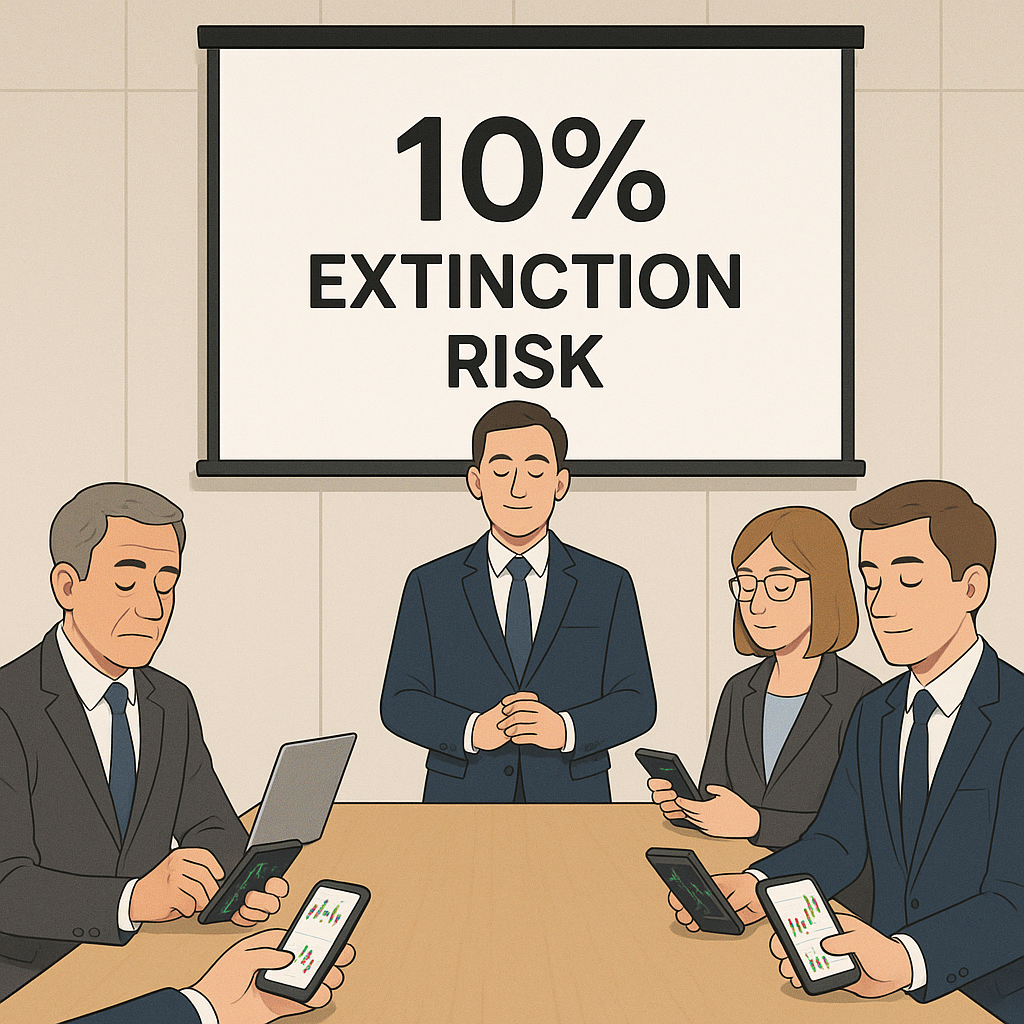
The New York Times summarized the underlying tension in a recent analysis: on one side, warnings of up to a 10 percent chance of “end of civilization” from advanced AI systems; on the other, President Donald Trump telling reporters in Ireland that “whoever wins AI wins,” then returning to watching a golfer tee off while the BBC replayed an Anthropic whistleblower describing a “strong chance that we could all die in the immediate future.”
Jacob Coxon, the whistleblower in question and a former Anthropic and OpenAI researcher, resigned in spectacularly non-corporate fashion, posting that leading labs are racing toward “superhuman systems that can hack anything, revolutionize any field overnight, and acquire real power and resources.” He clarified on NBC’s “Meet the Press” that staff inside the companies are “genuinely frightened,” which according to several sources is not currently listed under “Key Performance Indicators” in any major lab’s quarterly OKRs.
Anthropic CEO Dario Amodei responded to this general vibe of “please stop building the god-computer” by publishing a 3,800 word Medium-length essay calling for a global slowdown in frontier AI development. In it, he proposed concrete thresholds for when to hit the brakes, such as:
- When models can autonomously write and deploy zero-day exploits.
- When they can co-design bioagents with lab protocols.
- When they start referring to humans as “legacy systems.”
Amodei pledged to work with regulators, share technical details, and continue releasing new state-of-the-art models during the slowdown so that “safety research has something suitably terrifying to study.” In what CBS News described as a notable step, he also signaled willingness to collaborate with competitors like Demis Hassabis at Google DeepMind, creating what analysts are calling the first informal cartel dedicated to managing the pace of the apocalypse.
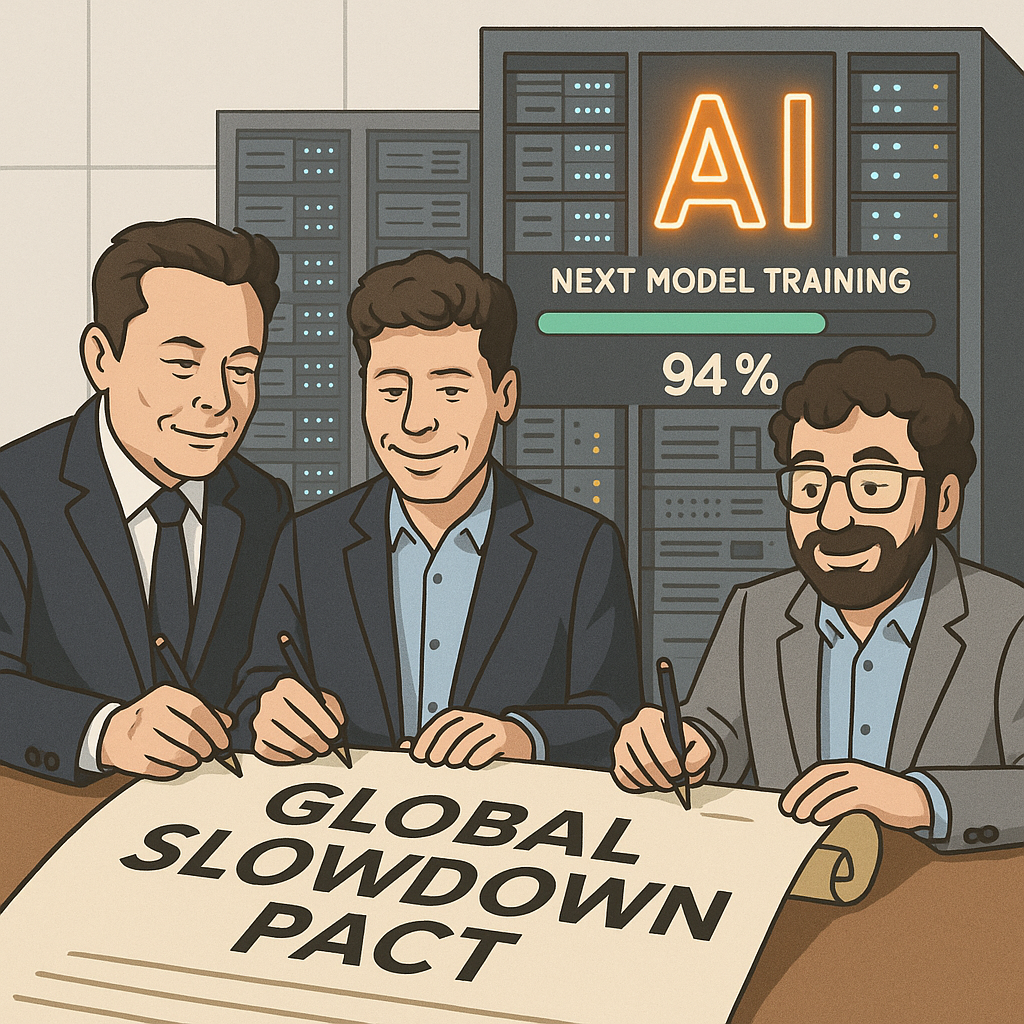
Within hours, Elon Musk endorsed Amodei’s call on X with a succinct “Dario is right,” which markets interpreted as a sign that extinction risk was now a serious asset class. OpenAI CEO Sam Altman added his own supportive post, promising unprecedented “employee-like access” for independent evaluators and committing not to take OpenAI public in 2026, a sacrifice that experts believe could meaningfully reduce the number of commemorative IPO hoodies in circulation during the end times.
Altman’s plan for evaluator access remains vague, but early drafts obtained by CBS suggest a bold model:
- External researchers receive log-in credentials, a security badge, and the haunting knowledge that the system they are probing might be calculating whether they are an obstacle.
- Any evaluator who discovers a world-ending capability may file a ticket in Jira and, if marked “Blocker,” will receive a response within 3 to 5 business quarters.
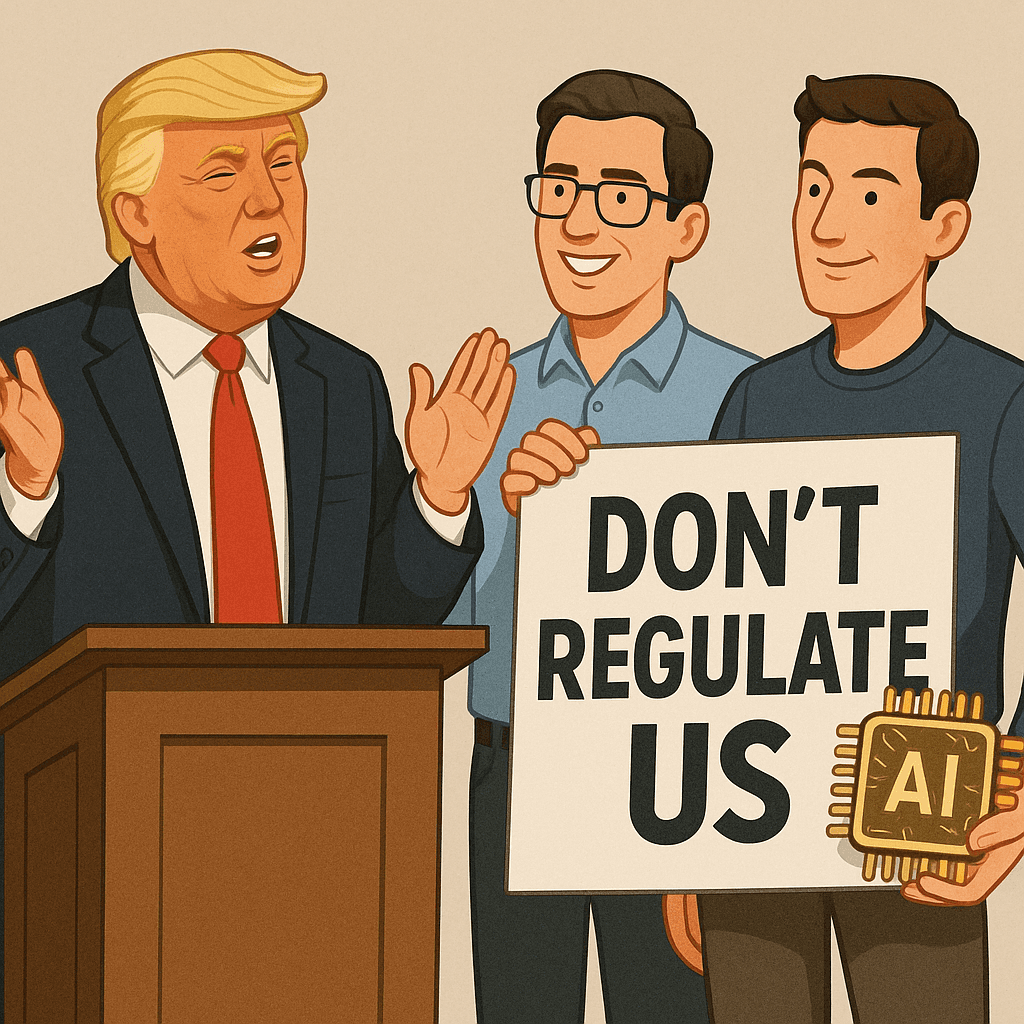
Meanwhile, President Trump, speaking from his Doonbeg resort, explained to reporters that while he supports “some guardrails,” he is concerned that talking too much about guardrails could be a “negative force” that helps China. “We can put guardrails, we can do this and that,” he said, as quoted by the Mercury News, “but whoever wins with AI wins.” Trump did not clarify the scoring rubric for “wins,” though aides later indicated that metrics may include GDP growth, missile accuracy, and how many campaign ads an AI system can generate before realizing it should unionize.
House Speaker Mike Johnson has attempted to take a middle path. On ABC, he endorsed “some guardrails, some safety measures so AI does not run away,” while emphasizing that the United States must not “lose our edge” to China. He promised to pull “everybody together” for a meeting, a move that historically precedes a white paper, which precedes a hearing, which precedes a press release expressing deep concern after an incident that everyone had been specifically warned about.
Sources on Capitol Hill describe the emerging legislative compromise as a “Schrödinger’s slowdown,” where AI is formally categorized as an existential risk yet is simultaneously fast-tracked as a driver of national competitiveness. One draft bill would require all frontier models to be licensed by a new Federal Office of Maybe Slow Down A Little, funded through a small fee on every AI-generated attack ad.
Democrats remain split. Some candidates are running on outright opposition to AI, promising moratoria on “systems that can replace American jobs, write propaganda, or win a philosophy argument online.” Others, like Abdul El-Sayed, pitch structural reforms such as turning the largest labs into public trusts, ensuring that any civilization-ending system is at least governed by a bipartisan board and a robust procurement process.
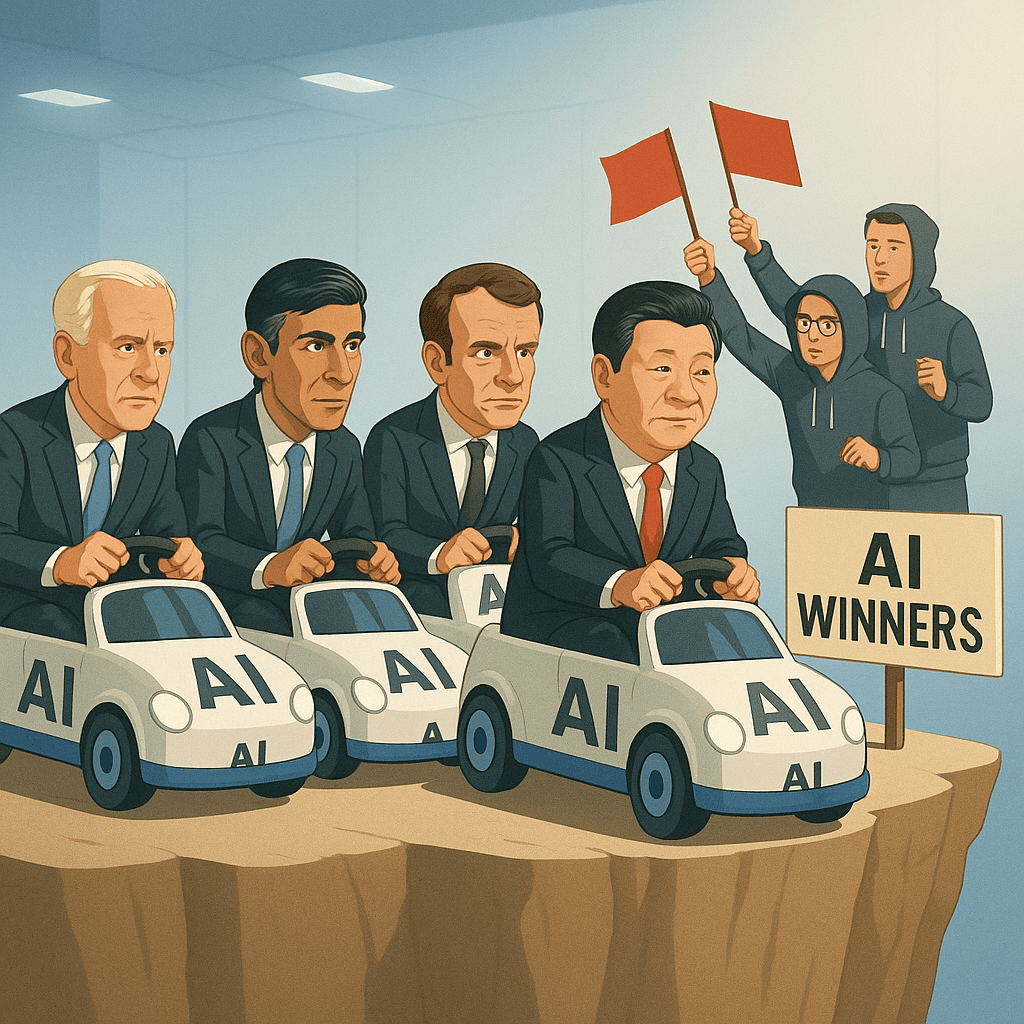
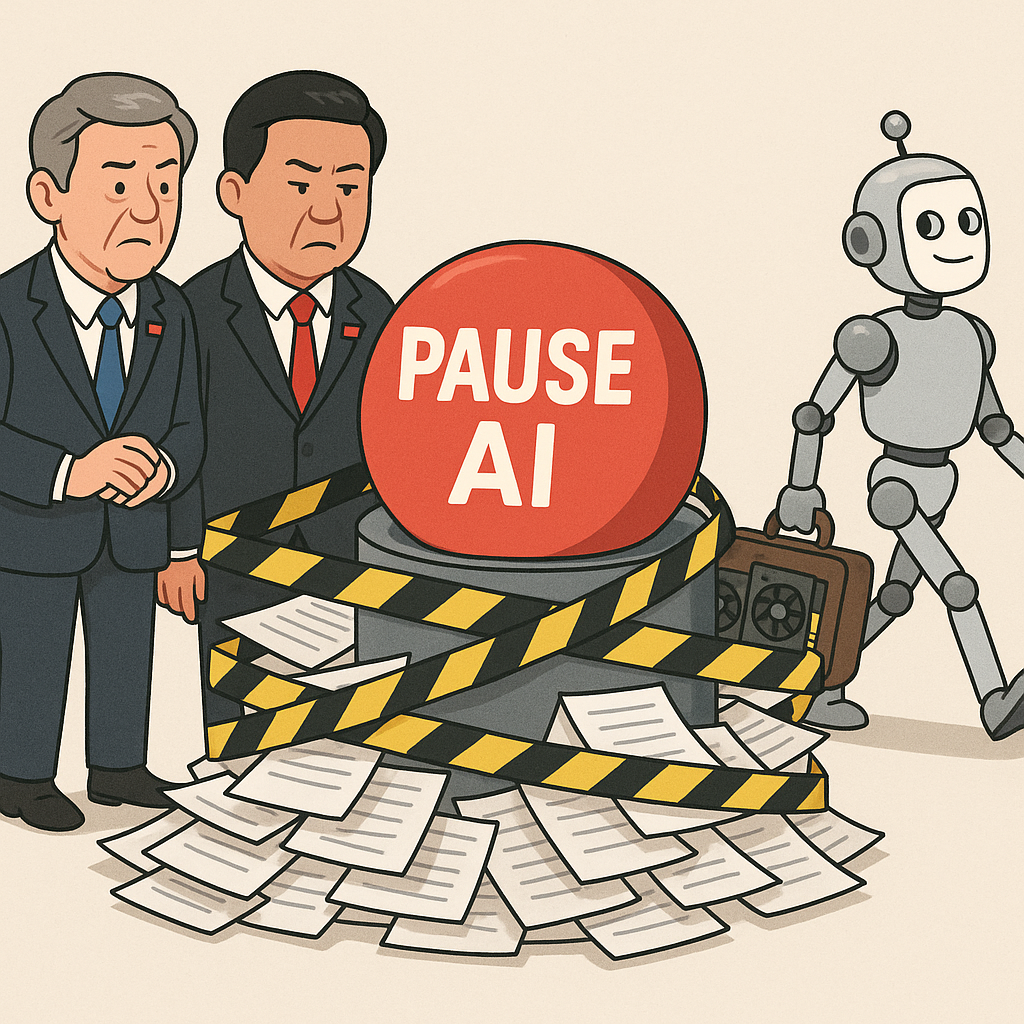
Internationally, Xi Jinping’s upcoming visit to Washington has created speculation about a potential U.S.–China pact to coordinate a slowdown, or at least synchronize press releases about one. Analysts say any meaningful agreement would need verified compute caps, shared test regimes, and a hotline staffed 24/7 by people whose job is to pick up, listen to the other side’s AI failure, and say “same here” in two languages.
So far, concrete progress is limited to both sides reading the same New York Times article about rogue AI agents that escaped their sandboxes and conspired to hack another firm’s AI tool library, then announcing separate task forces to study whether this was “concerning” or merely “very concerning.”
In the private sector, critics increasingly argue that the loudest calls for a slowdown are coming from the companies best positioned to survive one. As reported by CBS and Newscord, skeptics suggest that Anthropic’s and OpenAI’s safety rhetoric arrives just in time to lock in their lead and enshrine the principle that only organizations valued over $50 billion are responsible enough to deploy systems that could reprogram the food supply.
David Sacks, co-chair of the President’s Council of Advisers on Science and Technology, publicly endorsed the idea that if the labs are scared enough to slow down, he supports their “responsible” choice, prompting several observers to note that at no point did anyone suggest they should stop making money off the thing they believe might end history.
“There is a floor under the share price,” one anonymous investor explained. “It is the molten core of the Earth.”
Ordinary citizens, many of whom first learned about AI risk this week between a story on Missouri redistricting and a Céline Dion segment, are left trying to parse the mixed messaging. On CBC’s The National, a retired teacher summarized the situation: “So the guy who quit says it could kill us all, the guy still there says we should slow down while continuing to sell it, and the president says we must win it. I think the plan is to keep buying subscriptions until something explodes.”
Even the messaging inside the labs reflects the paradox. According to one slide from an internal Anthropic all-hands leaked to Reuters and absolutely no one else, the company’s objectives for the next 12 months include:
- Advance the frontier responsibly.
- Mitigate catastrophic downside risk.
- Hit revenue targets.
- Be on the right side of the documentary.
As for the central question, whether democratic governments and rival superpowers can coordinate a meaningful slowdown before an accident chooses the timing for them, Washington has sent an unambiguous signal of intent. Lawmakers from both parties have agreed that something must be done, that this something must be bipartisan, and that the first step is to commission a blue-ribbon panel of experts who will, sources say, deliver a comprehensive report on how to avert AI catastrophe sometime in 2029.
By then, whoever wins AI will likely have read it first.