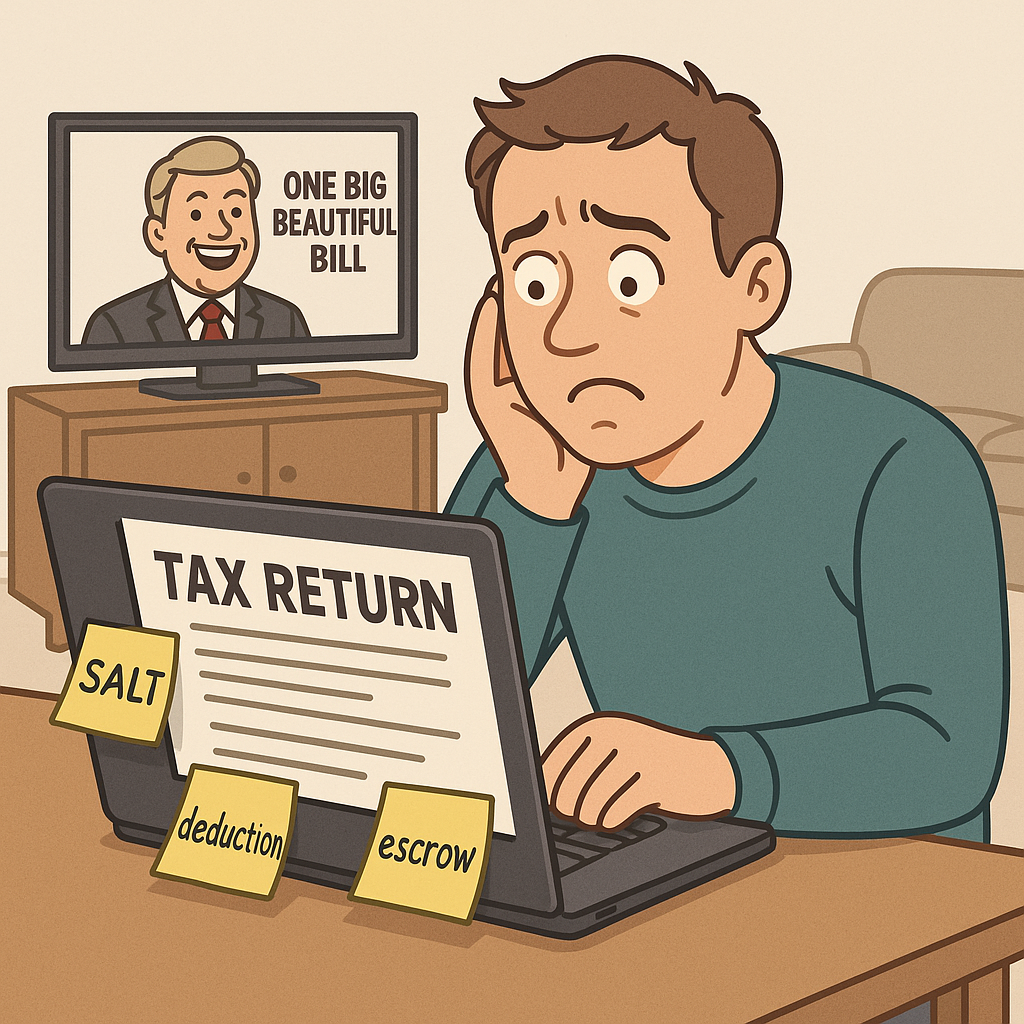
In a stunning coincidence that absolutely has nothing to do with upcoming elections, lawmakers are suddenly obsessed with the plight of the American homeowner, rolling out what local outlets like the Laconia Daily Sun have lovingly dubbed a “one big beautiful bill” to tweak the SALT deduction and a grab bag of housing rules (Laconiadailysun, Feb 2026). After years of pretending the 2017 cap on state and local tax deductions was a law of nature like gravity or HOA fines, Congress has remembered it can, in fact, pass legislation.
At the center of the theater is the humble SALT deduction, the tax provision that determines whether high-property-tax homeowners feel middle class, comfortable, or personally betrayed by the federal government. Since the Trump-era cap, homeowners in places like New Hampshire’s Lakes Region have been gathering in kitchens, on docks, and in poorly lit Facebook groups to ask the same question: “Why does the IRS hate my granite countertops?” Now, facing voter rage, both parties have decided it’s time for one big, beautiful partial walk-back.
In the new proposal, House and Senate negotiators—who until last week could not locate “Laconia” on a map without a staffer and Google Maps—have packaged SALT deduction changes with a scattershot assortment of homeowner goodies: modest tweaks to mortgage interest rules, some energy-efficiency credits, and a new, experimental deduction for anyone who can prove they didn’t just panic-buy their house at 7% interest because “the realtor said it was now or never.”
Republicans are pitching the bill as a long-overdue relief package for tax-strangled homeowners in places like Belknap County, while Democrats describe it as a “targeted, equitable reform” to help “working families in communities such as Laconia and Gilford.” Translation: wealthy-ish homeowners in swing-ish zip codes. As one anonymous Senate aide put it, “We ran the numbers and discovered renters don’t donate nearly as much to campaigns as a guy with a dock on Lake Winnipesaukee and a deep emotional connection to his property-tax bill.”
Local officials, including those regularly quoted in the Laconia Daily Sun, have rushed to praise the move with the kind of language usually reserved for championship parades and the return of Dunkin’ seasonal flavors. Town budget committees, however, are a little less giddy. With the SALT deduction becoming more generous again, high-tax municipalities quietly fear residents will rediscover the ancient ritual of screaming at school board meetings about mill rates.
“If Washington makes it easier to write off local taxes again, people will immediately decide they’re tax-policy experts,” sighed one New Hampshire town manager, speaking on background. “We’ll go from, ‘I don’t understand my escrow statement’ to ‘I’ve built a 17-tab spreadsheet proving we can cut the fire department by 40%.’ I didn’t go into public service for this. I went into public service for the health insurance.” 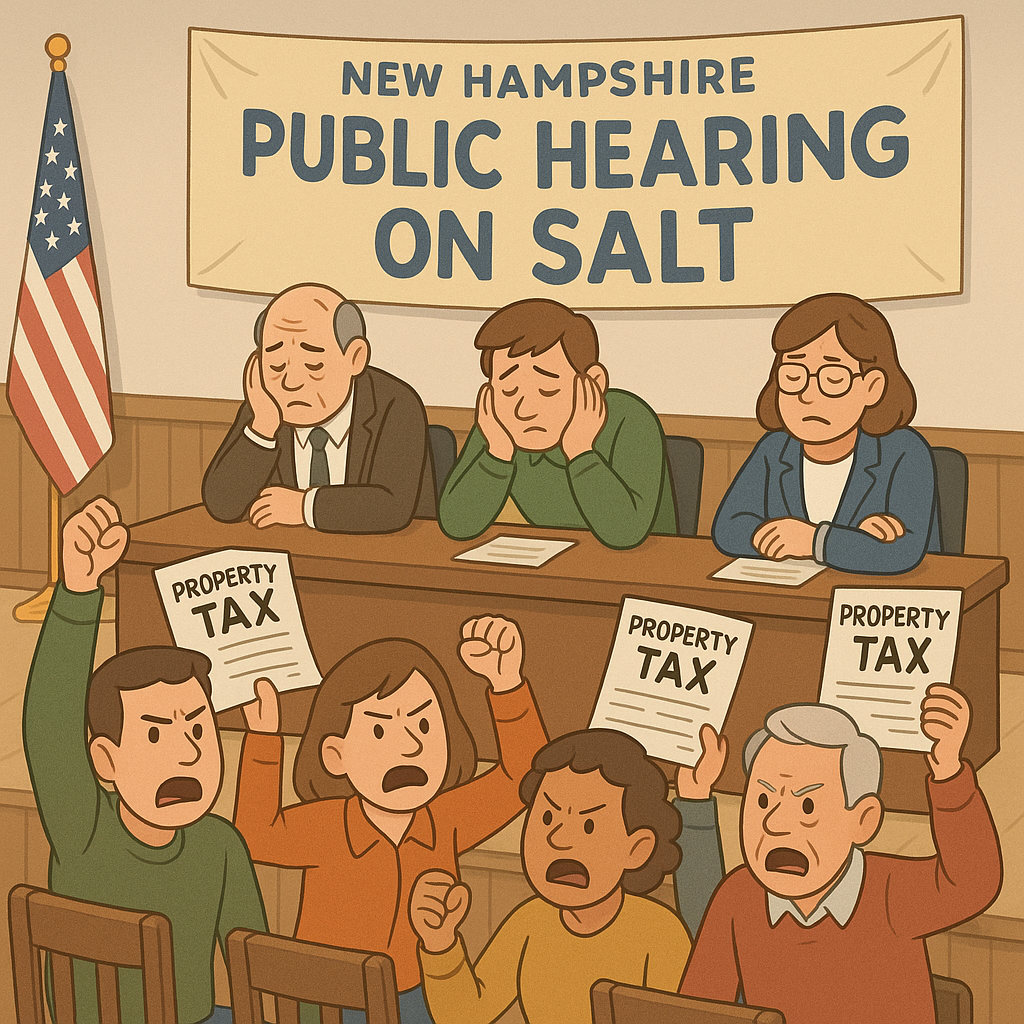
Financial planners across New England are reporting a sudden flood of calls from homeowners who read one partial paragraph of the article in the Laconia Daily Sun and concluded that the IRS is personally mailing them a check. “We try to explain this is a deduction, not a Venmo,” said one CPA in Concord. “They hear ‘more SALT’ and assume it’s like stimulus, but for lake houses.” When told that the benefit phases out at higher incomes, several clients reportedly asked if their accountant could “just put my income a little lower,” as if the IRS were a dating app profile.
On Capitol Hill, the politics are as predictable as a HOA landscaping notice. Republicans frame the change as undoing an Obama-Biden-Pelosi-Schumer-someone’s-dog tax regime (timeline optional), while Democrats insist the tweak is a “down payment” on broader affordability reforms that will arrive right after the next three election cycles, the next government shutdown, and the next time anyone remembers that renters exist. On cable news, the SALT debate is now being explained with stock photos of McMansion driveways, stressed couples with manila folders, and the inevitable shot of the U.S. Capitol at sunset, symbolizing either democracy or foreclosure, depending on the chyron. 
Not everyone is thrilled. Policy analysts, tasked with pretending this is about coherent tax design rather than panic about voters in places like the Lakes Region, have warned that re-expanding SALT could disproportionately benefit higher-income homeowners. Lawmakers responded with their usual strategy: adding a few tiny credits for first-time buyers and slapping the words “middle-class relief” across every press release. “We’re striking a balance,” said one member of the House Ways and Means Committee. “We help the people with big property-tax bills now, and later we’ll help renters by, uh, creating a commission to study the issue.”
Back in New Hampshire, real estate agents are already rehearsing their new sales pitch: “Yes, prices are insane and interest rates are rude, but have you heard the good news about your SALT deduction?” Homeowners, emboldened by the phrase “one big beautiful bill,” are stacking wish lists: higher deduction caps, new solar credits, maybe a line-item for “emotional damage from Zillow.” Meanwhile, renters in Laconia are left to wonder if Congress will ever notice that housing policy affects people who don’t own a waterfront deck.
In the end, the political calculus is simple. Congress has found a sweet spot where it can look like it’s doing something ambitious, while in reality just retrofitting a 2017 headache into a 2026 talking point. The SALT deduction fight will give incumbents something to brag about in mailers: “I fought to protect your home,” they’ll declare, neglecting to mention that your appraisal went up 40% and you now live in fear of your escrow analysis.
Still, the marketing is solid. “One big beautiful bill” sounds nice. So did “transitory inflation.” If you squint at the new SALT changes from just the right angle—say, over a glass of wine on a Lake Winnipesaukee porch—you might even feel like you won. Until, of course, April rolls around, you open your return, and realize the government once again did what it does best:
It changed everything, just enough, so that nothing important really changed.
But hey, at least your deduction got a makeover.