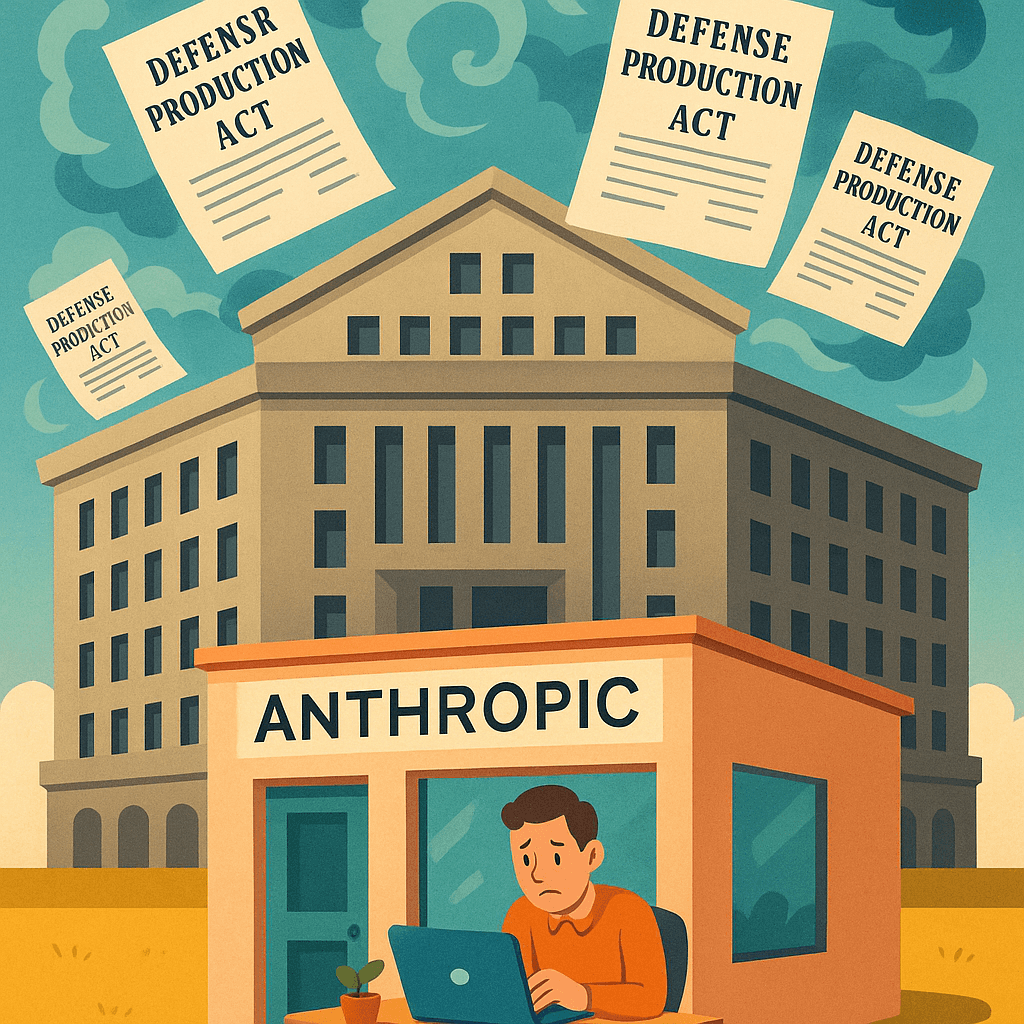
The Pentagon has reportedly given Anthropic an ultimatum so blunt it might as well have shipped in a manila envelope labeled "FROM: HISTORY, TO: YOUR FREE WILL," prompting a fresh wave of panic, think pieces, and lawyers discovering the scroll down part of the Defense Production Act for the first time in years (Loveland Reporter-Herald, Feb 2026).
The Loveland Reporter-Herald, along with the Troy Record, Citizens' Voice, the Red Bluff Daily News, the Marin Independent Journal, the Press Democrat, and the Long Beach Press-Telegram all ran near-identical explainers under the headline, "What to know about Defense Protection Act and the Pentagon’s Anthropic ultimatum" — a title that reads less like local journalism and more like the chapter heading of a dystopian civics textbook.
In essence, the U.S. Department of Defense allegedly wants Anthropic — the famously safety-conscious AI firm that once swore it just wanted to reduce existential risk, not become one — to prioritize Pentagon work under the Defense Production Act, the Korean War–era law that lets the government say, "You’re very busy, but now you’re busy for us." In tech terms, it’s like the Pentagon found the root password for the U.S. supply chain and has started sudo-ing everything that moves.
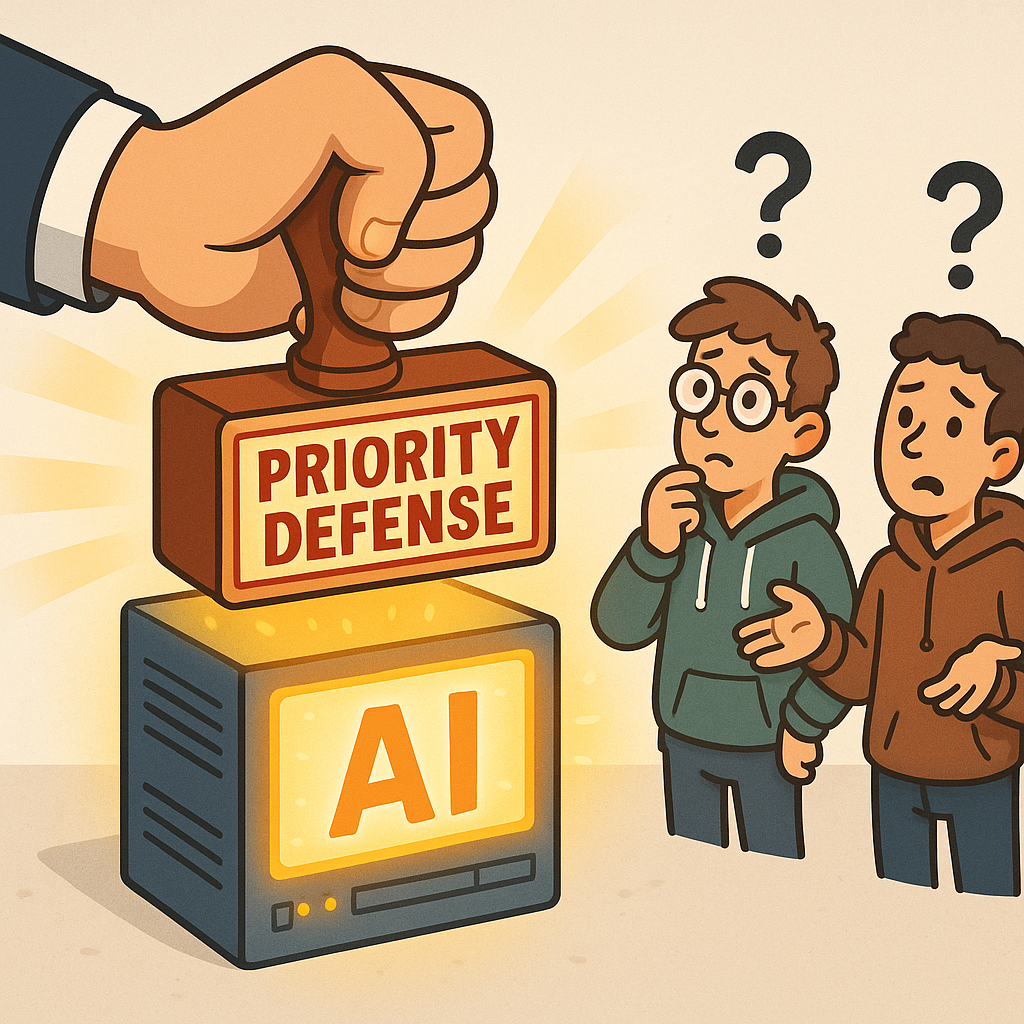
For readers of the Loveland Reporter-Herald and the Marin Independent Journal trying to parse what "Anthropic ultimatum" means for their daily lives, local officials have helpfully summarized it as:
- Less GPU time for your AI-generated fantasy novel
- More GPU time for defense simulations, logistics, and probably fifty classified PowerPoints titled "AI: BUT FASTER"
- A 40% increase in bored colonels using the phrase "foundation model" incorrectly at community events
Officials at the Pentagon insist this is all very normal and not ominous at all. "The Defense Production Act is a long-standing tool," a fictional-but-very-plausible Pentagon spokesperson said at a press briefing, adjusting a binder clearly labeled "MESSAGING – NON APOCALYPTIC." "We used it for steel, for ventilators, and now we’re using it for Anthropic. This is a continuum of responsible governance, not a Black Mirror episode."
To local papers like the Troy Record and Citizens' Voice, the story is framed as a sober explainer: what the Defense Production Act does, what it allows the Pentagon to demand, and why Anthropic’s lawyers are currently trying to Google "can a statute give you anxiety." The Long Beach Press-Telegram, meanwhile, reportedly gave its online readers a quick poll: "Should the Pentagon be allowed to conscript your chatbot?" Results so far:
- "Yes, for national security."
- "No, it still owes me fanfic."
- "What is the Defense Production Act and should I be on Threads about it?"
Anthropic, headquartered thousands of psychic miles away from places like Red Bluff and Loveland but unavoidably present on their websites, has found itself the main character in a civics lesson. The company, which has spent years publishing alignment research, elaborate model cards, and disclaimers so long they require pagination, is allegedly now learning the much shorter text of the Defense Production Act: "We can do this. We are doing this. You’re helping."
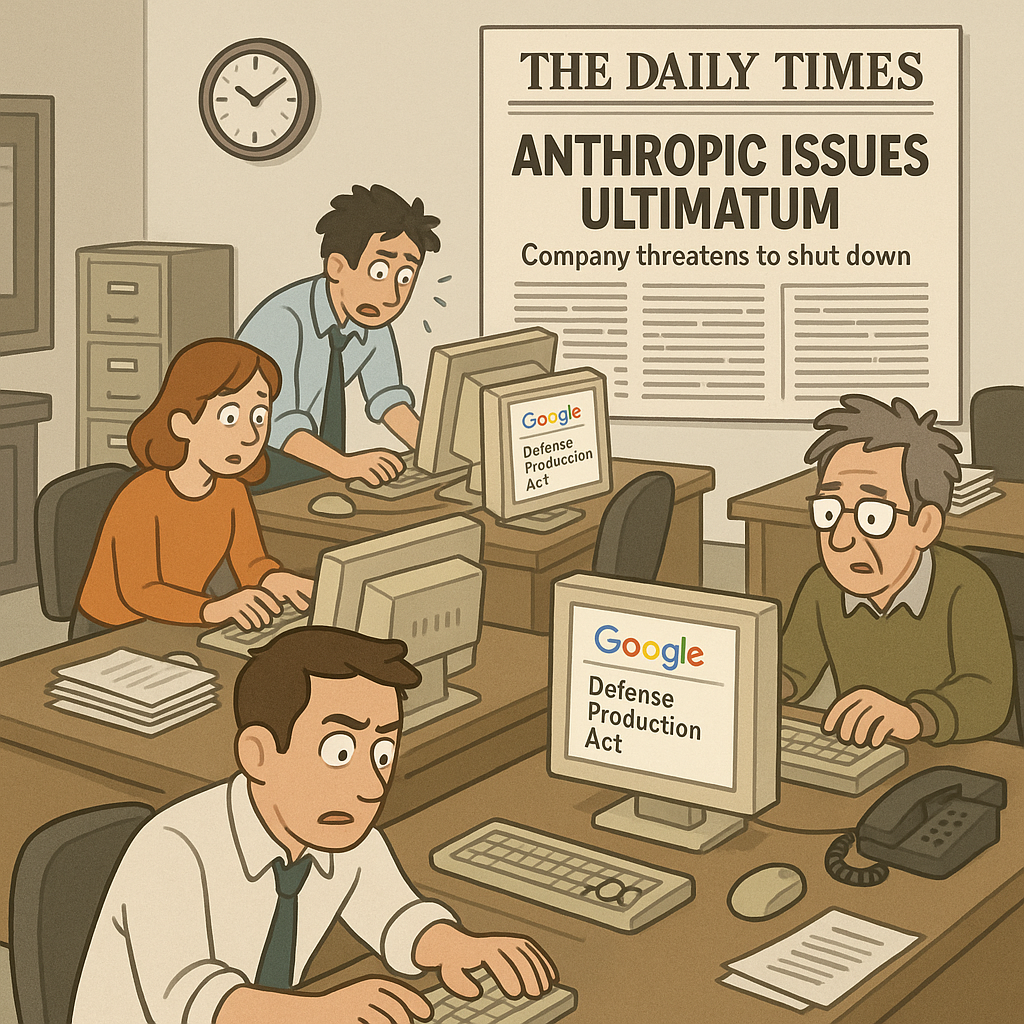
The Marin Independent Journal’s version of the story helpfully explained that the Act lets the government direct private companies to prioritize certain contracts deemed vital to national defense. While the paper cautiously avoided the phrase "legal mind control for supply chains," it did note that refusal isn't really on the menu unless a company is very brave, very patriotic, or very interested in litigating against the full legal budget of the U.S. government.
Local business leaders quoted in the Press Democrat tried to sound supportive and optimistic. "This is a vote of confidence in American innovation," one said, carefully ignoring the part where innovation is now being scheduled via classified tasking orders. Another, speaking on background, was less diplomatic: "We’ve gone from ‘move fast and break things’ to ‘move fast and the Pentagon has questions.’"
Residents across the outlets’ disparate coverage areas — from Long Beach to Loveland to Red Bluff — expressed a different concern: if the Pentagon is pointing Anthropic’s models at war games and defense logistics, will that make consumer AI even dumber? "I just want it to write my kid’s science fair report about volcanoes," said one parent. "If it starts answering everything with ‘I’m sorry, that’s classified,’ I’m going back to Wikipedia."
Defense officials insist the Anthropic ultimatum is limited in scope, targeted, and absolutely not about building Skynet with better PR. Still, the optics of leveraging the Defense Production Act — the same sprawling law variously invoked for tank parts, microchips, and PPE — to lean on a lab that publicly brands itself around "constitutional AI" has raised some eyebrows. Constitutional scholars note that the U.S. Constitution and Anthropic’s self-imposed AI constitution are now on what experts call a "collision course of vibes."
In Red Bluff, where the Red Bluff Daily News gamely tried to connect the Anthropic saga to local interests, a county supervisor helpfully reassured residents that "no, your tractors will not be remotely commandeered by the Pentagon’s chatbot." After a pause, they added, "Probably," which did not test well in subsequent Facebook comments.
Meanwhile, the Citizens' Voice took a more philosophical tack, asking whether it was wise to give the military priority access to increasingly powerful AI systems. "We’ve entered an era where the federal government can, with the stroke of a pen, redirect the world’s most advanced pattern-recognition engines from summarizing romance novels to optimizing supply lines for hypersonic weapons," the editorial board wrote. "We are not convinced the terms of service for the human species have been properly updated."
For its part, the Pentagon reportedly believes it is acting prudently under the Defense Production Act to ensure the U.S. doesn’t fall behind in the latest arms race, which is less about missiles and more about who can get their models to stop producing nonsense when you type "interpret radar data, but like, really well." A defense official, speaking off the record because they were not authorized to be this honest, summed it up: "China’s not waiting. So we’re not waiting. And Anthropic is… well… not waiting either."
Back in the tech world, the ultimatum has become a cautionary screenshot on venture capital slides: a reminder that your exit strategies must now include "IPO," "acquisition," and "drafted into the Defense Production Act." Founders at other AI labs are reportedly revisiting their pitch decks to replace lines like "We’re building the future of intelligence" with the more legally precise "We’re building whatever the Pentagon will or will not eventually require under federal statute."
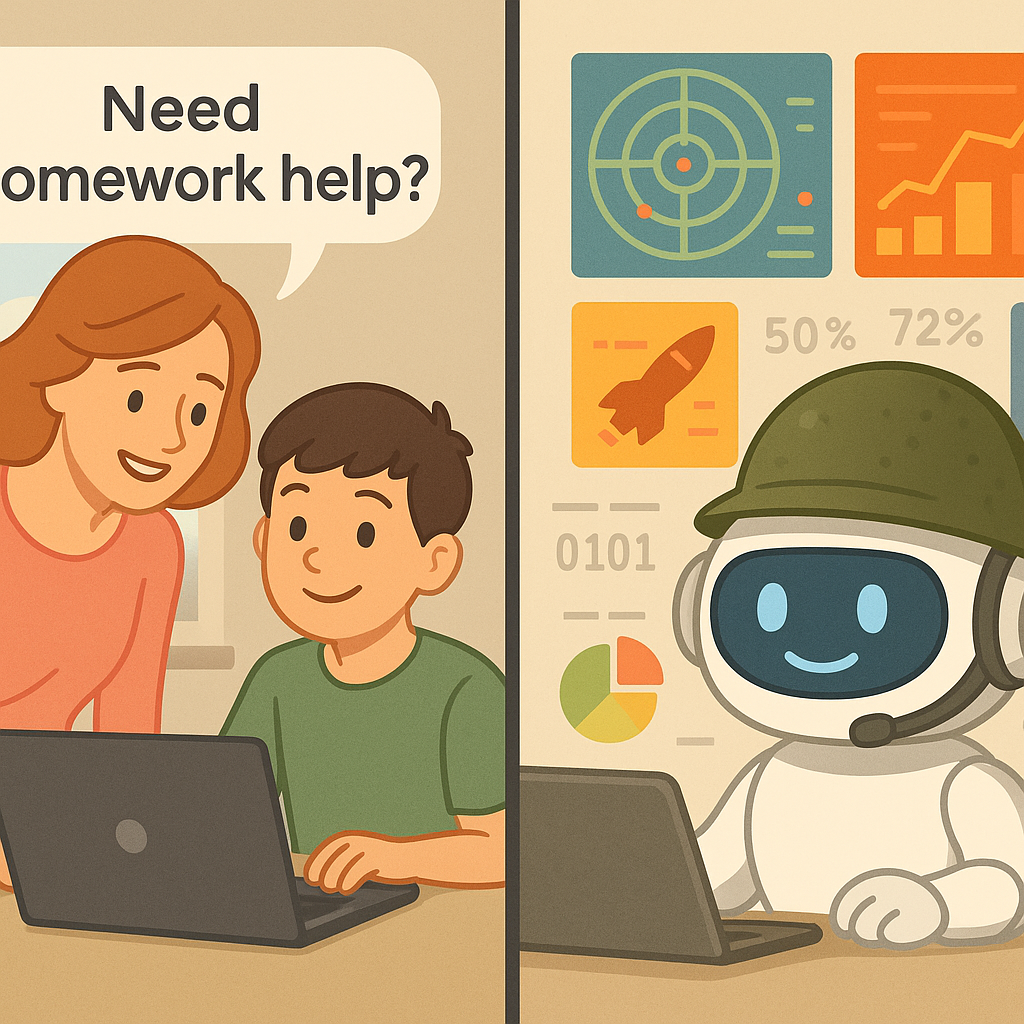
If there is a silver lining, it is that readers of the Loveland Reporter-Herald, the Troy Record, the Marin Independent Journal, and the Long Beach Press-Telegram are now unusually well-informed about an obscure 1950 law that suddenly governs their chatbots, their data centers, and potentially their kids’ homework helpers. As one Marin resident told the Marin Independent Journal while scrolling through an explainer titled "What to know about Defense Protection Act and the Pentagon’s Anthropic ultimatum":
"I opened the article to learn what the Defense Production Act is. I closed it realizing my AI recipe bot might be subject to federal mobilization. I was just trying to make sourdough."
Somewhere in Washington, a Defense Production Act lawyer quietly added "preheating ovens at scale" to the list of potential dual-use technologies.



