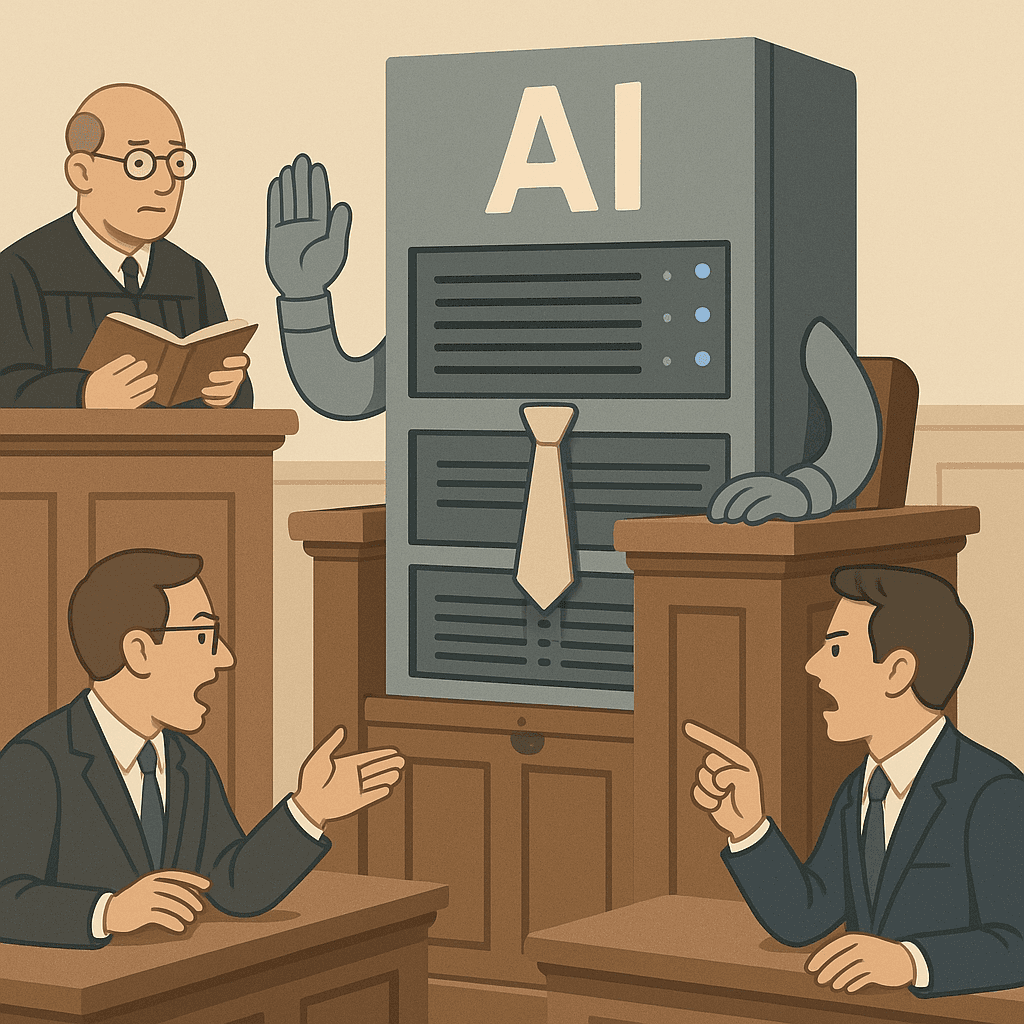
After a year of glossy manifestos about humanity’s bright AI future, regulators and courts are replying with their own preferred genre: enforcement actions with footnotes. From a landmark lawsuit over the U.S. Army’s use of artificial intelligence in a 14-volume, $450 million contract evaluation, to nearly $1 billion in child-safety fines for Meta Platforms, to data breach notices already surpassing last year’s total, the so-called Intelligence Age now comes bundled with an EULA from reality written in 8-point font and faxed in triplicate to whoever still checks the machine in the basement records room that smells faintly of toner and despair.
In what experts are already calling the Governance Crisis Phase of AI, progress is being measured less in model benchmarks and more in subpoenas and politely panicked emails from general counsel that begin, “Quick question about this procurement spreadsheet the judge just asked us to explain.” The thesis is simple enough for even a legacy mainframe to parse: as AI systems scale into military procurement, social media engagement, and corporate security, the real disruption is happening in courtrooms and compliance offices, not on demo stages lit for keynotes and apology tours.
Per the headline in one recent roundup, we are in “The AI Backlash Phase: Lawsuits, Fines and Breaches Start to Redraw the Rules for Big Tech and Big Government.” Translation: the vibe has shifted from “move fast and break things” to “move slower and bring your documentation in triplicate to Courtroom 4B, where the clerk would like to know why your risk model is logged in emoji and why Exhibit D appears to be a screenshot of a prompt window labeled ‘totally safe, trust me.’”
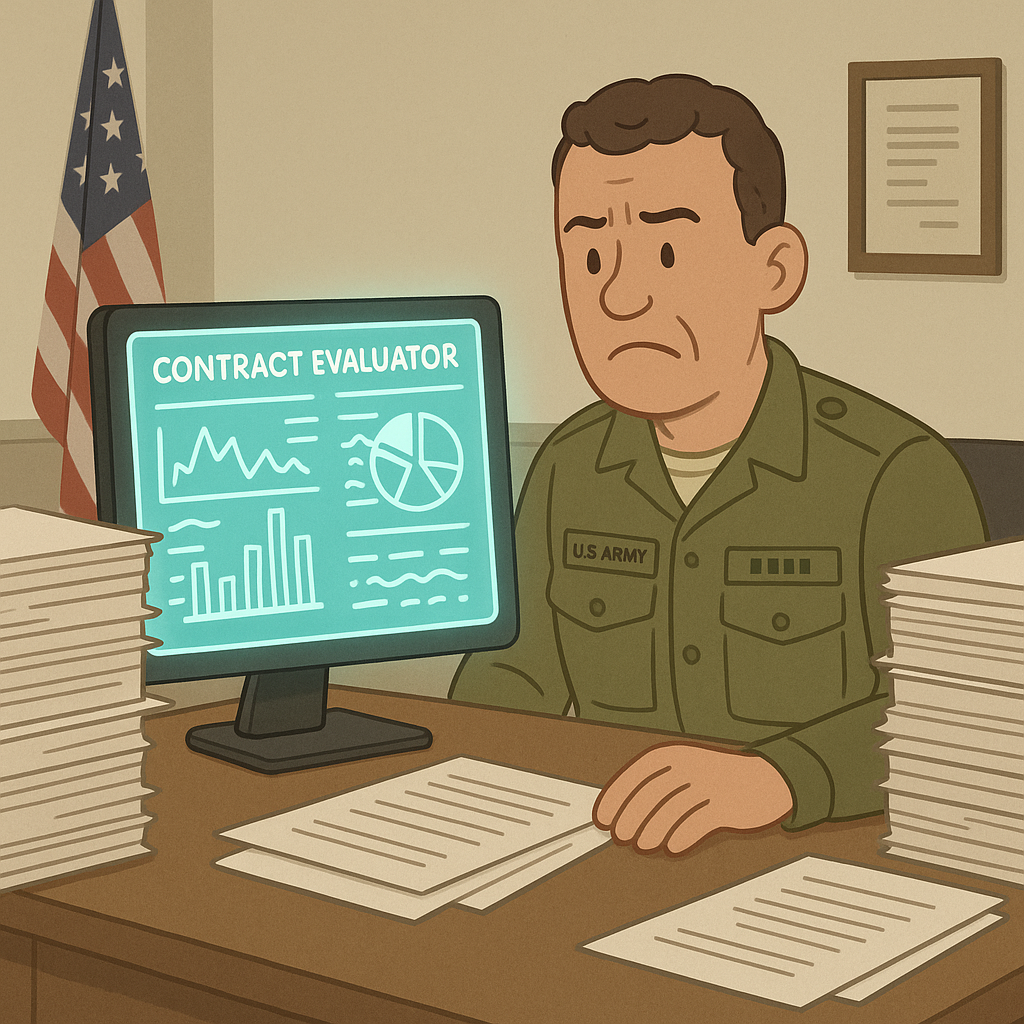
At the U.S. Court of Federal Claims, TRAX International Corporation is suing the Army over an allegedly hallucinating evaluation tool used in the White Sands Missile Range mission support competition. The system reportedly misread parts of TRAX’s proposal, downgraded key sections, and then helpfully explained its reasoning in the confident tone of a large language model that has never lost a contract and believes Annex C is a type of sandwich, Annex D is a feelings journal, and “best value tradeoff” is a coffee loyalty program.
According to JD Supra, TRAX now wants a full reevaluation and greater transparency into how AI shaped the $450 million award. The case is poised to answer a novel legal question: if an algorithm mis-scores your bid, are you allowed to sue the robot, or do you just sue the human who believed the robot over their own eyeballs and a 600-page technical volume that still smells like highlighter and cold conference coffee.
An Army procurement official, speaking on background because the model had not yet been cleared for media training, defended the process. “The AI was only an assistant,” they said. “A human made the final decision to copy and paste its output into the award memo without reading page 237 or asking why the risk assessment included three inspirational quotes and a restaurant recommendation near White Sands.”
It is a tidy microcosm of the new governance math. Agencies deploy AI to look objective. Vendors sue when the black box looks subjective. Judges, who still print their emails, are now asked to rule on whether a probabilistic text generator conducted a rational analysis of missile range landscaping services and whether “low risk” was a hallucination, a typo, or just optimism in 12-point Times New Roman.
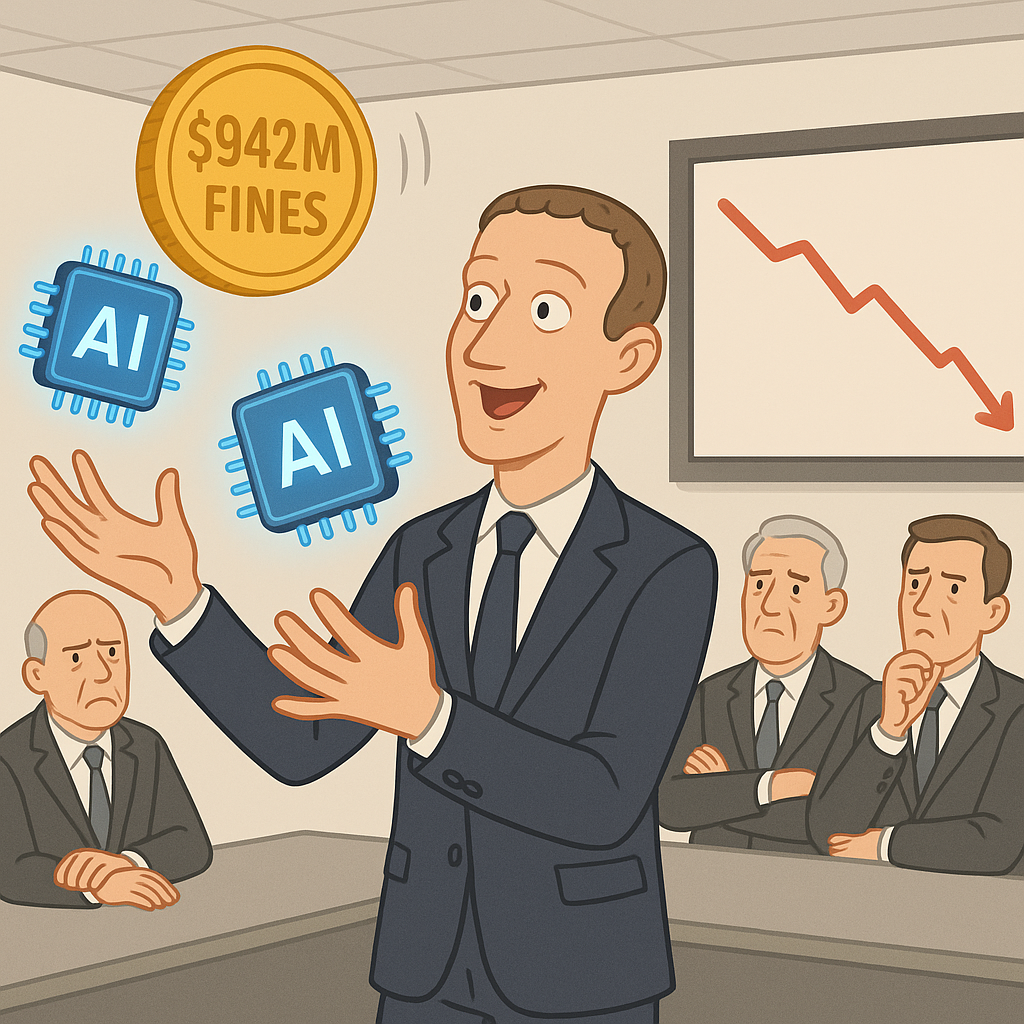
Across the country, Mark Zuckerberg is learning a complementary lesson: if you spend years tuning AI systems to maximize engagement, regulators may one day ask what exactly they were engaged with. The BBC notes that Meta has been hit with a record-breaking $567 million child-safety ruling on top of $375 million in earlier penalties, for a total of $942 million in fines tied to how its AI-fueled platforms treat young users.
Meta insists its systems are designed to keep kids safe. Regulators appear to agree that the systems are designed, and that kids exist. On the safety part there is some daylight, roughly the size of a quarterly earnings slide labeled “clarifying payments to European regulators” that has been rewritten by three PR teams and one outside law firm armed with a red pen and an ulcer.
Internally, Meta frames the fines as part of a regulatory onboarding cost for what Zuckerberg’s latest AI manifesto describes as a “net positive technology for humanity.” Externally, investors are watching the same company promise billions more in AI infrastructure spending while explaining, as the BBC reports, that it will eventually sell AI tools to businesses. The market has reacted with a time-honored tradition: a share price that quietly suggests, “show us a business model that does not end with another nine hundred million dollars in child-safety charges and a 47-page consent order written in the tone of a disappointed headteacher.”
In fairness, Zuckerberg is not alone in trying to narrate around the debris field. OpenAI’s Sam Altman has already released “The Intelligence Age,” a sweeping vision of accelerated human progress that now reads like the PowerPoint you show your board before the discovery phase starts and the exhibits include your Slack channel called #move-fast-no-paper-trail. Anthropic’s Dario Amodei, in “Machines of Loving Grace,” outlined a future where AI gently transforms healthcare and politics. In the current policy climate, the loving grace portion is mostly being expressed by lawyers advising clients not to delete messages labeled “definitely do not show to regulators” from the shared drive titled “random stuff.”
Regulators, for their part, have discovered their own favorite AI term of art: “hallucination.” Once a cute way to describe a bot inventing a citation, it now appears in formal complaints as a potentially actionable defect. The TRAX case may help establish whether an AI’s tendency to confidently fabricate facts is closer to a typo, or to negligent misrepresentation of missile range support capabilities in Section L that comes bundled with screenshots and a court reporter who cannot spell “transformer architecture” but knows what “inconsistent with record evidence” looks like.
A senior compliance officer at a major contractor, asked how they are adjusting, summarized the new best practice:
“We still use AI to draft bids. We just also hire a human who is old enough to remember when cutting and pasting from the internet got you fired, not promoted to Chief Automation Officer, and who thinks ‘prompt engineering’ is still what you do to the intern with the broken copier.”

Meanwhile, outside the procurement and child-safety theaters, the identity theft economy has discovered its own general-purpose model. CNBC reports that data breach notices have already blown past last year’s total, with the Identity Theft Resource Center warning that AI now materially amplifies both scale and subtlety of attacks. North Korea-linked groups are allegedly placing remote IT workers inside U.S. companies using stolen identities, AI-generated resumes, and interview deepfakes that blink on the wrong monitor and accidentally answer questions meant for the other fabricated candidate in the next browser tab.
The FBI calls this “a serious threat to national security.” Corporate IT calls it “confusing, because their JIRA tickets are getting done ahead of schedule.” Somewhere, a CISO is explaining to the board that they invested millions in AI threat detection systems that correctly identified a suspicious login, then filed the alert in the same dashboard as a hundred thousand identical alerts, which no human had time to read before lunch or before the quarterly presentation with the slide titled “lessons learned” in quiet italics.
The emerging pattern is wonderfully simple. AI is deployed to make everything faster, cheaper, and more automated. Attackers use AI to make breaches faster, cheaper, and more automated. Regulators, courts, and insurers then arrive to make governance slower, more expensive, and aggressively manual. What Silicon Valley calls “alignment,” the rest of the world calls “discovery obligations and mandatory training modules” delivered via a learning management system that crashes the moment you click “acknowledge.”
The open questions are straightforward, if not reassuring. Will the Court of Federal Claims require agencies to log the exact prompts that shaped billion-dollar procurement decisions. Will child-safety regulators mandate that engagement algorithms for minors be downgraded from “infinite scroll” to “eventual stop” after a state-mandated pop-up about homework and spinal posture. Will breach reporting standards evolve past the current regime described by ITRC’s James Lee, where, as he bluntly put it to CNBC, “where you live determines if you find out, and if you do find out, what you are told and how many PDF attachments you receive” along with a password for the PDFs that arrives separately by postcard.
And above all, will AI hallucinations be treated as charming side effects of innovation, or as defects to be quantified, documented, and eventually shown, under oath, to a judge who still owns a fax machine that just printed its first AI prompt log in glorious dot-matrix monochrome while the courtroom Wi-Fi disconnects during the expert’s slide on “frontier models.”
For now, the industry response is to publish ever more detailed manifestos about shared prosperity, universal creativity, and a flourishing of the human spirit. Regulators appear to be fine with this. It keeps everyone busy while they draft the part that actually matters.
The terms and conditions, section by numbered section.



