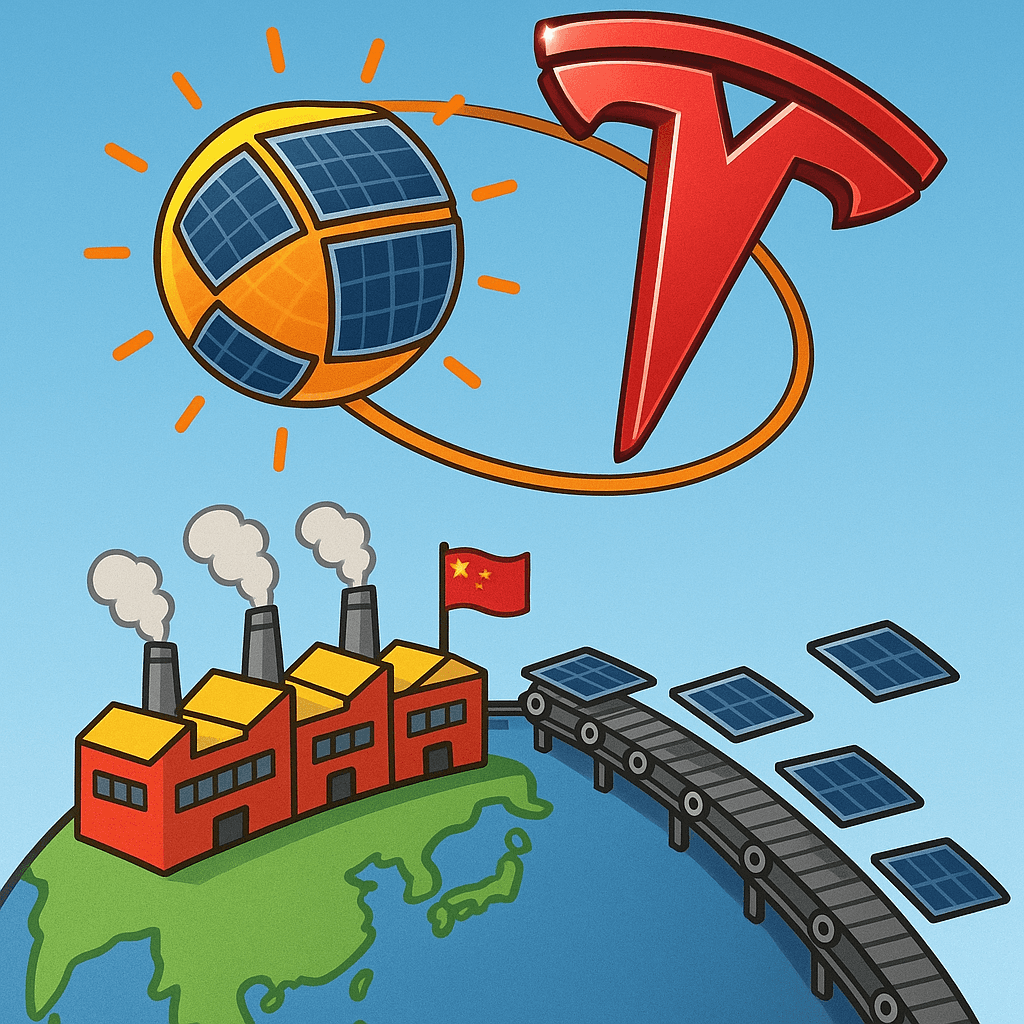
Tesla is apparently in talks with multiple Chinese firms to buy $2.9 billion worth of solar equipment, because if there’s one thing 2026 needed, it’s a billionaire trying to speed-run the sun. According to a report from Adaderana News (Mar 2026), the company founded by Elon Musk is shopping across China’s vast solar industrial park, loosely known as "that place where the rest of the world’s climate goals are actually manufactured."
The alleged shopping spree would see Tesla vacuum up panels, batteries, and enough inverters to power a small country or, more likely, a very large X data center full of people explaining that Elon’s latest post was actually 4D chess. Sources say the total bill could hit $2.9 billion, which is either a staggering investment in renewable energy or roughly the price of one bad day on the Nasdaq.
Industry watchers are thrilled, confused, and mildly afraid.
“On the one hand, it’s huge for clean tech,” said a fictional but emotionally accurate analyst at a Shanghai-based solar fund. “On the other hand, whenever Elon Musk bulk-buys anything, someone ends up sleeping in a factory and calling it ‘hardcore mode.’”
Tesla’s prior solar adventures, from the acquisition of SolarCity to the infamous solar roof tiles that were part energy revolution, part Instagram filter, have been… mixed. The tiles were unveiled as sleek, magical shingles that would gently sip sunlight while making your neighbors feel poor. Then reality arrived, in the form of supply constraints, engineering headaches, and homeowners discovering that “lifetime warranty” meant “lifetime of the product line, which died before your HOA paperwork cleared.”
This time, though, the company appears determined to go bigger and more global. The talks reportedly involve several unnamed Chinese solar manufacturers, who are quietly delighted to sell billions in equipment to Tesla while the United States government gives stern speeches about supply chain security and then immediately logs into Temu. 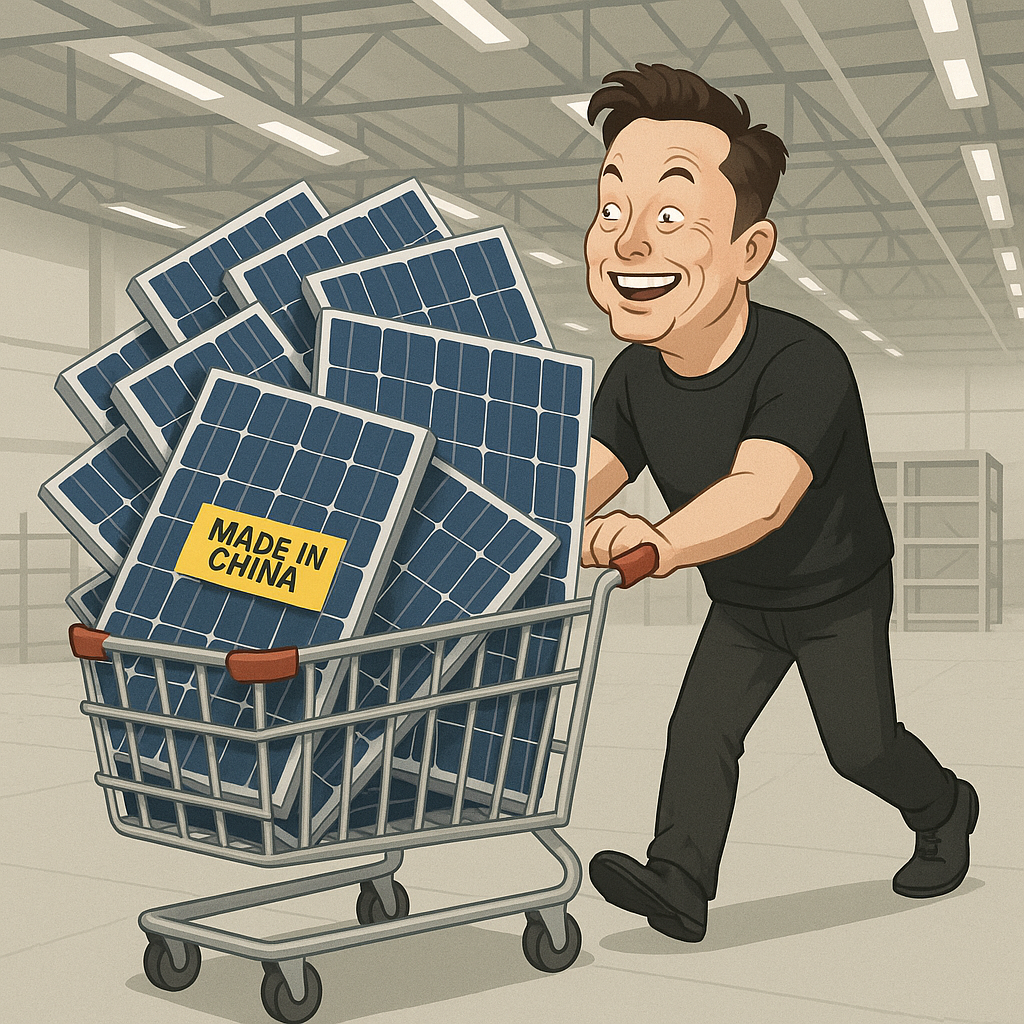
In Beijing, the reaction has been pragmatic. “Friend to all, enemy to none, customer to whoever wires the money first,” joked one Chinese trade observer, shamelessly borrowing a line from Papua New Guinea’s own diplomatic slogan, as reported by Islands Business News, and rebranding it as the motto of the solar supply chain. China remains the world’s dominant producer of solar panels, precursors, and awkward silences during Western press conferences about ‘strategic decoupling.’
The United States, for its part, is trying to process the cognitive dissonance of cheering aggressive climate investments while also clutching geopolitical pearls. A hypothetical official at the U.S. Department of Energy reportedly summarized the mood:
“Look, do we want more solar? Yes. Do we want Elon to get it from Chinese firms in a $2.9 billion megadeal? No. Do we have a domestic manufacturer ready to ship this volume tomorrow? Also no. So right now our policy is: vibe anxiously and issue PDFs.”
Meanwhile, Tesla investors are split between those who see this as a visionary move and those who keep remembering things like the Cybertruck’s panel gaps. A chunk of the $2.9 billion is reportedly aimed at bolstering Tesla Energy: megawatt-scale storage projects, grid-level systems, and the dream that one day your entire neighborhood will be powered by a single, heroic battery bank that definitely won’t need three firmware updates just to keep the lights on during a drizzle.
In typical Tesla fashion, the company has not officially confirmed the exact details of the Adaderana News report, because that would be responsible. Instead, the narrative is being built out of leaks, hints, and a constellation of Musk’s side-comments on X that may or may not be about this deal. At press time, the closest thing to a statement was an ominous post reading simply: “Sun = underrated.”
Wall Street, naturally, is treating the entire episode like a spiritual awakening. One venture capitalist enthused that the move could mean:
- More Tesla-branded solar farms, ideally with merch.
- Vertical integration from the sun to your toaster.
- A new way to bundle carbon credits, grid services, and Elon’s personal brand into a single ETF called $SOLME.
Environmental advocates are cautiously pleased. Massive procurement of solar gear, even from Chinese firms, could accelerate renewables deployment just when the climate charts are starting to look like a meme coin pump-and-dump graph. Still, some worry that concentrating so much capacity in one corporate ecosystem might turn the green transition into yet another flavor of platform capitalism: you don’t just buy power, you subscribe to it.
“Imagine a future where your house loses electricity unless you tap ‘I agree’ on a 47-page software update from Tesla Energy,” sighed one grid researcher. “No one should have to scroll that much to make coffee.” 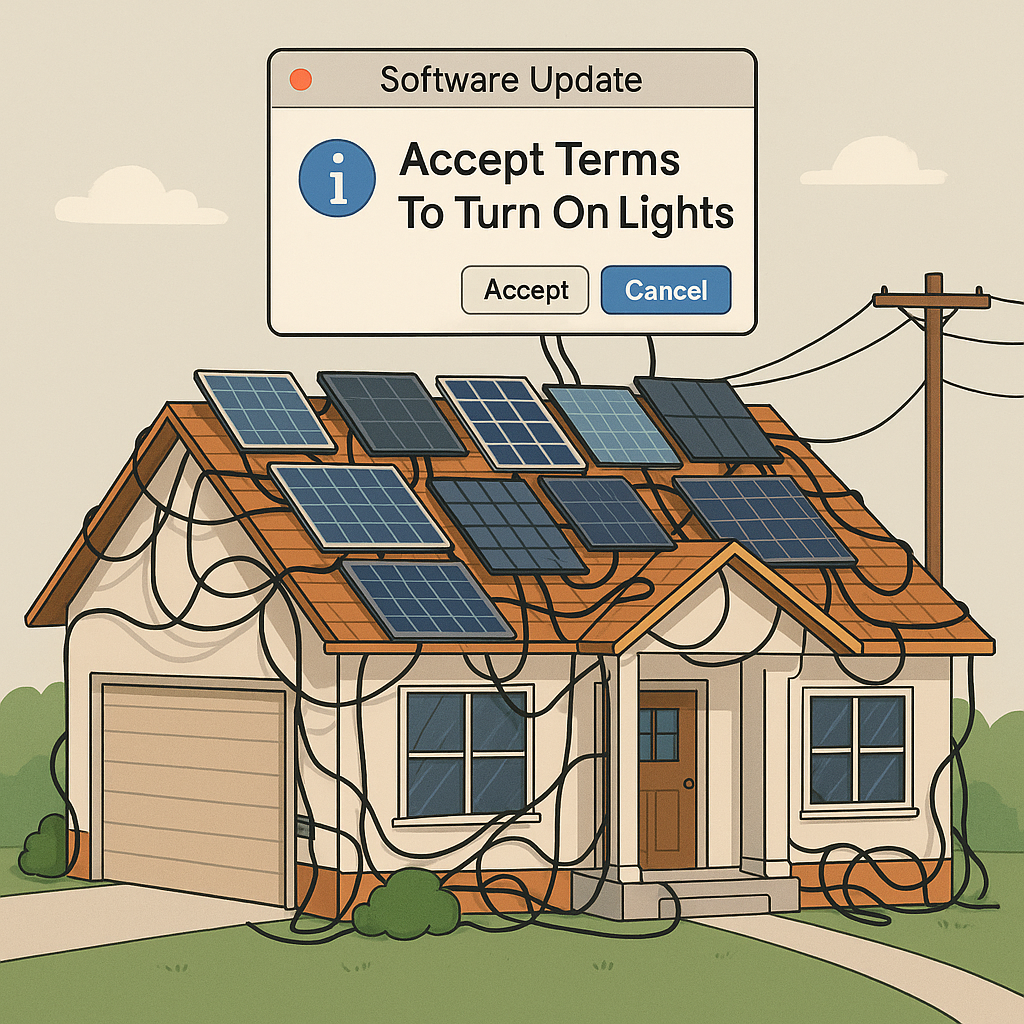
The Chinese companies rumored to be involved, while unnamed in the Adaderana piece, are reportedly treating Tesla’s approach like winning the decarbonization lottery. Factory managers are already picturing a glorious era of 24/7 production, automated quality control, and motivational posters reading, “Every Panel You Ship Is Another Tweet You Don’t Have To Read.”
Not everyone is sold. Some skeptics in the solar industry point out that Musk has a habit of overpromising, under-sleeping, and then moving on to the next frontier mid-implementation. They still remember the hyped “solar everywhere” era, when Tesla’s messaging made it sound like every suburban cul-de-sac was one Powerwall away from becoming a self-sufficient eco-commune. Instead, many of those neighborhoods got an HOA subcommittee arguing about roof aesthetics and a waitlist.
The deal also highlights a quiet technological reality: for all the rhetoric about energy independence, countries like the U.S. remain deeply reliant on China’s industrial machine for the physical objects that make "clean tech" more than a podcast topic. Photovoltaic cells, inverters, and the not-so-sexy aluminum frames that hold everything together mostly begin life in places Western politicians only visit when they need a new ‘balanced but firm’ quote.
By late afternoon, think tanks were furiously issuing takes. Some warned of “strategic vulnerability” in letting a company like Tesla hinge its solar ambitions on Chinese supply chains. Others gently pointed out that everyone’s phones, laptops, and smart kettles already hinge on the same thing, and if this was going to be the line in the sand, that sand passed through a Shenzhen logistics hub three weeks ago.
The true escalation, though, may come in how this reshapes Silicon Valley’s collective self-esteem. If Tesla can lean this hard on China for solar equipment, it gives other U.S. tech firms permission to stop pretending they’re one pivot away from building their own fabs out of reclaimed kombucha jars.
Expect a wave of copycat headlines soon:
- “Big Tech Firm Announces Bold Climate Action Plan: Bulk Order From Alibaba.”
- “Startup Claims To Be ‘Hardware Agnostic,’ Means ‘Dependent On Whatever Is Cheapest In Guangdong.’”
- “VC Fund Launches ‘Sustainable Supply Chain’ Initiative, Forgets To Ask Where Anything Is Actually Made.”
Back in Fremont and Austin, Tesla engineers are rumored to be quietly thrilled at the prospect of working with up-to-date, high-volume Chinese solar components instead of cobbling together supply chains from a mix of pilot projects, vaporware, and wishful thinking. If the deal closes at anything like the reported $2.9 billion figure, it could usher in a new phase where Tesla Energy stops being an inspirational slide in an investor deck and starts being an actual, boringly reliable piece of global infrastructure. 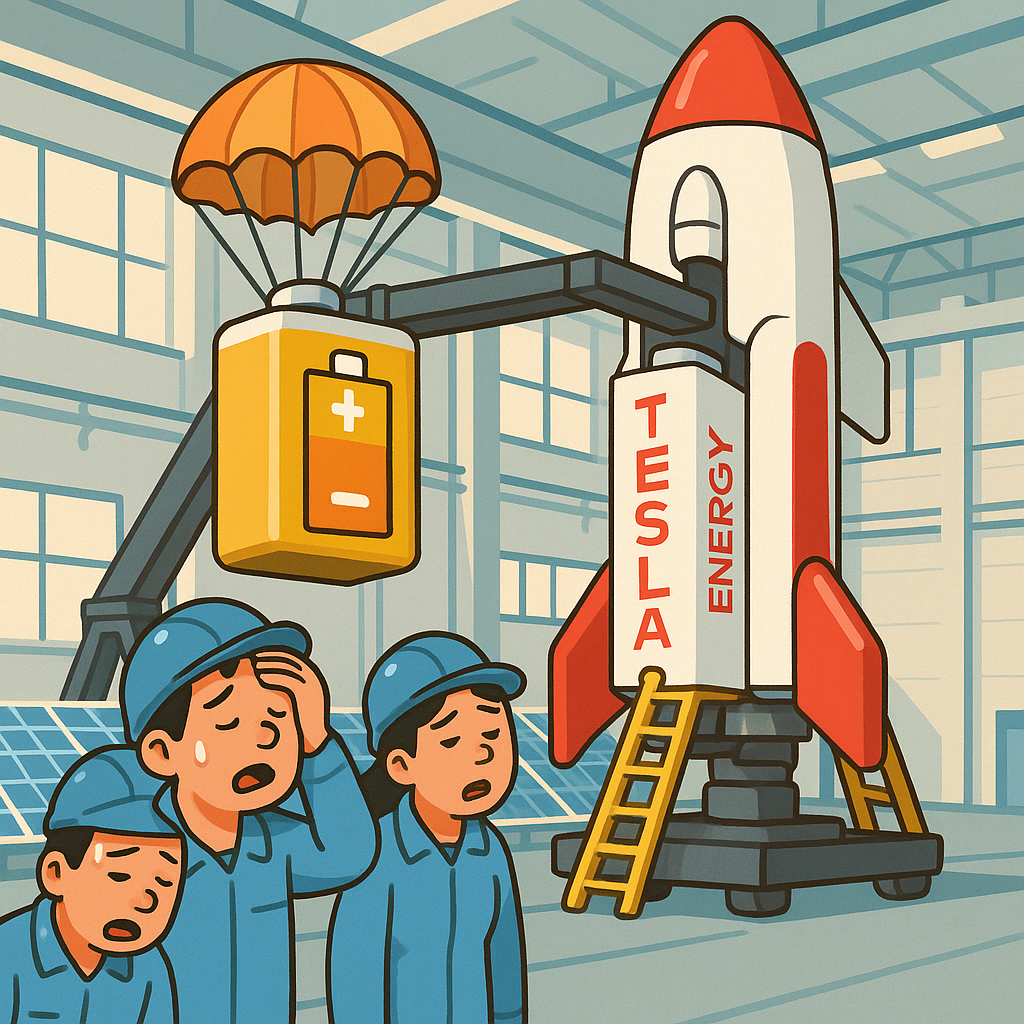
Of course, this is still Elon Musk we’re talking about. The only guarantee is that within 48 hours of signing any contract, he will find a way to describe it as “building a multiplanetary energy civilization” and then ask regulators to approve a “self-driving substation” that definitely doesn’t exist yet.
Until then, the sun will continue to rise over Chinese solar factories, Tesla will continue to flirt with them via very expensive term sheets, and the rest of us will continue refreshing our power apps, trying to manifest a future where the grid is stable, the energy is clean, and the terms of service are under 500 words. Dream big, charge often.