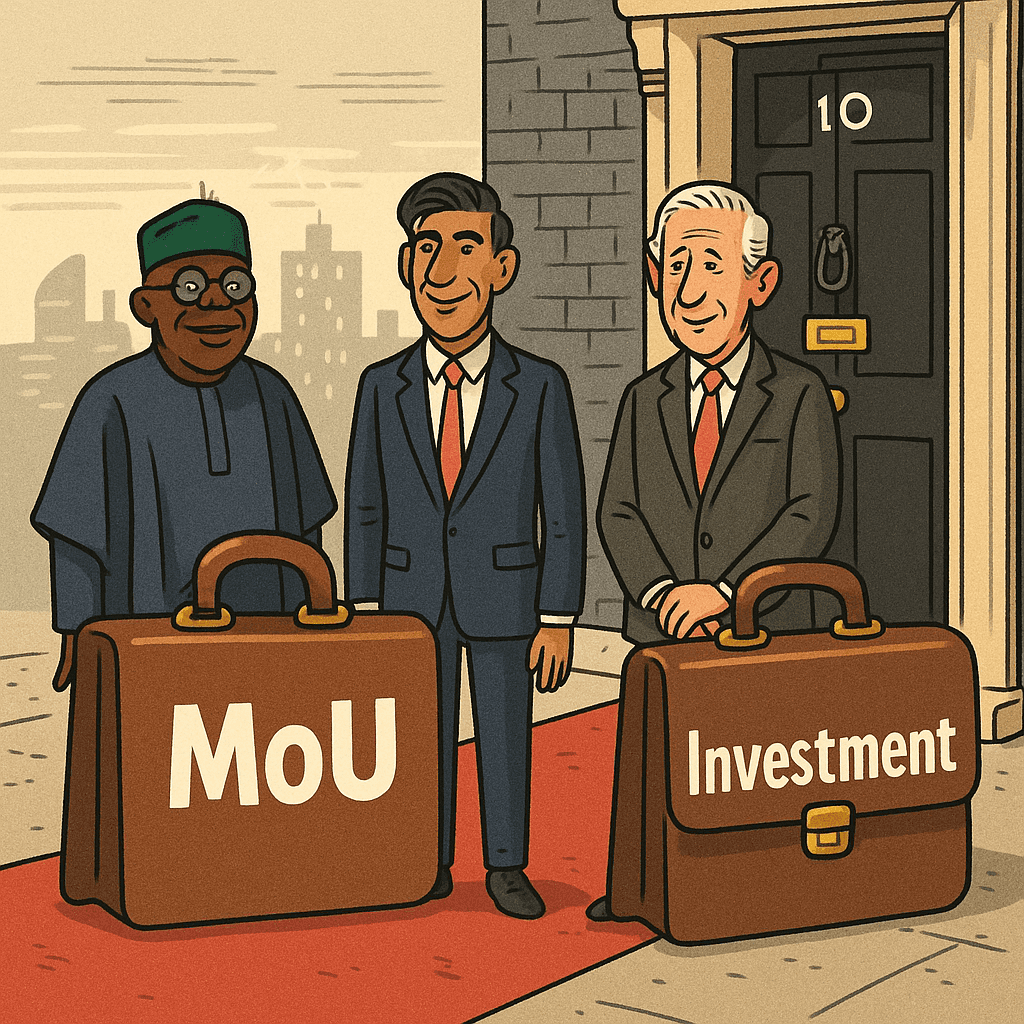
London, UK – President Bola Ahmed Tinubu arrived in Britain this week on what Leadership described as a “historic UK State Visit,” proudly branded “Open For Business, Rooted In Partnership.” Observers noted that the only thing more historic than the trip was the number of times the phrase “mutual prosperity” was read from prepared remarks without anyone specifying whose prosperity, exactly, was on the agenda.
Downing Street, delighted to have a visitor who isn’t there to discuss post-Brexit reality, rolled out the red carpet and a carefully curated backdrop of Union Jacks, Nigerian flags, and discreetly hidden austerity measures. Rishi Sunak, emerging from Number 10 armed with a smile and three different spreadsheets on “strategic growth synergies,” greeted Tinubu as “a key partner,” diplomatic code for “we hear you still have oil and young people.” (Leadership, Mar 2026).

In his prepared statement, President Tinubu assured British investors that “Nigeria is open for business.” He did not clarify whether Nigeria is also open for electricity, functioning refineries, or passports that work at Heathrow e-gates. Instead, he emphasized that his administration is “rooted in partnership,” a phrase repeated so often that a junior aide was reportedly assigned to silently mouth the words along in case he forgot which root they were currently citing.
“Our economic reforms are bold, decisive, and irreversible,” Tinubu said, standing beside UK officials who specialize in bold, decisive, and totally reversible promises. “Nigeria is ready to welcome British capital.” At this, several London hedge fund managers briefly checked their phones to confirm whether “British capital” had any remaining disposable income after paying London rent.
According to the official communiqués, the visit will unlock “billions in potential trade and investment across sectors such as energy, infrastructure, finance, and technology.” Unofficially, insiders say the trip’s key deliverables include:
- At least four Memoranda of Understanding (MoUs) that will never be read again.
- One photo of Tinubu and King Charles III laughing, captioned online as “Them don share our future finish.”
- A joint statement promising to “deepen ties,” a phrase both sides use when they can’t agree on anything with numbers.
At a London investment forum, banners screamed “Open For Business” over slick images of Lagos and Abuja. The PowerPoint deck, reportedly prepared by a multinational consultancy that bills by the optimism, outlined how Nigeria under Tinubu plans to become a “global investment destination” by:
- Reforming foreign exchange rules.
- Streamlining regulations.
- Hoping investors don’t read the news.
“We are creating a transparent, rules-based environment,” declared a Nigerian delegation member, as both UK and Nigerian journalists stared politely, having long since lost the ability to process those words together in a sentence. One British banker was overheard whispering, “If it’s that transparent, why are we still getting briefed in a side room by three different special advisers?”
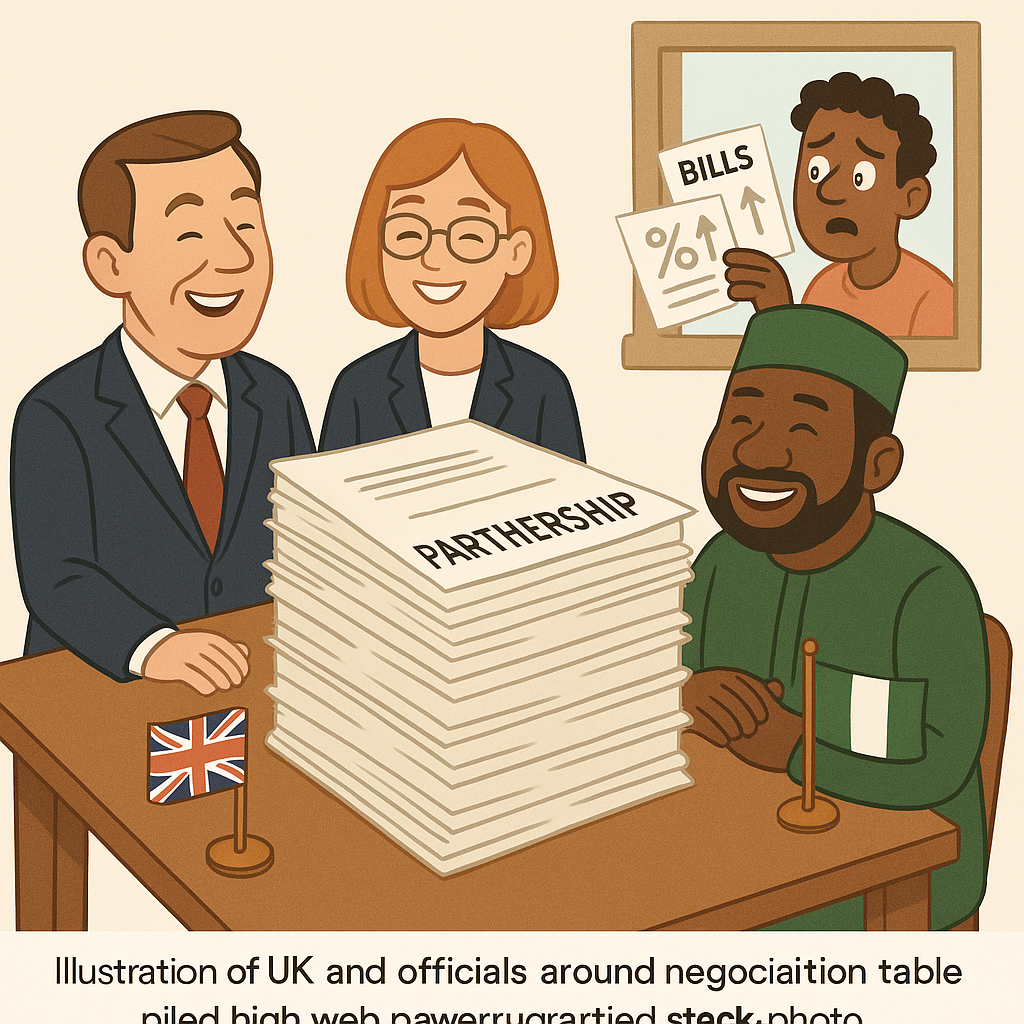
The UK side was represented by a revolving cast of ministers responsible for trade, Africa, and whichever department hasn’t been resigned from this week. They praised Tinubu’s “reform agenda,” diplomatic shorthand for “he’s doing all the painful monetary policy bits that make spreadsheets happy and citizens furious.” One official from the Foreign, Commonwealth & Development Office lauded Nigeria’s “strong democratic institutions,” then quietly asked a colleague if the phrase still tested well in focus groups.
Back in Abuja, the phrase “historic UK State Visit” triggered equal parts pride and suspicion. Supporters of the All Progressives Congress (APC) shared glossy photos of Tinubu standing beside the Union Jack, writing captions like “Jagaban on the global stage!” Critics responded by circulating screenshots of fuel prices and exchange rates, with annotations in red like a particularly cruel exam script.
“This is an important milestone in resetting Nigeria’s global economic narrative,” insisted a spokesperson from the Nigerian Presidency, speaking to state media. “The President is reassuring our partners that we are reliable and serious.” Social media users, noticing the timing of a new round of tariff hikes and power outages, questioned whether “serious” referred to the economic strategy or the national mood.
“Every time they say ‘Nigeria is open for business,’ my landlord remembers and increases the rent,” complained a Lagos resident on X (formerly Twitter). “Can we be closed for like two quarters?”
The British press, still traumatized by domestic issues, welcomed the chance to cover someone else’s difficulties in polite tones. One columnist praised Tinubu’s “investor outreach” while carefully side-stepping questions about Nigeria’s rising cost of living. Another noted that the visit showed “the UK remains a key destination for African leaders,” which is a delicate way of saying British visas are still highly prized, especially when they come with investment opportunities and photo ops outside Buckingham Palace.
Meanwhile, Nigerian commentators pointed out that the phrase “rooted in partnership” sounds suspiciously like prior slogans: “Vision 2010,” “Vision 2020,” “Economic Recovery and Growth Plan,” and the legendary “Change” campaign, each of which ended up rooted mostly in PowerPoint archives and abandoned government websites.
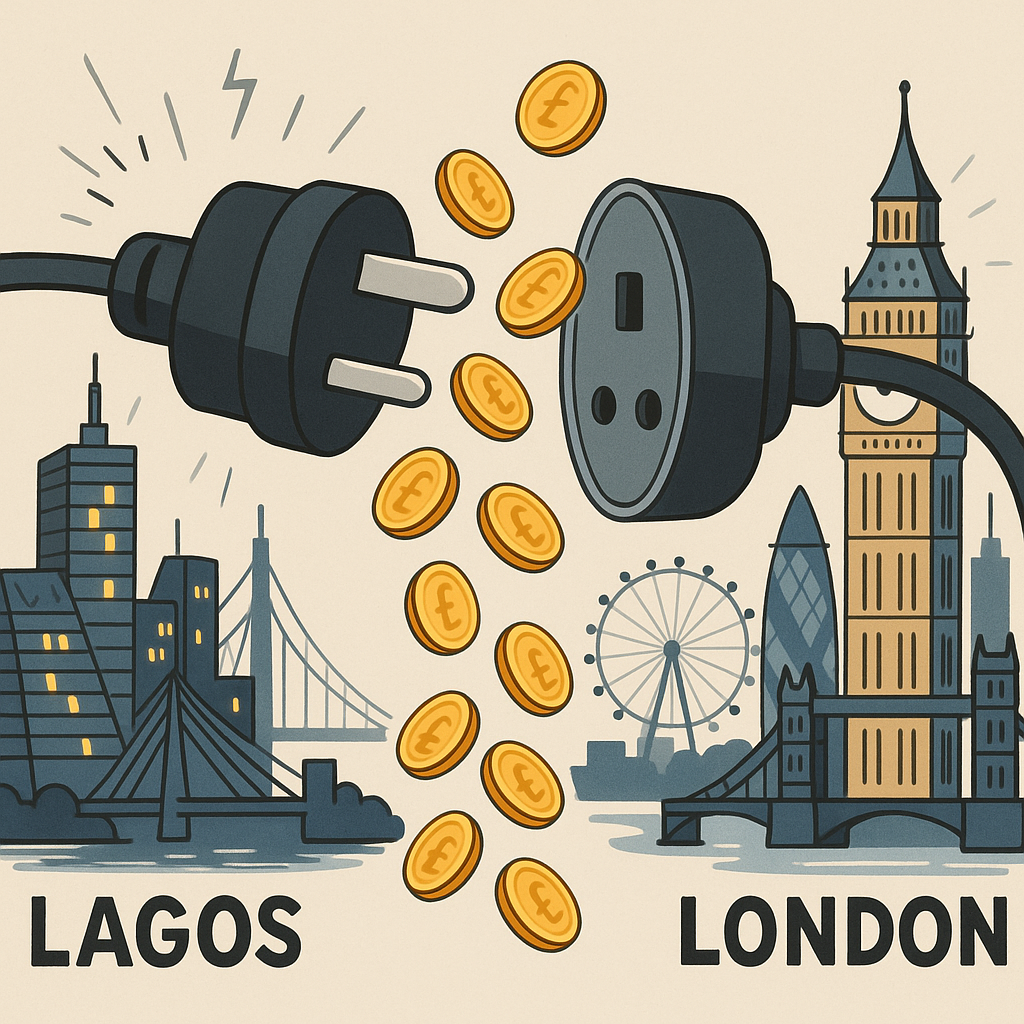
“We’ve seen this movie before,” said an economics lecturer at the University of Lagos. “Presidents travel to London, talk about partnership, sign MoUs, and then we still don’t have working refineries. The only thing that scales reliably is the per diem.” He added that while courting UK investors is fine, “Nigerians would like to be informed whether the government is also open for accountability, rooted in functioning institutions.” He was promptly invited to “a stakeholder roundtable”, which is Nigerian for “we will ignore you in person now.”
Sources close to the delegation say Tinubu’s team is genuinely keen to land concrete deals in energy, rail, and digital services, with the Presidency pitching Nigeria as a regional hub for everything that sounds like the future. British officials, in turn, are keen to maintain influence in West Africa, preferably in a way that doesn’t require explaining to voters why they are investing abroad when potholes in Birmingham are now legally classified as inland lakes.
As the visit winds down, both sides are expected to issue a joint communiqué stuffed with words like “inclusive,” “sustainable,” “resilient,” and “transformative” – adjectives that almost completely replace numbers in modern diplomacy. There will be smiling photos, solemn handshakes, and breathless headlines: “Open For Business, Rooted In Partnership: President Tinubu’s Historic UK State Visit” (Leadership, Mar 2026). Back home, Nigerians will open their electricity bills, visit the market, and attempt to locate the partnership in their pockets.
No one doubts that international engagement matters or that Nigeria, under Tinubu or anyone else, must talk to the world. The question is simpler and less photogenic: after London’s speeches and London’s selfies, will the deals light up streets in Lagos – or just chandeliers in Mayfair?
Until that answer arrives, Nigeria remains officially “open for business.” Returns not guaranteed. Terms and conditions apply. Rooted in vibes.